


More news on this day
As Europe gears up for another busy summer in the skies, one French airport in particular is drawing attention for all the wrong reasons, after new data identified it among the continent’s worst performers for flight delays.
Get the latest news straight to your inbox!
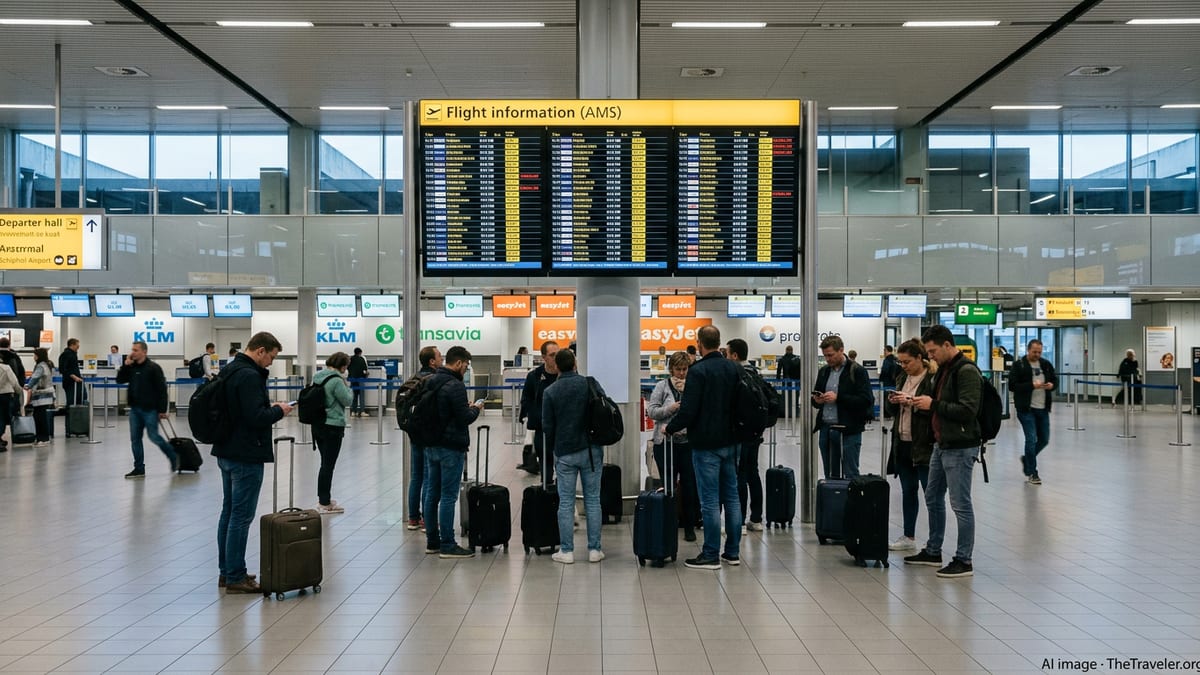
Nice Côte d’Azur emerges as France’s worst delay hotspot
Recent rankings of European airport punctuality point to Nice Côte d’Azur as the French airport with the most acute delay problems, especially on peak summer routes. Comparative analyses of departure data compiled by aviation intelligence sites and passenger-rights platforms consistently place the Riviera gateway near the top of European tables for long waits at the gate.
One 2025-focused review of delay statistics highlights Nice among the 10 European airports where passengers are most likely to face late departures of more than an hour. Another ranking of disruption patterns across France over the 2024 season shows that, while several French airports struggled, Nice recorded some of the highest proportions of significantly delayed flights among the country’s major tourist hubs.
The picture that emerges is of a busy Mediterranean airport whose popularity has outpaced its ability to move aircraft on and off the apron on time. While Nice does not handle as many flights as giant hubs such as Paris Charles de Gaulle, its delay rate relative to traffic volume places it at the sharp end of French punctuality tables.
Analysts stress that these conclusions depend on the specific metrics used, from the share of flights delayed more than 15 minutes to the frequency of very long hold-ups exceeding an hour. Even so, across methodologies, Nice features as France’s most problematic airport for delays in the current rankings that compare major French gateways.
How the delay rankings are compiled
The latest league tables are built from a mix of real-time flight tracking feeds, historical schedules and airport performance databases. Specialist platforms aggregate millions of data points on departure and arrival times, then compare planned and actual movements to calculate delay rates, average minutes lost per flight and the severity of disruptions.
Some rankings focus on the proportion of flights leaving more than 15 minutes behind schedule, a widely used definition of a delayed departure. Others concentrate on the share of very late flights, such as those delayed by more than 60 minutes, or examine the cumulative time lost across all movements. A separate approach, used by air passenger advocacy services, combines punctuality with cancellation rates and customer feedback on handling of disrupted journeys.
In the case of Nice, these different lenses still point in a similar direction. While absolute numbers vary, publicly available comparisons show the airport featuring prominently among the worst performers in Europe for 2025 and standing out within France for its rate of substantial delays. By contrast, some regional French airports with lower traffic volumes register fewer severe hold-ups, even if their overall on-time performance is far from perfect.
Industry observers caution that year-on-year shifts are common. A single season marked by construction works, weather disruptions or industrial action can drag an airport down the rankings, only for it to rebound later. However, Nice’s recurring appearance in recent tables suggests that structural factors are playing a growing role.
Why France’s skies are especially vulnerable
France occupies a central position in European airspace, and this geography has become a major part of the delay story. Network performance reviews from Eurocontrol and other monitoring bodies underline that French air traffic control issues contribute a disproportionate share of en route delay minutes in Europe, relative to the country’s slice of overall traffic.
Capacity constraints, staffing shortages in air traffic control and a long-running pattern of strike action have all been cited in official performance assessments as key drivers of disruption affecting flights that cross or serve France. When controllers reduce capacity or industrial disputes limit staffing, flow restrictions ripple across the network, and busy airports such as Nice often feel the impact in the form of delayed departures and arrivals.
Weather is another recurrent factor. Thunderstorms over the Mediterranean, strong winds along the coast and summer heat can all force temporary reductions in runway capacity or require greater spacing between aircraft. These constraints easily translate into knock-on delays when schedules are already tight and stands are operating near full occupancy at peak hours.
The combination of constrained airspace and high seasonal demand means that French airports, and especially those in holiday regions, are particularly exposed. When disruptions hit en route, recovering punctuality on the ground is difficult, especially at airports with limited spare capacity at gates or on taxiways.
Tourism demand puts extra pressure on Nice
Nice Côte d’Azur is the primary gateway to the French Riviera, serving not only Nice itself but also Cannes, Antibes, Monaco and a string of coastal resorts. Traffic surges during spring and summer, driven by leisure travellers, cruise passengers and major events such as the Cannes Film Festival and the Monaco Grand Prix. Airlines respond by packing schedules with additional frequencies and seasonal routes, increasing the strain on infrastructure.
During these peak months, runway slots become scarce and turnaround windows are compressed. Ground handling teams must cope with a dense wave pattern of arrivals and departures throughout the day, which leaves little margin for recovering time when earlier flights run late. As a result, a single morning disruption can cascade into an afternoon of rolling delays.
Reports on 2024 and early 2025 performance indicate that this seasonal saturation has made Nice particularly vulnerable to knock-on effects from wider network problems. When European air traffic management introduces flow restrictions or reroutes flights around congested sectors, aircraft bound for the Riviera often accumulate holding time before arrival, then depart late on their next leg.
Local factors, including limited runway capacity and apron space constrained by geography between sea and hills, further complicate the picture. These physical limits leave less flexibility to absorb surges in traffic or to reshuffle stands at short notice when operators face disruptions.
What travellers should expect and how to plan
For passengers planning trips through Nice in 2025, the recent rankings do not mean travel is destined to be chaotic, but they do suggest that allowing extra time and building contingency into itineraries is prudent. Travel advisories from consumer groups commonly recommend selecting earlier flights in the day where possible, as delay statistics often worsen in the late afternoon and evening when accumulated disruptions peak.
Connecting itineraries that rely on tight transfer windows at Nice may be particularly risky during the busiest weeks of summer. Publicly available guidance encourages travellers to opt for longer layovers or, when feasible, to connect through alternative hubs with stronger on-time records. For those starting or ending their journey on the Riviera, factoring in the possibility of late arrivals can also help with planning ground transport and hotel check-ins.
Industry analysts note that airports and airlines are under mounting pressure to improve performance, especially as air traffic across Europe has returned to and in some cases exceeded pre-pandemic levels. Regulatory authorities and performance review bodies have urged operators in France and elsewhere to invest in staffing, technology and airspace design to ease bottlenecks and reduce the systemic causes of delay.
Until those improvements take hold, Nice Côte d’Azur is likely to remain under scrutiny from both regulators and travellers as the French airport that most clearly illustrates how crowded skies and constrained infrastructure translate into longer waits at the gate.