


More news on this day
Extensive airspace restrictions tied to America’s 250th anniversary celebrations in Washington, D.C., are set to halt most flights at Ronald Reagan Washington National Airport on July 4, triggering warnings for travelers heading into one of the busiest holiday weekends of the year.
Get the latest news straight to your inbox!
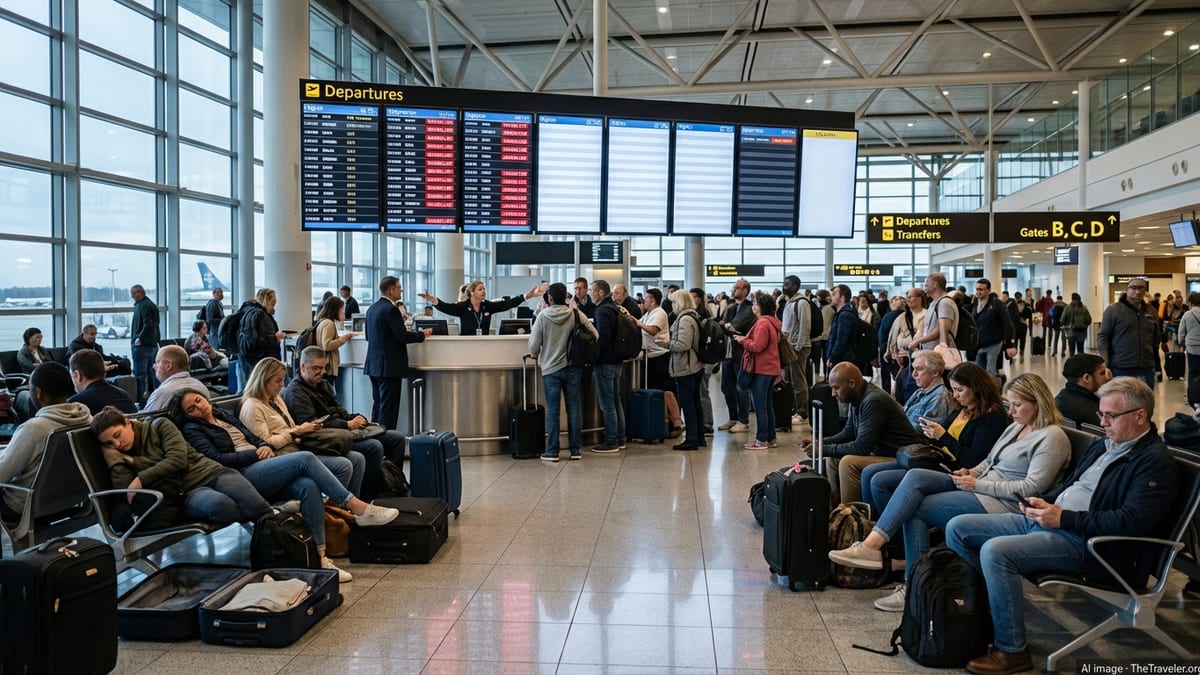
Reagan National to pause most operations for America 250 flyovers
Publicly available notices and local coverage indicate that air traffic at Reagan National will largely stop for much of the day on July 4, 2026, as federal agencies clear the skies over central Washington for large scale military flyovers, air shows and an expanded fireworks display marking the nation’s 250th birthday. The suspension follows formal airspace planning for the semiquincentennial, which has been years in the making but only recently translated into concrete July 4 flight schedules.
Local reporting in the Washington region describes a near total pause in takeoffs and landings at Reagan National beginning around midday on July 4 and lasting into the night, with additional shorter interruptions on July 3 to accommodate rehearsal flights. While exact times are being managed through detailed Notices to Air Missions and Temporary Flight Restrictions, airlines have already reshaped their schedules to comply.
The Metropolitan Washington Airports Authority has warned that passengers booked into or out of Reagan National over the holiday should expect significant changes, ranging from rebooked departure times to rerouted itineraries. Advisory language reproduced in aviation forums urges ticketed travelers to closely monitor their reservations, underscoring that operational impacts will be most acute on July 3 and July 4.
Temporary flight restrictions ripple across the Northeast corridor
The Reagan National shutdown forms the centerpiece of a broader constellation of temporary flight restrictions tied to America 250 events. Federal aviation guidance on restrictions explains that such measures are deployed to protect people and property in congested airspace during major national occasions, and are typically enforced through layered, time bound zones that bar or strictly limit most civilian flights.
For the semiquincentennial, these restrictions are concentrated around the capital but also affect key routes along the busy Northeast corridor. Operational notices show that Washington area airspace will be heavily managed beginning in the days leading up to July 4, with priority given to military demonstrations, ceremonial flyovers and security related movements. The concentration of restrictions over the core of the national airspace system heightens the risk of knock on delays for flights that never enter the restricted blocks themselves.
The Federal Aviation Administration’s real time restriction portal has already begun flagging July 4 related constraints, and updated guidance issued in June highlights the need for pilots and dispatchers to review current notices before every leg. Airlines have been adjusting schedules for weeks to reduce the number of flights exposed to the tightest closure windows, but the volume of summer holiday traffic means some congestion is still likely.
Airlines issue waivers and rebookings for July 4 travelers
Major carriers have responded to the airspace plan by rolling out flexible booking policies for the July 4 period, with several publicly posted travel advisories referencing the America 250 airspace restrictions. Delta Air Lines, for example, has published a waiver for trips on July 4 that include Washington National among the covered airports, allowing customers to move travel to other days within a limited window without change fees, although standard fare difference rules can still apply.
Similar policies have appeared across the industry, and posts from airline specific traveler communities show that United Airlines is allowing affected passengers whose itineraries touch Reagan National between July 3 and July 5 to shift their flights within that timeframe. Travelers reporting schedule changes on social media and online forums describe being automatically rebooked to early morning departures, later evening arrivals, or flights routed through other hubs to avoid the middle of the day on July 4.
Despite the proactive measures, some passengers are only now discovering that flights they booked months ago are no longer operating at their original times. Consumer discussions suggest that those who wait to respond to airline notifications may have fewer alternative options, particularly if they insist on keeping Reagan National rather than shifting to Washington Dulles or Baltimore/Washington International, which are expected to be busier as a result of the closure.
What July 4 flyers should expect in Washington and beyond
For travelers, the most immediate consequence of the Reagan National airspace shutdown will be a sharp reduction in midday options on July 4. Industry analysts note that relatively few people traditionally choose to fly at the peak of the Independence Day holiday, which may limit the number of passengers directly displaced. Even so, the depth and duration of the 2026 restrictions are unusual for a domestic airport of Reagan National’s size and prominence, particularly one that sits so close to the nation’s political and ceremonial core.
Holidaymakers already in Washington may experience the restrictions less as a flight disruption and more as a backdrop to highly choreographed air displays. Plans published by event organizers for the Salute to America program describe extensive aerial components across July 3 and 4, together with tightened security perimeters on the National Mall and around the U.S. Capitol. Local advisory notices stress that certain park areas, roadways and riverfront access points will close for extended periods, which could complicate both airport transfers and ground movements for visitors.
Travel experts watching the situation caution that even those not flying through Reagan National could feel indirect effects. High summer demand, limited spare aircraft and the concentration of constraints over Washington mean that weather or staffing problems elsewhere in the system could interact with the July 4 airspace plan to create longer lasting disruptions. Passengers are being encouraged, through airline advisories and airport notices, to build in extra time, travel with carry on baggage where possible, and confirm gate and schedule information repeatedly on the day of travel.
Planning strategies as America 250 celebrations peak
With the 250th anniversary of U.S. independence drawing visitors from around the country and abroad, Washington area aviation is entering an unusually complex operating period. Publicly available government documents on semiquincentennial planning show that security and ceremonial priorities have driven airspace design, with commercial schedules adjusted around those requirements rather than the opposite. For Reagan National, that means a brief but notable reversion to a quieter role on what is otherwise one of the marquee days of the American travel calendar.
For travelers still booking last minute July 4 trips, the practical advice emerging from airline and airport communications is straightforward. Those who can shift their plans to July 2, early on July 3, or July 5 will have a wider choice of flights and are less likely to face rolling delays. Those whose plans are fixed around July 4 itself may want to consider using Dulles or Baltimore/Washington, or even rail options along the Northeast corridor, to avoid the most restricted airspace.
As America 250 festivities reach their peak, observers expect that the Reagan National shutdown will stand out as one of the most visible travel side effects of the commemorations. For many passengers, however, the impact may be limited to an unusually quiet terminal and an overhead sky filled not with airliners but with carefully choreographed salutes marking a once in a generation milestone.