


Ubigi has become one of the most talked-about travel eSIM brands, praised for fast speeds, broad coverage and competitive prices in regions like Europe and North America. But that does not mean it is the best choice for every traveler or every trip. In fact, for certain destinations, devices and travel styles, Ubigi can be a poor fit and even a source of expensive headaches. This guide looks specifically at who should think twice before using Ubigi and which alternatives may work better in real-world situations.
Get the latest updates straight to your inbox!
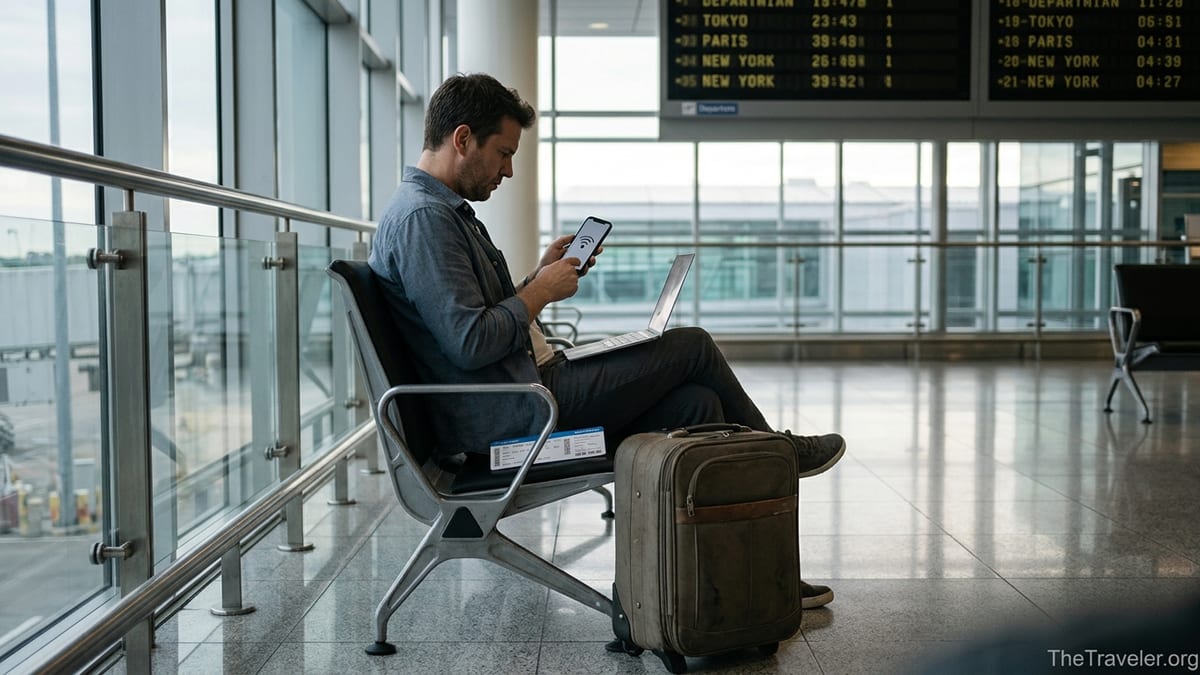
Understanding Where Ubigi Shines and Where It Struggles
Ubigi’s core strengths are clear. It offers eSIM data in more than 190 countries, with 5G in a growing list of destinations, and its Europe and USA plans are often priced competitively compared with other travel eSIMs. For example, around major European hubs such as Paris, Berlin or Rome, many travelers report strong speeds and reliable coverage that easily handle maps, ride-hailing and video calls on the go. In the United States, Ubigi partners with major local networks and markets unlimited monthly plans that can be attractive to digital nomads spending several weeks in cities like New York, Austin or Seattle.
However, when you move away from those “easy” destinations or have specific technical needs, experiences become more mixed. Recent user feedback highlights recurring issues with activation glitches, inconsistent performance in parts of Asia, and device-specific quirks, particularly on some Google Pixel and Android models. While plenty of people use Ubigi with no issues at all, the pattern is strong enough that certain travelers should be cautious and consider alternatives better matched to their situation.
Thinking about Ubigi, then, is less about whether it is a good or bad service overall and more about fit. A backpacker hopping through five Western European capitals on an iPhone may find Ubigi close to ideal. A first-time visitor to Japan who relies on a Pixel handset or a couple trying to tether laptops from a “fair use” unlimited plan may not. The sections below break down who should be wary, with concrete scenarios and practical substitutes.
Travelers Relying on Google Pixel and Quirky Android Devices
One of the clearest groups that should be cautious with Ubigi is travelers using Google Pixel phones or less mainstream Android models. Multiple real-world reports describe connectivity problems where Ubigi shows a full 5G or LTE signal yet delivers either extremely slow data or no data at all, especially in places like Japan and parts of East Asia. In several cases, travelers noted that Ubigi support acknowledged ongoing “software compatibility” issues with certain Pixel generations and even offered refunds, which suggests the problem is not always simple user error.
Consider a traveler flying from Los Angeles to Tokyo with a Pixel 9 or Pixel 10. They buy a Ubigi Japan eSIM the night before departure, scan the QR code and arrive at Haneda expecting to summon an airport transfer in minutes. Instead, their phone displays a strong 5G icon but struggles to load even basic Google Maps directions, forcing them to fall back on expensive roaming from their home carrier just to get into the city. Other travelers in the same terminal using iPhones or different providers such as Airalo or Nomad do not report the same level of trouble. For that Pixel user, Ubigi is a poor match, no matter how appealing the advertised speeds or prices may seem on paper.
If you own a Pixel or a regional Android variant like an India-specific OnePlus model, it is safer to choose an eSIM brand with a strong track record of Android compatibility and simpler routing. Nomad and Airalo, for example, have built reputations on relatively straightforward activation processes and solid performance across a broad range of devices. In practice, this might mean buying a Nomad Japan or Asia regional eSIM for a two-week trip, paying a few dollars more than Ubigi, but gaining peace of mind that your mapping, translation apps and ride-hailing will work consistently from the moment you land.
Visitors to Japan, China and Parts of Asia Needing Rock-Solid Data
Ubigi’s regional Asia plans look attractive for travelers stringing together destinations like Japan, South Korea, Taiwan and China on a single trip. In theory, you install one eSIM and move between countries without swapping anything. In reality, traveler reports from the past couple of years show a mixed picture, with some users enjoying smooth, high-speed data and others facing intermittent or non-existent connectivity, especially in Japan and China.
One recurring complaint from travelers in Tokyo and Osaka is that Ubigi will occasionally show connectivity but then deliver data so slowly that it is nearly unusable. A visitor relying on it to navigate Shinjuku Station, translate restaurant menus in Kyoto, or keep children entertained on a shinkansen journey might find that basic apps take minutes to load or time out completely. In China, some travelers report roaming profiles that activate yet fail to pass data until they spend time manually switching between local partner networks at the instruction of support. For a short business trip to Shanghai or Shenzhen, where you need to join video meetings from a hotel or upload files on the go, these sorts of hiccups can be unacceptable.
If Asia is your main destination and you need your data connection to “just work,” there are several more predictable alternatives. Dedicated country eSIMs from Nomad or regional plans from providers that specifically test in Asia can be safer. For Japan alone, some travelers still prefer traditional physical SIMs from operators like NTT Docomo or SoftBank sold at major airports, because they are tuned to local networks and often come with in-person setup help. A traveler flying into Narita for a week-long ski trip in Hokkaido, for instance, may be better served by an Airalo or Nomad Japan-specific eSIM plus a backup physical SIM at the airport, rather than gambling on an all-in-one Ubigi Asia package.
People Attracted by Ubigi’s Unlimited Plans but Unclear on Fair Use
Ubigi’s unlimited data plans, especially for the United States and Europe, are a major draw for heavy users. A monthly “unlimited” plan sounds ideal for digital nomads or remote workers rotating between coworking spaces and cafes in cities like Lisbon, Barcelona, New York or Chicago. The marketing language around these plans often highlights full-speed 4G or 5G connectivity and the freedom to stream, upload and download without worrying about caps.
However, like many unlimited offers, Ubigi’s plans are governed by a fair use policy. A typical example is a U.S. monthly unlimited plan that provides a specific chunk of high-speed data, such as 60 GB, after which speeds are reduced to around 2 Mbps for the remainder of the billing period. That throttled speed is usable for messaging, email and basic browsing, but it can feel painfully slow for cloud backups, HD video streaming or large file transfers. A traveler who spends the first two weeks of a month uploading raw photo files from a national park road trip or streaming sports in their hotel may burn through the high-speed allowance quickly and then feel that the “unlimited” plan has become effectively limited for their needs.
If you routinely use more than 50 to 60 GB per month, or you depend on fast uplinks for work, it is safer to choose a provider whose marketing and policies match your usage profile more transparently. For example, some travelers prefer fixed data bundles from Airalo or Nomad because it is clear from the outset that, say, a 20 GB or 30 GB plan will either be sufficient or not, with no mid-month surprises around speed throttling. Others opt for local carrier prepaid plans once they arrive, such as purchasing a domestic unlimited 5G SIM at a T-Mobile, Verizon or AT&T store in the United States, where it is easier to understand and contest fair use rules in person if necessary. In these cases, Ubigi’s unlimited branding can be misleading for heavy users and should probably be avoided.
Travelers Who Depend on Responsive, Hands-On Customer Support
Another profile that tends to be poorly served by Ubigi is the traveler who needs fast, hands-on customer support and a straightforward refund process if something goes wrong. Ubigi offers in-app and online support, but recent traveler accounts describe experiences ranging from unresponsive help desks to lengthy back-and-forth conversations that do not resolve core connectivity problems. Losing 20 to 30 dollars on a non-working eSIM may be tolerable for a seasoned backpacker willing to switch providers on the fly, but it can be hugely stressful for a family or infrequent traveler who has only budgeted for one solution.
Imagine a couple flying from Toronto to Rome for a long-awaited honeymoon. They purchase a 50 GB pan-Europe plan from Ubigi a few days before departure, expecting to rely on it for directions, restaurant research and keeping in touch with family at home. Once in Italy, their phones stubbornly refuse to connect despite following all the configuration steps. They write to Ubigi support and wait in their hotel lobby for a reply, only to receive generic troubleshooting tips that they have already tried. By the time support acknowledges that there may be a technical incident on their account, they have already spent money on a separate local SIM card and used their home roaming in the meantime. Securing a refund becomes another drawn-out task during what was supposed to be a carefree vacation.
If having a responsive human on the other end matters to you, or if you are the sort of traveler who feels anxious when tech fails, Ubigi is not always the safest first choice. Some competitors prioritize customer experience more visibly, with faster live chat responses or clearer refund rules. For example, several well-reviewed eSIM marketplaces position themselves on the strength of their 24/7 support and no-questions-asked refunds when plans do not activate correctly. In practice, that might mean paying slightly more for a 10 GB Europe eSIM from a brand like Nomad or picking an eSIM backed by an established carrier such as Orange’s travel offer, trading a few dollars for greater peace of mind.
Remote Workers and Power Users Who Rely on Hotspots and Tethering
Ubigi technically supports tethering on most devices, but its plans and fair use policies can be limiting for people who use their phones as primary hotspots. A remote worker who spends months at a time in Mexico City, Lisbon or Bangkok might want to run a laptop, a tablet and a second phone off a single eSIM, expecting home-fiber levels of reliability from a mobile connection. While Ubigi can handle casual hotspot use, its throttling thresholds and potential for network-specific quirks make it less ideal as a main work connection.
Consider a freelance designer based in Chicago who spends a month in Los Angeles and then another in New York. They might look at a Ubigi unlimited United States eSIM as an all-in-one solution: tether the laptop for cloud-based design tools, join daily video calls, sync large project files and stream movies in the evening. In practice, heavy tethering could push them through that initial high-speed allowance in a week or two, dropping speeds to levels that may struggle with high-quality video calls or large uploads. If that same freelancer then flies to London and plans to rely on Ubigi’s European plan as an office connection, any minor instability in roaming or partner networks becomes not just an annoyance but a direct threat to their income.
For this sort of power user, a better strategy is often to split usage between a travel eSIM and a local fixed plan. In the United States, that might mean using Ubigi or a rival such as Airalo simply for smartphone data while securing a prepaid or short-term home internet plan for the laptop from a local provider. In Europe or Asia, it might mean buying a local eSIM or physical SIM with an explicitly hotspot-friendly data package from a national carrier, while keeping a regional eSIM in reserve for cross-border days. The bottom line: if your livelihood depends on hotspot stability and predictable speeds across multiple devices, Ubigi’s consumer-focused offerings are not designed to be your only line of connectivity.
Budget Travelers Visiting High-Cost Regions
In many popular regions, Ubigi’s per-gigabyte pricing is very competitive. In others, particularly some parts of the Middle East and Africa, it can be noticeably more expensive than rivals or local options. A budget-conscious backpacker who has carefully planned every dollar of a trip through Jordan, the United Arab Emirates or Morocco may find that Ubigi’s regional plans consume a bigger slice of the budget than expected, especially if they rely heavily on maps, translation apps, social media uploads and streaming.
Take, for example, a traveler spending ten days in Dubai and Abu Dhabi. A modest Ubigi plan covering that period might cost significantly more per gigabyte than a comparable product from another eSIM provider tested in the region, or than a local prepaid SIM from one of the UAE’s carriers purchased at the airport. In North Africa, a similar pattern can emerge, where a 5 GB roaming eSIM package from a specialist provider or a domestic operator may undercut Ubigi by a clear margin. For a shoestring traveler tracking costs in a spreadsheet, paying several extra dollars per gigabyte quickly adds up.
In these cases, budget travelers are often better served by shopping around region-specific guides to eSIM pricing or by purchasing local SIMs on arrival. Tech-focused outlets regularly compare provider pricing in destinations like Morocco or across the Gulf, and their testing often surfaces less flashy brands with better value at ground level. A traveler on a long overland route from Casablanca through Marrakech and into the Atlas Mountains, for instance, might combine a local Maroc Telecom or Orange prepaid SIM for heavy daily use with a small global eSIM from a marketplace like Nomad as a safety net. Ubigi’s convenience and brand recognition can be appealing, but it is not always the wallet-friendliest choice.
The Takeaway
Ubigi is a strong player in the travel eSIM market and can be an excellent fit for many common scenarios, especially for iPhone users traveling to Europe or North America who want fast data without overthinking the details. Yet the experiences of real travelers show clear patterns where Ubigi is less suitable. Owners of certain Google Pixel and Android devices, visitors to more complex markets like Japan and China, heavy users tempted by “unlimited” marketing, and travelers who depend on responsive, human customer support have all reported enough friction that caution is warranted.
Ultimately, the decision to use or avoid Ubigi should come down to your personal risk tolerance and trip profile. If reliable data is mission-critical, or if you know you will be pushing the limits of fair use with tethering and remote work, then starting with a provider or local SIM better tailored to those demands is wise. If, on the other hand, you are making a straightforward holiday trip to Paris on an iPhone and mainly need maps and messaging, Ubigi remains a convenient, often cost-effective option.
Whichever route you choose, the key is not to assume that any single eSIM brand is universally “the best.” Instead, treat Ubigi, Airalo, Nomad, Holafly and local carriers as tools in a kit. For each trip, look at your device, destination, budget and data habits, then pick the one that fits those specifics rather than the one with the loudest marketing. Doing so will greatly reduce the odds of landing in a new country with a beautiful view, a full signal bar and a phone that stubbornly refuses to load the map you need.
FAQ
Q1. Is Ubigi a bad eSIM provider overall?
Ubigi is not inherently bad. It performs very well for many travelers, especially iPhone users in Europe and North America, but certain devices, destinations and heavy-usage patterns can expose its weaknesses.
Q2. Should Google Pixel owners avoid Ubigi completely?
Pixel users should be cautious, particularly if they rely on 5G or are traveling to Japan and parts of Asia where compatibility issues have been reported. If you must use a Pixel, consider keeping a backup eSIM or local SIM from another provider.
Q3. Is Ubigi reliable for a first-time trip to Japan?
Experiences in Japan are mixed. Some travelers report excellent speeds, while others see unstable or unusable connections. For a first visit where you rely heavily on navigation, a Japan-specific eSIM from another provider or a local SIM on arrival may be safer.
Q4. What is the main problem with Ubigi’s unlimited plans?
The main issue is fair use. After a certain amount of high-speed data, speeds are reduced to levels that may feel slow for streaming, large uploads or heavy tethering, which can disappoint users expecting truly unrestricted high-speed access.
Q5. Is Ubigi a good choice for digital nomads and remote workers?
Ubigi can work as a secondary or backup connection, but relying on it alone for mission-critical remote work, especially if you use hotspots heavily, is risky. Combining a local fixed plan with a travel eSIM from a different provider is usually more robust.
Q6. How does Ubigi’s pricing compare with other eSIMs?
In Europe and North America Ubigi is often competitive, sometimes among the cheaper options for the quality offered. In parts of the Middle East and Africa, however, its pricing can be higher than local SIMs or certain rival eSIM providers.
Q7. What kind of traveler should consider alternatives first?
Travelers using Pixel or less common Android devices, those visiting Japan or China who need guaranteed reliability, very heavy data users attracted to “unlimited” offers, and anyone who values responsive customer support should start by comparing alternatives.
Q8. Can I rely on Ubigi’s customer support if something goes wrong?
Support quality appears inconsistent. Some customers report helpful responses, while others describe slow replies and difficulty obtaining refunds. If live, reliable support is critical to you, another provider or a local carrier may be a better primary choice.
Q9. Is Ubigi suitable for short city breaks in Europe?
For short trips to major European cities, especially with iPhones, Ubigi often works well and offers convenient, competitively priced plans. The main concerns arise with more complex itineraries, heavier usage or sensitive devices.
Q10. What are the best alternatives to Ubigi?
Alternatives depend on your destination and needs. Airalo and Nomad are widely used competitors with broad coverage and straightforward plans, while regional or local carriers such as Orange in Europe or domestic operators in each country can offer strong value and support for longer stays.