


Travel eSIMs have gone from niche tech to everyday tool in just a few years, and Ubigi is now one of the most visible names in that space. Before you tap “buy” in the app store queue on the way to the airport, it is worth understanding not only Ubigi’s strengths but also the fine print, common user complaints, and how it compares with rivals. This guide walks you through what to expect before buying Ubigi, using recent real-world examples from travelers in 2025 and 2026.
Get the latest updates straight to your inbox!
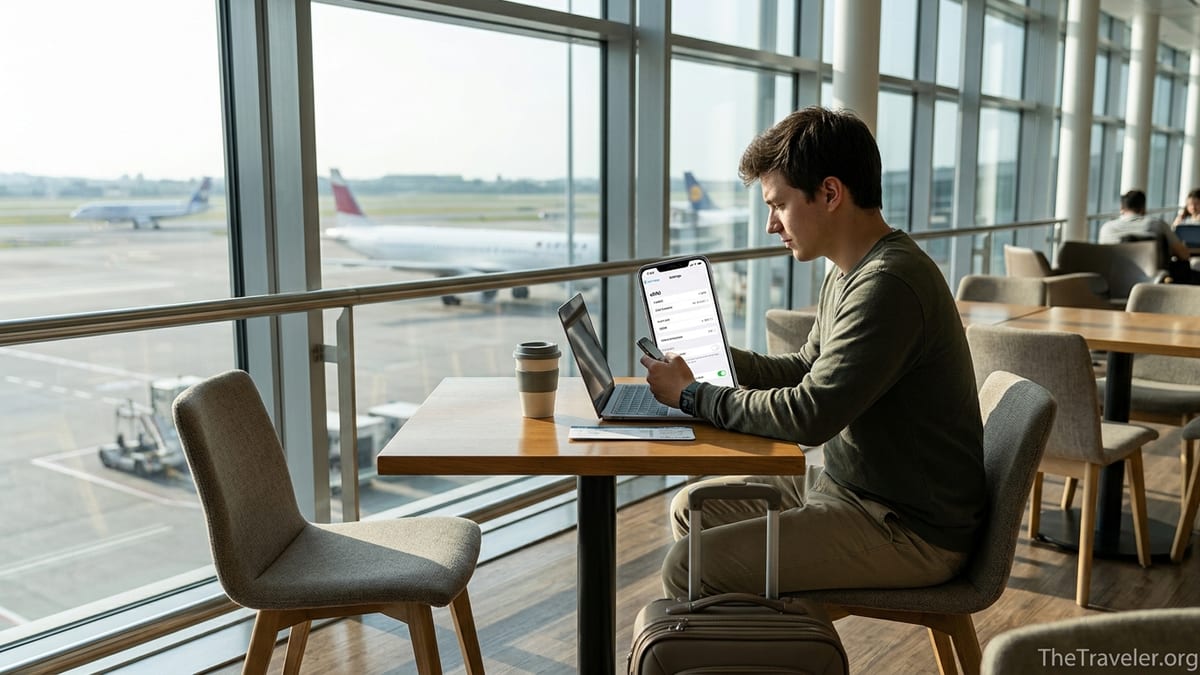
What Ubigi Actually Is and Where It Works
Ubigi is a travel-focused eSIM provider owned by Transatel, a French telecom company that runs on partner networks instead of building its own towers. In practice, that means Ubigi sells digital data plans you download directly onto your phone, then roams on major local carriers such as AT&T or T-Mobile in the United States, NTT Docomo or KDDI in Japan, and big operators across Europe. Recent independent reviews in 2025 and 2026 generally describe Ubigi as a fast and reliable option, especially for mobile professionals who care about latency and stable connections rather than rock-bottom pricing.
Ubigi currently offers coverage in more than 200 destinations across single-country, regional, and global plans. For example, there are standalone plans for the United States, Japan, or the United Arab Emirates; regional bundles for Europe or Asia-Pacific; and broader “world” packages aimed at multi-stop itineraries. In Europe specifically, tech reviewers in early 2026 highlighted that Ubigi’s plans start around 5 US dollars for 1 GB valid for a week in roughly 35 countries, making it a competitive choice if you are hopping between cities like Paris, Berlin, and Rome on the same trip.
Coverage quality still depends heavily on the country and local network. Feedback from frequent travelers suggests Ubigi performs especially well in Western Europe, North America, and popular Asian hubs such as Singapore and Taiwan, where roaming partners have strong 4G and growing 5G infrastructure. By contrast, user reports from parts of mainland China and some Middle Eastern destinations are more mixed, with occasional complaints about slow speeds or difficulty getting data working at all. Before buying, it is important to check not just whether Ubigi lists your country, but which local operator it uses there and how that network is regarded for data performance.
Ubigi has also started rolling out 5G access in a subset of destinations. According to the company’s own help center, 5G is now available in more than 25 locations, including the United States, several large European markets, and parts of Asia. The catch is that you will only see 5G if both your phone and the local partner network support it, and even then coverage might be concentrated in major cities rather than small towns or rural regions. If you are planning a road trip through the US national parks, for example, you should still expect to fall back to 4G or even 3G in remote areas, no matter what your eSIM provider claims.
Pricing: What You Get for Your Money
Ubigi’s pricing varies by destination, but some broad patterns have emerged from 2025–2026 plan comparisons. In many European countries and in the United States, reviewers consistently find Ubigi among the more competitively priced premium providers. Example: for the US, tech outlets have recently noted entry-level plans starting at roughly 3 US dollars for 500 MB valid for a single day, scaling up to multi-gigabyte options that last 15 or 30 days. In Japan, common offers include around 4 US dollars for 1 GB valid for 30 days or about 21 US dollars for 10 GB on a joint Japan–USA plan, which can suit travelers pairing Tokyo and Los Angeles in a single itinerary.
Regional Asia-Pacific plans tend to start around 9 to 10 US dollars for 3 GB valid for a month, covering more than 20 countries. This sort of bundle makes sense if you are doing a circuit such as Seoul–Tokyo–Taipei–Bangkok and do not want to juggle separate eSIMs for each country. For long European trips, a 25 GB plan for 30 days might sit in the 30 to 40 US dollar range depending on current promotions, similar to or slightly higher than competitors like Nomad or Airalo but often praised for stable speeds on major networks.
One point that regularly surprises buyers is how quickly smaller plans can vanish with modern app usage. For a city-break weekend in Paris or New York where you mainly check maps, ride-hailing, messaging, and the occasional restaurant search, 3 to 5 GB may be sufficient. But if you routinely upload photos and videos to social media, stream music on the move, or tether a laptop, 10 to 20 GB becomes more realistic even for a one-week trip. Travelers who bought a 3 GB Ubigi plan for a week in Japan, then tried to hotspot their laptop for remote work, often report burning through the entire allowance within a few days.
Ubigi also advertises some “unlimited” plans, particularly in North America and parts of Europe. Real-world user reports show that these usually come with a fair-use cap, after which your speeds are heavily throttled. In one widely shared account, a traveler who purchased a 7-day unlimited plan discovered that after roughly 15 GB their speed dropped to a fraction of normal, making video calls and streaming effectively unusable. The plan still technically provided data, but at such a slow rate that critical apps struggled. Before you buy, open the plan details in the app and look carefully for any reference to fair-use policies, speed reductions, or data thresholds so you do not misinterpret “unlimited” as truly without limits.
Device Compatibility and Setup Experience
To use Ubigi, your phone or tablet must support eSIM. Almost all recent iPhones from the XS onward, newer Samsung Galaxy S and Z series, and Google Pixel models are compatible, as are many high-end devices from brands like OnePlus and Xiaomi. However, not every budget or mid-range handset includes eSIM hardware, even in 2026. Checking Ubigi’s own compatibility list before purchase is essential, especially if you are using a lesser-known brand or an older phone bought on a contract. Do not assume that because your phone is 5G-ready it must also be eSIM-ready; the two features are separate.
Ubigi offers two main installation flows: scanning a QR code or installing directly via its app. The app-based method is usually smoother on iPhone and newer Android devices, where you can add the eSIM profile in a handful of taps. Many travelers report that downloading and activating a Europe or US plan over home Wi-Fi takes under 10 minutes from start to finish, including payment, profile download, and activation. This is ideal if you like to prepare the night before flying so your phone connects as soon as you land.
That said, there are enough reports of glitches that you should not leave activation to the last possible moment. In a series of posts on eSIM-focused forums in mid-2026, users described situations where the Ubigi app froze at “creating QR code,” never delivered the eSIM profile, or claimed the plan was active but no data flowed once they arrived. In some of these cases, travelers who were trying to set everything up in an airport departure lounge with boarding already underway found themselves without working data on arrival and had to scramble to buy a physical SIM or a different eSIM in the arrivals hall.
The safest approach is to install the Ubigi eSIM on your device at least a day or two before departure while you still have reliable home Wi-Fi. Once installed, you can usually activate or top up later without needing to repeat the whole process. If you are a digital nomad planning multi-country travel, consider starting with a small, inexpensive Ubigi plan in your current country just to test that installation and activation work smoothly on your specific phone model before committing to a larger, more expensive bundle.
Real-World Performance: Where Ubigi Shines and Struggles
Independent test sites and everyday users broadly agree that Ubigi performs well in many mainstream destinations, but results can differ sharply by region. In Western Europe and North America, reviewers often clock fast 4G and solid early 5G speeds adequate for streaming HD video, running navigation in dense cities, and holding video calls for work. Business travelers commuting between London, Paris, and Brussels, for example, describe Ubigi as “set and forget”: once installed, it roams seamlessly from one country to the next without manual APN tweaks or SIM swaps.
In parts of Asia, feedback is more mixed but still largely positive in major hubs. Some travelers returning from Taiwan, Singapore, and urban Japan in late 2025 and early 2026 shared that Ubigi gave them consistently fast data on their iPhones and Pixels, with speed tests showing performance on par with local prepaid SIMs in city centers. One frequent flyer who used Ubigi’s Asia regional plan during a multi-week route through Tokyo, Taipei, and Seoul reported that streaming maps, short-form video, and cloud-based translation apps worked without noticeable lag.
On the other hand, several posts in Japan-focused travel communities warn of intermittent connectivity or complete lack of data with Ubigi in that country, particularly in late 2024 and early 2025. Some users described constant “no network” messages, while others said speeds dropped to unusable levels during busy times in Tokyo. In a few cases, customer support acknowledged that there were issues with specific network partners and processed refunds, but only after lengthy troubleshooting and email exchanges. A similar pattern of complaints appears in accounts from mainland China, where travelers reported that their phones showed an active Ubigi eSIM but continued to fall back to their expensive home roaming plans because no data was actually transmitted.
These contradictory experiences highlight an important point: your results with Ubigi will depend heavily on where you are, which tower you connect to, and even how congested the network is on a given day. If you are visiting a destination where several recent users have flagged problems, it can be wise to have a backup option such as a second eSIM from another provider or the budget to buy a local physical SIM card at the airport. Conversely, if you are heading to a destination like Western Europe or the US where Ubigi has been widely used and positively reviewed, it is reasonable to expect near-local speeds as long as your device and settings are configured correctly.
Customer Support, Refunds, and Risk Management
Customer support is a recurring theme in recent Ubigi discussions. On the positive side, many travelers report straightforward experiences when everything works as intended: they buy a plan, it activates instantly, and they never need to contact support at all. Some reviewers also note that Ubigi’s online help center and FAQ pages are more comprehensive than average, with detailed guides on APN settings, dual-SIM behavior, and troubleshooting steps for both iOS and Android.
However, people who run into problems often describe support as slow, inconsistent, or overly scripted. In several 2025 and 2026 cases, users with non-functioning data in Japan or China said they waited many hours or even days for meaningful responses, which is of limited value when your trip lasts a week. Refunds were sometimes granted, particularly where Ubigi’s partner network was clearly at fault, but the process could involve multiple email back-and-forths, screenshots, and device logs. If you are relying on Ubigi for mission-critical tasks such as remote work meetings or time-sensitive navigation, you should factor in this support lag as a risk.
Public review platforms show a wide range of ratings for Ubigi. There are tens of thousands of positive stories from travelers who had seamless connectivity in Europe, the US, and parts of Asia, praising both speed and convenience. Alongside those, there are strongly worded negative reviews calling Ubigi “unusable” or even a “scam,” typically from people who bought an unlimited plan without understanding the fair-use cap or who experienced total failure in a particular country. It is important to read these in context: a highly vocal minority with a bad experience does not negate a large volume of satisfied users, but it does highlight specific failure modes you should plan around.
To minimize risk, buy your Ubigi plan as close as practical to your departure date so that coverage and partner information are current, but still leave enough buffer to test activation on Wi-Fi. Start with a smaller data package for your first trip instead of immediately relying on a week-long unlimited option, especially in countries with more mixed reports. Finally, keep screenshots of your plan details, payment confirmation, and any error messages. If you need to request a refund, having this documentation ready can shorten the back-and-forth and improve your chances of a positive outcome.
How Ubigi Compares With Rival eSIM Providers
The travel eSIM market has become crowded, with players like Airalo, Nomad, Holafly, and ByteSIM competing directly with Ubigi. When tech reviewers benchmarked them in 2025 and 2026, Ubigi typically landed in the “reliable premium” category rather than the absolute cheapest. For example, in Europe, some competitors undercut Ubigi by a few dollars per 10 GB, but Ubigi often scored better on average speeds and stability, especially at peak times in major capitals. For travelers who prioritize smooth performance over shaving every last cent off the bill, this trade-off can be acceptable.
In Asia, comparisons are more nuanced. A recent round-up of Japan-focused eSIMs mentioned Ubigi alongside rivals such as Nomad, which some travelers preferred after running into connectivity problems with Ubigi in certain districts of Tokyo or Osaka. Meanwhile, other users reported the opposite experience, finding Ubigi solid in Japan while struggling with a different provider in neighboring Taiwan or South Korea. The key pattern is that no single eSIM provider is best in every country, and even within the same country performance can vary by city, neighborhood, and device.
Another difference lies in how each provider handles unlimited or high-capacity plans. Ubigi has been criticized for aggressive throttling after a fair-use threshold on some “unlimited” packages, whereas a few competitors offer clearly defined high-cap data packs, such as 30 GB with no speed reduction until you actually hit the cap. If you are a heavy user planning to stream, game, or work on the road, you may want to compare several providers’ policies for your specific destination rather than assuming Ubigi’s unlimited branding matches your expectations.
Finally, promotions and bundle partnerships evolve quickly. In 2026, some major tech publications highlighted special discounts on Ubigi plans tied to large events or regional campaigns, such as reduced prices on eSIMs for the 2026 World Cup host countries or multi-country Asia packages. Rivals run their own promotions as well. It is worth checking a couple of up-to-date comparison articles in the weeks before your trip; the “best value” provider for your route may shift from month to month depending on who is running a sale.
The Takeaway
Before buying Ubigi, expect a generally polished, globally available eSIM service that performs strongly in many mainstream destinations, particularly Western Europe and North America, and increasingly across parts of Asia. Pricing is usually midrange to competitive for the level of performance, with flexible options from small weekend packs to regional bundles that can cover a month of multi-country travel. For many travelers, especially those with modern iPhones or Android flagships who like to stay connected across borders without swapping SIM cards, Ubigi can be a convenient and reliable choice.
At the same time, go in with open eyes about the limitations. Do not assume the word “unlimited” means what it might at home; fair-use caps and throttling can dramatically reduce speeds after moderate usage. Recognize that performance is not uniform worldwide: there are credible reports of connectivity issues in specific countries such as Japan and mainland China, where you may want to bring a backup plan. Installation can be smooth, but app glitches do occur, so give yourself time to troubleshoot before you board your flight.
If you treat Ubigi as one tool in your connectivity toolkit rather than your only lifeline, it can be a strong ally. Check device compatibility in advance, install the eSIM over reliable Wi-Fi, start with a modest plan to validate that everything works on your phone, and read current reviews for your exact destination. Used thoughtfully, Ubigi can help you navigate new cities, hail rides, book last-minute hotels, and stay in touch with friends and colleagues across borders without the shock of traditional roaming bills.
FAQ
Q1: Is Ubigi worth it compared with buying a local SIM card?
For many short trips, Ubigi is worth it for the convenience of avoiding queues and paperwork at the airport, especially in Europe and North America where its pricing and speeds are competitive. For longer stays of several weeks or more in a single country, a local SIM from a supermarket or carrier store can still be cheaper and sometimes faster.
Q2: Will Ubigi work on my phone?
Ubigi will only work if your device supports eSIM. Most recent iPhones, higher-end Samsung Galaxy and Google Pixel models, and many premium Android phones are compatible, but some budget and older devices are not. Always check Ubigi’s compatibility list before you buy a plan.
Q3: How much data should I buy for a one-week trip?
If you mostly use maps, messaging, and light browsing, 3 to 5 GB is often enough for a week. If you upload photos and videos, stream music, or hotspot a laptop, plan on 10 to 20 GB to avoid running out mid-trip.
Q4: Does Ubigi really offer unlimited data?
Ubigi sells plans marketed as unlimited, but in practice most have a fair-use threshold after which speeds are heavily throttled. This can make streaming, large downloads, or video calls difficult. Check each plan’s conditions in the app so you know exactly what “unlimited” means before you buy.
Q5: How good is Ubigi’s coverage in Japan and China?
Coverage in Japan and China has been mixed according to recent travelers. Some users report solid speeds in major cities, while others have experienced no data or frequent dropouts. If you are visiting these countries, consider having a backup option such as a second eSIM from a different provider or a local physical SIM.
Q6: Can I install my Ubigi eSIM before I travel?
Yes, and you should. The safest approach is to install the eSIM profile over your home Wi-Fi at least a day or two before departure, then activate or top up the plan once you are ready to use it. This gives you time to fix any setup issues before you are on the move.
Q7: What happens if Ubigi does not work when I land?
If your Ubigi eSIM shows as active but you have no data, first double-check mobile data, roaming, and APN settings, and try restarting your phone. If that fails, contact Ubigi support and be prepared to buy a backup eSIM or local SIM so your trip is not disrupted while you wait for a response.
Q8: Can I share my Ubigi data by tethering or hotspotting?
In most cases you can use your phone’s hotspot to share Ubigi data with a laptop or tablet, but this will consume your allowance much faster. Travelers who hotspot for work or streaming often find they need higher-capacity or multi-week plans instead of small tourist bundles.
Q9: Is Ubigi a good choice for remote work while traveling?
Ubigi can work well for remote work in regions where its coverage is strong, such as much of Western Europe and North America, particularly on 4G or 5G. If your income depends on stable video calls, keep a secondary connection option, like a local SIM or a second eSIM provider, in case of local network issues.
Q10: How far in advance should I buy a Ubigi plan?
It is usually best to buy the plan within a week of your trip so that coverage information and promotions are up to date, then install and test it at least a day or two before you fly. Avoid waiting until you are already boarding or have landed, when troubleshooting becomes more stressful.