


More news on this day
Airline leaders are renewing calls for the head of the UK’s air traffic control provider to step down after two significant technical disruptions in September 2026 reignited questions about system resilience, crisis management, and accountability for widespread flight cancellations.
Get the latest news straight to your inbox!
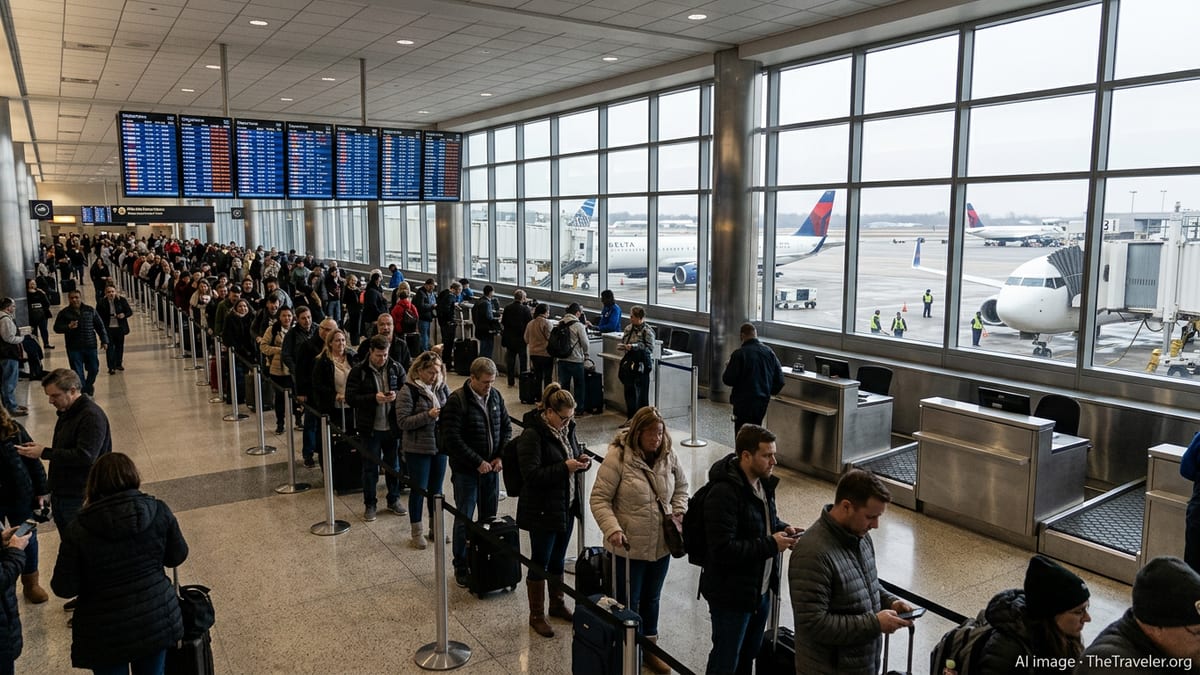
Two high-profile outages in September 2026
The latest pressure centers on National Air Traffic Services (NATS) chief executive Martin Rolfe following a major disruption on September 8, 2026, when a technical fault affected flight data processing and forced traffic restrictions that cascaded into large-scale cancellations and delays. Published coverage has put the total above 2,000 canceled flights in and out of the UK during the worst of the disruption, with knock-on effects lasting beyond the initial system issue.
NATS later published a preliminary report describing a software defect in a specific part of its flight data system and said the incident involved corrupted output after processing resumed, prompting controllers to rely on fallback procedures while maintaining safety. The company has said mitigation measures were put in place while a permanent fix is tested and deployed.
Less than two weeks later, a second technical issue triggered renewed disruption and sharpened criticism from carriers that argue the repeat incident undermines confidence in the organization’s ability to prevent recurrences, even if the immediate operational priority remains safety.
Which airline bosses are speaking out, and what they are arguing
The most vocal criticism has come from Ryanair, whose leadership has repeatedly attacked NATS management in the wake of operational failures. Reuters coverage from September 8 reported Ryanair said roughly 150,000 of its passengers were affected by delays of up to eight hours, alongside more than 200 cancellations, and called for Rolfe to resign.
Other airline executives have echoed the call. Published coverage has highlighted comments from Wizz Air UK’s managing director urging Rolfe to consider stepping aside, and easyJet has also publicly questioned the resilience of NATS systems after the repeat disruption, arguing that firm steps are needed to prevent further failures.
While the language and intensity vary by carrier, the common thread is a push for accountability at the top after a sequence of incidents that airlines say have become too frequent and too costly to treat as isolated mishaps.
The traveler impact: cancellations, reaccommodation, and compensation limits
For travelers, the immediate effect of air traffic control restrictions is often confusing: flights may be canceled preemptively to manage reduced capacity, while other aircraft face long ground delays and missed connections. The September disruptions hit at scale because ATC constraints ripple across airline networks, affecting aircraft rotations and crew legality well beyond the airports where the backlog first appears.
In the UK, passenger rights also become complicated during ATC-related disruptions. The UK Civil Aviation Authority issued guidance after the September 8 incident referencing the UK’s version of Regulation 261/2004, which generally preserves a passenger’s right to care and assistance such as rerouting or refunds, even when disruption is outside an airline’s control. However, cash compensation under the regulation may not apply when the cause is categorized as an extraordinary circumstance, a point that can leave travelers with significant disruption but limited eligibility for compensation beyond refunds, rerouting, meals, and accommodation where required.
That gap between traveler disruption and compensation liability is part of what has fueled airline frustration: carriers still shoulder substantial operational costs for hotels, handling, repositioning aircraft and crews, and customer service recovery, even if they are not always required to pay standardized compensation.
Governance and accountability: why resignation demands keep returning
NATS operates the UK’s en-route air traffic control system and is structured as a public-private partnership, with the UK government holding a major stake. That ownership model can heighten the political visibility of disruptions, because the system is national infrastructure with direct consequences for tourism, business travel, and airport operations.
Calls for leadership change have been amplified by the fact that NATS has faced scrutiny in prior years following earlier system problems, and the September 2026 failure revived debate over whether past recommendations and investments have delivered the promised resilience. In parliamentary proceedings following the September disruption, published remarks referenced prior inquiry recommendations and the expectation that corrective actions would reduce the risk of repeat events.
Airline leaders arguing for Rolfe’s resignation are effectively framing the issue as one of management performance rather than technical bad luck: even if a software defect is rare or difficult to predict, they contend that redundancy, testing, and operational resilience should prevent a single fault from triggering a nationwide capacity shock.
What NATS says happened, and what comes next
NATS’ preliminary findings on the September 8 incident attributed the disruption to a software issue in a specific part of the flight data system, traced to a small subsection of code. The organization has indicated that safety procedures drove the operational response, including restricting traffic while controllers worked with limited or degraded system support.
Separately, UK transport reporting has described government engagement with NATS leadership following the disruptions, including requests for a rapid accounting of what went wrong and what will change. For travelers and airlines, the key questions are practical: whether fixes will be independently validated, how quickly resilience upgrades can be implemented, and whether operational contingency plans will reduce the need for sweeping traffic restrictions if another fault occurs.
Until those answers are clearer, airline executives are likely to keep focusing on the same bottom line: repeated nationwide disruptions erode traveler confidence, impose sizable costs on carriers and airports, and risk turning technical incidents into recurring, high-profile breakdowns during busy travel periods.