


More news on this day
Philadelphia International Airport has resumed operations after a ground stop tied to a regional air-traffic communications failure, but travelers should expect delays to linger as airlines and controllers work through a backlog that built up across the Northeast.
Get the latest news straight to your inbox!
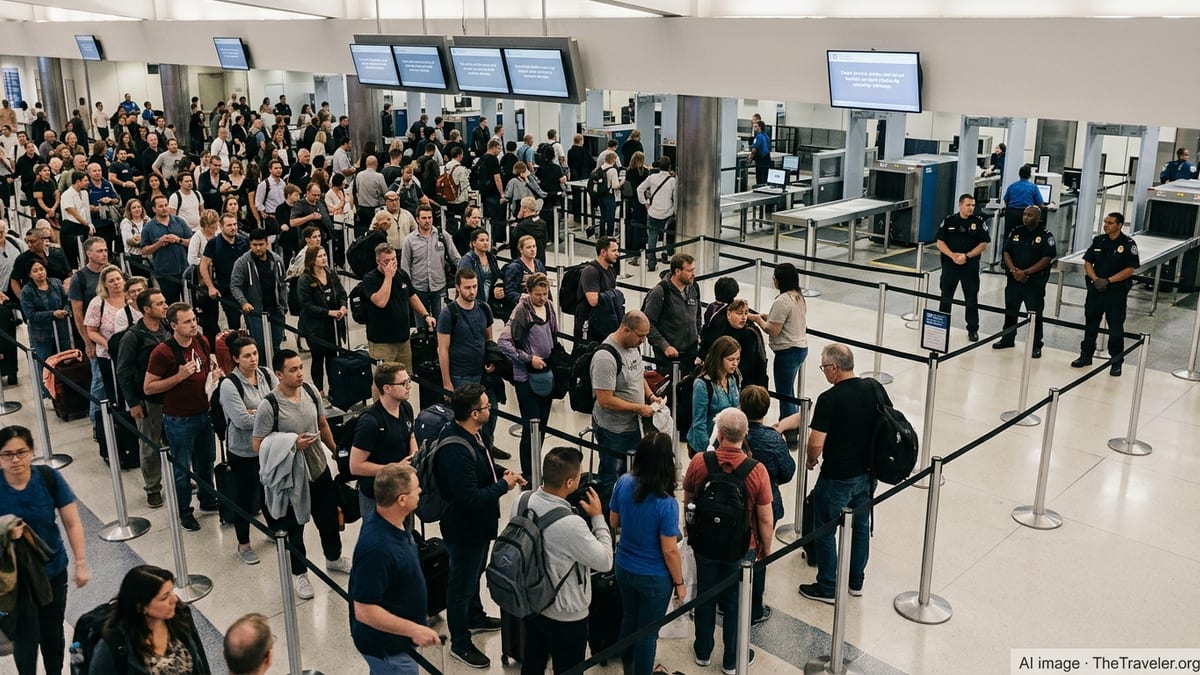
What happened, and why PHL briefly slowed to a crawl
Published coverage indicates the disruption began Monday, September 21, when communications problems at a key air-traffic facility in Philadelphia cascaded into ground stops and severe delays across multiple major Northeast airports. The issue involved damaged telecom connections used for radar and controller communications, affecting the flow of arrivals and departures into some of the nation’s busiest airspace.
By late Monday, repairs were reported as complete and flights began resuming at Philadelphia and other affected airports. Even with service restored, the air-travel system does not instantly return to normal because aircraft, crews, and gates are no longer in their planned positions, and many flights were already canceled outright.
Early Tuesday, September 22, the FAA’s public airport-status page for Philadelphia showed only minor operational impacts, listing general arrival and departure delays of 15 minutes or less and no destination-specific delays. That snapshot reflects overall airport conditions, not whether individual flights are still running behind schedule.
How long will delays last after a ground stop ends?
In most ground-stop scenarios, the sharpest delays follow a predictable pattern: arrivals restart first, then departures ramp up as gates open and crews rotate back into position. Even when the FAA shows short “general delays,” passengers can still see longer disruptions on specific routes because a single delayed incoming aircraft can push back an entire day’s schedule for that plane and crew.
For Philadelphia specifically, the best expectation for Tuesday is a gradual easing through the morning and early afternoon, with pockets of disruption persisting into the evening for flights that depend on aircraft and crews arriving from the most affected airports. If your flight is part of a multi-leg aircraft rotation through New York-area airports, the recovery can take longer.
Cancellations are often the main reason disruptions extend into the next day. Once an airline cancels a flight, the aircraft and crew that would have operated it may be reassigned, and rebooking can spill into later departures as airlines consolidate passengers onto fewer flights.
What travelers at PHL should watch today
Because airport-wide status can look normal even while particular flights run late, travelers should focus on flight-specific signals: a delayed inbound aircraft, a late crew, or a gate change that forces additional taxi or turnaround time. Airlines typically update app notifications and airport monitors more quickly than airport-wide delay summaries.
Tuesday’s biggest risk factor is network recovery across the Northeast, not conditions inside a single terminal. If aircraft are out of place, airlines may need to ferry planes, swap equipment, or make last-minute changes to keep key routes running. That can show up as aircraft substitutions, longer waits at the gate, or rebookings onto later departures.
Another factor is how quickly airlines can rebuild their schedules after a day with widespread disruptions. Even if PHL itself reports only minor delays, congestion at destination airports can still trigger hold times before departure, reroutes en route, or late-arriving aircraft returning to Philadelphia.
Steps to reduce disruption risk at Philadelphia International Airport
If you are flying out of Philadelphia today, plan around the possibility of rolling changes. Checking the inbound aircraft’s status can be especially helpful: if the plane operating your flight is late getting to PHL, your departure time is more likely to slip even if security lines and gates feel calm.
Rebooking strategies matter during recovery days. Nonstop flights tend to stabilize sooner than tight connections through the most congested hubs, and earlier departures often have more rebooking options if something goes wrong. If your itinerary includes a connection through a heavily impacted airport, proactively reviewing alternate routings before arriving at the airport can save time.
For travelers picking up arriving passengers at PHL, monitor arrival times closely and anticipate curbside congestion during uneven recovery periods. Even moderate arrival delays can create surges at baggage claim and ground transportation when multiple late flights land close together.
When to expect operations to look “fully normal” again
Based on the FAA’s early Tuesday status showing only minor delays at PHL, the airport appears to be in the recovery phase rather than ongoing ground-stoppage conditions. For many travelers, that means Tuesday should be workable, but not perfectly on schedule.
Systemwide normalization typically takes longer than the official end of a ground stop, especially after a high-volume day of disruptions. Travelers should be prepared for residual effects through at least today, with the longest impacts concentrated on routes tied to airports that experienced the most cancellations and prolonged pauses.
If your travel is flexible, the most reliable way to avoid the tail end of the disruption is to choose flights later in the week or to prioritize nonstops that rely less on tight aircraft rotations. If you must fly today, the best approach is to stay closely aligned with your airline’s real-time updates and be ready for schedule adjustments.