


I used to treat hop on, hop off sightseeing buses as the ultimate tourist trap. In cities like London or New York, I would roll my eyes at the open top double deckers crawling through traffic and promise myself I would never be on one. Then I landed in a new city with limited time, sore feet and information overload, bought a Big Bus ticket almost out of desperation, and discovered something I had not expected at all: when you pick the right city and use them strategically, Big Bus Tours can be one of the easiest, most efficient ways to get your bearings and still feel like you are really seeing the place.
Get the latest updates straight to your inbox!
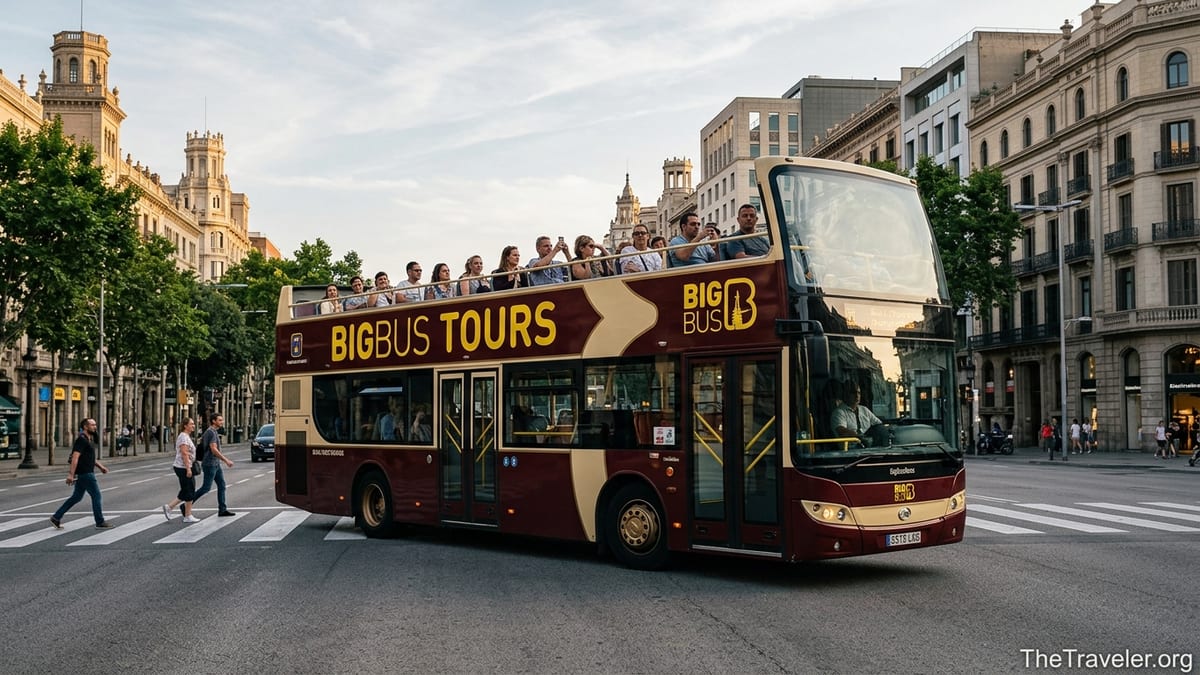
From Tourist Trap to Travel Tool
Big Bus Tours is one of the largest open top sightseeing bus companies in the world, operating hop on, hop off routes in cities from New York and San Francisco to London, Paris, Dubai and Sydney. In many destinations the maroon and gold buses have become part of the urban landscape, looping between major sights on fixed routes with audio commentary and the option to get on and off all day on a single ticket.
Like many independent travelers, I assumed these buses were purely for first timers who did not know how to use public transport. That perception shifted during a short work trip to New York, when I had one free afternoon to explore. Instead of juggling subway lines and Google Maps, I picked up a 24 hour Big Bus Classic ticket at a discount through a city sightseeing pass and climbed to the open top deck near Times Square. Two hours later, after cruising past the Empire State Building, Flatiron, SoHo and the Brooklyn Bridge, I realized I had gained a mental map of Manhattan that would have taken days to build on my own.
In another city, San Francisco, a Big Bus loop that crossed the Golden Gate Bridge gave me a completely different perspective on the bay than the street level trams and buses I had been using. The wind on the top deck, the sudden views back toward the skyline, even the cheesy but informative recorded commentary helped stitch the city’s neighborhoods together in a way that made the rest of my time there easier and more enjoyable.
Those experiences did not turn me into someone who uses hop on, hop off buses everywhere. What they did do is nudge Big Bus Tours out of my mental “never” category and into the set of tools I evaluate in each new city, alongside walking tours, metro passes and bike rentals.
How Big Bus Works in the Real World
Most Big Bus operations follow the same basic model. You choose a ticket length, usually 24, 48 or 72 hours. In New York, for example, the entry level Classic pass typically gives you one day of hop on, hop off access on the main uptown and downtown loops, while higher tier tickets can add extras such as a Statue of Liberty harbor cruise or a night tour by bus.
The buses run on fixed routes that connect major landmarks. In Las Vegas, Big Bus has more than a dozen stops along the Strip and downtown, from the Welcome to Fabulous Las Vegas sign to Fremont Street. In San Francisco a standard loop will cover Union Square, Fisherman’s Wharf, the Palace of Fine Arts, the Golden Gate Bridge viewpoint and the Haight or Golden Gate Park, depending on the season. Timetables usually promise a bus every 20 to 30 minutes during core daytime hours.
On board, you plug disposable earphones into a jack at your seat and select a language channel for recorded commentary, or in some cities you may get a live guide on certain departures. The narration tends to be light on deep history but strong on orientation and quick stories: which building you are looking at, where that side street leads, a reminder that the stop for the Louvre is coming up, the legend behind that statue on the roundabout.
Payment is increasingly cashless. You can buy Big Bus tickets through their website, through reseller platforms, in person at certain stops, or bundled with a multi attraction pass. Prices and inclusions change frequently, but as a ballpark, a standard one day Big Bus ticket in a major U.S. city often sits in the range of a few dozen dollars per adult, with discounts for children and for buying in advance. Families can save substantially by combining it with a city pass that includes museum entries or observation decks they plan to visit anyway.
When a Big Bus Tour Really Shines
Big Bus and similar hop on, hop off services work best in a specific set of circumstances. Time is a major factor. If you have only one full day in a spread out city like Los Angeles, where neighborhoods such as Hollywood, Santa Monica, Beverly Hills and Downtown are far apart, a continuous sightseeing loop may be the only realistic way to see the highlights without renting a car. In LA, Big Bus routes link the Walk of Fame with Rodeo Drive and the beach areas, turning an otherwise daunting transit puzzle into a single, if somewhat long, ride.
They are also helpful on your first full day in any large, visually dense city. In Paris, a Big Bus route that traces the Seine between the Eiffel Tower, the Louvre and Notre Dame allows you to sit back and build a sense of how the river bends, where the big boulevards actually are in relation to each other and how far apart the museums and monuments really feel. After a single loop, walking and metro rides suddenly become easier to plan because you have seen key junctions with your own eyes.
For some travelers, physical comfort and accessibility matter more than squeezing every cent out of a transit budget. In cities with steep hills or cobbled streets such as San Francisco or Lisbon, a top deck seat can be a relief for people with mobility issues, families with small children in strollers or anyone recovering from an injury. Instead of trying to navigate multiple tram lines or climb steep staircases between viewpoints, you have a guaranteed seat, shade in summer on the covered sections, and a predictable route.
Big Bus can also act as a low stress “arrival day” activity. After a red eye flight into London or Dubai, when your brain is foggy and you are tempted to nap the afternoon away, a slow moving circuit around the city gives you daylight exposure to help reset your body clock, some fresh air on the open top and enough light commentary to keep you awake without demanding much effort.
The Downsides You Need to Know About
There are genuine drawbacks. Price is at the top of the list. A full day on Big Bus will almost always be more expensive than using public transport and walking. For a solo traveler or couple, the cost might feel like a splurge; for a family of four, the total quickly climbs into the territory where you could instead pay for a private walking tour with a local guide or hire a taxi several times over.
Traffic is another. In cities with chronic congestion such as London or New York, the very streets that pass the most famous landmarks are often the most clogged. That means your Big Bus can spend long stretches crawling behind delivery vans and black cabs, especially at rush hour or during roadworks. While you are technically sightseeing the whole time, the ratio of movement to waiting will not suit everyone. During one London loop between Marble Arch and Tower Hill, my bus sat at a standstill near Trafalgar Square for nearly twenty minutes due to construction, a delay that would have been easy to bypass on the Underground.
Frequency can be a mixed bag in low season. Operators publish optimistic headways, but if tourism is quiet or the company has staffing shortages, you may find yourself waiting longer than the promised interval for a seat. In winter, when you are standing at an exposed stop in New York or Berlin, that extra ten or fifteen minutes can feel brutal. It also eats into the value of a 24 hour ticket, since you are using part of your paid time simply waiting.
Finally, it is worth acknowledging the psychological effect. Sitting on a double decker full of headphone wearing tourists can create a bubble that separates you from everyday city life. You are unlikely to overhear local gossip the way you might on a tram in Prague or share a spontaneous conversation with a commuter on a bus in Dublin. For some travelers, that separation is actually part of the appeal; for others, it is a reason to limit Big Bus usage to a single orientation loop before switching to more local modes.
How to Use Big Bus Without Wasting Money
The key to making Big Bus Tours worthwhile is to treat them as a structured tool, not a default mode of transport. First, be realistic about how many loops you will actually do. On my first New York Big Bus day, I had grand plans to ride both uptown and downtown routes in full, plus hop off at several museums. In practice, traffic and my own energy levels meant that I completed one full downtown circuit, got off in Lower Manhattan to wander on foot, then rode a partial uptown loop the next morning. A 24 hour ticket would have been sufficient; paying extra for a 48 hour pass would have added cost without benefit.
Second, plan your hops strategically. Instead of jumping off impulsively at every major landmark, pick two or three high priority stops that cluster sights together. In San Francisco, for example, you might hop off at Fisherman’s Wharf to visit Pier 39 and the sea lions, then reboard to cross the Golden Gate Bridge and hop off again at the viewpoint for photos and a short walk, and finally exit at Union Square for shopping and dinner. By limiting yourself to a few transfers, you reduce the risk of long waits between buses.
Third, pair your ticket with other passes only if you will genuinely use them. Many city passes sell the idea that combining Big Bus access with attractions like Top of the Rock in New York or the Eiffel Tower area in Paris offers unbeatable value. It can, but only if these are places you already planned to visit. If you are a museum heavy traveler who would rather spend half a day inside the Louvre or the Met than ticking off multiple viewpoints, stand alone Big Bus tickets may be a better fit.
Finally, pay attention to the weather and time of day. The top deck is the main reason to use Big Bus, but it can be brutally hot in Dubai in summer or icy cold and windy crossing the Golden Gate in winter. Late afternoon often strikes the best balance, with softer light for photography and slightly cooler temperatures. In some cities, such as Las Vegas, a dedicated evening Big Bus tour lets you see neon lights and fountains after dark while avoiding the fiercest daytime heat.
Best Cities to Consider a Big Bus Tour
Not all cities are created equal when it comes to hop on, hop off value. Big Bus shines where the main attractions are spread out, street layouts are confusing at first glance or public transport requires multiple line changes to link major sights. In the United States, New York, San Francisco and Las Vegas tend to deliver the most satisfying loops for first timers.
New York’s downtown and uptown routes pass headline landmarks such as Times Square, the Empire State Building, the Flatiron District, Chinatown, Little Italy, the Brooklyn Bridge approach, Central Park and Museum Mile. For someone arriving with only a basic understanding of Manhattan’s grid, rolling past these areas in a single continuous journey helps you see how SoHo slides into Greenwich Village, how close Wall Street is to the ferry terminals, and how the numbered avenues and streets actually feel at ground level.
San Francisco benefits from geography. Hills and water make straight line navigation deceptive. A Big Bus loop that winds from the waterfront up through Russian Hill, across to the Golden Gate Bridge and back via the Presidio and Civic Center lets you experience those gradients from a comfortable vantage point, then decide later which neighborhoods you want to tackle on foot. The moment the bus emerges on the bridge with the city skyline behind you is worth the ticket on its own for many visitors.
In Europe and the Middle East, Big Bus routes in cities like London, Paris and Dubai can be helpful for orientation, especially for travelers who feel intimidated by local transport systems. In London, one loop glides past Buckingham Palace, Westminster Abbey, Piccadilly Circus, the Tower of London and St Paul’s Cathedral, effectively connecting a greatest hits list of royal and historical landmarks. Dubai’s spread out waterfront, new development zones and air conditioned shopping malls make a hop on, hop off circuit appealing for travelers who do not want to negotiate long taxi rides between the old creek area, the Marina and Palm districts.
When You Should Skip It and Ride Like a Local
There are plenty of situations where Big Bus is simply not the best choice. Compact, walkable cities with excellent public transport are usually better experienced on foot and by local tram or metro. In places like Amsterdam, Vienna or Copenhagen, bikes and trams thread through historic cores in ways a double decker coach never could. The main canals, ring roads and pedestrian shopping streets are close enough together that a paper map or phone is sufficient orientation.
If you are spending several days in one city and enjoy slow travel, dedicated neighborhood walks and local buses often offer richer encounters. In New York, for instance, a single ride on the Staten Island Ferry, a walk across the Brooklyn Bridge and a spin on an ordinary crosstown bus will show you just as much life as any hop on, hop off commentary, at a fraction of the price. In London, an Oyster or contactless card on routes like the number 11 or 24 bus gives you much of the same scenery as a tourist loop, while surrounding you with commuters, school children and everyday city chatter.
You may also want to avoid Big Bus in very high season or on major event days. When a summer holiday weekend, a marathon or a royal ceremony clogs central streets, sightseeing buses can get stuck at bottlenecks for stretches that make even the most patient traveler restless. On those days, underground systems or even walking between two or three key neighborhoods often prove more efficient and less frustrating.
Finally, consider your travel personality. If you are the sort of person who likes to duck down side streets, linger in small cafés and change plans whenever a market stall catches your eye, the regimented loops of a hop on, hop off route may feel limiting. You can, of course, hop off and stay off, but if you only ride a small portion of a loop, the cost per mile of bus travel can quickly eclipse the value you get in return.
The Takeaway
Big Bus Tours is neither the lazy tourist crutch that some independent travelers dismiss, nor a magic key to every city. It is a tool, and like all travel tools, its usefulness depends on how and where you use it. In wide spread, visually dense cities where you have limited time and energy, a one day hop on, hop off ticket can provide a low stress overview, a working mental map and a handful of memorable views that make the rest of your trip smoother.
In places that are compact, easy to navigate or better explored at street level, you can skip the open top buses in favor of walking, trams and local buses without missing anything essential. The important step is to decide consciously rather than defaulting to either automatic avoidance or automatic purchase.
If you go in with clear expectations, pick your city carefully and treat the bus as an orientation tool rather than a door to door chauffeur, you may find yourself, as I did, surprised by how useful and genuinely enjoyable a Big Bus tour can be. For travelers who value a mix of efficiency, comfort and big picture context on day one, it deserves a spot on the shortlist.
FAQ
Q1. Are Big Bus Tours worth the price compared with public transport?
They can be, but only in certain situations. If you have very limited time, want an easy overview of a large city and plan to ride at least one full loop, the higher cost can make sense. If you are staying several days and are comfortable with local buses or metros, public transport will usually be cheaper and more flexible.
Q2. Which cities are best for trying a Big Bus Tour for the first time?
Cities where major sights are spread out and the street layout is confusing tend to work best. New York, San Francisco, Las Vegas, London, Paris and Dubai are all good candidates for a first experience because the routes link landmarks that are otherwise time consuming to connect in a single day.
Q3. How long should I allow for one full Big Bus loop?
Most main loops take between 90 minutes and three hours, depending on traffic and how many stops are on the route. In heavy congestion, especially in cities like London or New York, it can take longer, so avoid starting a loop right before you have timed tickets or dinner reservations.
Q4. Is it better to buy a 24, 48 or 72 hour Big Bus ticket?
For most travelers, a 24 hour ticket is enough, especially if you are using the bus mainly for an overview and a few strategic stops. Longer passes can be useful in very large cities if you know you will spread your sightseeing over several days, but many visitors find that one day on the bus and the rest on local transport strikes the right balance.
Q5. Can I use Big Bus as my main mode of transport in a city?
It is possible, but usually not ideal. Routes are designed for sightseeing rather than efficiency, so they may not pass through residential or less touristy neighborhoods you want to explore. Treat Big Bus as a supplement for orientation and iconic views, then switch to walking, metro or taxis for getting around day to day.
Q6. What is the best time of day to ride a Big Bus Tour?
Late morning and late afternoon often work best. You avoid the worst of rush hour, the light is softer for photos, and temperatures are usually more comfortable on the open top deck. In hot destinations, consider an evening tour instead of riding under the midday sun.
Q7. How crowded do Big Bus Tours get in peak season?
In busy months you can expect popular stops near major landmarks to have lines, and top deck seats to fill first. If riding in peak season, board at less congested stops when possible and start earlier in the day to improve your chances of getting a good seat without a long wait.
Q8. Are Big Bus Tours suitable for families with children?
Yes, they can work well for families, especially with children who tire easily. Kids often enjoy the novelty of the open top and the changing scenery, and parents appreciate having a fixed route and guaranteed seats. Just bring snacks, sun protection or warm layers depending on the weather.
Q9. How do Big Bus Tours handle bad weather?
Most buses have a partially covered top deck and a fully enclosed lower deck, so tours continue in rain or cold. That said, wind and rain can make the upper level uncomfortable, and visibility may be reduced. In destinations with unpredictable weather, check the forecast and build some flexibility into your plans.
Q10. Should I choose Big Bus over a guided walking tour?
They serve different purposes. A Big Bus Tour gives you a broad overview and easy transport between sights, while a walking tour usually offers deeper stories in a smaller area and more interaction with a local guide. If you have time and budget, doing a bus overview on day one and a focused walking tour later can be an excellent combination.