


Hop on hop off buses are one of the easiest ways to get your bearings in a new city, especially if you are short on time or visiting for the first time. Two brands dominate this style of sightseeing worldwide: Big Bus Tours and City Sightseeing. Both run open top double decker buses, both sell 1 or 2 day passes, and both promise an effortless overview of major landmarks. Yet when you look closely at routes, pricing, commentary and extras in cities from New York to Rome, important differences emerge that can make one a better fit for your trip than the other.
Get the latest updates straight to your inbox!
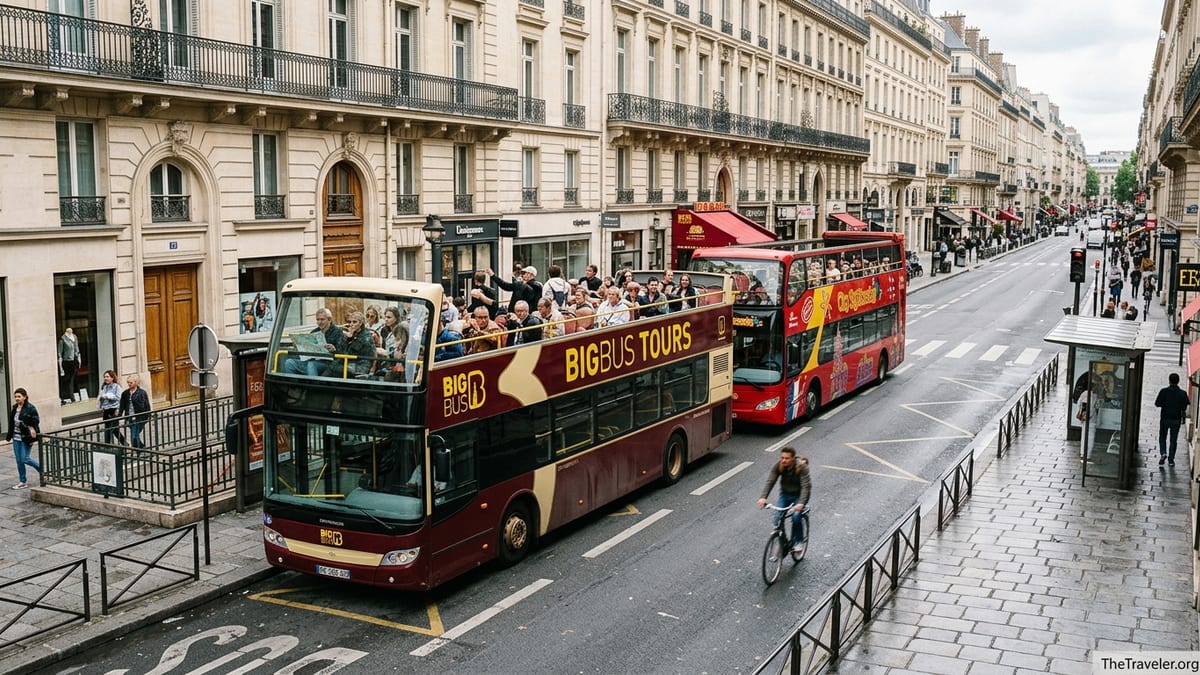
Big Bus Tours and City Sightseeing at a glance
Big Bus Tours grew out of London and now runs open top sightseeing buses in around 20 major destinations, with a strong footprint in the United States and the Middle East. You will find Big Bus in classic short break cities such as New York, Washington DC, Chicago, Las Vegas, San Francisco, Miami, Philadelphia and Los Angeles, but also in international hubs like Paris, Dubai, Abu Dhabi, Hong Kong and Singapore. In many of these places it is either the only global hop on hop off operator or the largest one on the road.
City Sightseeing is a franchised network rather than a single company. Local partners license the brand in more than 100 locations worldwide, from big hitters like Rome, Berlin, Amsterdam and Cape Town to smaller holiday destinations. In some cities they operate alongside Big Bus, while in others they are the only major red bus in town. Because of this franchised model, you can expect more variation in the experience between cities, but also more coverage in secondary or resort destinations where Big Bus is not present.
In practical terms, both brands sell time based passes that allow unlimited rides within 24, 48 or 72 hours, with recorded commentary in several languages and free city maps or app access. Both focus their routes on key landmarks rather than on being a substitute for local public transport. The real distinction lies in how polished the experience is from city to city, what extras are bundled into tickets, and how crowded or frequent the buses are at peak times.
It is also worth noting that local competitors often exist alongside these two global players. In Budapest, for example, visitors can choose between Big Bus branded services, City Sightseeing routes and independent operators offering similar circuits and bundled river cruises. In Berlin, head to central stops such as Alexanderplatz or Kurfürstendamm and you are likely to see both Big Bus and City Sightseeing buses boarding side by side, sometimes with only small differences in price but noticeable differences in bus age or commentary quality.
Routes, frequency and coverage in key cities
If you are deciding between Big Bus and City Sightseeing in a city where both operate, the shape of the route and how often buses come can matter more than the logo on the side. In New York, for instance, Big Bus focuses on two main loops uptown and downtown, giving first timers simple coverage of sights like Times Square, the Empire State Building, the 9/11 Memorial, Central Park and Museum Mile. Buses typically run every 15 to 20 minutes during the day on the core sections of the route, which makes it fairly easy to hop off at one museum and be confident you will not be stuck waiting too long at the stop.
In Rome, City Sightseeing and Big Bus follow broadly similar clockwise loops linking the Colosseum, Circus Maximus, Piazza Venezia, the Vatican and the main train station. Independent reviewers who have ridden both in the past year often highlight that City Sightseeing runs slightly more frequent buses on busy weekends, which can shave waiting times near the Vatican or at Termini station. On the other hand, Big Bus may have a slight edge in terms of clearer stop signage and the condition of some vehicles on the central sections of the route, which can be a relief on hot summer days when you do not want to spend long figuring out where to stand.
Berlin is another good case study because both brands overlap heavily. Typical one day visitor circuits include Brandenburg Gate, Checkpoint Charlie, the East Side Gallery and Museum Island. Updated comparisons of Berlin’s hop on hop off buses note that City Sightseeing’s route extends a little deeper into some residential neighborhoods and shopping areas, while Big Bus keeps its circuit slightly shorter but focuses more heavily on headline attractions. For a first visit of only one or two days, that more concentrated Big Bus route can feel efficient, while repeat visitors might prefer City Sightseeing’s slightly broader reach.
Coverage is also about operating hours. In cities like Singapore and Dubai, Big Bus tends to run slightly longer daytime hours, which allows you to use the bus from mid morning until early evening and catch sunset views from the top deck. In some European cities, City Sightseeing’s last loops can finish earlier outside peak summer, which matters if you plan to use the bus as transport back to your hotel after a late museum visit or dinner in the historic center.
Ticket types, prices and value for money
Both companies use tiered ticket types that can be confusing at first glance. Big Bus typically names its passes Classic, Premium and Deluxe, which roughly correspond to 24, 48 and 72 hours of access, sometimes with bundled extras such as river cruises, walking tours or night tours. In Chicago, for example, a standard 24 hour Big Bus adult ticket has recently started from a little under 50 US dollars when bought online in advance, with higher priced tiers adding an evening panoramic tour or extra day of validity. In Singapore, an essential one day Big Bus ticket commonly starts at around 60 US dollars for adults, with optional upgrades that add an amphibious DUCK tour on the bay.
City Sightseeing generally labels its tickets in plain language by validity period or by bundle, such as 24 hour bus, 48 hour bus plus boat, or three day all inclusive ticket. In Budapest, a basic City Sightseeing package that includes bus, river cruise and a walking tour can often be found in the low 40 US dollar range for one day, with multi day bundles priced proportionally higher. In Rome, third party resellers frequently advertise City Sightseeing’s 24 hour ticket as the lowest entry price among the big bus brands when booked online several weeks ahead.
Headline prices do not tell the full story. Value for money hinges on how you plan to use the bus. If you are simply looking for one lap around a city like Washington DC to get your bearings, then a cheaper basic City Sightseeing style ticket may suffice wherever available. But if you want to combine day and night touring or add a harbor cruise in cities like New York, San Francisco or Hong Kong, you may find that Big Bus bundles represent better overall value because the incremental cost of the extras is lower than booking everything separately.
Also pay attention to child pricing and family options, especially in North American cities where hop on hop off buses can be one of the biggest line items in a sightseeing budget. In Washington DC, for instance, historical pricing from local ticket partners shows that the gap between adult and child fares on Big Bus can be relatively small compared with standard public transit, which means families may need to do a careful cost comparison versus simply using the metro and supplementing with one guided tour of their most important attraction.
Onboard experience, commentary and comfort
Regardless of which brand you choose, the basic experience is similar: you climb to the open top deck to enjoy panoramic views, plug in headphones and listen to recorded commentary as you drive past key landmarks. The difference tends to be in how up to date and engaging that commentary is, how smooth the audio system works, and how well maintained the buses feel in real use.
Big Bus, as a centrally managed company, often provides a more standardized onboard product across its network. In cities like New York, Paris and Dubai, you can expect multi language recorded commentary with reasonably synchronized landmark callouts and the occasional bit of humor. Many vehicles offer both covered and fully open seating on the top deck, which helps in places with intense sun or frequent showers. Independent reviews of Big Bus in major US cities repeatedly mention that the buses feel modern, with strong air conditioning on the lower deck and decent cleanliness even on busy summer weekends.
City Sightseeing’s franchised nature means the onboard experience can range from excellent to only adequate depending on the local partner. In cities where tourism is highly competitive, such as Cape Town or Berlin, operators tend to invest in newer buses with clear sound systems, good wind screens on the top deck and lively commentary. In other destinations, passengers occasionally report intermittent audio, older buses or commentary tracks that feel dated. However, in many European capitals, City Sightseeing compensates with the option of live guides on selected departures in peak season, which some travelers prefer to canned audio.
Comfort also includes crowding and the ability to secure a good seat. In iconic locations such as Rome’s Colosseum stop or New York’s Times Square, both brands can see substantial queues in the late morning and mid afternoon. Big Bus sometimes gains an advantage because of slightly higher frequencies on core segments, which helps clear lines faster. City Sightseeing may run larger double deckers in some cities, which gives a better chance of snagging a front row top deck seat if you board early in the loop. Your best strategy with either brand is to start early in the day, ride the full loop once to get oriented, then plan your hop offs for the second lap.
Digital tools, maps and practical logistics
Both Big Bus and City Sightseeing encourage passengers to download their official apps, which show live or scheduled bus times, stop locations and sometimes walking directions to nearby attractions. Big Bus has put significant emphasis on a unified app across its network, so if you are using it in Philadelphia or Chicago you will recognize the same interface and map style you saw earlier in London or Dubai. In practice, this means you can often see anticipated bus arrival windows at your chosen stop, which is valuable if you are deciding whether to linger at a café or head straight to the curb.
City Sightseeing apps and digital tools are slightly more fragmented because of the franchise model. Some local operators have excellent, regularly updated apps that integrate audio commentary and route changes, while others still lean heavily on printed maps handed out on board. This is not necessarily a deal breaker, but it does mean you should check recent reviews in your specific city to see whether the app is accurate and whether any construction work or events have forced temporary route changes that affect stop locations.
At street level, signage tends to be marginally clearer for Big Bus in many North American cities, where branded stop poles or shelters show the company name and route color. City Sightseeing stops are usually marked with red branded boards on existing city bus poles, which can be a little harder to spot amid urban clutter. In European historic centers, both brands sometimes have to position their stops a short walk from the actual landmark due to traffic restrictions, so it is wise to study the map before assuming the bus will drop you right at the entrance to a cathedral or museum.
Tickets for both companies can be purchased online in advance, at hotel concierges or at street kiosks. Buying online at least a day ahead almost always secures the best price, particularly for City Sightseeing where local partners run frequent promotions in the shoulder seasons. Big Bus often offers free date change flexibility on standard tickets bought direct, which can be reassuring if your arrival flight is delayed or bad weather is forecast for your first day in town.
Flexibility, cancellations and who each brand suits best
Flexibility policies and cancellation options can be crucial if you are building a complex multi city itinerary. Big Bus terms typically allow for some level of date flexibility on standard tickets when purchased through their official channels, and in some cases they will consider refunds or rebooking if you cannot reach the city because of a documented transport cancellation such as a missed flight. Exact conditions and notice periods vary by destination, so you should always read the fine print for the specific city you plan to visit.
City Sightseeing’s policies are set largely by local operators and by whichever reseller you book through, so the rules can range from generous free cancellation up to 24 hours before your tour to stricter non refundable passes in peak summer on popular routes such as Rome. If you know your plans are fluid, booking directly with the local City Sightseeing operator or via a reseller that advertises flexible cancellation can be a smart move, even if the headline price is a few dollars higher than the least flexible option.
In terms of traveler profile, Big Bus often suits first time visitors to large, high traffic cities who want a predictable, standardized product. If you are in New York or Dubai for only one full day and want to guarantee a modern bus, familiar app and clear stop layout, Big Bus is frequently the safer bet. Families who value structured add ons such as bundled attraction tickets or evening tours may also find Big Bus packages easier to understand and compare.
City Sightseeing can be the stronger choice for budget conscious travelers, repeat visitors or those exploring smaller destinations where Big Bus does not operate. In a city like Budapest, a City Sightseeing ticket that combines bus, river cruise and a walking tour can provide a complete sightseeing program at a lower total cost than piecing those elements together independently. In places like Cape Town, City Sightseeing routes have evolved to connect an impressive list of headline attractions on a single ticket, which can save both time and money compared with booking separate shuttle services or rideshares.
The Takeaway
There is no single global winner between Big Bus Tours and City Sightseeing. Both brands deliver what most travelers want from a hop on hop off bus: an easy overview of the city, the freedom to get on and off near major sights, and a hassle free way to tick off key landmarks in limited time. The better choice in your case will depend less on the brand name and more on local details in the city you are visiting.
If you are heading to a major North American destination or to cities like Dubai, Singapore or Hong Kong, Big Bus tends to offer a slightly more polished and standardized product, with clear apps, modern vehicles and package tickets that combine day, night and cruise elements efficiently. For travelers who value predictability and do not mind paying a small premium for a smoother experience, Big Bus will often feel like the right call.
On the other hand, if you are traveling through Europe or South Africa, or visiting a destination where City Sightseeing has long been embedded, their routes can provide excellent coverage and competitive pricing, especially when bought in advance online. In cities where both Big Bus and City Sightseeing operate, take a few minutes to compare route maps, first and last bus times and recent user reviews rather than defaulting to the brand you recognize first.
Whichever company you choose, the keys to getting good value from a hop on hop off ticket are the same: start early in the day, ride one full loop without getting off to understand the city layout, then plan two or three focused stops where the bus genuinely saves you walking or public transport time. Think of the bus as a rolling orientation tour rather than as your only way of getting around, and it can be a memorable and efficient start to your exploration.
FAQ
Q1. Which is generally better for first time visitors, Big Bus or City Sightseeing? Big Bus usually suits first time visitors to large cities because the experience is more standardized, routes are straightforward and the app is consistent across destinations, while City Sightseeing can be more variable depending on the local operator.
Q2. Where is Big Bus usually the stronger choice? Big Bus is often the better pick in big North American cities such as New York, Washington DC, Chicago, San Francisco and Miami, and in hubs like Dubai and Singapore, where it operates modern fleets, clear routes and well integrated ticket bundles.
Q3. Where does City Sightseeing have the advantage? City Sightseeing tends to have the edge in parts of Europe and South Africa, and in smaller or resort destinations where Big Bus does not operate, offering broader coverage and often slightly lower entry level prices when booked in advance.
Q4. Is there a big difference in price between Big Bus and City Sightseeing? Base prices are broadly comparable, though City Sightseeing tickets are often a little cheaper for simple 24 hour access, while Big Bus can offer good value on higher tier passes that include extras like night tours or cruises.
Q5. Which company has better commentary and guides? Big Bus generally delivers more consistent recorded commentary quality worldwide, while City Sightseeing can offer excellent experiences in some cities and only average in others, though in a few destinations it balances this with live guides on selected departures.
Q6. How should families with children choose between the two? Families should compare not just adult prices but also child tickets and family bundles, look at how many included extras such as cruises or walking tours they will realistically use, and consider which routes stop closest to kid friendly attractions.
Q7. Are the hop on hop off buses accessible for travelers with limited mobility? Many Big Bus and City Sightseeing vehicles have at least one accessible entrance and reserved seating, but accessibility varies by city, so travelers with mobility needs should check specific route information and recent reviews before booking.
Q8. Can I rely on the bus as my only form of transport in a city? It is better to treat hop on hop off buses as a sightseeing tool rather than as your sole transport, supplementing them with walking, metro or taxis, especially early in the morning or late at night when buses run less frequently.
Q9. Is it worth paying extra for tickets that include night tours or cruises? Paying extra can be worthwhile in cities with dramatic skylines such as New York, Hong Kong or Dubai, where a bundled night tour or harbor cruise provides a very different perspective that would cost more if booked on its own.
Q10. How far in advance should I buy my hop on hop off ticket? Buying at least a day or two in advance usually secures the best online prices and sometimes flexible date options, but you generally do not need to book weeks ahead unless you are traveling at peak holiday times in very busy cities.