


For many first-time visitors, a city can feel overwhelming on arrival. Street names are unfamiliar, landmark distances are hard to judge, and public transport maps look like spaghetti diagrams. That is exactly why hop-on hop-off operators such as Big Bus Tours have become a default first-day choice in cities from London and New York to Paris and Singapore. They promise an easy overview, a ready-made sightseeing route, and a stress-free way to get oriented before diving deeper on foot or by metro.
Get the latest updates straight to your inbox!
A Ready-Made Orientation to a New City
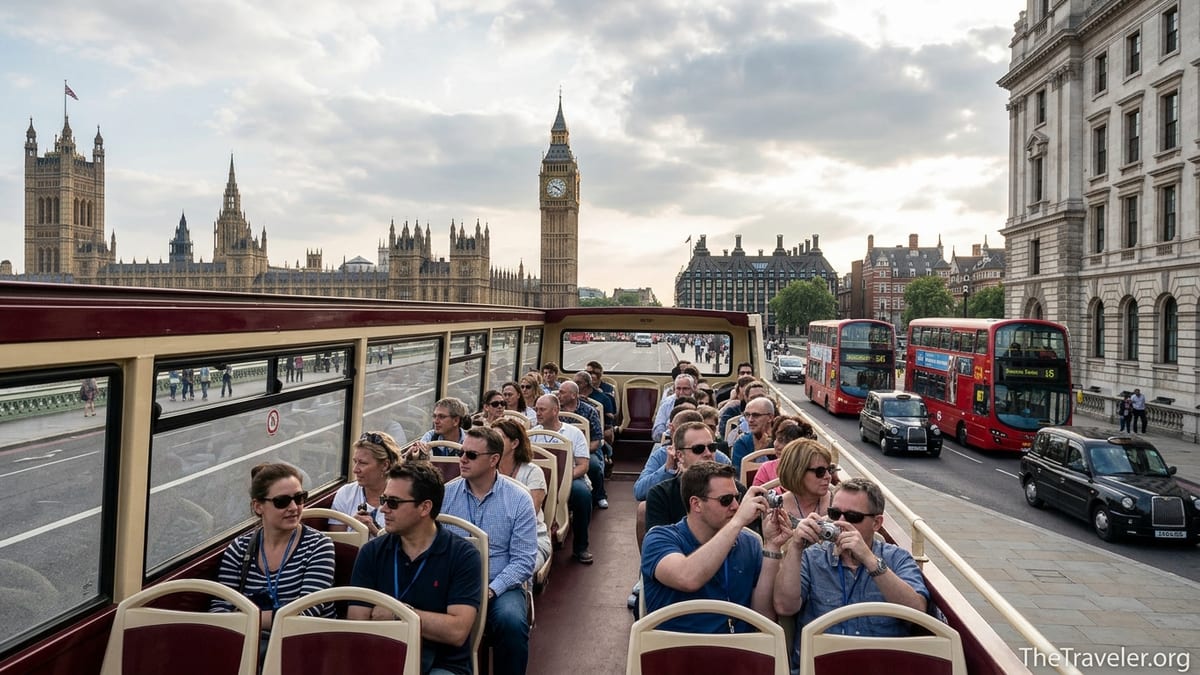
One of the main reasons first-time visitors gravitate toward Big Bus Tours is the promise of an instant overview. In a place like London, the company’s maroon and cream double-deckers loop past Buckingham Palace, the Houses of Parliament, the London Eye, the Tower of London and more than 40 stops on three color-coded routes, so guests can see most of the headline sights in a single day without planning a complicated itinerary.
Ticket descriptions for the London network emphasize this orientation benefit. The Essential Ticket, for example, typically offers 48 hours of hop-on hop-off bus access plus a Thames river cruise and several guided walking tours, giving first-timers a structured way to connect major neighborhoods such as Westminster, the City, and the West End without worrying about how they link together.
Travelers often use their first afternoon simply staying on the bus for a full loop to get their bearings. In New York, visitors might sit on the top deck as the route runs down Fifth Avenue, through Midtown, then along lower Manhattan toward the Battery, mentally bookmarking places like Times Square, the Flatiron Building and the Brooklyn Bridge for a later return. By the time they step off, they have a mental map that would take days to build via subway alone.
This big-picture overview matters even more after a long-haul flight. First-time travelers arriving from North America to Europe or Asia are frequently jet-lagged and not ready for complex navigation. Being able to sit back, listen to commentary and simply look around while the bus does the work is a major part of the appeal.
Convenience, Frequency and Low-Planning Sightseeing
Big Bus markets itself as a flexible hop-on hop-off operator, but for many first-timers the core attraction is how little planning is required. In London, ticketing sites highlight that buses run roughly every 10 to 20 minutes on main routes during daytime hours, which means travelers rarely need to check a timetable or worry about missing a departure. They can step off near Trafalgar Square, spend an hour in the National Gallery, and expect another bus to appear soon afterward.
Similar patterns apply in other flagship cities. In Paris, the official Big Bus network loops around central landmarks such as the Arc de Triomphe, the Louvre and Notre-Dame, with commentary in multiple languages provided by individual headsets. Visitors can buy a ticket on the spot near the Eiffel Tower or book ahead online, then simply follow clearly marked stops rather than working out which public bus or metro line gets them closest.
For many travelers, especially those on short stays, the alternative would be juggling different public transport tickets, smartphone apps and walking directions in an unfamiliar language. Big Bus tours absorb that complexity into a single product. A couple on a three-day trip to New York, for instance, might rely on the hop-on hop-off loop to connect the High Line, Soho, Chinatown and the 9/11 Memorial, then only experiment with the subway once they feel more confident.
The relative predictability of the schedule is also comforting to families. Parents with young children in San Francisco, where Big Bus also operates, often choose the service because it means they can avoid multiple transfers and steep hills on foot. They know that if the kids tire out at Fisherman’s Wharf or at a Golden Gate Bridge viewpoint, the next bus gives everyone a chance to rest without derailing the day.
Bundled Value: River Cruises, Walking Tours and Attractions
First-time visitors usually want to see a city’s big-ticket highlights and a hop-on hop-off pass can bundle many of those experiences together. In London, mid-range and premium Big Bus tickets typically include a one-way Thames river cruise between Westminster and the Tower of London, along with themed walking tours such as a royal route around Buckingham Palace or an evening Jack the Ripper walk in the East End. These extras are folded into a single price so first-timers do not have to price and book each component separately.
Current London pricing gives a sense of how this works in practice. A 48-hour Explore Ticket for Big Bus, as listed on several ticketing platforms in 2026, often sits in the region of 45 to 55 pounds for adults, including bus access, river cruise, three guided walking tours and sometimes an evening panoramic bus tour. Other operators such as Golden Tours or Tootbus may offer similar hop-on hop-off passes starting from around 20 to 30 pounds for a basic 24-hour option, but Big Bus leans on its added inclusions to appeal to first-timers who like the idea of a package.
Combination tickets strengthen that value argument. In London, some Big Bus bundles sold through attractions retailers include entry to the Tower of London and the London Eye alongside 48 hours of hop-on hop-off access. In practical terms, that means a visitor can ride the bus to the Tower in the morning, join the included river cruise back up the Thames, then later in the day use a timed ticket for the London Eye, all under one booking reference.
Other cities have similar arrangements. In New York, Big Bus has historically offered packages that pair a classic hop-on hop-off ticket with attractions such as the Empire State Building or a harbor cruise around the Statue of Liberty. In Dubai, customers can choose Big Bus passes that combine city sightseeing with desert experiences or entry to observation decks. For a first-time visitor facing a long list of must-see spots, a bundled ticket can feel like a simple, one-stop solution.
Multilingual Commentary and Storytelling
Information is another reason first-time visitors pick Big Bus Tours over navigating alone. Most routes today use headset-based audio commentary in multiple languages, so guests can plug in and choose English, Spanish, French, German, Mandarin or other options depending on the city. The commentary points out not only what buildings they are passing but also snippets of history, anecdotes and cultural context that might be missed on a regular city bus.
In London, for example, the narration typically explains the story of Big Ben, the ceremonial role of Buckingham Palace, and the history behind icons like St Paul’s Cathedral as the bus drives past. On a night tour, lights along the Thames, the London Eye and Tower Bridge are framed with commentary about how the city developed along the river. Many first-timers report that this running narrative helps them remember what they are seeing and gives structure to their mental map of the city.
Elsewhere, similar patterns hold. A traveler on a Big Bus route in Paris might hear about Baron Haussmann’s redesign of the boulevards or the artistic history of Montmartre, while someone on the Singapore loop is likely to get explanations of the colonial district, Marina Bay and the multicultural mix of Little India and Chinatown. For visitors whose first language is not English, the ability to hear this material in their own tongue can be a key deciding factor when choosing between operators.
Big Bus and comparable companies also increasingly supplement onboard audio with digital extras. Many tickets encourage riders to download an official app that shows real-time bus locations, outlines routes on a map, and sometimes includes self-guided walking tours. For first-time visitors who like to mix guided elements with independent exploration, this hybrid approach is attractive.
Comfort, Safety and Stress Reduction
Comfort and perceived safety play a significant role in the popularity of Big Bus tours with first-time visitors. The open-top decks on double-decker buses offer unobstructed views and a chance to take photographs without jostling for space at crowded street-level viewpoints. At the same time, travelers remain in a controlled environment, which feels less intimidating than pushing through busy subway platforms or crossing multi-lane boulevards.
In cities like New York, where first-time visitors may feel anxious about getting lost on the subway or taking the wrong local bus, a branded hop-on hop-off vehicle serves as a moving landmark. They know that as long as they stay near the route, another maroon Big Bus will appear and take them back toward Midtown or Times Square. This reassurance can be especially important for older travelers, solo tourists, or families with children.
Weather protection is another plus. Most modern Big Bus vehicles combine an open-top upper deck with some covered seating, so visitors can stay upstairs for sunshine and photo opportunities when the weather is good, then move downstairs if it starts to rain or gets too windy. In London and Paris, where weather shifts quickly, this flexibility matters in a way that walking tours cannot match.
The buses themselves often feel more approachable than public transport for those not used to large cities. Staff at main stops, such as near Trafalgar Square in London or around Times Square in New York, are on hand to answer questions, check tickets and provide basic advice about the route. For a first-time visitor who might be uncomfortable approaching a busy metro information booth, this one-to-one assistance can make a real difference.
Comparing Big Bus to Other Hop-On Hop-Off Options
Big Bus is one of several major hop-on hop-off brands operating globally, and first-timers often choose it because of scale and visibility. In London, comparison guides regularly mention Big Bus alongside competitors like Golden Tours and Tootbus. As of 2026, independent overviews note that Golden Tours and Tootbus sometimes offer slightly cheaper basic tickets, with starting prices around 20 to 25 pounds for 24 hours, while Big Bus leans into extensive routes, frequent departures and added extras such as multiple walking tours.
Ticket websites frequently describe Big Bus as the most widely recognized open-top network in London, with more than 40 stops across three main routes. That dense stop pattern means many first-time visitors see Big Bus vehicles passing by several times an hour, which reinforces the perception that this is the “safe” or default choice. For someone who has not researched the differences in detail, brand familiarity alone can tip the balance.
In other cities, comparable dynamics play out. In Paris, official city tourism resources and ticket sellers often list Big Bus alongside City Sightseeing and other operators, but Big Bus is usually prominent near high-traffic areas like the Eiffel Tower and the Louvre. In Hong Kong, other brands like Rickshaw Sightseeing Bus serve specific niches, yet Big Bus remains one of the easiest names for international travelers to recognize from previous trips.
Travel forums also shape perceptions. Discussions on platforms like Reddit show mixed opinions, with some travelers praising the ease and flexibility of Big Bus services and others suggesting that confident visitors might get better value using public transport. Importantly, even when regulars advise skipping hop-on hop-off tours, they often add that such buses can still make sense for a city’s first day, which is exactly when first-time visitors are most likely to use them.
Who Gets the Most From Big Bus Tours
Not every traveler needs a hop-on hop-off pass, and experienced city visitors may prefer to move directly to local buses, metros and walking routes. However, several groups tend to get particular value from Big Bus tours. First are short-stay travelers with tight schedules. A two-day visitor to London or New York simply does not have the time to experiment with different transport options; a Big Bus ticket allows them to cover marquee sights efficiently and with minimal stress.
Families with children often find Big Bus tours a useful compromise between adult sightseeing goals and kids’ attention spans. Instead of dragging children from museum to museum on foot, parents can let them enjoy the novelty of a double-decker ride and hop off at parks or interactive attractions along the way. In London, that might mean using the bus to connect the Science Museum, Hyde Park and the Tower of London without too many changes.
Older travelers and visitors with limited mobility also benefit. Climbing multiple flights of metro stairs or tackling steep hills can be challenging; boarding a bus at street level and riding between key points is far more manageable. In hilly cities like San Francisco, a Big Bus loop that crosses the Golden Gate Bridge and descends to areas such as Sausalito can give these travelers access to viewpoints that would otherwise require complex arrangements.
Finally, Big Bus tours appeal to cautious or solo travelers who place a premium on perceived safety and structure. For someone visiting a megacity like Dubai, Singapore or Hong Kong alone for the first time, having a clearly mapped route, fixed stops and an established operator reduces the sense of uncertainty. Once they have spent a day with the hop-on hop-off network, they are often more comfortable branching out on their own.
The Takeaway
Big Bus Tours and similar hop-on hop-off services have become a standard first-day ritual for many visitors because they solve several problems at once. They offer a ready-made orientation, a bundle of headline sights, and a simple way to move around without wrestling with unfamiliar transport systems. In cities from London and Paris to New York and San Francisco, first-time travelers can climb aboard, listen to multilingual commentary, and watch the city unfold in front of them from an open-top deck.
These tours are not always the cheapest way to get around, and savvy travelers staying longer or on tight budgets may prefer public buses or metros once they find their feet. Yet for plenty of first-timers, the combination of convenience, comfort, perceived safety and bundled extras makes Big Bus a logical starting point. Used thoughtfully, a hop-on hop-off pass can turn the bewilderment of arrival into a clear picture of how a city fits together and what is worth returning to later.
FAQ
Q1. Are Big Bus tours really worth it for first-time visitors?
For many first-timers, yes. They provide an easy overview, connect major sights without complex planning, and include commentary that helps you understand what you are seeing.
Q2. How much does a Big Bus ticket usually cost?
Prices vary by city and ticket type, but in 2026 a 24-hour basic ticket in places like London typically starts in the region of 25 to 35 pounds, with 48-hour and bundled options costing more.
Q3. Can I use Big Bus instead of public transport?
You can use it to cover most central tourist areas, but it does not replace local buses or metros entirely. Many visitors use Big Bus for orientation, then switch to public transport.
Q4. How often do the buses run?
Frequency depends on the route and season, but on major loops in popular cities buses often run roughly every 10 to 20 minutes during main daytime hours.
Q5. Is commentary available in my language?
Most Big Bus routes offer recorded audio commentary via headsets in several major languages such as English, Spanish, French, German and others, though exact options vary by city.
Q6. Do Big Bus tickets include attraction entry?
Some ticket types bundle extras like river cruises, walking tours or entry to attractions such as the London Eye or Tower of London, while basic tickets only cover the bus service.
Q7. Should I book Big Bus tickets in advance?
Booking ahead often secures better prices and avoids queuing at busy stops, especially in peak season, but in many cities you can also buy tickets on the day at main boarding points.
Q8. Is Big Bus suitable for families with children?
Yes. The open-top deck, frequent stops and relatively simple routes make it popular with families, and it reduces the need for multiple public transport transfers with young kids.
Q9. What are the downsides of using Big Bus tours?
Tickets can be more expensive than regular public transport, traffic can cause delays in busy cities, and routes focus mainly on tourist areas rather than local neighborhoods.
Q10. How can I get the most value from a Big Bus ticket?
Start early, ride a full loop first to get oriented, then plan where to hop off. Make use of any included extras such as river cruises, walking tours or evening panoramic routes.