


For travelers who love the ocean but dread shoulder‑to‑shoulder boardwalks, blasting speakers, and endless souvenir shops, Brigantine in southern New Jersey feels like a relief. This small barrier‑island city sits just over a single bridge from Atlantic City, yet its atmosphere is strikingly different: quieter streets, wide stretches of sand, and a pace that attracts people who come to actually relax at the shore. Here is why Brigantine consistently appeals to travelers who hate overcrowded beach towns, and how to experience its low‑key charm in a real‑world, practical way.
Get the latest updates straight to your inbox!
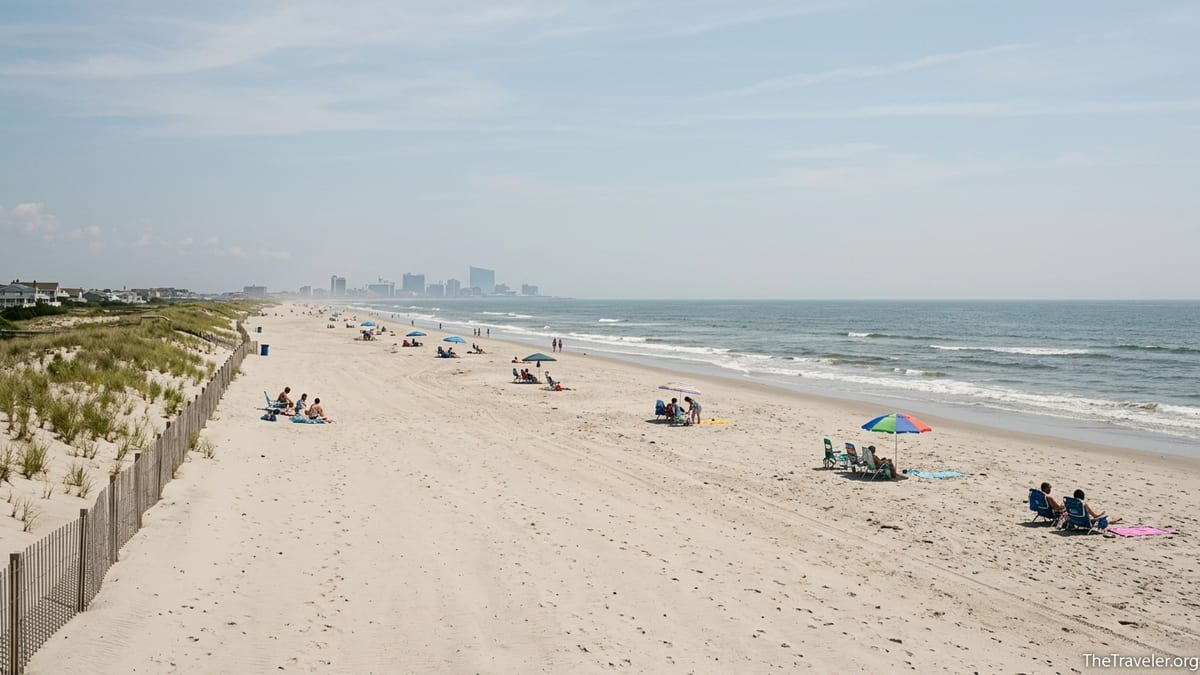
A True Island Escape Next Door to Atlantic City
Brigantine sits on its own barrier island just north of Atlantic City, connected to the mainland by the Brigantine Bridge and the Atlantic City–Brigantine Connector. That single access point shapes the entire feel of the place. There is no inland highway depositing day‑trippers onto multiple entrances along the shore. You either choose Brigantine or you do not come at all, which naturally limits drive‑through crowds and creates a more residential, local atmosphere.
Real estate agents and long‑time residents often describe Brigantine as a town designed to be a retreat from Atlantic City rather than an extension of it. Reviews from visitors echo the same impression: people routinely mention heading back to the “silent streets of Brigantine” after a night out in the casinos, or noting how the island feels “worlds away” despite being a short drive from the boardwalk. Travelers who find Atlantic City’s beach scene too busy or loud can base themselves in Brigantine instead, using it as a quiet “home base” with nightlife an easy ten‑ to fifteen‑minute drive away.
This geography has a concrete impact on crowd levels. Without a train station or major bus hub on the island, most beachgoers are either staying in Brigantine or have deliberately detoured from Atlantic City. Compared with larger resort towns like Wildwood, Seaside Heights, or Ocean City, where parking lots and boardwalks funnel in thousands of visitors, Brigantine’s single‑bridge setup helps keep numbers in check, especially on weekdays and during shoulder season.
For travelers, this means a more predictable, laid‑back experience. A family renting a small cottage a couple of blocks from the beach might drive over from Philadelphia or North Jersey, park the car in the driveway, and barely move it all week, walking to relatively quiet stretches of sand that never feel overrun even in mid‑summer.
Wide, Uncrowded Beaches Instead of Packed Boardwalk Strips
Brigantine’s main selling point for crowd‑averse travelers is the scale and spacing of its beaches. Locals like to say that “there is so much beach to go around,” and that is not an exaggeration. The town stretches along a long arc of Atlantic shoreline, with multiple guarded swimming beaches and large unguarded sections in between. On peak July weekends, families may sit with plenty of sand on either side of their blanket instead of feeling boxed in like they might in places such as Seaside Heights or parts of Cape May.
Official city information lists numerous guarded swimming zones in the summer season, from 2nd Street North and South through multiple cross streets on the south end. These stands are spread far apart enough that each section of beach feels like its own small neighborhood. Travelers report that even near the lifeguard stands, spacing remains generous, especially compared with the denser strips in Atlantic City directly in front of the casinos.
Trip‑planning reviews offer specific real‑world snapshots. Visitors staying in rental homes around mid‑island note walking two or three short blocks to a “never crowded” guarded beach where there is space for canopies, paddleball, and kids’ sandcastles without bumping into the next group. Another traveler mentioning a bayside rental described the ocean side just a couple of blocks away as “uncrowded with lifeguards” and praised the contrast with their busier Atlantic City hotel.
Because Brigantine has no large commercial boardwalk lined with arcades and nightlife, the sand is not a simple extension of a party zone. People come to sit, swim, read, fish, and stroll. You will see beach chairs, paperback novels, and coolers more often than huge Bluetooth speakers. For beach travelers who care less about attractions and more about the feel of the sand and the sound of the surf, this shift is significant.
Different Zones for Different Vibes, All Calmer Than Big Resorts
Another reason Brigantine appeals to travelers who dislike crowds is that the island’s various sections each develop their own character without any of them turning into a full‑scale party beach. The north end, south end, and central residential areas all offer different experiences that still share the same overall quiet tone.
The north end borders the North Brigantine Natural Area and forms one of the island’s most tranquil stretches. Travelers who rent near this area often remark on empty morning walks, long dune‑lined views, and mellow dog‑friendly sections. Because housing thins out near the protected land, the density of beachgoers drops as well. This makes it a particularly attractive option for couples or solo travelers who want to hear the waves and shorebirds more than human chatter.
Mid‑island sections tend to be where many seasonal rentals and year‑round homeowners mix. Here you will find guarded beaches popular with families, plus easy access to places like the Brigantine Beach Community Center, the small commercial corridor along Brigantine Avenue, and the city dock bay beach. Even at their busiest, these beaches resemble classic neighborhood hangouts rather than destination party spots.
The far south end, including the area known as the Cove, does bring more activity in the form of permitted 4x4 vehicles and boaters who anchor offshore to enjoy the inlet. On prime summer weekends, this zone can take on a tailgate atmosphere, with barbecues set up next to trucks on the sand. Yet even here, the scene is relatively contained and separated from the family‑oriented guarded beaches farther north. Travelers who want to avoid this livelier patch can simply choose a rental nearer the center or north of the island and never encounter it.
Low‑Key Local Life Instead of a Tourist Machine
One of the biggest frustrations in popular beach resorts is the feeling that every storefront is optimized to extract as much money as possible from short‑term visitors. Brigantine’s small, year‑round community gives the town a different tone. With a permanent population of under ten thousand residents, many businesses lean more toward serving locals than chasing transient crowds, which contributes to the relaxed vibe.
Instead of rows of nationally branded bars and chain restaurants, you will find independent breakfast spots, pizza places, ice cream stands, and family‑run seafood joints. Travelers might start their day at a long‑running local diner, grab a slice at a corner pizzeria for lunch, and end the evening with a casual fish dinner a few blocks from the beach without ever needing to navigate tourist‑trap pricing or long lines.
Nightlife in Brigantine is similarly understated. There are a few bars and taverns, often with outdoor seating and live music on summer weekends, but they mainly draw a neighborhood crowd. For visitors who actively dislike the casino and club scene, this is a huge plus: you can spend an evening enjoying a drink on a deck with a bay breeze and be back at your rental in minutes, not weaving through a throng of partygoers.
If you do want a “big night out,” Atlantic City is close enough that rideshare or a short drive over the bridge is realistic, but far enough that its noise does not spill back into the island. A common pattern for travelers is to plan one or two nights downtown for dining or shows, then retreat to Brigantine to wake up to quiet streets and the sound of gulls instead of slot machines.
Easy Practicalities: Parking, Access, and Costs
Compared with many Jersey Shore towns, Brigantine remains relatively straightforward to navigate and, for now, somewhat less punishing on the wallet. While summer parking regulations and beach‑tag requirements can change, travelers regularly point out that Brigantine’s on‑street parking, especially along residential blocks near the ocean, feels far less stressful than hunting for spots in places such as Asbury Park or Point Pleasant on a Saturday afternoon.
Recent regional beach round‑ups aimed at Philadelphia‑area travelers highlight Brigantine as a “quiet, uncrowded shoreline” with free or low‑cost parking on many residential streets within a short walk of the sand. In practice, this means that a family arriving early on a sunny July day often finds a legal street spot a block or two from a guarded beach, avoiding the steep private‑lot charges common in more commercialized towns.
Beach tags are generally required in season for anyone over a certain age, similar to other New Jersey towns. However, visitors report that full‑season badges and daily passes are priced comparably to or slightly below some of the more famous resort towns. For a week‑long stay, a family might budget for a mix of weekly badges and a few single‑day tags for visiting friends, totaling less than the combined parking and badge costs in popular boardwalk destinations where you pay both to park and to step on the sand.
Rental costs can be more approachable as well, particularly for groups. Travelers comparing options mention that a modest two‑bedroom cottage a couple of blocks from the beach can be competitive with, or less than, two hotel rooms in Atlantic City or a condo in Cape May during high season. For extended families and groups of friends who prefer to cook some meals at home and spend most of their time on the beach, Brigantine often delivers better value without sacrificing proximity to the ocean.
Nature, Wildlife, and Space to Breathe
For travelers who hate crowded beaches, it is often not just about the number of people but about the type of surroundings. Brigantine’s setting offers more than just a place to lay a towel. To the north and in the surrounding region, coastal wetlands, dunes, and wildlife refuges create a distinctly wild backdrop that you rarely find in heavily commercialized resorts.
The North Brigantine Natural Area preserves a swath of dunes, beach, and habitat at the island’s northern tip. While regulations there are aimed at protecting sensitive species and can be strict about access, the presence of such a large undeveloped zone creates a feeling of openness. The nearby Edwin B. Forsythe National Wildlife Refuge spreads across much of the coastal marshland north of Atlantic City, with bird‑rich wetlands and an eight‑mile wildlife drive just inland. Birdwatchers staying in Brigantine frequently combine relaxed beach days with early‑morning or sunset trips to the refuge, trading boardwalk noise for the calls of egrets and sandpipers.
On the bayside of Brigantine, low‑key recreation reinforces the unhurried feel. A small bay beach near the city dock offers calm water for kids and stand‑up paddleboarders. Public boat ramps, kayak launches, and marinas provide easy access to the back bays without the intense commercial charter scene you might see in bigger ports. Travelers can rent a pontoon boat for a half day, take a mellow cruise through the marshes, and be back in time for an uncrowded sunset walk on the ocean side.
Even simple daily rituals feel different in this environment. Many visitors describe ending the day sitting on a bayside bench or small boardwalk, watching the sun sink behind the Atlantic City skyline across the water. The juxtaposition is part of Brigantine’s charm: the neon glow is in sight, but the soundscape is gulls and lapping waves rather than traffic and casino music.
Who Brigantine Is Best For (and Who Might Not Love It)
Because it lacks a traditional boardwalk and large entertainment zones, Brigantine is not for everyone. Travelers who thrive on the nonstop energy of Wildwood’s amusement piers or point themselves straight toward Seaside Heights for the beach‑bar scene may find Brigantine too quiet, especially at night. College‑age groups looking specifically for a crowded, high‑energy beach may be better served by staying directly in Atlantic City or another resort town.
But for several types of travelers, Brigantine hits an ideal sweet spot. Families with young children often appreciate the calmer atmosphere and the ability to spread out on the sand without worrying about losing sight of kids in a dense crowd. Parents can push a stroller along residential sidewalks to the beach in the morning, come back for naps around midday, and return for an evening walk without navigating boardwalk traffic.
Couples and small groups seeking a relaxed, “live like a local” week at the shore often thrive here as well. They might rent bikes to explore the length of the island, pick up coffee at a neighborhood shop, and spend long stretches reading under an umbrella without feeling like they are missing out on must‑see attractions. When they do want more action, a quick trip across the bridge delivers casinos, concerts, and restaurants before they retreat again to Brigantine’s quieter streets.
Remote workers and longer‑stay visitors increasingly look to Brigantine for off‑season getaways. In spring and fall, the beaches are even emptier, many restaurants remain open with reduced hours, and rental prices drop. Someone bringing a laptop for the week might work mornings from a rental’s dining table, break for a midday beach walk where they pass only a handful of people, then head to Atlantic City one evening for a show before returning to their peaceful base.
The Takeaway
Brigantine’s appeal for travelers who hate overcrowded beach towns is not rooted in any single attraction but in a combination of geography, community character, and understated amenities. Its single‑bridge access limits casual inflows of visitors. Its long, wide beaches and dispersed guarded zones keep people spread out instead of stacked towel‑to‑towel. Its low‑key local businesses and absence of a flashy boardwalk prevent the town from feeling like a tourist machine.
In practical terms, this adds up to simple pleasures that are increasingly rare on the East Coast: finding street parking within a block or two of the sand, hearing waves more clearly than music, watching shorebirds over marshes a short drive from your rental, and walking home at night under quiet island skies even though a major casino city glows on the horizon.
For travelers who have grown tired of jammed beach bars, packed promenades, and the feeling of being one more body in a crowd, Brigantine offers an alternative: a place where the shore still feels spacious, the pace is genuinely laid‑back, and the beach itself remains the main event.
FAQ
Q1. Is Brigantine less crowded than nearby Atlantic City and other Jersey Shore towns?
Yes. While Brigantine does get busier in summer, its long beaches, lack of a major boardwalk, and single‑bridge access generally keep crowds lower than Atlantic City, Wildwood, or Seaside Heights, especially on weekdays and in shoulder seasons.
Q2. Does Brigantine have a boardwalk or amusement rides?
No. Brigantine does not have a traditional amusement‑style boardwalk with rides and arcades. There are small bayside walkways and beach access paths, but the town’s character is more residential and low‑key, which is part of why it stays quieter.
Q3. Are the beaches in Brigantine family‑friendly?
Yes. Brigantine’s guarded swimming beaches attract many families, and the atmosphere tends to be relaxed and low‑key. The absence of large beach bars and carnival rides means kids can play in a calmer environment, and parents often appreciate the ability to spread out on the sand.
Q4. How hard is it to find parking near the beach in Brigantine?
In peak summer you should still arrive earlier in the day, but many visitors report finding legal street parking within a short walk of the beach, especially along residential blocks. This is often easier and less expensive than in heavily commercialized boardwalk towns where large paid lots fill quickly.
Q5. Do I need beach badges in Brigantine?
Yes, Brigantine generally requires beach tags in season for people above a certain age, similar to other New Jersey towns. Prices for daily, weekly, or seasonal tags are typically posted by the city each year and are comparable to many other Shore communities.
Q6. Is Brigantine a good place for nightlife?
Brigantine itself has a small number of bars and restaurants with a neighborhood feel, but it is not a major nightlife destination. Travelers looking for casinos, clubs, and large concert venues usually head across the bridge to Atlantic City for the evening and then return to Brigantine’s quieter streets to sleep.
Q7. What kind of accommodations are available in Brigantine?
Most visitors stay in vacation rentals ranging from small condos to larger single‑family homes, many within a few blocks of the beach. There are also a handful of motels and small inns. Rentals are especially popular with families and groups who appreciate extra space, kitchens, and the residential setting.
Q8. Is Brigantine a good destination outside of peak summer?
Yes. Spring and fall can be excellent times to visit if you value quiet. The beaches are even less crowded, many local businesses remain open with slightly shorter hours, and rental prices are often lower. Cooler water temperatures are the main trade‑off.
Q9. What can nature lovers do in and around Brigantine?
Nature‑oriented travelers can enjoy long walks on the beach, explore the North Brigantine Natural Area under posted rules, and visit nearby spots such as the Edwin B. Forsythe National Wildlife Refuge for birdwatching and scenic drives through coastal wetlands.
Q10. Who is Brigantine best suited for?
Brigantine is ideal for travelers who prioritize space, calm, and a local feel over entertainment and nightlife: families with young kids, couples seeking a low‑key getaway, remote workers on extended stays, and anyone who loves the ocean but dislikes crowded, high‑intensity beach scenes.