


I checked into a Holiday Inn recently expecting a purely functional, forgettable mid-range hotel. I had a late flight, a work meeting in the morning and a budget that made luxury brands unrealistic. I wanted a clean bed, a decent shower and not much else. What I found instead was a property that had quietly modernized: a lobby that felt more like a co-working lounge than a bus-stop motel, a room layout that clearly reflected how people actually travel now, and family-friendly perks that can make a real difference in trip budgets. Holiday Inn still sits firmly in the midscale category, but if you have not stayed in one for a few years, it may be better than you think.
Get the latest updates straight to your inbox!
Holiday Inn’s Reputation vs the Reality on the Ground
Holiday Inn has long been shorthand for “basic but fine” in the United States: an interstate exit hotel where the carpet remembers the 1990s and you stay because it is there, not because you particularly want to. That image lingers from an era when many properties were dated, with boxy lobbies, heavy drapes and business centers that felt like afterthoughts. Travelers who remember that version of the brand frequently assume every Holiday Inn still looks and feels the same.
In practice, the brand has shifted. Holiday Inn is positioned by IHG Hotels & Resorts as an upper midscale option aimed at mainstream business and leisure guests who prioritize value and reliability over luxury. Recent marketing and development materials emphasize “joy of travel for all,” modern design and a more social, flexible lobby experience, rather than just a place to sleep on a road trip. Across more than 1,200 open hotels worldwide, that translates into a wide range of properties, from airport hotels in Orlando to city-center locations in Europe, that share a consistent baseline of comfort and amenities, even if the exact decor varies.
For many guests, the surprise comes when that baseline turns out to be better than expected. You still will not find marble-clad bathrooms or butler service, but at a renovated Holiday Inn the combination of updated rooms, usable public space and practical extras like on-site laundry and a small fitness room often beats what you get at similarly priced independents or older motels that rely on nostalgia and location alone.
Of course, Holiday Inn is a franchise system, so not every individual hotel will feel identical. Some properties are fully updated to the latest design; others are still catching up. That inconsistency is one reason the “basic” reputation persists. Yet when you land in one of the newer or thoroughly renovated hotels, there is a noticeable difference between the stereotype and the reality in front of you.
The Open Lobby Concept: More Than a Place to Pass Through
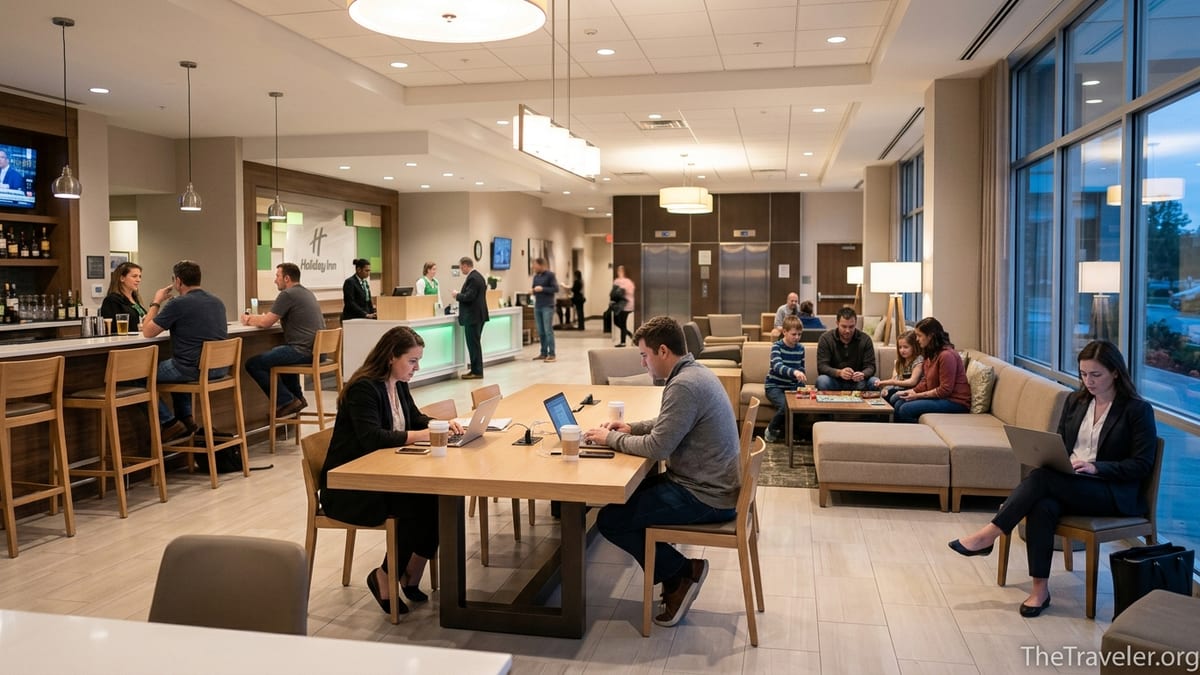
One of the most striking changes at updated Holiday Inn properties is the shift from traditional lobbies to what the brand calls the Open Lobby concept. Instead of a carpeted entrance with a check-in desk on one side and a mostly empty sitting area on the other, the newer design merges reception, bar, lounge seating, casual dining and sometimes even a games corner into one flexible space. I first noticed this at a suburban U.S. Holiday Inn where the front desk flowed into a bar with high-top tables, and clusters of sofas with power outlets replaced the old business center computer against a wall.
IHG’s development material describes the Open Lobby as a way to create a “flexible, modern space to work, eat, drink, relax and socialise,” something that fits how people actually use hotels today. You see this manifested as long communal tables where you can plug in a laptop, semi-private booths ideal for a quick Zoom call and a bar that doubles as a coffee counter in the morning. In properties that have embraced this layout, the lobby starts to feel more like a casual co-working cafe than a transitory zone between your Uber and the elevator.
From a traveler’s perspective, this matters. On a recent work trip, I arrived early afternoon and needed to tweak a presentation before a client dinner. Instead of sequestering myself at the desk in my room, I found a corner of the Open Lobby at a Holiday Inn near an East Coast airport, ordered a sandwich and a coffee from the bar and worked comfortably for a couple of hours with access to power and decent Wi-Fi. Around me, a family played a board game at a low table, a flight crew chatted over snacks and a couple of solo travelers quietly answered emails. It felt sociable yet relaxed, not like camping at a table in a crowded fast-food restaurant.
Design details help as well. Newer Open Lobby spaces often use lighter woods, better lighting and sound-absorbing finishes, which keep conversations from echoing. Some properties incorporate local photographs or subtle regional decor touches so the space feels less generic. While it is still clearly a chain hotel, the experience of sitting in that lobby for two hours is a step up from the utilitarian image many people still associate with Holiday Inn.
Rooms That Reflect How People Actually Travel Now
Holiday Inn’s updated room designs, sometimes referred to as the H4 concept in brand materials, are another area where expectations often lag behind reality. Instead of the old set-up of two beds, a chunky armoire and a small desk shoved in the corner, many renovated rooms now feature cleaner lines, hard-surface flooring or low-pile carpets, wall-mounted TVs and more thoughtful storage. The goal, as described in development brochures, is to support both short stays and longer visits by making the space flexible and clutter-free.
In practice, that can mean a combination of a dedicated work desk and a moveable table you can reposition near the sofa or bed, multiple charging points by the bed and at the desk, and lighting that can be adjusted for reading, working or winding down. On a recent stay at a Holiday Inn in the Midwest priced around 150 to 180 dollars per night before taxes, the room included a decent-sized fridge, a Keurig-style coffee machine, blackout shades and a bathroom with a modern walk-in shower rather than a tired shower-tub combo. None of it was luxurious, but everything worked and felt cleaner and more contemporary than the “basic” label suggests.
Business travelers in particular benefit from these changes. Reliable Wi-Fi, a comfortable desk chair and enough outlets to charge a laptop, phone, tablet and perhaps a camera all at once are baseline requirements now, not nice-to-haves. At updated Holiday Inn properties, those essentials generally come standard. For leisure guests, details like luggage benches that actually fit modern suitcases and open shelving rather than deep, dark closets make it easier to live out of a bag for a couple of days without your belongings exploding across the floor.
Bathroom updates also stand out. While fixtures and finishes vary, more recent renovations favor practical walk-in showers with glass partitions, wall-mounted amenities and brighter, more flattering lighting. Travelers used to dim, yellow-tinged bathrooms at highway motels often notice the difference immediately. The effect is not luxury spa, but it is solid, functional design that makes morning routines smoother, whether you are heading to a conference or loading the car for a long drive.
Family Perks That Can Meaningfully Cut Trip Costs
If you are traveling with children, one of Holiday Inn’s most underrated strengths is its longstanding Kids Stay and Eat Free program. In participating hotels across the Americas and many other regions, up to two children under 18 can stay free in the same room as their parents, and children under 12 can eat free from the kids’ menu in the on-site restaurant when accompanied by a paying adult, subject to specific terms. The brand promotes this heavily, and it is a real advantage for families trying to stretch a budget over several days.
On a typical U.S. road trip, a family of four might face breakfast costs of 40 to 60 dollars per day at a mid-priced diner if everyone orders a meal and drinks. Staying at a Holiday Inn where two kids can eat from a dedicated children’s menu at no additional charge when parents order their own breakfast can reduce that daily food bill substantially. Multiply this over a week-long vacation and you are looking at savings that could cover fuel or tickets for an attraction. In resort locations such as beach destinations or theme park gateways, this benefit becomes even more valuable when on-site restaurant prices are higher than what you would find off-property.
The kids-stay-free aspect also matters when considering room rates in high-demand cities. Booking one room with two queen beds at a city-center Holiday Inn for 220 dollars per night including taxes, instead of two adjoining rooms or a suite elsewhere, can keep costs manageable. As long as parents are comfortable sharing the space, having older teens stay without an extra room charge makes urban trips more accessible. Just be sure to check the specific hotel’s policy and maximum room occupancy when booking, since fire codes and local regulations vary.
Of course, there are nuances. Vacation club or timeshare-style properties associated with the Holiday Inn name may not participate in the same kids-eat-free program, and some franchised hotels interpret the guidelines strictly, limiting free meals to items on an official children’s menu. It is wise to confirm details with the individual hotel before you rely on these benefits for your budget. Still, as a general rule, families that make use of the kids stay and eat free structure often come away pleasantly surprised at how far their money goes.
Food, Drinks and the Question of Breakfast
One area where expectations can diverge is breakfast. Many travelers assume all midscale chains work like Holiday Inn Express, where a self-serve breakfast buffet is usually included in the rate. Standard Holiday Inn hotels are different: breakfast is often available but not automatically free for every guest. Depending on the property, you may encounter an a la carte restaurant, a breakfast buffet charged per person, or a package rate that includes breakfast for one or more adults, sometimes paired with kids-eat-free benefits.
This can catch travelers off guard, especially those whose employers reimburse only when breakfast is included. Online discussions among IHG One Rewards members sometimes highlight frustration when elite travelers expect complimentary breakfast at every Holiday Inn but find that benefits vary by hotel. To avoid surprise charges, it is worth checking your rate description carefully during booking; if breakfast is included, it will usually be clearly noted in the room package name or description rather than assumed.
The upside is that when breakfast is offered, it is often more substantial than the basic continental spreads at some budget hotels. You are likely to find hot items like eggs, breakfast meats, potatoes, and a waffle or pancake station alongside fruit, yogurt, pastries and cereals. In some international locations, breakfast buffets fold in local dishes, such as rice porridge and noodle soups in parts of Asia or cold cuts and cheeses in European city hotels. In cities where Holiday Inn competes head-to-head with full-service brands, the breakfast experience sometimes feels closer to an upscale buffet than to the “free muffin and coffee” of lower-tier properties.
Beyond breakfast, the on-site bars and restaurants at newer Holiday Inns aim for casual but modern menus: burgers, salads, grain bowls, flatbreads and regional comfort dishes, priced roughly in line with midrange chain restaurants nearby. In some hotels, the bar becomes a social hub in the evening, especially near airports where flight crews and business travelers unwind over a drink. For guests who prefer simplicity, room service or order-at-the-bar options make it easy to grab a meal without hunting for a restaurant in an unfamiliar neighborhood after a long day.
Location, Price and When Holiday Inn Is a Smart Choice
What ultimately shapes a Holiday Inn stay is the balance between location, price and the specific property’s age or renovation status. In the United States, nightly rates for standard Holiday Inn hotels commonly fall somewhere between budget motels and upscale full-service brands, though prices can climb in high-demand markets. Around a major U.S. airport, you might see standard rooms starting between 140 and 220 dollars per night, depending on season and local events. In smaller cities or along interstate corridors, that range could drop closer to 110 to 160 dollars, especially on weekends.
At those price points, the brand makes the most sense when you value on-site amenities and a dependable experience. An airport Holiday Inn, for example, may offer a free shuttle, a restaurant open late, meeting rooms and a fitness center, all under one roof. Compare that with a cheaper roadside motel that has no shuttle, very limited food options and dated rooms, and the slightly higher rate begins to feel justified, particularly if you are traveling with children or carrying work equipment that you want to keep secure.
In city centers, the calculus is similar. A Holiday Inn in a central business district might not be the cheapest option, but it may offer a better balance of comfort, reliability and brand standards than older independents with no loyalty program tie-ins. When you factor in IHG One Rewards points earnings and potential elite benefits such as late checkout or room upgrades, frequent travelers can sometimes squeeze extra value from repeated stays at the same brand. The predictability becomes part of the appeal: you more or less know what kind of bed, Wi-Fi and workspace you will have, which reduces stress on multi-city trips.
Where Holiday Inn may feel less compelling is at the high end of its price spectrum, when rates approach those of upscale brands that offer more distinctive design or amenities like executive lounges. In those situations, it is worth comparing not just price but what you actually need from the stay. If your priority is a memorable rooftop bar or boutique design, another brand might win. If your priority is two comfortable beds, a lobby where your kids can hang out with a board game and a restaurant downstairs that stays open after 9 p.m., a well-run Holiday Inn can be the more practical and surprisingly satisfying choice.
The Takeaway
Holiday Inn is not trying to be a luxury brand, and it still carries plenty of legacy properties that feel dated. Yet the brand’s evolution, particularly through its Open Lobby concept, refreshed guest rooms and family-focused perks, has quietly pushed many of its hotels beyond the “basic” label. The experience at a renovated Holiday Inn today can be a comfortable, efficient and sometimes pleasantly social base for business trips, road journeys and family getaways.
If your last Holiday Inn stay was many years ago, it is worth resetting your expectations. Look for recently renovated or newly opened properties, read a handful of recent guest reviews and pay attention to whether breakfast and kids’ benefits are included in your rate. At the right property and price, Holiday Inn delivers more than just a bed by the highway. It offers a reliable, well-thought-out place to work, relax and connect, with enough modern touches that you may find yourself, as I did, quietly impressed that it was better than you thought.
FAQ
Q1. Is Holiday Inn the same as Holiday Inn Express?
Holiday Inn and Holiday Inn Express are sister brands under IHG, but they are different. Holiday Inn is usually full-service with a restaurant and bar, while Holiday Inn Express is more limited-service and typically includes a free breakfast buffet.
Q2. Do all Holiday Inn hotels offer free breakfast?
No. Many Holiday Inn hotels offer breakfast, but it is not always free for every guest. Some rates include breakfast, others charge separately, and details vary by property, so it is important to check your booking conditions.
Q3. How does the Kids Stay and Eat Free program work at Holiday Inn?
At participating Holiday Inn hotels, up to two children under a specified age can stay free in their parents’ room, and younger children can eat free from the kids’ menu when accompanied by a paying adult, subject to each hotel’s terms and conditions.
Q4. Are Holiday Inn hotels good for business travelers?
Yes. Updated Holiday Inn properties usually offer reliable Wi-Fi, in-room workspaces, meeting rooms and an Open Lobby area that functions as a casual work and networking space, which suits many business travelers.
Q5. What kind of amenities can I typically expect at a Holiday Inn?
Typical amenities include a restaurant and bar, fitness room, flexible lobby seating with power outlets, meeting space, in-room coffee and tea, a television, a work desk and, in many hotels, a small fridge.
Q6. How can I tell if a Holiday Inn has been recently renovated?
Clues include recent photos on the hotel’s booking page, mentions of renovation in recent guest reviews and references to features like the Open Lobby concept or updated room design in the description.
Q7. Are Holiday Inn hotels suitable for long stays?
While they are designed primarily for short and medium-length stays, many Holiday Inn hotels work fine for longer visits, especially if your room includes a fridge, good storage and access to on-site laundry and a restaurant.
Q8. How do Holiday Inn prices compare to other midscale hotels?
Holiday Inn prices generally sit in the mid-range, often slightly higher than basic motels and some budget chains but below upscale brands. Exact rates depend on location, season and local demand.
Q9. Can I earn loyalty points when staying at Holiday Inn?
Yes. Holiday Inn is part of IHG One Rewards, so eligible stays earn points that you can later redeem for free nights or other rewards across the IHG portfolio, subject to program terms.
Q10. Is Holiday Inn a good option for families on a road trip?
Often yes. The combination of family-friendly room layouts, on-site dining, pools or small fitness rooms in many locations and the Kids Stay and Eat Free structure can make Holiday Inn a practical and budget-conscious choice for road trips.