


Long treated as Manhattan’s unassuming neighbor across the Hudson River, Jersey City has emerged as one of the smartest bases for travelers who want New York City at their doorstep without paying New York City prices. A wave of waterfront development, fast transit links, competitive hotel rates and a flourishing dining and cultural scene have turned this onetime industrial port into a polished, practical home base for both short breaks and longer stays.
Get the latest updates straight to your inbox!
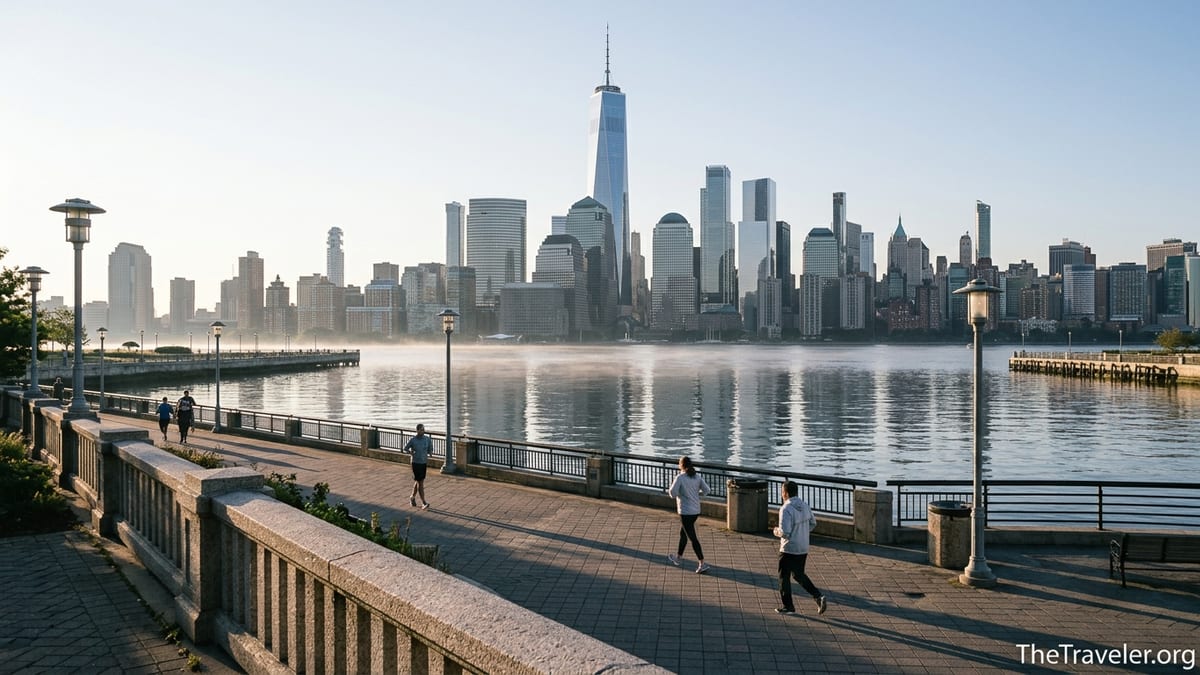
Closer to Manhattan Than Much of New York City Itself
One of Jersey City’s biggest surprises is just how close it is to the parts of Manhattan most visitors want to see. Exchange Place station sits directly across the Hudson from the World Trade Center, and PATH trains cover that hop in only a few minutes once you are on board. Many locals report door-to-door commutes from waterfront apartment towers in Paulus Hook or Newport to offices in Lower Manhattan that are faster than coming in from uptown New York neighborhoods.
The same applies for Midtown. From Newport or Grove Street, PATH trains roll into 33rd Street near Herald Square, connecting travelers to the Theater District, Macy’s, and Penn Station without the need to switch to the subway. In typical conditions, travelers can be on a train platform in Jersey City, ride under the river and walk up to street level at 33rd Street in well under half an hour, a timeframe that compares favorably to trips from outer-borough neighborhoods that technically share New York City’s mailing address.
This proximity changes how you can plan your days. Staying in a Newport hotel, for example, you can have breakfast with sweeping skyline views, ride the PATH to Lower Manhattan for a 9 a.m. museum opening at the 9/11 Memorial Museum, then be back in Jersey City for a waterfront dinner at a place like Lokal Eatery & Bar or Blue Anchor without ever touching a taxi. The psychological distance of “crossing the river” quickly disappears when you realize it is simply one more subway-style ride.
Jersey City’s closeness is not just about minutes on a timetable. The waterfront promenade and ferries face Manhattan head-on, so you are constantly oriented toward the city across the water. For many travelers, that daily visual connection makes Jersey City feel less like an outlying base and more like a balcony seat overlooking the main stage.
Better Value on Beds With Serious Skyline Views
While hotel prices fluctuate, Jersey City consistently offers a better ratio of space and comfort to price than equivalent Manhattan neighborhoods with similar access. Along the Newport and Exchange Place waterfront, properties such as large chain hotels and apartment-style suites compete with each other as much as they compete with downtown New York, and that competition often translates into more aggressive weekend and off-peak rates.
Travelers frequently report that a modern, river-facing room in Jersey City can cost less than a compact interior room in Lower Manhattan during the same period, even when demand is high across the region. For families or small groups, apartment-style accommodations clustered around Grove Street or Hamilton Park can provide separate bedrooms and kitchenettes at nightly prices that would barely cover a single standard room in Midtown. Over a five- or seven-night stay, that difference can add up to hundreds of dollars that can be redirected to Broadway tickets, special-occasion meals or day trips.
The value equation is not just financial. Jersey City’s waterfront skyline has grown dramatically, with high-rise residential towers framing direct, unobstructed views of Lower Manhattan and the Statue of Liberty. Many rooms and rooftop bars, such as those at hotels near Exchange Place, offer a front-row panorama of the New York skyline that would be priced as a once-in-a-lifetime splurge if you were sleeping on the Manhattan side. In Jersey City, that view is often simply part of the standard room category.
Travelers on tighter budgets are not excluded from the scene. A short walk inland from the waterfront, older mid-range properties and select-service hotels around Journal Square and McGinley Square usually undercut riverfront prices while staying a single PATH ride away from Manhattan. For solo travelers, students and remote workers who prioritize access and safety over frills, that blend of affordability and connectivity is part of what makes Jersey City a quietly strategic choice.
Transit That Works Like a Local’s Secret Weapon
Jersey City’s attractiveness as a base rests heavily on transit that functions more like an extension of the New York subway than a separate regional network. The PATH system links key Jersey City hubs such as Exchange Place, Grove Street, Newport and Journal Square directly to Lower and Midtown Manhattan, with frequent service during the day and late into the night. For visitors, it quickly becomes second nature to check both PATH and subway maps when plotting a day’s outings.
Because PATH uses the same contactless payment methods that many travelers already rely on, integrating it into a Manhattan-focused itinerary is straightforward. A typical day might see a traveler swipe through the turnstiles at Grove Street, change at the World Trade Center to the New York City subway, then reverse the route after dinner in the East Village. Regular riders often speak of PATH as simply another subway line with a river crossing in the middle, which captures how seamless the connection feels in practice.
Within Jersey City itself, the Hudson-Bergen Light Rail and a dense network of buses tie together neighborhoods that are increasingly relevant to visitors. The light rail runs along the waterfront with stops for Liberty State Park, residential enclaves, and transfer points toward Hoboken, while buses fill in the inland grid toward Journal Square and beyond. For a traveler, that means a car-free stay is entirely realistic: you can arrive from Newark Liberty International Airport by train or rideshare, move around the city by PATH and light rail, and reach most Manhattan attractions without ever renting a vehicle.
Transit’s reliability is only half the story. Jersey City’s main visitor-oriented neighborhoods around the PATH stations are intensely walkable, with short blocks, active corner storefronts and well-used bike lanes. On a typical evening you can step off the train at Grove Street, wander a few minutes to find a coffee bar, wine shop or late-night taco spot, and be back at your accommodation without feeling dependent on taxis or ride-hailing apps.
Waterfront Living, Liberty State Park and Room to Breathe
One of the most tangible differences between staying in Jersey City and a typical Manhattan hotel district is the sense of physical space. The Hudson River waterfront is lined with parks, plazas and promenades that locals use as their everyday front yard. Newport’s esplanade, the reimagined Exchange Place Plaza and the long stretch of walkway heading toward Hoboken provide rare car-free corridors where travelers can jog, cycle or simply stroll with a coffee while watching ferries and water taxis crisscross the river.
Just south of downtown lies Liberty State Park, an immense green open space that feels almost improbable given its proximity to two major cities. Here, visitors can rent bikes, spread out on lawns with clear views of the Statue of Liberty, or board ferries to Liberty and Ellis Islands. For families, being able to spend the morning at these iconic sites and then retreat to a quieter hotel base without fighting Midtown traffic is a major advantage.
The waterfront is also where Jersey City’s restaurants and bars lean most heavily into their geography. Venues like waterfront seafood spots in Newport, rooftop lounges near Exchange Place and upscale wedding-friendly dining rooms around Liberty State Park have built their identities on the promise of skyline views. Travelers who stay nearby can sample these spots not as special excursions, but as their neighborhood places: a casual lunch after a morning in Manhattan, or an impromptu drink when golden hour light hits the skyscrapers across the river.
Crucially, many of these open spaces are genuinely integrated into daily life rather than existing as fenced-off tourist attractions. On a weekday evening you are as likely to see office workers walking home and children on scooters as you are to spot visitors with cameras. That everyday bustle makes the waterfront feel safe and lived-in, which in turn reassures travelers returning late from a show or dinner in Manhattan.
Neighborhoods With Character, Food and Nightlife
Jersey City is not simply a bedroom community for New York; it has evolved into its own dining and nightlife destination. Grove Street, in particular, has become a spine of activity, with blocks of restaurants, cafés, cocktail bars and casual eateries clustered around the PATH station. On warm evenings, sidewalks fill with outdoor tables and street musicians, and it is entirely plausible to spend an entire night out here without stepping on a PATH platform.
Other pockets have distinct personalities. Paulus Hook, with its brick townhouses and quieter streets, hides cozy bistros and long-established taverns where you can sip a drink while freighters move silently along the dark river outside. The rapidly redeveloped Powerhouse Arts District mixes former industrial buildings and new towers with galleries, performance spaces and modern eateries. Further north, Newport blends polished high-rises with spots like seafood-focused restaurants and contemporary hotel bars that draw both local residents and visiting business travelers.
What makes this scene useful for travelers is how it expands your options. A couple staying near Exchange Place might spend the day exploring museums in Manhattan, come back for a local happy hour with skyline views, and then decide on a whim to ride the PATH to the East Village or West Village for a late dinner. Alternatively, they might choose to stay put, working through Jersey City’s own roster of ramen shops, taquerias and bakeries. For longer stays, having both choices available keeps the trip from feeling repetitive or overly touristy.
The food culture also tends to reflect Jersey City’s diversity, with everything from Indian and Filipino to Latin American, Middle Eastern and modern American menus packed into a small footprint. Travelers who like to explore through their palate can, in a single day, grab South Asian sweets in Journal Square, small plates along the waterfront and pastries from a European-style bakery near Hamilton Park, all while being a single train ride from Manhattan.
Smart Base for Longer Stays and Remote Work
As work patterns have shifted, Jersey City has become particularly attractive for remote workers, digital nomads and travelers blending business and leisure. Many new residential towers around Newport, Grove Street and Journal Square were built with high-speed internet, coworking-style lounges and quiet lobbies that double as daytime workspaces. For visitors booking extended-stay hotels or serviced apartments, those amenities often come baked into the nightly rate.
From a practical standpoint, basing yourself in Jersey City for a week or more offers a balance between stimulation and routine. On workdays you might log on from a desk with skyline views, take a midday walk along the Hudson River Waterfront Walkway, and then ride the PATH into Manhattan for an evening meeting or networking event. On weekends, you have easy access to both museums and galleries in New York and more relaxed activities like farmers markets in downtown Jersey City or picnics in Liberty State Park.
For those traveling with partners or families, the extra space typical of Jersey City accommodations becomes especially valuable. Parents can book a one-bedroom suite with a separate living area where children can wind down in front of a movie while adults catch up on work or plan the next day’s itinerary. Supermarkets, casual restaurants and coffee shops clustered around major residential developments make it easy to settle into a comfortable rhythm that feels less like a hotel stay and more like a temporary local life.
Financially, longer stays are often where Jersey City’s savings over Manhattan really show. Weekly rates at apartment-style properties can come in below what a compact Midtown hotel would charge for the same period, even before counting small but significant advantages such as more affordable neighborhood cafés, laundromats and everyday services. For remote workers who measure destinations by livability as much as by headline attractions, this combination is a compelling argument.
The Takeaway
Jersey City’s rise as one of the smartest bases near Manhattan did not happen overnight. It is the product of decades of waterfront redevelopment, investment in transit and steady growth in residential and commercial towers that now define its skyline. For travelers, the result is a city that offers quick access to Lower and Midtown Manhattan, waterfront parks and promenades, a diverse dining scene and accommodations that usually provide more space and value than comparable options across the river.
Staying here shifts the psychology of a New York visit. Instead of being confined to one busy Manhattan neighborhood, you wake up each day with two cities at your disposal: the global capital across the water and the more relaxed, increasingly creative hub you are calling home. Whether you are planning a long weekend of Broadway and museums, a hybrid work trip or a family vacation that needs both playgrounds and skyline selfies, Jersey City makes a strong case for being your base.
The key is to think like a local. Choose accommodation within a short walk of a PATH station, build in time to enjoy Liberty State Park and the Hudson River views, and treat Jersey City’s own restaurants, bars and cultural venues as part of your itinerary rather than an afterthought. Do that, and you may find that your most memorable New York moments come from across the Hudson.
FAQ
Q1. Is staying in Jersey City really as convenient as staying in Manhattan?
For most visitors headed to Lower or Midtown Manhattan, staying near a PATH station in Jersey City is nearly as convenient as staying in a Manhattan neighborhood, and in some cases travel times are shorter than coming from outer borough areas.
Q2. How long does it take to get from Jersey City to Manhattan by PATH?
Typical PATH journeys from Exchange Place to the World Trade Center take only a few minutes of train time, while rides from Grove Street or Newport to 33rd Street in Midtown generally fall in the 20 to 25 minute range once you are on the train.
Q3. Are hotels in Jersey City cheaper than in Manhattan?
While prices fluctuate with demand, Jersey City hotels usually offer more space and amenities for the same or lower price than equivalent properties in Manhattan, especially along the waterfront and at apartment-style accommodations.
Q4. Is Jersey City safe for tourists, especially at night?
Visitor-focused neighborhoods around PATH stations such as Exchange Place, Newport and Grove Street tend to be busy, well lit and patrolled, and many travelers feel comfortable walking between stations, hotels and restaurants at typical evening hours, though normal big-city precautions still apply.
Q5. Which Jersey City neighborhood is best to stay in for first-time visitors?
For a first visit focused on Manhattan sightseeing, areas around Exchange Place, Newport or Grove Street work well because they combine short walks to PATH stations with plenty of restaurants, basic services and waterfront access.
Q6. Can I visit the Statue of Liberty easily from Jersey City?
Yes, Liberty State Park in Jersey City is one of the main departure points for ferries to the Statue of Liberty and Ellis Island, and many visitors find this route less crowded and more relaxed than departures from Battery Park in Manhattan.
Q7. Do I need a car if I stay in Jersey City?
No, a car is generally unnecessary for visitors staying in central Jersey City. PATH trains, light rail, buses, rideshares and walkable neighborhoods cover most needs, and parking at hotels can be expensive.
Q8. Is Jersey City a good base for longer remote work stays?
Yes, many newer buildings and extended-stay properties offer reliable high-speed internet, work-friendly common areas and easy access to both Manhattan office districts and Jersey City cafés, making the city well suited to hybrid work trips.
Q9. What are the downsides of basing in Jersey City instead of Manhattan?
Potential downsides include relying on PATH schedules, the need to factor in an extra transit leg when staying out late in some parts of Manhattan, and being slightly removed from the most touristy districts, though many travelers see that last point as a benefit.
Q10. How far in advance should I book a Jersey City hotel for a New York trip?
Booking several months ahead is wise for peak periods such as late spring, summer weekends and the December holiday season, when both Manhattan and Jersey City see higher demand and the best located hotels near PATH stations can fill quickly.