


Picking the right home base across the Hudson can shape your entire New York City trip. For many visitors, the choice comes down to two riverfront neighbors: Jersey City and Hoboken. Both sit minutes from Manhattan, both have PATH trains, waterfront skyline views, and increasingly polished dining scenes. Yet on the ground, they feel very different. Here is how they compare so you can decide which New Jersey base fits your travel style better.
Get the latest updates straight to your inbox!
First Impressions: Overall Vibe and Who Each City Suits
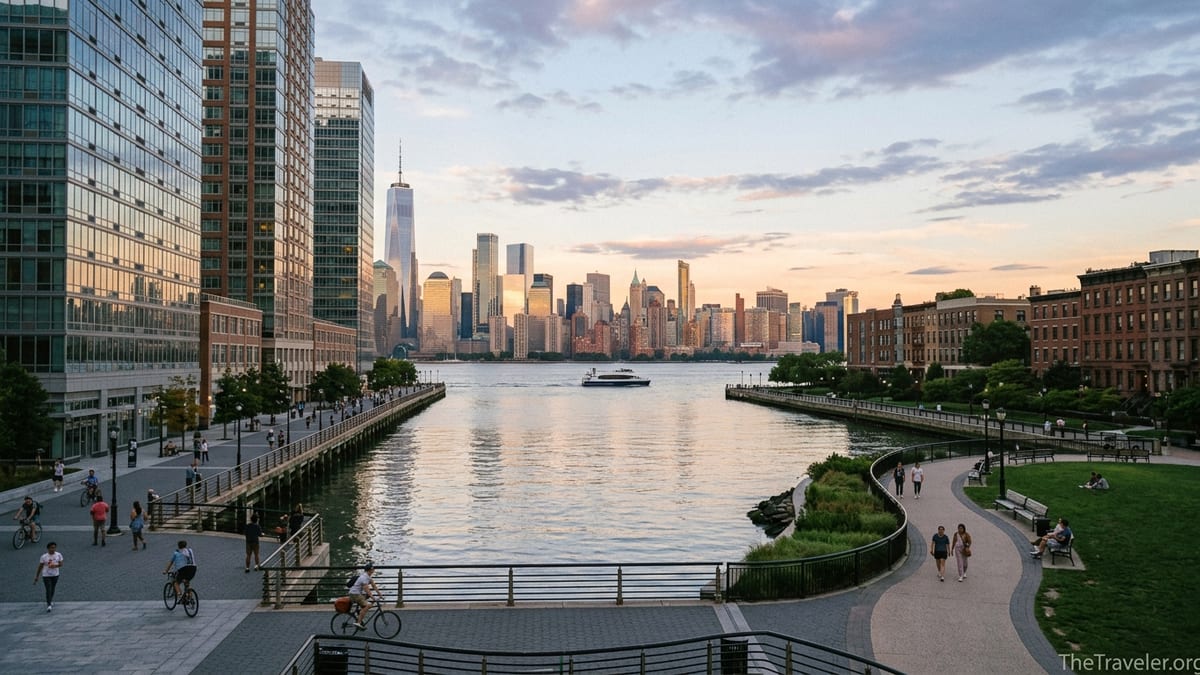
Stand on the Hudson River waterfront in either Jersey City or Hoboken and the Manhattan skyline fills your entire field of view. The difference is what is behind you. Jersey City feels like a full-scale city, with a cluster of glass towers around Exchange Place and Grove Street, older low-rise streets in neighborhoods like Journal Square and the Heights, and a diverse population that gives the place a big-city buzz. You will see commuters in suits, families with strollers, students, and office workers pouring off PATH trains.
Hoboken, by contrast, reads more like a compact, upscale town. Washington Street, its main spine, is lined with brownstones, mid-rise apartment buildings, and a dense run of bars, cafes, and restaurants. The residential blocks feel quieter and more intimate, and the waterfront parks are almost constantly filled with joggers, dog walkers, and parents with young kids. Hoboken is famously popular with young professionals who want an active social life but prefer a smaller, walkable community instead of a full-on city.
If you want a bigger-city feel, multiple distinct neighborhoods to explore, and a slightly edgier, more varied atmosphere, Jersey City is likely your match. If your ideal base is a polished, very walkable, almost European-feeling riverfront town with strong nightlife and easy Manhattan access, Hoboken will be more your speed.
Getting to Manhattan and Around the Region
Both cities exist in a tight orbit around Manhattan, and your daily reality will be shaped by transit. Jersey City has several PATH stations, including Grove Street and Exchange Place downtown and Journal Square inland. From Exchange Place to World Trade Center, the PATH train ride is often around 8 to 10 minutes, with a standard PATH fare of roughly 3 dollars per ride. From Grove Street you can ride directly to World Trade Center or head up to 33rd Street in Midtown with a transfer, often reaching Herald Square in about 20 minutes in normal conditions.
Hoboken’s transit revolves around Hoboken Terminal, a Beaux-Arts hub where PATH trains, NJ Transit commuter rail, buses, and NY Waterway ferries all converge. From Hoboken to 33rd Street on PATH, travel time is often around 14 minutes. Ferries from Hoboken to Midtown or the World Financial Center are faster and more scenic, typically about 10 to 15 minutes, but cost several dollars more than PATH and add up quickly if you ride them daily.
From Newark Liberty International Airport, reaching either city is comparatively straightforward. One common pattern is to take AirTrain Newark to Newark Liberty International Airport Station, then transfer to NJ Transit rail toward Newark Penn Station and on to either Hoboken or Jersey City. Typical journeys to the waterfront parts of both cities clock in at roughly 40 to 60 minutes door to door, depending on transfers and time of day, with costs that frequently land in the 15 to 25 dollar range for trains plus the AirTrain supplement. Taxis and rideshares can shorten travel time to around 25 to 40 minutes in light traffic, but with fares more in the 30 to 50 dollar range.
Within the cities, Jersey City benefits from the Hudson-Bergen Light Rail, which links waterfront areas and neighborhoods like the Heights and Bergen-Lafayette. That makes it easier to stay in a less central neighborhood yet pop down to the PATH in ten or fifteen minutes. Hoboken is so compact that most visitors simply walk; from the south end of town near the terminal to the north waterfront parks is a pleasant 20 to 30 minute stroll.
Where You Will Likely Stay: Hotels and Neighborhood Bases
Jersey City has more large, chain-style hotels and modern high-rise properties, many targeting business travelers who want quick access to the World Trade Center. Along the waterfront near Exchange Place and Newport you will find familiar names with corporate-style rooms, river views, and rates that are often lower than comparable hotels across the river in Lower Manhattan. For example, it is common to see midweek nightly rates that are tens or even hundreds of dollars less than similarly rated properties in Tribeca or the Financial District during busy periods.
Dive a few blocks inland to the Grove Street area and you will find smaller boutique-style options, longer-stay hotels, and apartment-style accommodations. This neighborhood has become a favorite for visitors who want walkable nightlife and restaurants at their doorstep while still being within about a five-minute walk of the PATH. Farther out, areas near Journal Square and the Heights often offer more budget-friendly stays, including simple hotels and short-term rentals. Travelers who do not mind a 15 to 20 minute transit ride to Manhattan can unlock significant savings here.
Hoboken’s compact size means fewer large hotels, but those that do exist often lean into the waterfront setting with Manhattan views from many rooms. Pricing can be on the premium side, especially on weekends when visitors come in for weddings, celebrations, and city breaks. Short-term rentals and apartment-style stays fill much of the gap. A typical visitor might rent a one-bedroom apartment a few blocks off Washington Street for less than a comparable unit in Chelsea or the West Village, while still paying a bit more than a similar unit in Jersey City’s less central neighborhoods.
In practical terms, if you want the widest range of price points and are willing to stay slightly away from the waterfront to save money, Jersey City gives you more flexibility. If your priority is staying in a small city where nearly everything is within a fifteen-minute walk, Hoboken’s more limited but well-located options may feel worth the premium.
Food, Nightlife, and Everyday Atmosphere
Jersey City’s food scene mirrors its diversity. Around Grove Street and Newark Avenue you will find everything from casual taco joints and burger spots to modern Indian, Filipino, and Middle Eastern restaurants, many run by local families. The pedestrian section of Newark Avenue turns into an outdoor dining strip in warm weather, with string lights, sidewalk tables, and a mix of cocktail bars and low-key pubs. Venture into neighborhoods like Journal Square or the Heights and you will encounter more hole-in-the-wall options, including South Asian bakeries, Latin American lunch counters, and all-night diners that serve local commuters and residents.
For nightlife, Jersey City offers a loose constellation of bars and lounges rather than a single bar strip. Rooftop bars along the waterfront attract a dressed-up crowd and often lean into the skyline view with craft cocktails priced similarly to those in Manhattan. Smaller bars and live music venues around Grove Street tend to feel more casual and attract a local regulars crowd mixed with visitors staying nearby. On a Friday night, you can expect lively sidewalks, late closing times at many spots, and PATH trains filled with people heading back from New York.
Hoboken’s social life is more centralized. Washington Street functions as the city’s main bar corridor, especially on Thursday through Saturday nights. You will find Irish pubs showing Premier League matches in the morning, sports bars overflowing on big game days, and cocktail lounges drawing a well-dressed after-work crowd. Hoboken has a reputation among locals in the region as a place where twentysomethings and early-thirties professionals come to bar-hop without the intensity of Manhattan’s club scene. As a visitor, this makes it very easy to sample multiple venues in one night without ever needing a cab or transit.
By day, both cities feel friendly and lived-in. In Jersey City you might hop from a third-wave coffee shop near Grove Street to a Dominican lunch spot in Journal Square, then grab a drink at a waterfront bar for sunset. In Hoboken you might start with a bagel and coffee on Washington Street, stroll along the riverfront promenade past Pier A Park, and end up in a neighborhood wine bar for a relaxed evening. The choice comes down to whether you prefer the variety and occasional rough edges of a larger city, or the more curated, polished feel of a small but lively town.
Views, Parks, and Waterfront Time
For pure skyline drama, both Jersey City and Hoboken deliver. Jersey City’s Exchange Place waterfront and the promenade that runs through Newport and down toward Liberty State Park offer sweeping views of the World Trade Center and Lower Manhattan. The waterfront towers behind you create a dense urban canyon feel. Liberty State Park, easily reached by light rail, Uber, or bike, is one of the region’s great under-the-radar green spaces, with broad lawns, a long riverside walkway, and access to ferries to the Statue of Liberty and Ellis Island. On a clear day, you can spend hours here picnicking, cycling, or watching planes and ferries move across the harbor.
Hoboken’s waterfront is more intimate but no less beautiful. A long ribbon of parks and promenades runs roughly north-south along the river, with benches, playgrounds, and small piers jutting into the water. From here, you get front-row views of Midtown Manhattan’s skyscrapers as well as Lower Manhattan, depending on where you stand. Pier A Park is a favorite spot for locals to spread out with blankets, kick a soccer ball, or attend seasonal events like outdoor movie nights and food festivals. In the evenings, the path fills with runners and couples taking sunset walks with the Empire State Building glowing across the river.
For families, both cities’ waterfront parks are a major advantage over staying directly in Manhattan, where green space is often more fragmented around busy streets. You can easily imagine a day that starts with a morning run under clear spring light, continues with sightseeing in Manhattan, and finishes with a quiet hour sitting on the grass watching the skyline light up, all without leaving your base city.
Culture, Day Trips, and Longer Stays
If you are staying more than a quick weekend, you will likely want more than just a bed and a train to Manhattan. Jersey City has been steadily building a cultural scene of its own. The Powerhouse Arts District near the waterfront hosts galleries and performance spaces, while local theaters and small venues put on everything from indie concerts to comedy nights. Street art and murals dot many neighborhoods, making simple walks a bit of an open-air gallery experience. The mix of immigrants and long-time residents also shows up in local markets and festivals, which can be a rewarding slice of everyday life if you time your visit right.
Hoboken’s cultural credit comes partly from history. It is the birthplace of Frank Sinatra, and you will see references to him in local plaques and small points of interest. More broadly, Hoboken plays up its small-city charm with seasonal street festivals, farmers markets, and waterfront events. Because the city is compact, it is easy to stumble upon live music in a small park or a block party when exploring on foot.
Both cities make a solid base for regional day trips. From Hoboken Terminal, NJ Transit trains can take you to places like the Jersey Shore or inland New Jersey towns without needing to pass through Manhattan. From Jersey City, the Hudson-Bergen Light Rail links to other Hudson County communities, while PATH and nearby NJ Transit services at Newark and Hoboken connect you onward to broader New Jersey and New York State destinations. For example, a traveler could use Jersey City as a base to visit MetLife Stadium for a major event or a FIFA World Cup 2026 match, then be back at the waterfront in around 20 to 30 minutes by car or shuttle depending on traffic.
For remote workers or longer-stay visitors, Jersey City tends to offer more coworking spaces and a slightly broader mix of long-stay apartments, particularly around Journal Square and Exchange Place. Hoboken, with its quieter residential character and bustling main street, appeals to those who want to blend into a close-knit neighborhood with easy daily rituals: the same coffee shop, the same riverfront jogging route, and a favorite local bar where the staff remember your name by the end of the week.
Costs, Crowds, and Choosing Based on Travel Style
In broad strokes, both Jersey City and Hoboken will usually be cheaper bases than central Manhattan, but they are not budget destinations in the global sense. Within that framework, Hoboken tends to run slightly more expensive on average for centrally located stays and everyday spending, while Jersey City offers a wider range from high-end waterfront towers to more modest, inland options.
For example, it is common to see a modern waterfront hotel room in Jersey City priced lower than a comparable waterfront property in Hoboken on the same dates, especially midweek. However, short-term rentals and boutique options in Hoboken command strong demand from couples and groups seeking that specific town feel, which can narrow the price gap. Dining and drinks in both cities are broadly similar in cost to outer borough neighborhoods in New York like Astoria or Williamsburg, with a casual dinner for two often landing in the 50 to 80 dollar range before drinks in mid-range spots.
In terms of crowds, Hoboken’s nightlife areas can feel more concentrated and intense on weekend nights, with clusters of people moving from bar to bar along just a few blocks. If you stay directly on or just off Washington Street, expect late-night noise on peak nights. Jersey City’s activity is more diffused; Grove Street and Newark Avenue get busy, but many other neighborhoods remain relatively quiet in the evenings. If you prioritize calm, looking slightly away from the main entertainment strips in either city will help.
When deciding, try mapping your own priorities. If your main goal is to explore as much of Manhattan as possible in a short time, Jersey City’s direct PATH connections from multiple stations, along with a wider spread of hotel options, may edge ahead. If your dream trip includes lazy afternoons in waterfront parks, short walks to dozens of bars and restaurants, and a strong small-city community feel, Hoboken is likely a better emotional fit, even if it sometimes costs a little more.
The Takeaway
There is no wrong answer between Jersey City and Hoboken, only a better fit for how you like to travel. Jersey City offers the energy and diversity of a full-scale city, multiple neighborhoods to explore, strong transit from several points, and a broad spectrum of price points, especially if you are willing to stay a bit away from the waterfront. It is a natural base for travelers who like discovering local scenes beyond the main tourist strips and who might stay a week or more.
Hoboken, on the other hand, distills the experience into a compact, highly walkable package. You trade breadth of neighborhoods for the pleasure of having almost everything within a short stroll: bars, cafes, riverfront parks, and the PATH and ferry terminal. It shines for shorter breaks, couples trips, and visitors who care as much about atmosphere and routine as about ticking off a long list of Manhattan sights.
If you picture yourself browsing small local shops, greeting the same barista each morning, and taking sunset walks along a quiet riverfront promenade, Hoboken will likely feel just right. If you imagine hopping between neighborhoods, sampling diverse food scenes, and using your base as a springboard to multiple parts of the region, Jersey City probably makes more sense. Either way, with Manhattan just minutes away across the river, you will have the best of both worlds within easy reach.
FAQ
Q1. Is Jersey City or Hoboken better for first-time visitors to New York City?
For most first-time visitors who plan to spend long days sightseeing in Manhattan, Jersey City has a slight edge thanks to multiple PATH stations and a wider range of hotels, including several right on the waterfront with direct World Trade Center access.
Q2. Which is cheaper overall, Jersey City or Hoboken?
Overall, Jersey City tends to offer more budget-friendly options, especially in neighborhoods away from the waterfront, while Hoboken’s centrally located, walkable layout often comes with slightly higher accommodation costs.
Q3. Which city has better nightlife?
Hoboken’s nightlife feels more concentrated and is known for its busy bar strip along Washington Street, while Jersey City offers a more scattered mix of bars, lounges, and live music venues centered around Grove Street and the waterfront.
Q4. How long does it take to get from each city to Manhattan?
From Jersey City, PATH rides to the World Trade Center can be around 8 to 10 minutes from Exchange Place and roughly 20 minutes to Midtown with a transfer, while from Hoboken, PATH trains reach 33rd Street in Midtown in about 14 minutes under normal conditions.
Q5. Which base is better for families?
Both work well, but families often appreciate Jersey City’s larger green spaces like Liberty State Park and the flexibility of more varied accommodation, while Hoboken’s small-scale, walkable streets and waterfront playgrounds can feel especially convenient with younger children.
Q6. Is it easy to get from Newark Airport to Jersey City and Hoboken?
Yes. A typical route is AirTrain Newark plus NJ Transit trains to Newark Penn Station and onward connections, usually taking around 40 to 60 minutes, or a taxi or rideshare which can be faster but more expensive.
Q7. Which is better for a romantic weekend?
For many couples, Hoboken’s compact, riverfront setting, cozy restaurants, and easy sunset walks along the water make it a particularly appealing choice for a short romantic stay.
Q8. Can I stay car-free in either Jersey City or Hoboken?
Absolutely. Both cities are well served by PATH trains and, in Jersey City’s case, light rail. Hoboken is compact enough that most visitors walk almost everywhere, and occasional rideshares fill in the gaps.
Q9. Which base is better for remote workers or longer stays?
Jersey City often suits longer stays thanks to more coworking spaces, a wider range of apartment-style accommodations, and multiple distinct neighborhoods that keep the city feeling fresh over time.
Q10. If I only care about skyline views, which should I choose?
Both cities offer excellent Manhattan skyline views, but Hoboken’s long, uninterrupted riverfront parks and Jersey City’s dramatic waterfront promenade and Liberty State Park viewpoints each provide outstanding vantage points, so you cannot really go wrong with either.