


More news on this day
Across the airline industry, a relatively small number of premium cabin seats are generating an outsized share of revenue, prompting carriers to redesign cabins, tweak pricing models and double down on high-yield travelers in an effort to protect margins in a cost-pressured market.
Get the latest news straight to your inbox!
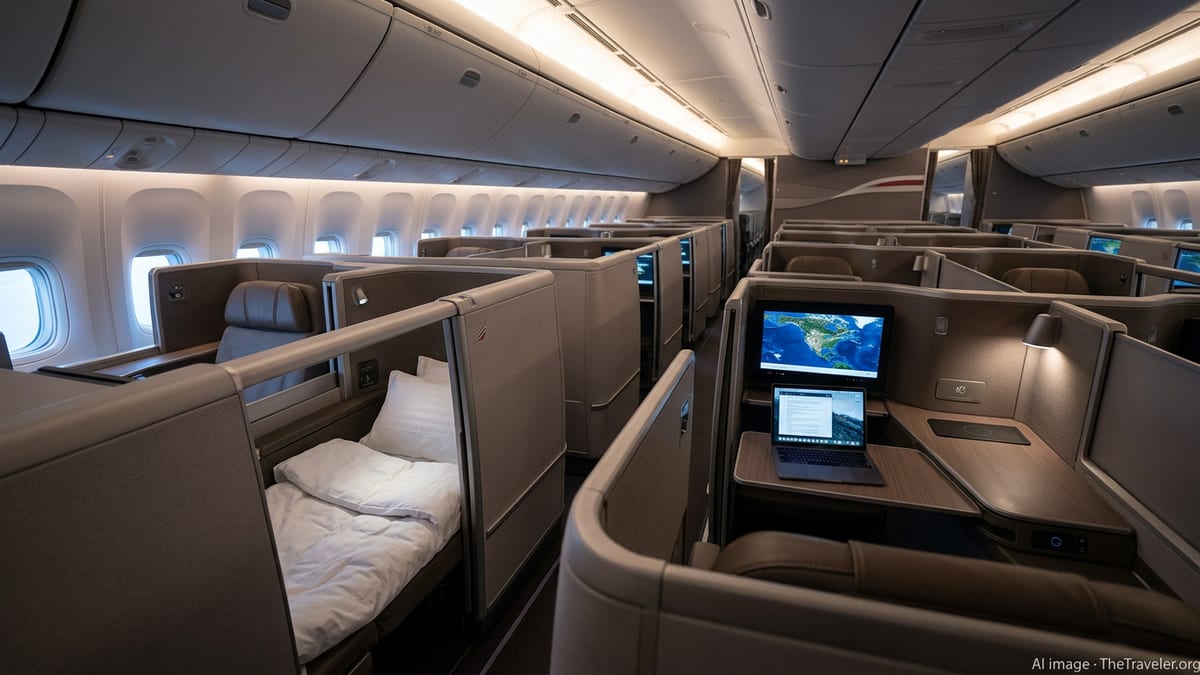
Small Share of Seats, Large Share of Revenue
Industry data show that premium seats, including business and premium economy, account for a minority of total capacity yet deliver a disproportionate slice of passenger income. Analysis from the International Air Transport Association indicates that premium fares are several times higher than economy prices on comparable routes, but premium customers represent only a fraction of overall traffic. The revenue impact is significant because each sold premium seat contributes more to the top line than multiple economy seats on the same aircraft.
This pattern is reflected in disclosures from large network airlines. Public financial reports from major carriers highlight that revenue growth from premium cabins has consistently outpaced the main cabin, driven by strong demand from corporate travelers and higher-spending leisure passengers. In some cases, premium products have reached or are approaching parity with main cabin ticket revenue even though they occupy far fewer seats on board.
The combination of higher fares and reliable demand makes premium cabins central to airlines’ efforts to recover from the shocks of the pandemic era and navigate persistent cost volatility. With fuel, labor and maintenance expenses elevated, additional yield from premium seating can be the difference between a marginal route and a profit-generating one.
On long-haul flights in particular, premium-class traffic often underpins the viability of entire networks. Airlines rely on high-yield tickets at the front of the aircraft to cross-subsidize more price-sensitive economy travelers, ensuring that widebody routes remain commercially sustainable.
Yield and Margin Advantages Over the Main Cabin
Premium cabins typically deliver higher yields, meaning more revenue per passenger kilometer, than standard economy seating. Financial filings from leading carriers show that premium products have produced stronger unit revenue growth than the main cabin in recent years, reflecting both higher prices and healthy load factors. Airlines report that paid occupancy rates in premium segments have reached record levels in several quarters, underscoring the willingness of customers to pay for added space and service.
Margins are also generally stronger in premium cabins, even after accounting for higher costs such as catering, cabin crew training and enhanced amenities. Once the fixed costs of aircraft ownership and operation are covered, incremental revenue from selling a premium seat, rather than leaving it empty or downgrading it, flows disproportionately to the bottom line. This explains why many airlines aggressively manage last-minute upgrades and dynamic pricing on premium inventory.
Carriers have also expanded intermediate offerings like premium economy and extra-legroom seating, which can be especially profitable. These products often require modest changes to cabin layout while commanding a sizable pricing step-up from standard economy. Airlines can therefore generate a strong revenue premium without incurring the full cost of a long-haul business class suite.
By segmenting cabins into multiple fare tiers, airlines capture a broader spectrum of willingness to pay. Travelers who will not buy a lie-flat business class seat may still accept a premium economy fare, while others might pay extra for a few inches of space or priority boarding. Each additional tier contributes to higher blended yields relative to a simple two-class model.
Cabin Design and Fleet Strategy Tilt Toward Premium
The profit potential of premium seating is changing the way airlines configure aircraft. Fleet plans and investor presentations from large global carriers show a clear trend toward increasing the share of premium seats on new deliveries and retrofitted jets. On some widebody types, roughly half of the cabin length may now be dedicated to business, premium economy and other higher-yield products, even when the majority of seats by count remain in economy.
Airlines are introducing new aircraft variants and cabin refits that accommodate more premium capacity without greatly reducing total seat counts. This includes installing higher-density business class layouts with direct aisle access, expanding premium economy sections and rebalancing cabin zones to favor higher-margin seating. Some carriers have indicated that premium revenue is on track to surpass main cabin revenue on certain fleets as these changes roll out.
Fleet strategy is also shaped by the types of routes that benefit most from premium-heavy configurations. Ultra-long-haul and key corporate markets, such as transatlantic and transpacific hubs, are frequently assigned aircraft with the largest premium cabins. Shorter-haul domestic or regional services, while still offering first or business class, tend to adopt a more balanced mix to match demand and cost structures.
These decisions reflect a broader strategic bet that premium demand will remain resilient. Airlines argue in public presentations that differentiated cabins and in-flight experiences help reduce the perceived commoditization of air travel, supporting pricing power and customer loyalty over time.
Loyalty Programs and Corporate Demand Strengthen Premium Economics
Another reason premium cabins generate more profit is their strong alignment with airline loyalty ecosystems. Frequent flyer programs, co-branded credit cards and status tiers are often structured around earning and redeeming benefits that are most attractive in premium cabins, such as upgrades, priority services and lounge access. Airlines report that a significant share of premium revenue is linked to members of their loyalty schemes.
Corporate travel contracts further enhance the economics of the premium cabin. Business travelers, particularly in sectors such as finance, technology and professional services, often fly in higher classes on long-haul routes under negotiated deals. While overall corporate travel has evolved since the pandemic, public commentary from carriers indicates that high-yield segments have recovered strongly, with premium booking patterns remaining robust even as some companies manage costs by mixing cabin classes.
Loyalty and corporate channels also provide a buffer during economic slowdowns. When discretionary leisure demand softens, committed frequent flyers and contracted corporate customers can help sustain premium loads and stabilize yields. This supports more predictable revenue streams compared with relying solely on point-to-point leisure traffic in economy.
In addition, airlines monetize premium-related ancillary services, such as extra-legroom seats, advance seat selection and bundled fare products that include priority handling. These add-ons are often marketed through loyalty program interfaces and mobile apps, deepening engagement and providing another layer of high-margin income linked to premium travel.
Risks and Constraints in a Premium-Heavy Strategy
Despite the appeal of premium profits, concentrating too heavily on higher cabins carries risks. Premium demand is more exposed to corporate travel budgets and macroeconomic cycles than basic leisure traffic. A downturn that prompts businesses to cut back on travel or downgrade cabins can quickly pressure yields on routes that rely heavily on premium revenue.
Airlines must also manage the operational complexity that comes with dense cabin segmentation. Each additional product tier requires distinct service standards, training, catering and inventory management. If not executed consistently, the resulting inconsistencies can erode the perceived value of premium offerings and weaken pricing power.
Another constraint is physical space. There is a practical limit to how many premium seats can be added before overall capacity becomes too small to support the route’s cost base. If airlines overestimate premium demand and under-provision economy seating, they risk flying with unsold high-end inventory while turning away price-sensitive passengers.
For now, however, the balance of publicly available data suggests that premium cabins remain the primary profit engines on many airline networks. As carriers continue to refine cabin layouts, loyalty programs and corporate sales strategies, the high-yield seats at the front and middle of the aircraft are likely to remain central to how airlines generate and defend margins in a competitive global market.