


Get the latest updates straight to your inbox!
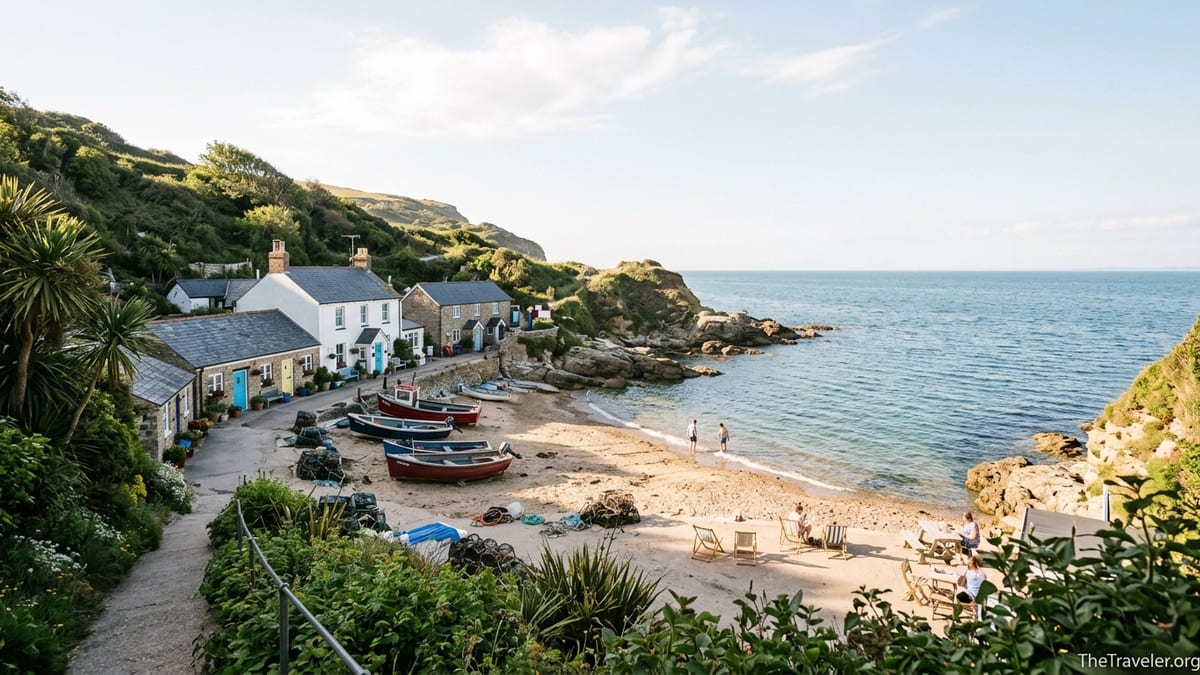
Hidden beneath crumbling cliffs and subtropical gardens on the Isle of Wight’s south coast, Steephill Cove is the kind of place you half hope other people never discover. There is no road, no promenade, and no amusement arcades. Instead you arrive on foot, hearing the hiss of waves on shingle before the cove suddenly appears below you: fishing boats pulled up on the sand, whitewashed cottages huddled against the slope, and deckchairs lined up outside tiny cafes. For many visitors, this short footpath detour from nearby Ventnor becomes the place they remember long after the rest of the island has blurred into a single summer postcard.
A Cove You Have to Earn: Why the Journey Matters
Part of Steephill Cove’s magic lies in the fact that you cannot simply drive to it. The nearest public parking is in Ventnor, around a 20 to 30 minute coastal walk away, or by Ventnor Botanic Garden on Undercliff Drive, from where it is about 200 yards down a footpath and a set of steep steps to the beach. Cars stop at the top: from there, everyone becomes a pedestrian, picking their way along cliff paths or shaded tracks. That small effort filters out the casual crowds and keeps the atmosphere quiet, even at the height of summer.
The most popular approach is on foot from Ventnor seafront, following a celebrated stretch of the Isle of Wight Coastal Path. Families often start with an ice cream on Ventnor’s esplanade before heading west along the sea wall and then climbing gently through flower‑filled gardens toward the coast path. Within minutes the town slips from view, replaced by sea views, gorse, and scrub oak. On warm days, the air can feel almost Mediterranean here, a result of the south‑facing “Undercliff” microclimate that protects this coast from colder northerly winds.
Another common route begins at Ventnor Botanic Garden, itself worth a visit for its palms and giant gunnera leaves. Many visitors park there, wander the terraces of South African proteas and New Zealand tree ferns, and then drop down the signed footpath to Steephill Cove for a late lunch. It is an easy downhill stroll going in, but the name “Steephill” is well earned: the climb back up after a day on the beach can feel longer, especially with tired children and a bag of wet towels in tow.
However you arrive, the sense of reveal is the same. One moment you are enclosed by bracken and trees, the next the path opens and the whole cove appears below like a tiny amphitheatre of sea and stone. It is a moment that regular walkers learn to anticipate, and one first‑timers rarely forget.
Timeless Character on a Small Scale
Steephill Cove is not a large beach. At high tide, the waves can cover much of the sand, leaving only a strip of shingle and rock. Yet the compact scale is exactly what gives the cove its village‑like feel. Whitewashed fishermen’s cottages nestle close together at the base of the slope, some with blue doors and tiny gardens where hollyhocks and agapanthus lean toward the sun. Small boats sit propped on wooden skids, their hulls flaking salt‑streaked paint. Lobster pots and coils of rope pile up beside stone walls, reminders that this is still a working cove and not a purpose‑built resort.
There are no chain restaurants, neon signs, or loudspeakers here. Instead you will find hut‑style cafes serving crab sandwiches, ploughman’s lunches, and pots of tea at simple wooden tables. In peak season, a deckchair on the beach might cost only a few pounds for the day, and you can still order a paper cup of chips or a slice of homemade cake and eat it with your feet in the sand. Visitors used to the bustle of Sandown or Shanklin often comment that Steephill feels like stepping back several decades.
Self‑catering cottages and small apartments are dotted around the cove, many converted from old boathouses or fishermen’s homes. Guests staying right on the beach often begin their mornings by opening a front door almost directly onto the shore, watching the first dog walkers pass with takeaway coffees while the sun clears the top of the cliffs. At night, when day visitors have gone and only the soft clink of rigging remains, the cove can feel like a private world.
That quiet, lived‑in character is what sets Steephill apart from more obviously “developed” resorts. It is not polished or manicured; instead, it retains the slightly weathered charm of a place that has changed slowly, if at all, over generations. For many islanders, it is still the beach where they remember childhood rockpooling and where they now bring their own children to do the same.
Sea, Sand, and Rockpools: Why the Beach Itself Shines
As a beach, Steephill Cove punches far above its size. The shoreline is a mix of coarse sand and shingle, backed by low rock ledges that create natural seating. On calm days the sea is clear enough that you can see fish flickering in the shallows, and swimmers often wade out to waist depth before floating in the swell. Some recent visitors have reported seaweed collecting along the waterline at certain times, especially after storms, but conditions change with the tides and wind, and on many summer days the water is invitingly blue‑green.
The rocky edges of the cove are a natural playground for children armed with plastic buckets and nets. When the tide falls back, it leaves behind rockpools full of beadlet anemones, tiny crabs, and limpet‑strewn stones. Families set up base on the sand and scatter along the rocks for hours, comparing finds. Parents often appreciate that the limited space and single main access path make it easier to keep an eye on younger children than on a vast open beach.
Because the cove is tucked under cliffs, it can feel sheltered from strong winds that whip more exposed parts of the coast. On very hot days, the cliffs throw welcome shade across parts of the beach in the early morning and late afternoon. In high summer, swimmers sometimes brave the water without wetsuits, while at the shoulder seasons in May or September you will often see hardy locals doing quick dips before retreating to the cafes for hot chocolate.
Practical facilities are simple but adequate. Seasonal toilets, beachside refreshments, and places to buy ice creams or cold drinks are typically available during the main holiday months. There are no lifeguards stationed at Steephill, so families tend to supervise children closely, and visitors with mobility issues should be prepared for uneven ground and the steep access paths. Yet for most, those small compromises are a fair exchange for the lack of crowds and car noise.
Life Between Tides: Cafes, Cottages, and Local Flavour
Steephill Cove has built its modest reputation on straightforward, local food served in unforgettable surroundings. Several family‑run cafes and kiosks cluster behind the beach, many with outdoor wooden decking where customers sit in swimsuits and sandals, eating freshly prepared crab salads or prawns in Marie Rose sauce. Portions are typically generous and the menus short, reflecting what is available that day rather than an attempt to be all things to all people.
Prices in recent seasons have generally reflected typical coastal cafe levels on the Isle of Wight. A crab sandwich might come in at a little over ten pounds, while coffee and cake are usually in the mid single‑digits. For many visitors, the setting is part of the value: it is hard to complain about the bill when you are eating within sight of the fishermen’s boats that likely landed your lunch along this very shoreline.
Because the cove is so compact, eating and relaxing tend to blend together. Parents may sit nursing a pot of tea on a terrace while children dart back and forth between the tables and the water’s edge. Couples linger over late lunches until the sun begins to lower and the crowd thins. On overcast days, the cafes become cosy refuges where you can listen to rain on the roof and watch waves marching in across the Channel, content that you have nowhere urgent to be.
Accommodation in and around Steephill Cove tends toward the intimate rather than the large‑scale. Visitors can find a scattering of self‑catering apartments, small cottages, and guest rooms close to the path down to the beach, with larger hotels and guesthouses clustered in Ventnor a short walk away. Many of these places highlight their proximity to the cove as a key selling point, promoting early‑morning swims and sunset strolls as part of the experience rather than add‑ons.
A Microclimate of Calm: Nature and Scenery Around the Cove
The wider setting of Steephill Cove is one reason it consistently features in recommendations for the best sections of the Isle of Wight Coastal Path. The cove sits within the island’s Undercliff, a band of semi‑rural land beneath the main cliffs where landslips over centuries have created terraces, hidden valleys, and a distinctive warm, sheltered microclimate. This environment supports plants more commonly associated with southern Europe, and you will often see palm trees, towering echiums, and other exotics in nearby gardens.
Immediately above the cove, Ventnor Botanic Garden showcases this unusual climate with collections from places such as the Canary Islands and South Africa. Many walkers break their day by combining a slow circuit of the garden’s paths with a dip at Steephill, moving from labelled beds of succulents and alpine flowers down to wild coastal scrub and finally the open shore. The experience underlines how compressed the landscape is here: in half an hour you can pass through what feels like several different regions.
The coastline itself is part of a larger protected area recognised for both geological interest and wildlife. West from Steephill, the cliffs and bays toward St Catherine’s Point and Compton are designated as a Site of Special Scientific Interest. Even without knowing the names, visitors notice the drama in the stratified rock faces, the slipping, terraced slopes, and the way the land drops abruptly into the sea. On clear days, you may see cormorants drying their wings on offshore rocks, or kestrels hovering above the path in search of small prey hiding in the grasses.
All of this combines to create a feeling of being cocooned from the busier parts of the island. Surrounded by tall cliffs and lush garden slopes, with only the sea in front of you, it is easy to feel that Steephill exists in its own small weather system, emotionally as much as climatically.
Walking Routes and Day Trips That Start and End Here
For walkers, Steephill Cove is both a reward and a waypoint. The short out‑and‑back route from Ventnor seafront is one of the island’s most accessible “taster” walks, typically taking around 45 minutes to an hour each way at a gentle pace with photo stops. Families with school‑age children often manage the route, especially if motivated by a promised ice cream at the cove and a paddle in the shallows at the end.
More experienced walkers fold Steephill into longer loops that might begin on the chalk ridges above Ventnor and drop down to the coast before returning via inland bridleways. Several guided walking holiday operators now include a day that links the high downs, the Undercliff, Steephill Cove, and Ventnor in a single outing. This allows visitors to experience the contrast between open, breezy hilltops with far‑reaching views and the intimate, enclosed feel of the cove below.
From the cove itself, you can continue along the coastal path past Ventnor Botanic Garden toward other tucked‑away bays like Orchard Bay. However, it is worth checking local signage and current route information, as occasional landslips along the Undercliff can trigger temporary diversions. When sections close, walkers often improvise alternative routes along higher ground or quiet residential streets before dropping back toward the sea.
Even those not committed to a full day’s hike can use Steephill as a pivot between attractions. A typical relaxed day might involve a mid‑morning visit to the Botanic Garden, lunch and swimming at the cove, and an afternoon stroll back to Ventnor for a drink at a seafront pub as the last light catches the waves. The distances are short enough that you can fill the day without needing a car once you have arrived in town.
Planning a Visit: Practicalities, Seasons, and Expectations
Despite its hidden feel, Steephill Cove fits easily into a wider Isle of Wight itinerary. The nearest town, Ventnor, is reachable by bus from the island’s larger hubs such as Ryde, Shanklin, and Newport, which themselves connect to mainland ferry and hovercraft terminals. From Ventnor’s bus stops, it is a downhill stroll to the seafront and then a further walk along the coastal path to the cove. Visitors with heavy luggage often stay in Ventnor accommodation and treat Steephill as a day‑trip destination rather than attempt the path with suitcases.
Season plays a big role in the cove’s atmosphere. In July and August, expect school‑holiday families, full cafe terraces, and a sociable hum of conversation, especially on sunny weekends. Early mornings and evenings can still feel peaceful, but midday may require patience as you navigate narrow paths with fold‑up chairs and cool boxes. In late spring and early autumn, the mood softens. There may be fewer facilities open every day outside peak season, yet many regular walkers prize May and September for their combination of mild weather, open sea views, and thinner crowds.
Facilities at the cove are geared to day visitors rather than full‑service resort expectations. There are no large public car parks directly above the beach, no amusement arcades, and limited options once the kiosks close for the afternoon or evening. Dog policies can vary by time of year, reflecting wider seasonal restrictions across island beaches, so anyone visiting with pets should check the latest local guidance close to their travel dates rather than rely on older printed leaflets.
Finally, it is worth managing expectations regarding weather and sea conditions. The Isle of Wight’s south coast can offer brilliant, almost continental days when the sea sparkles and the air barely moves. It can also deliver bracing winds, rolling swell, and banks of seaweed after storms. Recent reviews mention patches of weed in the shallows at times, though on other days the water is clear and calm. Steephill is not an artificial lagoon; it is a living stretch of coast, and its moods change with the tides and seasons.
The Takeaway
Steephill Cove’s reputation as one of the Isle of Wight’s most beautiful hidden spots is not built on size, spectacle, or glossy development. Instead it rests on small, carefully balanced ingredients: a car‑free setting reached only on foot, a clutch of weathered cottages at the water’s edge, simple food served within earshot of the surf, and a landscape that folds sea, cliffs, and subtropical gardens into a single compact scene.
For travellers willing to trade convenience for character, the cove offers an experience that feels more like visiting a tiny coastal hamlet than a conventional seaside resort. The short walk in becomes part of the day, the climb out marks its close, and the hours between are stitched together from swims, rockpooling, cafe lunches, and quiet moments watching the horizon. In a world where many coastal destinations feel increasingly interchangeable, Steephill Cove still feels stubbornly, charmingly itself.
FAQ
Q1. How do I get to Steephill Cove if I do not have a car?
From mainland ports you can take a ferry or hovercraft to the Isle of Wight, then use local buses to reach Ventnor. From Ventnor seafront it is roughly a 20 to 30 minute walk along the coastal path to Steephill Cove, or you can take a bus to near Ventnor Botanic Garden and walk down from there.
Q2. Is there parking close to Steephill Cove?
There is no parking directly at the cove and no road access to the beach itself. Most visitors park in Ventnor’s town car parks or by Ventnor Botanic Garden on Undercliff Drive, then walk in via signed footpaths and steps.
Q3. Is Steephill Cove suitable for young children?
Yes, many families visit with children, who enjoy the sand, shingle, and rockpools. Parents should be aware of the steep paths and steps, as well as the lack of lifeguards, and supervise children closely near the water and on the rocks.
Q4. Are there toilets and places to buy food and drinks?
During the main holiday season there are usually basic public toilets and several small, family‑run cafes or kiosks offering hot and cold food, ice creams, and drinks. Outside peak months, opening hours may be reduced, so it is sensible to bring water and snacks just in case.
Q5. Can I swim at Steephill Cove?
Many visitors swim and paddle at Steephill Cove when sea conditions are calm. The water can be cool outside midsummer, and there are no lifeguards, so swimmers should take sensible precautions, stay within their depth if unsure, and be cautious of waves and submerged rocks.
Q6. Is Steephill Cove dog friendly?
Dog access can depend on the time of year and local regulations, which sometimes restrict dogs on popular beaches during peak summer months. Before travelling with a dog, it is best to check the latest advice from local tourism or council sources and look for on‑site signage when you arrive.
Q7. What should I wear for the walk to and from the cove?
The paths include some steep, uneven sections and steps, so comfortable walking shoes or sturdy sandals are recommended. Even in summer, bringing a light layer or windproof jacket is wise, as coastal weather can change quickly.
Q8. Are there accommodation options right at Steephill Cove?
There are a handful of self‑catering cottages and small apartments at or very close to the beach, often in converted fishermen’s cottages or boathouses. These tend to book up quickly in high season, so many visitors stay in nearby Ventnor and walk down for the day instead.
Q9. When is the best time of year to visit?
July and August offer the warmest sea temperatures and the most open facilities, but they are also the busiest months. Late spring and early autumn can provide a good balance of milder weather, quieter paths, and enough services for a comfortable visit.
Q10. Is Steephill Cove accessible for people with limited mobility?
Access can be challenging for visitors with limited mobility because all routes involve steep paths or steps, and the beach itself has uneven sand, shingle, and rocks. Those who use wheelchairs or have difficulty with gradients may find it difficult or impossible to reach the cove and should seek detailed, current access information before attempting the trip.