


More news on this day
Air travel across the Gulf faced another day of severe disruption as publicly available flight tracking data showed 441 delays and 37 cancellations affecting services through Kuwait, Saudi Arabia and the United Arab Emirates, disrupting operations for Akasa Air, Saudia, Airblue, Kuwait Airways, Air Arabia and several other carriers at key hubs in Jeddah, Riyadh, Kuwait City, Dubai and Sharjah.
Get the latest news straight to your inbox!
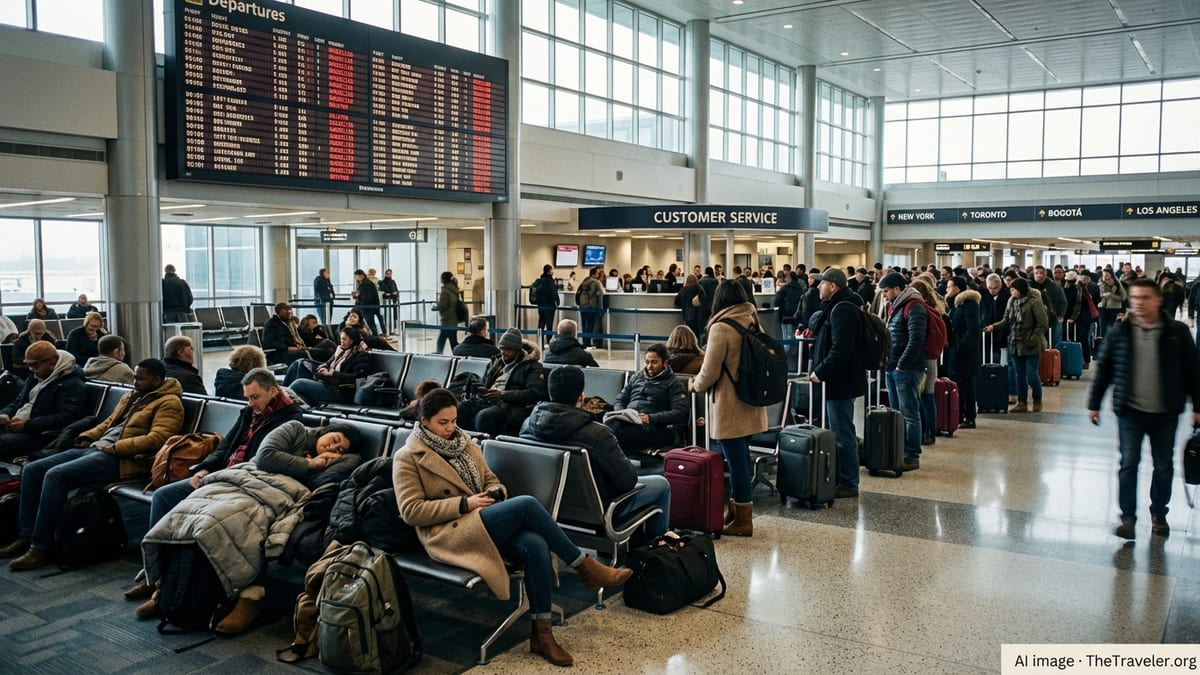
Gulf Hubs Struggle With Fresh Wave of Operational Disruption
Recent schedules published for major Gulf airports indicate that a new round of disruption has rippled across the region, adding to months of already fragile operations. The latest figures, compiled from airport boards and flight tracking platforms, point to 441 delayed services and 37 outright cancellations across Kuwait, Saudi Arabia and the UAE in a single operational window, with the impact concentrated on the busiest hubs.
In Saudi Arabia, congestion at Riyadh’s King Khalid International and Jeddah’s King Abdulaziz International has translated into rolling delays that stretch well beyond scheduled departure times. Publicly available information shows that Saudia, low cost operators and foreign carriers alike have been forced to reshuffle rotations, with late arriving aircraft triggering knock on effects for onward services to Asia, Africa and Europe.
In the UAE, Dubai International and Sharjah International have recorded clusters of delayed and canceled departures, adding to previous weeks where local and foreign media coverage already flagged significant schedule disruption. Reports from regional travel advisories describe a pattern of services repeatedly shifting from on time to delayed status before some ultimately disappear from departure boards, reflecting the unstable operating environment for airlines using these key hubs.
Kuwait City has remained a pressure point in its own right, with Kuwait Airways and foreign carriers facing intermittent suspension of services on certain routes. Data from recent days shows fewer scheduled movements than would be expected for the time of year, consistent with earlier advisories stating that commercial operations to and from Kuwait continue on a constrained basis.
Akasa Air, Saudia, Airblue and Kuwait Airways Among Affected Carriers
The disruption has cut across a wide range of airlines, affecting both regional giants and newer entrants. Among Indian carriers, Akasa Air is again visible in tracking feeds with irregular operations on Gulf routes, particularly services linking secondary Indian cities with Jeddah, Riyadh, Kuwait City and UAE airports. Delays on these sectors are especially disruptive for passengers relying on tight turnaround times to connect to domestic networks back in India.
Saudia remains one of the most heavily exposed operators given its reliance on Riyadh and Jeddah as primary hubs. Earlier industry reporting already highlighted constrained operations for the Saudi flag carrier, and the latest delay and cancellation counts reinforce that the airline continues to work with limited flexibility. Compressed aircraft availability and route options mean that a single prolonged ground hold in Jeddah or Riyadh can cascade into missed rotations on medium haul routes.
Regional point to point players such as Airblue and Kuwait Airways have also featured in the latest wave of disruptions. Airblue, which serves Gulf destinations from Pakistan, relies on predictable slot timings in Jeddah, Riyadh and the UAE to feed its return services. When airport conditions force extended ground times, publicly available schedules show that the carrier has limited ability to absorb disruption without steering some departures into delay or cancellation territory.
Kuwait Airways, already navigating earlier suspensions and a reduced timetable flagged in previous customer advisories, is operating within narrow margins. Any further tightening of regional restrictions or air traffic control flow can quickly turn a manageable delay into a cancellation, particularly on routes where spare aircraft and standby crews are scarce.
Air Arabia and UAE Low Cost Networks Face Mounting Pressure
In the UAE, Air Arabia and other low cost operators based in Sharjah and Dubai continue to face mounting operational pressure. Recent coverage from regional travel outlets has documented waves of cancellations and delays for Air Arabia and fellow budget carriers, and the newest tallies of delayed and canceled flights across the UAE suggest that conditions remain volatile. Frequent short haul hops, which normally allow for tight aircraft utilization, provide little buffer when airspace or airport constraints suddenly reduce throughput.
Air Arabia’s network is particularly vulnerable because many of its routes are tightly scheduled out of Sharjah, with aircraft operating multiple rotations per day to destinations across the Gulf, North Africa and South Asia. When one early sector from Sharjah or a regional outstation is held or diverted, the knock on effect can undermine several subsequent flights booked on the same airframe, swelling the overall count of delays and increasing the risk that later services are canceled altogether.
Dubai’s role as a mega hub has also shaped the scale of disruption. Earlier reporting on previous periods of turbulence in the region showed that even a relatively modest number of cancellations in Dubai can create outsized effects on global networks, because many long haul passengers transit through the city rather than originate or terminate there. The current set of 441 delays and 37 cancellations across the wider region is being interpreted by aviation analysts as another sign that networks remain in a prolonged phase of operational fragility.
Sharjah, which has grown into a significant secondary hub for low cost carriers, is experiencing similar stresses. With a large share of departures scheduled in concentrated morning and late evening banks, any temporary hold on departures or arrivals rapidly leads to congestion, gate shortages and crew re rostering challenges.
Regional Airspace Constraints and Weather Add to Operational Strain
The latest operational disruption is unfolding against a backdrop of intermittent airspace constraints and challenging weather in parts of the Middle East. In recent months, various regional advisories and airline statements have pointed to periods of closed or restricted airspace over segments of the Gulf and neighboring states, forcing carriers to route flights along longer corridors over Central Asia, North Africa or the Red Sea. These detours increase flight times and fuel burn and leave little slack in daily schedules.
Dust storms and poor visibility episodes, particularly around Kuwait and parts of Saudi Arabia, have also periodically reduced airport capacity. When visibility drops or crosswinds exceed thresholds, arrival and departure rates are cut, leading to stacking delays that impact entire banks of flights. Publicly available weather and aviation briefings from earlier disruptions showed that even short lived storms could produce hours of knock on delays as airports worked through accumulated backlogs.
Combined with ongoing geopolitical tension in parts of the wider region, these operational constraints create a highly dynamic planning environment for airlines. Carriers must juggle aircraft routing, crew duty limits and airport slot restrictions in real time, often with little advance warning when new notices to air missions or temporary ground stops are issued. In such an environment, the risk of large clusters of delays and cancellations, as seen in the latest figures for Kuwait, Saudi Arabia and the UAE, remains elevated.
Industry commentators note that while some long haul corridors are gradually adjusting to revised routings, short and medium haul routes within the Gulf are still contending with unpredictable day to day conditions. This is especially true for services that transit multiple jurisdictions where local authorities may apply differing safety or operational thresholds.
What Passengers Traveling Through Jeddah, Riyadh, Kuwait City, Dubai and Sharjah Can Expect
For travelers booked on Akasa Air, Saudia, Airblue, Kuwait Airways, Air Arabia and other carriers operating through Jeddah, Riyadh, Kuwait City, Dubai and Sharjah, the current environment means that flexibility and vigilance are essential. Publicly available airport and airline guidance consistently urges passengers to verify flight status as close to departure as possible and to expect gate changes, rolling delays and occasional last minute cancellations.
Travel industry advisories issued over recent weeks recommend building generous transfer windows into itineraries that rely on Gulf hubs, particularly for those connecting between different tickets or carriers. Passengers transiting through Dubai and Sharjah on their way between Europe, Asia and Africa are being encouraged by travel agents and online booking platforms to consider longer layovers, as a buffer against the type of rolling delays that have characterized recent days.
Reports from consumer forums and social media monitoring indicate that some travelers are exploring alternative routings via Istanbul, Cairo or other secondary hubs that have been less affected by Gulf specific constraints. Others are postponing non essential trips, especially where travel involves multiple segments through Kuwait City or overlapping transits in both Saudi Arabia and the UAE within a short timeframe.
While airlines and airports across Kuwait, Saudi Arabia and the UAE are gradually adjusting schedules in response to the latest round of disruption, publicly available industry commentary suggests that operations are likely to remain irregular in the near term. For now, the tally of 441 delayed flights and 37 cancellations across the three states highlights how quickly conditions in the Gulf can shift, leaving passengers and carriers alike navigating another period of travel uncertainty.