


Armenia is not a place most travelers visit just once. Wedged in the South Caucasus between Europe and Asia, this small, landlocked country keeps drawing visitors back with a rare mix of ancient history, village hospitality, and big-mountain scenery that still feels largely undiscovered. With around 2.2 million international visitors in 2024, only slightly below its 2023 record, Armenia’s appeal is clearly growing, yet it remains pleasantly uncrowded compared with regional hotspots. For travelers who care as much about culture and story as they do about views and hikes, Armenia has become a repeat favorite.
Get the latest updates straight to your inbox!
Ancient culture that still shapes daily life
Many countries talk about having an ancient culture. In Armenia, that history is visible at nearly every turn and still shapes how people live, eat, and celebrate. In Yerevan, you can start a morning at the Matenadaran, the hilltop museum that preserves thousands of medieval manuscripts, and by afternoon be sipping strong Armenian coffee in a family-run café in the Kond neighborhood, where laundry hangs across narrow alleys and old stone houses lean into each other. The past feels absorbed into daily routines rather than sealed off behind museum glass.
Armenia is also widely known as the first state to adopt Christianity in the early 4th century, and its churches remain active community centers rather than just sightseeing stops. Visit Etchmiadzin Cathedral on a Sunday and you are likely to share the pews with local families attending liturgy, candles in hand, as the sound of chanted hymns rolls through the stone interior. This overlap of living faith and heritage is one reason religious travelers and culturally curious visitors return for repeat pilgrimages.
Even in the capital’s more modern corners, tradition surfaces in small details. Restaurant menus might pair trendy takes on khorovats (grilled meat) with homemade pickles and lavash baked in a traditional tonir oven out back. In central Yerevan, high-end wine bars pour bottles from boutique producers in Areni and Vayots Dzor, regions where villagers have been growing grapes since antiquity. Travelers who return for a second or third visit often comment that the culture feels deeper each time, as they gradually pick up Armenian phrases, understand holiday rituals, or get invited to a village family’s birthday feast.
What keeps many visitors coming back is that Armenia’s cultural experiences rarely feel manufactured. Whether you are buying fresh herbs at Yerevan’s GUM market, listening to a street busker play the duduk near Republic Square, or learning how to fold tolma at a rural guesthouse, interactions tend to be unscripted and personal. In a travel world where “authenticity” is often just a marketing word, Armenia’s everyday culture remains refreshingly unpolished.
Layered history from pagan temples to Soviet boulevards
For history-minded travelers, Armenia packs surprising variety into a small geography. A classic example is the easy day trip from Yerevan to the Garni Temple and Geghard Monastery. At Garni, about 30 kilometers east of the capital, you stand in front of a first-century Hellenistic temple with Ionic columns rising above the Azat River gorge. Drive another 15 minutes and you are in the rock-hewn halls of medieval Geghard, a UNESCO-listed monastery partly carved into the mountainside. Doing both in one day illustrates Armenia’s long story better than any textbook.
In the south, Tatev Monastery clings to a cliff above the Vorotan Gorge, a setting so dramatic that even well-traveled visitors compare it favorably to iconic sites elsewhere in Europe and the Middle East. Reaching Tatev typically involves either a winding mountain road or the long “Wings of Tatev” cable car, which floats over deep ravines. Many travelers now plan entire repeat trips around returning to Syunik province to spend more time exploring Tatev and nearby cave villages such as Khndzoresk.
Armenia’s more recent history is equally visible. In central Yerevan, wide Soviet-era boulevards and monumental buildings surround Republic Square and the Cascade complex, while side streets hide courtyards from the early 20th century and contemporary murals. A visitor might spend one day touring the History Museum of Armenia and the Armenian Genocide Memorial, then the next tracing the city’s Soviet and post-Soviet evolution through architecture, metro stations, and neighborhood cafés where young locals work on laptops.
Because the country is compact, it is possible to connect these layers on a short trip, and that ease of access is part of the appeal. A traveler based in Yerevan for a week can join inexpensive small-group tours to places like Khor Virap, with its famous view of Mount Ararat across the border, or Noravank Monastery, wedged in red rock cliffs. On a second visit, the same traveler might skip the standard sightseeing loop and instead focus on smaller, lesser-known sites like the Aghavnavank Monastery set amid a rare yew grove in Dilijan National Park or the village churches of Lori. The sense that there is always another historical layer to uncover keeps history lovers returning.
Mountain scenery that rivals bigger-name ranges
Although Armenia is best known for its monasteries, its landscapes are what convince many visitors to return. The country’s interior is a patchwork of volcanic peaks, high plateaus, forested valleys, and deep gorges. Unlike in some alpine regions, many of the most impressive viewpoints are reachable on straightforward day hikes or even by short walks from mountain roads, which makes Armenia particularly appealing for travelers who like to mix sightseeing with moderate hiking rather than multi-day expeditions.
Mount Aragats, Armenia’s highest peak at just over 4,000 meters, is one of the country’s great outdoor draws. In summer, hikers drive up past Amberd Fortress and Lake Kari to trailheads that allow a non-technical ascent of the southern summit in a long day. On a clear morning, you can see snow-streaked ridges and, in the distance, the outline of Mount Ararat across the border. New mountain resorts, including a ski and leisure complex on the slopes east of Aragats, are slowly adding infrastructure, but the area still feels quieter than better-known Caucasus peaks in neighboring countries.
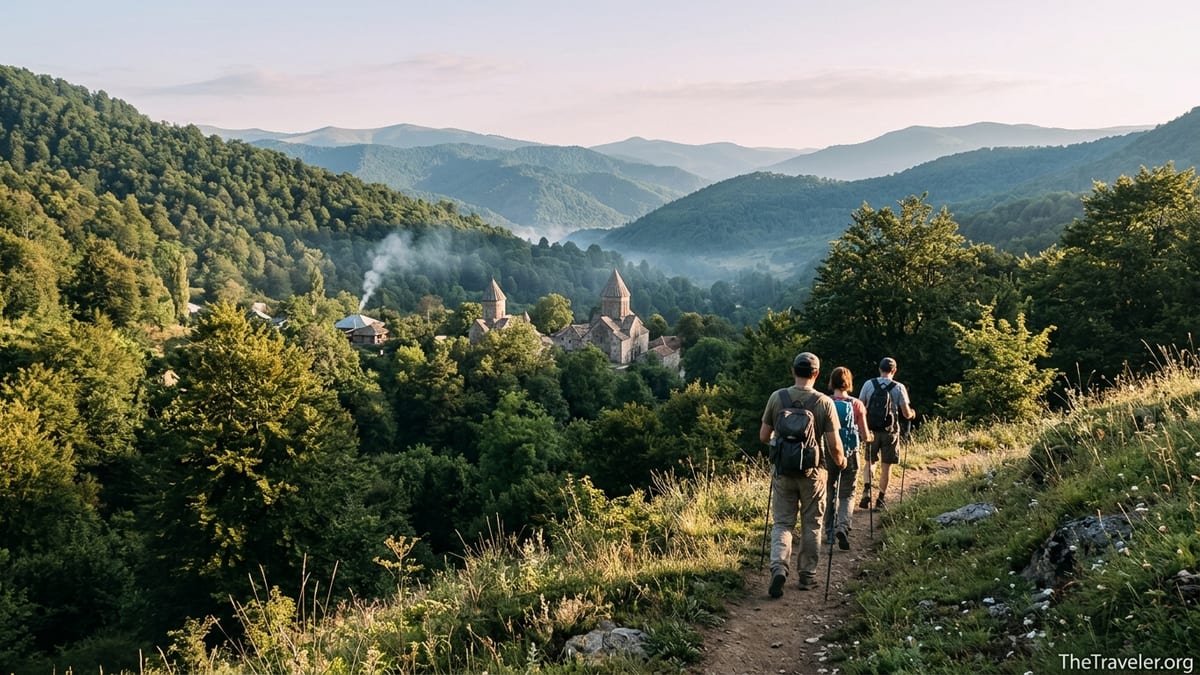
Further north, Dilijan National Park has earned its “Armenian Switzerland” nickname with rolling, forested hills and cool, misty mornings. The town of Dilijan itself is small enough to walk across in 20 minutes, but trails leave from nearby lakes and villages into a network of beech and oak forest. Popular routes include the Parz Lake to Goshavank hike, where you finish your walk at a stone monastery above a village, and the steeper trail up Mount Dimats, known among local hikers for its grassy summit ridge and big views over the Ijevan range. Because the park is only a few hours’ drive from Yerevan, repeat visitors often tack on a two or three day hiking escape here at the end of urban trips.
Even travelers who are not serious hikers can access memorable mountain scenery. Lake Sevan, one of the highest large freshwater lakes in the region, is ringed by hills and accessible peninsulas. Day tours from Yerevan often combine a visit to Sevanavank Monastery, perched on a rocky promontory above the water, with a short lakeside walk and a meal of local trout at a shore restaurant. In other parts of the country, short roadside stops on mountain passes can reveal sweeping views, especially on the way to regions like Vayots Dzor or Syunik, where red and ochre rock formations contrast with green valleys.
Growing hiking and ecotourism networks
For outdoors-oriented travelers, one of the strongest reasons to keep returning to Armenia is how fast its hiking and ecotourism infrastructure is developing, while trails remain far from crowded. Over the past decade, local organizations and international volunteers have helped mark and maintain sections of the long-distance Transcaucasian Trail, including an 80 kilometer route through Dilijan National Park. Multi-day itineraries now link small guesthouses, forest monasteries, and high viewpoints, allowing hikers to explore the region on foot without camping every night.
In addition to the TCT, Armenian and foreign partners have mapped dozens of day hikes that are increasingly easy to access. In Tavush province, well-signed routes lead to spots like the Lastiver waterfalls and caves near the village of Yenokavan, a combination of river gorge, small cascades, and wooden suspension steps that has become a favorite weekend escape for local families. In Vayots Dzor, trails wind through dry canyons around Noravank Monastery and above the village of Areni, home to both vineyards and one of the world’s oldest known winemaking sites.
Tour operators and community organizations are also working to make hiking more approachable for casual visitors. In Yerevan, it is now common to find day tours to Aragats, Dilijan, or the Garni Gorge advertised on hostel noticeboards for prices that remain relatively modest by European standards, often including transport and a picnic. In mountain towns like Dilijan and Goris, guesthouse owners frequently arrange local guides or shared taxis to trailheads for guests who do not want to rent a car. This mix of growing infrastructure and informal help makes it easier for returning travelers to tackle slightly more ambitious routes each time.
Armenia’s national parks are part of this story as well. The country now officially recognizes four national parks, including Dilijan and Sevan, and regional authorities have been improving signage, visitor information boards, and viewpoints. While facilities can still feel basic compared with Western Europe, the direction of change is clear. Many repeat visitors note that trails they walked five or six years ago are now better marked and linked by digital maps, but still quiet enough that they might meet only a handful of other hikers all day.
Warm hospitality, food and wine worth traveling for
Even with all the history and scenery, many travelers say that what brings them back to Armenia is the way people welcome guests. Hospitality here is treated as a duty and a pleasure, especially in rural areas. Stay at a family-run guesthouse in Dilijan, Goris, or the wine village of Areni, and it is common to be greeted with homemade fruit preserves, strong coffee, and sometimes a glass of local wine or mulberry vodka, even before you have set down your bag.
Cuisine is another repeat draw. Traditional dishes like khashlama (slow-cooked meat and vegetables), harissa (a hearty wheat and chicken porridge), and dolma appear across the country, but each region tweaks recipes according to local produce. At Lake Sevan, restaurants specialize in grilled or baked trout pulled from the lake that day. In Vayots Dzor, where days are hot and nights cool, fruit orchards and vineyards dominate, and travelers often time their trips to coincide with grape harvest season. A simple roadside lunch might involve fresh herbs, village cheese, tomatoes that taste of the sun, and lavash torn from a still-warm stack.
Wine has become a major reason for repeat visits. Armenia’s winemaking tradition goes back millennia, but a modern boutique wine scene has taken off in the last decade. In Yerevan, wine bars around Saryan Street and near the Opera House pour flights from producers in Areni, Vayots Dzor, and other regions, with prices that many visitors from Western Europe or North America find accessible. Annual events such as multi-day wine festivals in central Yerevan draw tens of thousands of locals and visitors who stroll between tasting booths, food stalls, and live music stages under the open sky.
The café and bar culture has developed quickly too. In and around Yerevan’s Opera area and along Mashtots and Abovyan streets, travelers find everything from third-wave coffee shops to cozy wine cafés that stay open late. For repeat visitors, this means each trip can feel slightly different: one year focused on historical monasteries and long dinners with homemade brandy, another on hopping between new wine bars and trying contemporary Armenian fusion menus that reinterpret village recipes for an urban crowd.
Compact distances and good value for longer stays
One practical reason travelers keep coming back to Armenia is how easy it is to cover a lot of ground from a single base. The country is roughly the size of the US state of Maryland, and most major sights are within a three to four hour drive of Yerevan. This allows visitors to plan hub-and-spoke trips where they stay in a Yerevan apartment or hotel and join day tours or hire drivers to places like Garni, Geghard, Lake Sevan, Dilijan, Khor Virap, or even the northern city of Gyumri.
For budget-conscious travelers, Armenia offers a mix of affordability and comfort that can be hard to match. Prices shift year to year, but outside the very peak summer period, a clean guesthouse room in a regional town often costs less than many big-city hostel dorms in Western Europe. Simple restaurant meals, street food, and intercity minibus fares remain relatively low, while entrance fees to most historical sites and museums are modest. This makes it realistic for travelers to return for longer stays, perhaps two or three weeks focused on rural areas, without dramatically increasing their budget.
Digital nomads and remote workers are also beginning to include Armenia on repeat circuits. Reliable internet in Yerevan and larger towns, combined with the city’s growing café culture and relatively low living costs, makes it feasible to base yourself in the capital for a month or two, taking weekend trips to hike in Dilijan or relax at Lake Sevan. Over time, these longer stays deepen connections: a traveler who first visited Armenia on a four-day tour might find themselves returning later for a month, renting a short-term apartment, and building friendships with local café staff or hiking guides.
The country’s visa policies are another quiet factor. Many nationalities either do not need a visa for short stays or can obtain one easily on arrival, which lowers the friction for planning a second or third trip. Combined with growing air connections through Yerevan’s Zvartnots Airport and, to a lesser degree, Gyumri’s Shirak Airport, this logistical simplicity helps turn what could be a once-in-a-lifetime trip into a place travelers feel they can revisit.
The Takeaway
Armenia sits at a crossroads in every sense: between continents, between empires of the past, and between an older way of life and a modern tourism scene that is still taking shape. Travelers who visit for the first time are often drawn by images of monasteries perched on cliffs or the promise of uncrowded hikes in the Caucasus foothills. Those who return, sometimes years later, usually mention something less tangible: a sense of depth, of stories still to discover, of people who remember their names and insist they stay a little longer for coffee or one more toast.
For visitors interested in culture, history, and mountain scenery, Armenia offers a rare combination. Ancient temples and churches remain woven into everyday life rather than isolated as relics. Trails and national parks provide serious landscapes without the crowds found in many famous mountain regions. Food and wine traditions feel both old and newly energized. Distances are short, value is good, and each visit can focus on a different thread, from medieval monasteries to forest hikes to village wine cellars.
Whether you come for a weekend city break in Yerevan or a three-week circuit through remote provinces, Armenia has a way of getting under the skin. That is why so many travelers, having once traced its canyons and church domes against a backdrop of high peaks, find themselves planning a return, ready to see familiar valleys and faces in a new season and light.
FAQ
Q1. How many days do I need for a first trip to Armenia focused on culture and scenery?
Most travelers find that 7 to 10 days is enough for a good introduction, combining several days in Yerevan with day trips to Garni, Geghard, Lake Sevan, and a night or two in Dilijan or another mountain town. With more time, you can add southern regions like Syunik and Vayots Dzor.
Q2. Is Armenia safe for solo travelers, including women?
Armenia is generally considered safe, and many solo travelers, including women, report feeling comfortable walking in central Yerevan and major towns, even after dark. Normal city precautions apply, and in rural areas people are often especially protective and welcoming of guests.
Q3. Do I need a car to see Armenia’s mountain scenery and monasteries?
You can explore much of Armenia without driving by joining day tours, hiring a private driver, or using shared taxis and minibuses. Renting a car gives more flexibility for remote hikes and village stays, but many repeat visitors manage happily with organized excursions from Yerevan and regional hubs.
Q4. When is the best time to visit for hiking in Dilijan or on Mount Aragats?
The main hiking season typically runs from late May to October. In Dilijan, late spring and early autumn are especially pleasant, with green forests or colorful foliage. On Mount Aragats, snow can linger into early summer, so most hikers aim for roughly July to September for high-altitude routes.
Q5. Is Armenia expensive compared with nearby European destinations?
Armenia is usually more affordable than many Western European countries. Accommodation, local transport, and restaurant prices tend to be moderate, especially outside the busiest summer weeks. Travelers on mid-range budgets can often afford private rooms, guided day trips, and frequent meals out.
Q6. Can I visit key cultural sites like Garni, Geghard, and Etchmiadzin without joining a tour?
Yes. Many visitors hire a taxi for a half or full day, sharing the cost with fellow travelers, or use a combination of buses and short taxi rides. However, small-group tours are widely available and relatively good value, and they can help provide historical context through local guides.
Q7. What kind of hiking experience do I need for Armenia’s trails?
Armenia offers everything from gentle forest walks around Parz Lake to long summit days on Mount Aragats. Most popular day hikes require reasonable fitness, sturdy shoes, and comfort walking on uneven terrain, but not technical skills. More serious treks, including multi-day sections of the Transcaucasian Trail, benefit from prior mountain experience.
Q8. How easy is it to find vegetarian or vegan food in Armenia?
Traditional Armenian cuisine is meat-heavy, but many vegetable-based dishes are naturally vegetarian, such as bean stews, salads, grilled vegetables, and breads. In Yerevan and larger towns, cafés and restaurants increasingly offer vegetarian and some vegan options. In rural areas, advance communication with guesthouses helps hosts prepare suitable meals.
Q9. Do many people speak English in Armenia?
In Yerevan and main tourist areas, you will often find younger people and hospitality staff who speak basic to good English. Russian is also widely understood. In villages and remote regions, English is less common, but gestures, translation apps, and the general helpfulness of locals usually bridge gaps.
Q10. Is Armenia suitable for families with children who enjoy history and nature?
Yes. Compact distances, relatively quiet roads, and a mix of castles, monasteries, lakes, and short hikes make Armenia appealing for families. Children often enjoy open spaces around sites like Garni, Lake Sevan, and Dilijan, as well as the chance to interact with animals and village life in rural guesthouses.