


Armenia is compact enough that you can cross the country by car in a day, yet dense with mountains, monasteries, and small villages where it still feels like everyone knows everyone else. The challenge for most visitors is not finding things to do, but choosing what to skip without missing what makes the country special. With a bit of planning, it is possible to combine Yerevan’s cafe culture, headline sights like Tatev and Garni, and quieter corners such as Dilijan and Areni into one coherent trip rather than a blur of day tours.
Get the latest updates straight to your inbox!
Choose a Smart Base and Give Yerevan the Time It Deserves
For most travelers, Yerevan is both arrival point and natural base. The city is small enough to cross by taxi in 20 minutes, which makes it practical to stay in one central area, such as near Republic Square or along the tree-lined Saryan and Tumanyan streets. These neighborhoods put you within walking distance of wine bars, casual restaurants, and sights like the Cascade Complex and History Museum, while keeping early-morning pick-ups for day trips simple. Taxi apps commonly used in Armenia mean cross-town rides often cost roughly the price of a coffee in Western Europe, so you do not need to stress about being “perfectly located.”
Yerevan itself deserves at least two full days if you want more than a jet-lagged stroll. A typical first day might start with a slow coffee at an outdoor table on Northern Avenue, followed by the Cascade’s open-air sculpture park and views toward Mount Ararat on a clear day. In the afternoon, many visitors choose between the Sergei Parajanov Museum for an offbeat look at Soviet-era art, or the Cafesjian Center for the Arts inside the Cascade. Evenings are when Yerevan really comes alive: wine bars along Saryan Street pour local Areni Noir and Voskehat, and it is easy to assemble a tasting-by-the-glass just by bar-hopping a single block.
Practical costs in the capital are still relatively moderate by European standards. A filling lunch of khorovats grilled meat or a vegetarian spread of lentils, eggplant, and fresh herbs in a mid-range spot can be similar in price to a takeaway sandwich in many Western cities, while a glass of good Armenian wine often undercuts what you would pay for house wine in Paris or Rome. Budget travelers can lean on bakeries selling warm lavash wraps and roadside kiosks for fruit and nuts and still eat well.
Most importantly, using Yerevan as a hub lets you ease into Armenia’s pace before committing to the roads and rural guesthouses. Spend your first evening people-watching near Republic Square’s fountains or in one of the small neighborhood parks, then start looking beyond the city once you have your bearings.
Prioritize the True Highlights: A Simple First-Timer Route
Armenia rewards deep exploration, but you do not need to cover every region to feel you have “seen” the country. For a first trip of about a week, many experienced visitors and local guides recommend a triangle of Yerevan, southern Armenia around Tatev, and northern green hills around Dilijan, with short detours to Lake Sevan and the wine village of Areni. This gives you ancient monasteries, highland roads, lake views, and small-town life without constant packing and unpacking.
One realistic outline might look like this in practice. Days one and two in Yerevan to walk the city, visit the main museums, and adjust to the time zone. On day three, a long day or, better, an overnight run to the south around Goris and Tatev for mountain scenery and one of the country’s most dramatic monasteries. Return toward Yerevan via Areni and Noravank, trading mountain switchbacks for canyon walls and wine tastings. Then, as a final leg, head north from Yerevan to Lake Sevan and the forested town of Dilijan for a night or two before looping back.
This type of route mirrors what many independent travelers end up doing, whether they arrive on an organized tour or rent their own car. Those trying to squeeze Armenia into four or five days often try to add too many extras, such as Gyumri in the northwest or remote southern towns like Kapan, and then discover that what looks like a short distance on the map can translate into hours on narrow roads. Focusing on one or two regions beyond Yerevan almost always leads to more relaxed days, more time talking with guesthouse owners, and fewer hours staring through a windshield.
If you have more than a week, you can then add a secondary focus according to your interests: extra hiking days on the Transcaucasian Trail, more time among monasteries and industrial heritage around Alaverdi in the north, or slow days in lakeside cabins on Sevan. But it is better to build around a clear skeleton first rather than chase every pin on the map.
See the Classics Without Turning Them Into a Checklist
Certain places appear in almost every Armenian itinerary, and for good reason. The Garni Temple, perched above the Azat River gorge east of Yerevan, is the country’s only standing Greco-Roman colonnaded temple. Nearby Geghard Monastery, partly carved into the rock, sits at the end of a narrow valley and is one of Armenia’s most atmospheric religious sites. Many travelers combine both in a single day from Yerevan, spending roughly two hours at each stop plus drives and a simple lunch en route, which makes a full but not exhausting outing.
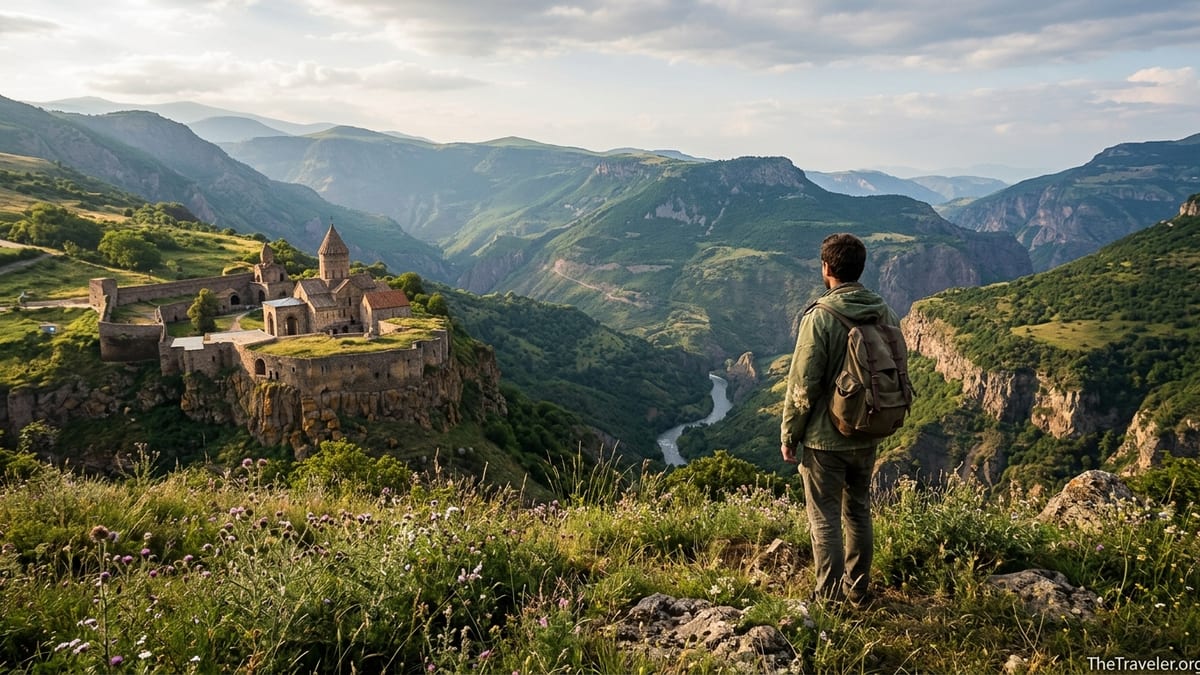
On the road south, Tatev Monastery is another landmark that can feel almost too famous, yet rarely disappoints. Reached by a cable car that runs over a deep gorge, the monastery sits on a high plateau surrounded by rolling hills and cliffs. The journey from Yerevan to the nearby town of Goris typically takes several hours by car in each direction, which is why many seasoned visitors now advise at least one night in Goris instead of trying to tackle Tatev as a day trip. Staying over also makes it easier to detour to the cave village of Khndzoresk or the small waterfall at Shaki without rushing.
Lake Sevan, one of the largest high-altitude lakes in the region, is another classic stop that is best treated as more than a photo break. The Sevan Peninsula with its twin churches is the most popular vantage point, and many group tours simply loop up the stairs to the monastery complex, pose for a shoreline photo, and move on. To really experience the lake, consider booking a simple lakeside guesthouse or a renovated writers’ retreat-style hotel and spending at least an afternoon wandering the shore, sampling crayfish or fish kebabs, or simply watching clouds move over the water.
The key to enjoying these classics is to approach them as places to linger rather than boxes to tick. That may mean saying no to a packed tour that attempts Garni, Geghard, Lake Sevan, Dilijan, and multiple churches in a single day, and instead choosing two or three main sights with time for coffee, wandering, and conversation in between. In Armenia, some of the best moments come not from the monuments themselves, but from the apricots a monastery caretaker presses into your hand or the impromptu picnic you share by the side of a mountain road.
Balance Culture, Nature, and Wine Country
One of Armenia’s strengths is the way cultural and natural experiences sit side by side. A single day might involve stepping into a 13th-century church blackened by centuries of candle smoke, then eating a late lunch under walnut trees by a river. To get the best experience, it helps to think in three broad themes and make sure your plan includes meaningful time with each: historical and religious sites, landscapes and hiking, and food and wine.
On the culture front, beyond the famous Garni, Geghard, and Tatev, it is worth seeking out at least one less-crowded monastery or village church. Places like Goshavank near Dilijan or the hillside churches around Alaverdi in Lori often see far fewer tour buses, which means you may share the site with a handful of locals and a stray dog. In Yerevan, smaller museums dedicated to individual artists and writers sit alongside the main history and genocide museums and can give a more personal window into Armenian life in the 19th and 20th centuries.
For nature, Dilijan National Park in the north has emerged as a practical introduction to Armenia’s forests and hills. Trails range from gentle lakeside loops around Parz Lake to moderate point-to-point hikes on segments of the Transcaucasian Trail that link monasteries and villages. Even a three-hour walk through the park’s beeches and oaks can give a sense of Armenia’s “Little Switzerland” landscapes without requiring serious expedition planning. Elsewhere, short walks to viewpoints near Noravank’s red cliffs or the basalt columns in the Garni gorge can deliver big scenery for relatively little effort.
Wine country is the third pillar that many visitors initially underestimate. The village of Areni in Vayots Dzor province anchors one of the oldest winemaking regions in the world and sits on the main road between Yerevan and the south. A typical visit might combine the cave where archaeologists uncovered a 6,000-year-old winemaking site with a modern winery stop, where you taste local reds made from Areni grape and whites from native varieties on a terrace overlooking the river. Back in Yerevan, wine bars provide an easy second round of exploration, with flights that might include labels from Hin Areni or other regional producers, all within walking distance of each other.
Get Out of the Capital: Stay Overnight in Smaller Towns
One common planning mistake is to sleep in Yerevan every night and tackle the rest of the country through long day trips. While that is physically possible, spending several days based in other towns changes the feel of a trip completely. Two of the easiest bases for first-time visitors are Dilijan in the forested north and Goris in the rugged south, both reachable by road in about half a day depending on traffic and stops.
Dilijan offers a very different atmosphere from Yerevan, with pine and broadleaf forests crowding the hills and a main street lined with wooden balconies and small cafes. Guesthouses range from simple family homes serving homemade jam and herbs at breakfast to modern lodges with saunas and fire pits. Staying two nights here allows for a hike or two in the national park, a leisurely meal in town, and perhaps a taxi ride to nearby Goshavank or Haghartsin monasteries tucked into the trees. In summer, evenings are noticeably cooler than in Yerevan, which can be a welcome relief during a heat wave.
Goris, on the other hand, feels like a frontier town among stone hills, its streets laid out in a grid beneath house-dotted slopes. Many travelers break their journey to Tatev here, arriving in the afternoon from Yerevan, walking through the old quarter of stone houses, and then heading up to the monastery and cable car first thing the following morning before driving back north. Local guesthouses often double as informal tour desks, helping you arrange a ride to the nearby cave village of Old Khndzoresk or recommending simple restaurants where stews simmer in clay pots.
Spending nights outside the capital also means different conversations. In Yerevan, you are more likely to chat with young professionals working in tech or creative fields over wine or coffee. In Dilijan and Goris, your host might be a retired teacher who now runs a guesthouse, a beekeeper selling jars of honey by the roadside, or a guide who can point out which forest paths are likely to be muddy after rain. These small, unscripted interactions often become the moments travelers remember most vividly.
Understand Transport, Timing, and Seasons
Armenia looks small on the map, but roads wind through mountains and valleys, which stretches driving times. A route that might be just a couple of hundred kilometers can still take several hours by car. For example, the drive from Yerevan to Goris for Tatev routinely fills much of a day with a few breaks, and even shorter legs between Yerevan and Dilijan or Lake Sevan can feel slow when behind trucks on two-lane highways. Building conservative estimates into your plan and avoiding too many one-night stops helps you arrive places with daylight to spare.
Many travelers choose to hire a car with driver or rent their own vehicle. Hiring a driver through a local agency or guesthouse means you can look out the window instead of watching for potholes, and for a small group the daily cost can compare favorably with multiple seats on organized tours. Renting gives maximum flexibility but comes with mountain driving, occasional aggressive overtakings, and winter conditions in colder months. Shared minivans known locally as marshrutkas remain the cheapest public option, running regular routes from Yerevan to provincial towns, but they are less comfortable, leave when full, and do not always stop directly at remote monasteries.
Season also plays a huge role in how you experience Armenia. Late spring and early autumn are often considered the sweet spots, with green hills, more moderate temperatures, and harvest activity in wine regions. Summer months bring long daylight hours but can be hot in Yerevan and the lowlands, making higher places like Dilijan and Sevan more comfortable. Winter transforms monasteries and villages into quiet snow scenes and is rewarding if you are prepared for icy roads and short days, but some high passes and hiking routes become difficult or unsafe without experience and gear.
Timing within each day matters too. Popular sites such as Garni and Geghard see most tour buses arrive late morning and mid-afternoon. If you are driving yourself, planning to reach Garni soon after opening or Geghard toward evening can mean sharing the complex with a handful of other visitors rather than dozens. In Yerevan, museums typically close by early evening, so it pays to cluster indoor visits earlier and leave strolling and cafe time for later, when the city’s street life is at its peak.
Travel Responsibly and Connect With Everyday Armenia
As tourism grows, choices you make on the ground can help support communities and keep Armenia’s smaller places livable. One of the simplest actions is to favor locally owned guesthouses, cafes, and tour operators over anonymous chains. In practice, that might mean staying in a family-run inn in Dilijan where breakfast is homemade yogurt and garden herbs, or choosing a small hiking guide company in Goris that employs residents rather than bringing in staff from elsewhere.
Shopping and activities provide more opportunities. In craft-focused towns and villages, look for workshops where you can watch wood carving, carpet weaving, or pottery making and buy directly from the maker. In rural areas, tasting honey, dried fruit, or homemade preserves at small roadside stands can feel like a minor purchase to you but may represent a meaningful sale for the family running the stall. On hiking routes, sticking to marked paths in places like Dilijan National Park helps prevent erosion and protects both flora and archaeological sites just below the soil.
Cultural norms in Armenia are generally straightforward, but a few considerations help interactions go smoothly. Dress modestly when visiting churches and monasteries, especially in more conservative rural areas, and avoid loud behavior or phone calls inside sanctuaries. Asking before photographing people is always appreciated, particularly older villagers and clergy. Many Armenians are proud of their hospitality and may insist on sharing coffee, fruit, or even a glass of homemade oghi spirit; it is fine to accept a small amount, but equally acceptable to decline gently if you do not drink or feel uncomfortable.
Above all, allow space in your schedule for everyday life. Sitting in a small-town bakery in the morning as schoolchildren stream by, or joining local families on a lakeside promenade at sunset, gives you a sense of Armenia that no checklist of churches can. The country’s highlights are remarkable, but it is the unscripted moments that knit them into a coherent experience.
The Takeaway
Getting the best experience in Armenia without missing the highlights is less about racing to every corner of the map and more about thoughtful choices. Give Yerevan at least a couple of days so the capital becomes a familiar backdrop rather than a blur of airport transfers. Build a simple route that connects one or two additional regions, such as Tatev and Goris in the south and Dilijan and Sevan in the north, and make sure it reflects a balance of culture, nature, and food and wine rather than focusing on just one.
Be realistic about distances and driving times, favor overnight stays in smaller towns over exhausting day trips, and plan your visits to classic sights at quieter times of day whenever possible. Seek out experiences that bring you into contact with local people, whether over a family breakfast in a guesthouse, a hike with a regional guide, or a tasting at a small winery in Areni. With this mindset, Armenia reveals itself not only as a place of ancient stones and high plateaus, but as a living country where your choices and curiosity can shape a richer, more grounded journey.
FAQ
Q1. How many days do I need in Armenia to see the main highlights?
For a first visit, around 7 to 10 days is a comfortable window. That usually allows two full days in Yerevan, an overnight or two around Tatev and Goris in the south, and time for Lake Sevan and Dilijan in the north without constant rushing.
Q2. Is it better to rent a car or rely on tours and public transport?
It depends on your comfort with mountain driving. Renting a car offers maximum freedom, but road conditions and local driving styles can be challenging for some. Many visitors choose a mix: organized day trips for longer routes such as Tatev, taxis or shared cars for medium hops like Yerevan to Dilijan, and walking or taxis within cities.
Q3. When is the best time of year to visit Armenia?
Late April to early June and September to mid-October are often ideal. These shoulder seasons usually bring milder temperatures, greener landscapes, and harvest activity in wine regions, with fewer peak-summer crowds at popular monasteries and lakes.
Q4. Can I visit Tatev Monastery as a day trip from Yerevan?
It is physically possible as a very long day, but most experienced travelers now recommend at least one night in or near Goris. Staying over makes the journey less tiring, gives you time for the cable car and monastery without rushing, and leaves room for side trips to places like Khndzoresk or Shaki waterfall.
Q5. Do I need to join a tour to hike in Dilijan National Park or on the Transcaucasian Trail?
Not necessarily. Well-marked routes around places like Parz Lake and some segments between monasteries can be done independently if you are used to basic navigation. However, hiring a local guide or joining a small-group hike is a good idea if you want longer routes, have limited experience with backcountry trails, or prefer someone else to handle logistics.
Q6. Is Lake Sevan worth more than a quick stop?
Yes, if your schedule allows. Many group tours only pause at the peninsula, but staying at least one afternoon or overnight lets you enjoy a quieter shoreline, sample lakeside food, and see the changing light over the water, particularly in the early morning and evening.
Q7. How easy is it to visit the wine region around Areni?
Areni lies right on the main road between Yerevan and the south, which makes it an easy stop on the way to or from Tatev or as part of a day trip that also includes Noravank Monastery. You can join an organized wine tour, arrange a driver through your guesthouse, or negotiate a taxi from Yerevan, and most larger wineries welcome visitors for tastings when booked ahead.
Q8. What should I wear when visiting churches and monasteries?
Dress modestly, especially in rural areas. Shoulders and knees covered are a good rule of thumb for both men and women, and avoid revealing clothing. It is not usually mandatory to cover your head, but carrying a light scarf can be useful if you feel more comfortable doing so in very traditional sites.
Q9. Is Armenia safe for solo travelers?
Many solo travelers, including women, report feeling generally safe in Armenia, especially in Yerevan and major tourist areas. Usual city common sense applies: watch your belongings in crowded spots, avoid overly intoxicated situations, and use licensed taxis or trusted ride-hailing apps at night. In rural areas, people are often curious and hospitable, and petty crime is relatively low.
Q10. Can I combine Armenia with visits to Georgia or other neighboring countries?
Yes, many travelers pair Armenia with Georgia, using overland routes or short flights between Yerevan and Tbilisi. Overland crossings can include scenic detours via Lake Sevan and northern towns. Borders with some other neighbors may be closed or restricted, so it is important to check current conditions before planning multi-country routes beyond Georgia.