


More news on this day
A Union Pacific freight train derailed in New Mexico, sending roughly 50 railcars off the tracks and drawing attention to powerful winds reported in the area at the time of the crash.
Get the latest news straight to your inbox!
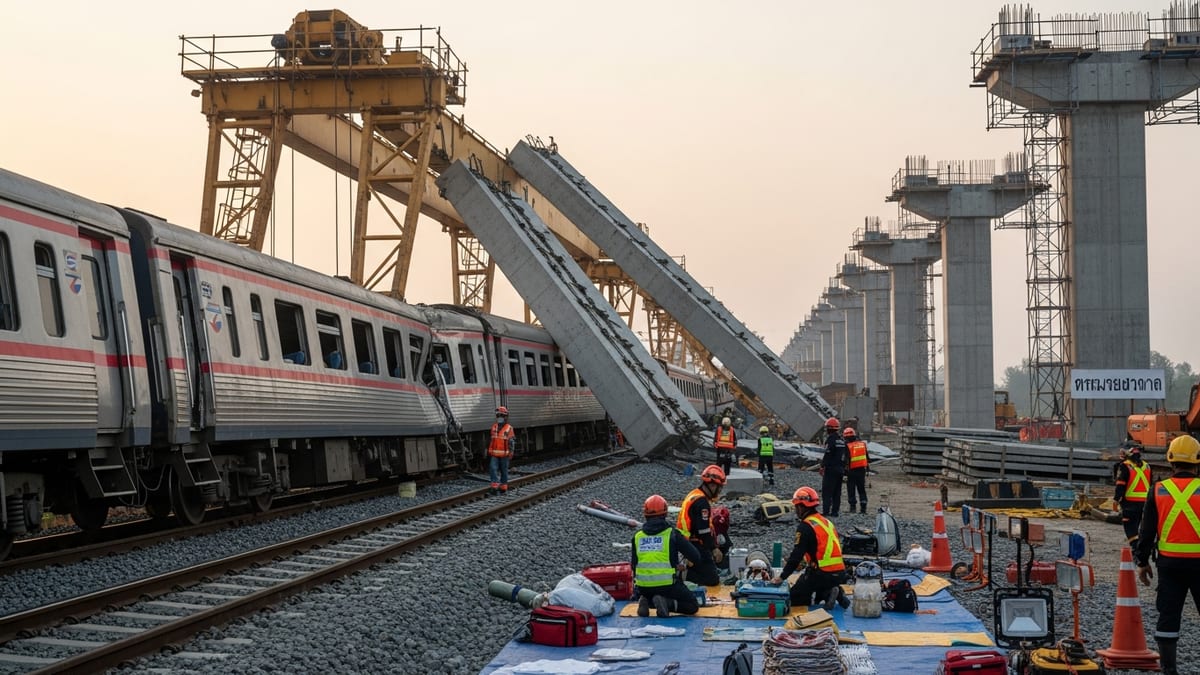
Freight consist topples in rural New Mexico
Publicly available reports indicate that the westbound Union Pacific train derailed in a sparsely populated stretch of New Mexico, scattering dozens of freight wagons along the right of way. Early tallies describe around 50 railcars leaving the tracks, some piling up in a tangle of metal and containers and others tipping onto their sides along the ballast.
Initial information from local and national coverage describes the consist as a long freight train hauling mixed cargo through the corridor, a key artery for rail traffic across the Southwest. Images shared by regional outlets show stacks of containers and covered hoppers jackknifed beside the line, with heavy equipment brought in to begin clearing the route.
Rail traffic through the area has been disrupted while crews remove wrecked cars and inspect the track structure. Passenger operations using the same corridor or nearby routes have faced delays or rerouting while the cleanup and inspections continue.
Early coverage suggests there were no serious injuries among crew members, and there have been no widely reported casualties among residents near the line. The incident nonetheless caused significant property damage and raised concerns about the vulnerability of long, tall freight trains when strong winds sweep across exposed track segments.
High winds under scrutiny as a possible trigger
Weather conditions at the time of the derailment are emerging as a central line of inquiry. Meteorological data and regional news reports point to strong winds moving across the high plains of New Mexico when the train passed through the affected section of track, with gusts described in some coverage as high enough to challenge highway vehicles and commercial trucks.
Rail safety specialists note that stacked intermodal containers and empty or lightly loaded freight cars can act like sails in crosswinds, particularly on elevated embankments, bridges, or open plateau terrain. In those conditions, a sufficiently strong lateral gust can contribute to a loss of stability, especially if multiple empty or lightly loaded cars are marshalled together in the same part of a train.
Historical summaries of wind-related railway accidents list several cases in which strong gusts pushed container cars off bridges or trestles in the American West, including prior Union Pacific incidents in neighboring states. Those records show that when winds reach severe levels and strike a train broadside, even modern rolling stock can be vulnerable if speeds, loading patterns, and local topography align in an unfortunate way.
Investigators examining the New Mexico derailment are expected to compare on-train data such as speed and brake applications with external information about wind speeds and directions. They are also likely to review whether any weather warnings, slow orders, or operational advisories were in effect for that section of track at the time.
Route importance and travel disruptions
The affected rail corridor forms part of a major east–west freight route linking ports, distribution hubs, and inland markets. When a derailment disables a section of main line, long-distance freight and passenger services can feel the impact for days, even if the initial response restores one track relatively quickly.
In this case, published coverage indicates that train movements were halted while wreckage was assessed and hazardous materials screening took place. Even when no significant release is detected, railroads generally keep traffic away from the scene until track geometry, signaling, and overhead structures are inspected and certified for a return to service.
Travelers across the region have encountered ripple effects, including potential delays to intercity passenger trains that use the same general corridor and detours for freight traffic that must be rerouted over alternative lines. For motorists, any grade crossings near the derailment site remain subject to temporary closures as heavy cranes and earthmoving equipment work in and around the right of way.
Tourism operators and local businesses that depend on reliable rail and highway access often feel short-term consequences from such disruptions, especially when a derailment occurs along a key interstate corridor that also supports road travelers heading to or from destinations in New Mexico and neighboring states.
Safety questions around long, tall freight trains
The New Mexico derailment adds to a recent series of high-profile rail incidents in North America that have renewed scrutiny of long freight trains and the forces acting on them. Safety studies and technical papers available to the public describe how train length, car placement, and loading patterns can affect stability when crosswinds, curves, and track irregularities are present.
Analysts emphasize that double-stacked intermodal cars and autorack trains have a higher profile than traditional boxcars or tank wagons, increasing the surface area exposed to gusts. When combined with high operating speeds and certain topographic features, that additional exposure can incrementally raise the risk of wind-related problems, particularly for empty or partially loaded cars.
In response to earlier wind-influenced derailments elsewhere in the West, some railroads have experimented with operational adjustments, including imposing lower speed limits during high wind warnings, modifying train makeup to distribute empty cars more evenly, and improving local wind monitoring along bridges and canyons. Observers will be watching to see whether similar measures are expanded or refined in light of the New Mexico incident.
Public discussion following major derailments often extends beyond the technical causes to broader issues of infrastructure resilience, emergency response capacity, and environmental protection. Even when no significant spill occurs, images of toppled railcars can prompt renewed calls for stricter oversight and fresh investment in rail safety measures along key freight corridors.
Investigation timeline and next steps
Formal inquiries into complex derailments typically unfold over months. Investigators collect physical evidence from the site, review maintenance and inspection records, and analyze data from locomotive event recorders and wayside detectors. In cases where weather may have played a role, wind measurements from nearby stations, radar records, and satellite data can help reconstruct the conditions the train encountered.
Preliminary findings regarding the New Mexico derailment are likely to focus on broad causal factors, including the role played by wind and any contributing track, equipment, or operational issues. A more detailed final report, including technical analysis and recommended safety actions, generally follows once all data has been processed and peer-reviewed.
In the meantime, rail traffic through the region is expected to resume under close monitoring as repair work is completed and inspections are signed off. Travelers planning rail journeys through New Mexico and the wider Southwest are being advised by public schedules and operator notices to check for potential delays or altered routings in the aftermath of the wreck.
For communities along the line, the episode serves as a reminder of the mix of benefits and risks that come with hosting a major freight artery. As the investigation proceeds, attention will focus on how lessons from the derailment are translated into concrete steps to reduce the chance that a powerful windstorm could again push dozens of wagons from the tracks in this part of the desert Southwest.