


More news on this day
Seattle’s Link light rail system has resumed regular service through downtown after an empty train derailed at low speed entering International District/Chinatown Station, temporarily halting rail connections across the city’s core and triggering hours of travel disruption for weekend riders.
Get the latest news straight to your inbox!
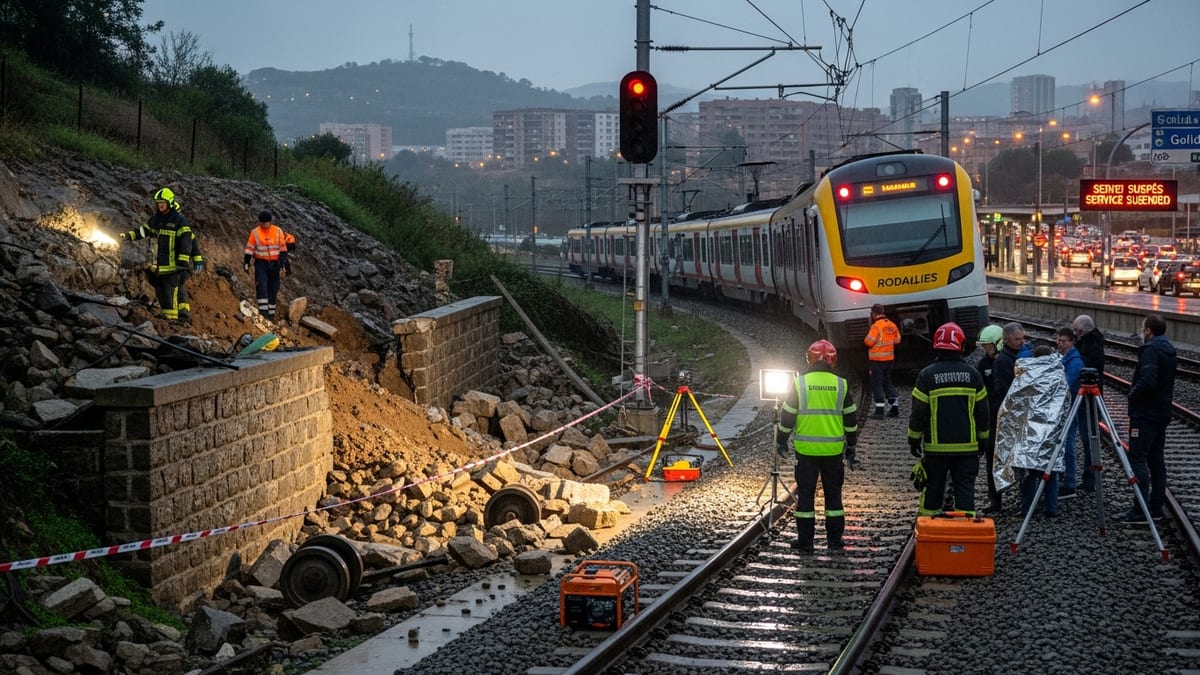
Service restored after hours of downtown disruption
Published coverage indicates the derailment occurred as a Link train was entering the center track at International District/Chinatown Station late on a Saturday night, in an area frequently used to turn trains around between lines. The train was not in passenger service at the time, and available reports state there were no injuries. Even so, the incident left a train straddling a key junction beneath downtown Seattle, blocking movements through one of the most important transfer points in the regional rail network.
With the disabled train fouling the trackway, Sound Transit implemented a suspension of light rail service through the station and into the downtown tunnel. Public alerts and rider accounts describe trains turning back short of the core and shuttle buses taking over segments of the route while technical crews worked in the tunnel to re-rail the train and inspect the track and switching equipment.
By Sunday morning, reports from local outlets and riders indicated that regular Link service had resumed, with trains once again operating through International District/Chinatown. Riders reported updated platform announcements and electronic signage showing normal headways, although some residual delays persisted as the system returned to its usual pattern.
The restoration of service restores a crucial north–south spine for both daily commuters and visitors, reconnecting downtown with Seattle-Tacoma International Airport, the Rainier Valley, and the growing number of stations to the north and east.
What is known about the CID derailment
According to published coverage and rider descriptions, the train involved in the derailment was operating without passengers and was being maneuvered through a track switch in the station area when at least one car came off the rails at low speed. The location is part of a complex track layout that includes a center platform and turnback facilities used to stage and reassign trains between the region’s 1 and 2 light rail lines.
Images shared on social media and summarized in local news reports suggest that the train remained upright within the station environment, rather than suffering a high-speed or elevated guideway incident. That limited the physical damage but still required a methodical response to ensure the equipment was safely re-railed, the switch mechanism inspected, and overhead power and signaling checked before trains could again pass through the area.
Early accounts from riders and transport observers emphasize that emergency responders and rail maintenance crews faced the additional challenge of working in a constrained underground setting while coordinating with bus bridge operations at street level. The absence of injuries and the relatively contained nature of the derailment allowed the recovery to focus on technical repair and operational testing rather than medical response or large-scale evacuation.
While a detailed technical explanation had not yet been published at the time of writing, the pattern of the incident aligns with other low-speed yard or station-area derailments documented in regional safety reports, where a combination of switch position, train handling, or mechanical factors can lead to a wheelset climbing off the rail at slow speed.
Impact on travelers and weekend visitors
The timing of the derailment, late on a weekend night, meant a mix of riders felt the impact, from hospitality and service workers heading home from downtown shifts to sports fans and visitors returning from events in the city core. Social media posts compiled in local reporting describe crowded platforms, repeated public-address announcements, and riders being advised to exit trains and seek bus alternatives when service was first halted.
With rail traffic blocked at International District/Chinatown, riders traveling between the airport or South King County and neighborhoods north of downtown faced the prospect of multiple transfers. Some travelers reported walking between surface bus stops and nearby stations in the rain and dark, while others opted for rideshare services when it became clear that trains would not resume quickly.
Reports indicate that once bus shuttles were running, headways improved, but capacity constraints and unfamiliar routings still caused delays and confusion for some riders. For travelers unfamiliar with Seattle or depending on rail to reach early-morning flights, the sudden loss of the one-seat ride between downtown and the airport underscored how central the Link system has become to the region’s mobility.
By late Sunday morning, riders reported that trains were again moving normally through the downtown tunnel, easing pressure on parallel bus routes that had absorbed the overflow. Normal service also restored key transfers at International District/Chinatown to Sounder commuter rail, Amtrak services at nearby King Street Station, and multiple regional bus lines.
Safety record and questions about reliability
The derailment has renewed public debate about the reliability of Seattle’s light rail system, which has experienced a series of service disruptions in recent years driven by technical faults, external collisions, and infrastructure issues. State-level safety reports on rail fixed-guideway systems show that while serious injuries on Link remain rare, low-speed incidents and service interruptions have been an ongoing operational concern.
Transit advocates quoted in recent coverage note that rail systems worldwide occasionally experience low-speed derailments in yards or complex track interlockings, but argue that frequent service outages, regardless of severity, erode rider confidence. Riders posting about the International District/Chinatown incident framed it within a broader pattern of unexpected stoppages, including prior episodes of stalled trains, overhead power problems, and vehicle collisions blocking tracks.
Publicly available documents show that Sound Transit and state oversight agencies have been investing in both preventive maintenance and incident investigation, using past events to refine operating rules, operator training, and infrastructure design. Analysts following the sector suggest that a thorough review of the latest derailment, including data from train systems and track inspections, could yield targeted fixes such as upgraded switch components or additional protections around complex junctions.
At the same time, transit planners emphasize that Link has rapidly expanded in length and complexity, adding new branches and operating patterns while still bedding in new signaling and power systems. That rapid growth makes the system more useful to riders but also increases the number of potential failure points, reinforcing the importance of robust safety management and clear, timely communication when disruptions occur.
Looking ahead as Link expansion continues
The derailment at International District/Chinatown arrives at a pivotal moment for Seattle’s rail network, as recent extensions have added new stations and corridors and further expansions are in development. The station itself sits at the heart of future plans for a new tunnel and additional lines intended to carry tens of thousands more riders per day through the regional core.
Transit observers note that the incident highlights both the strengths and vulnerabilities of the current system. On one hand, the lack of injuries and the resumption of normal service within hours indicate that existing safety systems and emergency procedures can contain a localized failure. On the other, the scale of the disruption caused by a single low-speed derailment underlines how dependent the broader network has become on a few critical chokepoints.
Rider groups and transportation commentators have called for transparent publication of investigation findings, clear timelines for any corrective work, and continued investment in redundancy so that future incidents do not sever the main link between key destinations. Some have also suggested improvements to passenger information during disruptions, including more precise announcements, better wayfinding to replacement buses, and real-time updates tailored to airport travelers and visitors.
For now, travelers once again have access to a continuous rail corridor from the airport and South King County through downtown and on toward the city’s northern neighborhoods and Eastside connections. As investigations proceed, attention is likely to focus on how lessons from the derailment are incorporated into daily operations and into the next phase of Link’s regional expansion.