


More news on this day
Australia’s cruise sector is entering a decisive new phase, with women moving from back‑of‑house tourism and hospitality positions into senior roles shaping ships, shoreside operations and the wider maritime economy.
Get the latest news straight to your inbox!
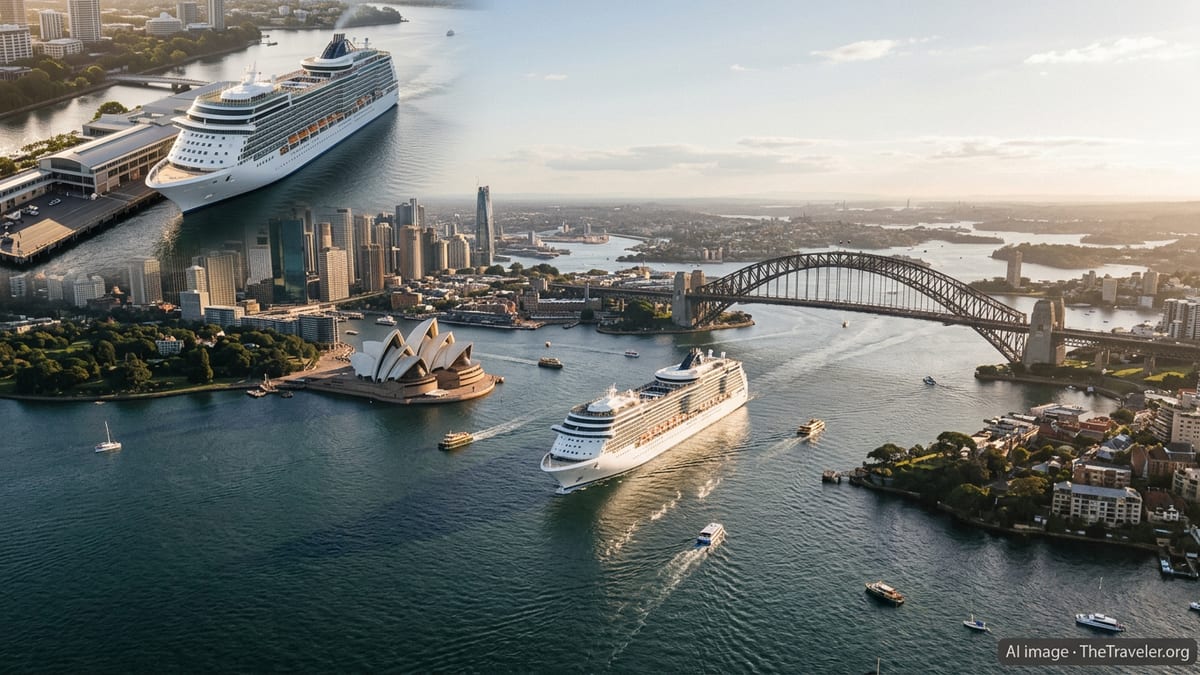
A Growing Market Creates Space for New Leaders
Australia has emerged as one of the world’s most vibrant cruise markets, with major global brands consolidating and expanding their presence across homeports such as Sydney, Brisbane and Melbourne. Industry reports indicate that this growth is being matched by structural changes on the bridge and in the boardroom, where women are assuming a greater share of leadership responsibilities than in previous decades.
Publicly available information from cruise industry associations shows that women now account for a substantial portion of senior management roles globally, with the cruise segment recording some of the highest female representation in maritime leadership. This trend is reflected in Australia, where senior roles in sales, operations, destination development and marketing are increasingly held by women with long careers in tourism and seafaring.
Recent consolidation in the market, including the integration of P&O Cruises Australia into Carnival Cruise Line, has reshaped the competitive landscape while reaffirming long term confidence in Australian cruise tourism. As brands reposition fleets and invest in new guest experiences, observers note that women executives are closely involved in decisions about deployment, itineraries and product design that will define the next era of cruising in the region.
Analysts point out that this alignment of market expansion and gender progress is significant for a sector traditionally dominated by male seafarers and port leaders. The combination of rising passenger numbers and more diverse leadership is being described as a turning point for maritime tourism in and around Australia.
From Hospitality to the Bridge and the Boardroom
For many years, women in Australian cruise tourism were concentrated in customer facing and hospitality roles, including onboard hotel services, retail, spas and entertainment. Current industry coverage describes a gradual but clear shift, with more women entering technical, operational and senior commercial positions that carry strategic influence.
Information released by global cruise associations highlights a rising number of female captains, staff captains and senior officers, alongside women serving as presidents and chief commercial officers of major cruise lines. While many of these appointments are based in North America and Europe, their influence extends to Australian itineraries and deployment decisions, shaping how ships operate in local waters.
Within Australia, travel trade publications have profiled women who have progressed from communications, marketing and customer experience roles into broader leadership positions across the cruise and tourism ecosystem. Former heads of communications, destination managers and aviation executives are now directing strategy at agencies and tourism bodies that work closely with cruise brands, ports and regional destinations.
Industry commentary suggests that these pathways are helping to normalise female leadership in maritime tourism. As women demonstrate expertise in complex fields such as revenue management, port logistics and environmental compliance, the perception that cruise operations are an exclusively male domain is gradually eroding.
Policy, Training and Networks Accelerate Change
Australian and international institutions are also leaning on policy and training initiatives to support women’s advancement in maritime roles. The International Maritime Organization has used its International Day for Women in Maritime, marked each year in May, to highlight pathways into leadership and to encourage governments, regulators and companies to address barriers to female participation.
National regulators and agencies in Australia have published gender equity strategies acknowledging that women still represent only a small share of the global seafaring workforce, even as participation rises. These organisations report that they are embedding inclusive recruitment practices, mandatory equity training for senior leaders and targeted development programs aimed at retaining and promoting women in technical and operational jobs.
Corporate initiatives complement this policy framework. Cruise company documents describe internal networks that connect female officers across global fleets, enabling them to share knowledge on career progression, mentoring and work life balance at sea. Such platforms are presented as important tools for breaking down professional isolation and creating visible communities of women in command and engineering positions.
Specialist events and awards within the Australian travel trade, including programs specifically recognising women in cruising, are further raising the profile of female leaders. By celebrating career achievements and highlighting measurable outcomes such as new itineraries, improved guest experiences or safety innovations, these initiatives provide role models for younger women considering maritime tourism careers.
Shaping Australia’s Maritime Tourism Future
As Australia seeks to capitalise on growing demand for cruise holidays, women in leadership are increasingly involved in decisions about destination development, port infrastructure and sustainability. Tourism publications have profiled female executives working on regional aviation links, First Nations tourism enterprises and coastal experiences that align closely with the cruise visitor economy.
These leaders are reported to be influential in steering product development toward more inclusive and community oriented models of tourism. In practice, this can mean collaborating with regional councils and Indigenous organisations on shore excursion design, prioritising low impact activities, and advocating for investment in local skills and small businesses that benefit from cruise calls.
At the same time, female leaders in engineering, maritime safety and regulatory bodies are contributing to debates around emissions reduction, alternative fuels and climate resilience for ports. As the cruise industry faces pressure to decarbonise and minimise its environmental footprint, the presence of women in technical and policy roles is broadening the perspectives feeding into long term planning.
Observers suggest that this combination of operational expertise and community focus is helping to define a distinctly Australian approach to cruise tourism. With women now more visible on bridges, in boardrooms and in regional tourism organisations, the sector’s future direction is increasingly being shaped by a more diverse set of voices.
Challenges Remain as Participation Lags Potential
Despite these advances, publicly available data indicates that women remain significantly underrepresented at sea and in senior maritime positions worldwide. Surveys referenced by Australian agencies show that women still make up only a small percentage of the global seafaring workforce, and that many occupy roles in passenger vessels rather than in technical or cargo operations.
Workforce reports from Australian maritime bodies also point to persistent gender pay gaps and uneven distribution of women across occupational groups. While senior leadership teams may include a growing share of women, certain specialist areas such as engineering, marine pilotage and port operations continue to be dominated by men, reflecting long standing educational and cultural barriers.
Industry analysts note that maintaining momentum will require ongoing efforts to expand talent pipelines, from school outreach and cadetships through to executive mentoring. Flexible working arrangements, transparent promotion processes and targeted leadership programs are frequently cited as critical tools for retaining women in a sector that often involves long periods away from home and irregular schedules.
Nonetheless, the trajectory in Australia’s cruise industry is widely viewed as positive. As more women take on high profile roles and their achievements are documented across trade media, corporate reports and public sector strategies, the visibility of female leadership is steadily increasing. For young Australians considering a maritime tourism career, the image of who can stand on the bridge or lead a brand in this growing sector is gradually being rewritten.