


More news on this day
With 104 matches scheduled across 16 cities in Canada, Mexico and the United States, the 2026 FIFA World Cup is set to create one of the largest travel surges North American airports have ever experienced, raising fresh concerns about delay risks at already stretched hubs.
Get the latest news straight to your inbox!
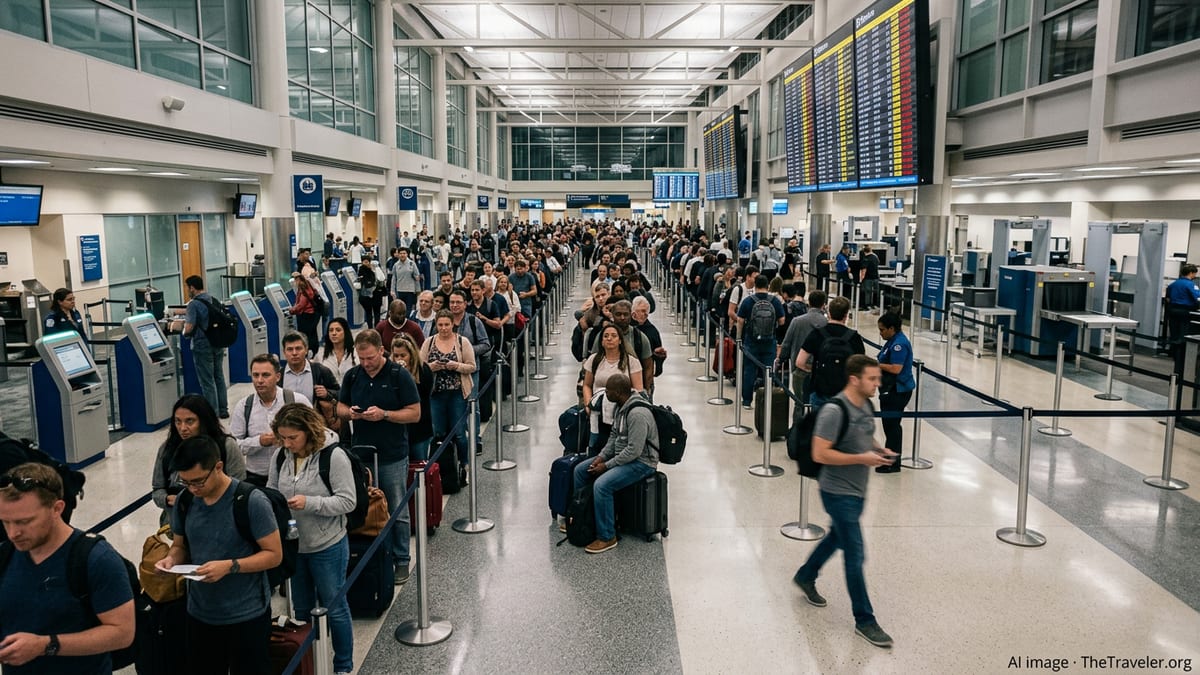
Historic Tournament, Concentrated Air Travel Pressures
The expanded 48 team format and triple host structure will concentrate huge volumes of passengers into a relatively short period, particularly around opening fixtures, knockout rounds and the final in the New York and New Jersey region. Publicly available tournament information shows that the final at MetLife Stadium in East Rutherford is expected to attract more than 80,000 spectators, many of whom will pass through Newark Liberty, John F. Kennedy and LaGuardia airports.
Travel industry forecasts suggest that international visitor numbers to the United States and Canada are already rebounding, with major gateways such as Toronto, Vancouver, Dallas Fort Worth, Atlanta and Los Angeles seeing year on year schedule growth. When routine summer peaks are layered with match day traffic, the likelihood of congestion at check in, security, immigration and baggage reclaim increases sharply, even before factoring in weather or operational disruptions.
In Mexico, traffic for host cities Mexico City, Guadalajara and Monterrey will combine with domestic tourism and business demand. Mexico City International Airport has long operated close to its declared hourly capacity, and infrastructure upgrades due for completion around mid 2026 are aimed at easing operational bottlenecks. The timing means some projects may still be ramping up as supporter travel peaks.
While airlines and airport operators are adjusting schedules and staffing plans, much of the risk is structural. Airspace around key metropolitan areas, from the US Northeast corridor to Southern California, was already among the most complex and delay prone before World Cup planning began.
Newark and the New York Region Under the Microscope
The New York and New Jersey area, which will host both early round matches and the final, is widely viewed by aviation analysts as the most vulnerable to disruption. Newark Liberty has experienced repeated periods of heavy delays in recent summers, with publicly available federal aviation data linking problems to a combination of runway work, aging equipment, bad weather and air traffic controller shortages in the region.
Regulatory filings show that the Federal Aviation Administration has imposed and then extended operating limits on arrivals and departures at Newark through 2025 to curb congestion and reduce the risk of cascading delays. Separate notices describe targeted delay reduction meetings with airlines and local airport authorities, as well as efforts to rebalance traffic between New York area facilities. These measures are intended to make the operation more predictable, but they also reduce scheduling flexibility heading into a major global event.
News reports over the past two years have highlighted a series of ground delay programs, temporary ground stops and equipment related slowdowns affecting Newark, with knock on effects at LaGuardia, JFK and Philadelphia. Analyses in national media point to chronic staffing gaps at the regional air traffic control facility, noting that complex retraining requirements and earlier hiring disruptions have slowed efforts to rebuild capacity.
For World Cup travelers, the practical implication is that any bout of summer thunderstorms, haze or equipment maintenance in the New York region in June or July 2026 could quickly translate into long queues and missed connections. Industry observers suggest that passengers with tickets for New Jersey matches may want to consider flexible itineraries using multiple airports in the region rather than relying on a single gateway.
Special Air Traffic Procedures for World Cup Host Cities
Planning documents show that aviation authorities in the United States are already issuing event specific guidance for several World Cup host regions. A recent domestic event notice for Kansas City details special air traffic procedures, including prior permission requirements for certain general aviation flights at multiple airports during match windows. A similar notice for the Dallas Fort Worth metroplex outlines temporary rules designed to enhance safety and minimize delays when match day traffic peaks.
These advisories focus heavily on private and charter operations, which are expected to increase as corporate groups and high net worth supporters travel to games. By channeling this traffic into defined slots and parking arrangements, authorities aim to preserve runway and taxiway capacity for scheduled commercial services. However, the notices also acknowledge that airspace complexity will rise during match periods, leaving little room to absorb weather or staffing related disruptions without some level of delay.
Industry coverage indicates that comparable planning is underway for other US host cities, including Atlanta, Houston, Miami, Seattle, San Francisco Bay Area, Boston, Los Angeles and Philadelphia. While not all cities face the same structural constraints as New York, several are already among the busiest airports in North America, and their margins for error during peak events are limited.
General aviation communities are being urged, through these notices, to finalize World Cup operating plans well in advance. For commercial passengers, the existence of event specific airspace procedures is largely invisible, but the downstream effect can appear as schedule padding, earlier departure times and longer connection windows built into airline timetables.
Infrastructure Upgrades and Capacity Investments
Some airports are using the World Cup as a catalyst to accelerate infrastructure improvements that could mitigate delays. In Toronto, the operator of Pearson International has announced a multibillion dollar renewal and expansion program aimed at boosting capacity and improving on time performance. Press releases describe runway rehabilitation, terminal modernization and technology enhancements that are scheduled to roll out in phases through the mid 2020s.
Toronto Pearson has also highlighted more than a year of coordinated planning with airlines, security agencies and ground handlers specifically tied to the World Cup and the busy summer travel season. The airport positions itself as Canada’s primary international gateway and a natural entry point for fans traveling to matches in Toronto and other Canadian host cities.
In Mexico City, a major renovation program at the main international airport is due to finish around mid 2026, with the goal of improving operations in time for the country’s hosting duties. Public information on the project notes terminal improvements and airfield works intended to support the existing cap on hourly operations while enhancing passenger processing.
Across the United States, the broader air traffic system is also in flux. Congressional hearings and policy documents linked to recent aviation legislation reference long term modernization of communications and control centers, as well as campaigns to expand and retrain the controller workforce. These steps may help reduce delay risk over time, but many of the benefits will arrive gradually rather than in a single leap ahead of the tournament.
What Travelers Can Expect in Summer 2026
Travel organizations and airline briefings point to a few consistent themes for passengers planning World Cup trips. First, schedules for summer 2026 are likely to include built in buffers on routes serving host cities, reflecting expectations of congestion at peak times. Second, connections through the New York and New Jersey area may carry higher disruption risk than routings via less saturated hubs, particularly for time critical match days.
Analysts also expect dynamic pricing and high load factors on key flows, which can make rebooking more difficult when delays occur. With many long haul flights into North America arriving in narrow time bands, a single round of ground delay programs at a major hub can ripple across multiple continents. Travel trade publications suggest that fans consider arriving a day early for knockout or final matches and allow extra time in their itineraries for security and immigration processing.
On the positive side, airports such as Toronto Pearson and several large US hubs are signaling increased staffing, expanded customer service teams and upgraded facilities for 2026. Experience from past mega events such as the Olympics and previous World Cups shows that intensive short term planning can reduce the most severe bottlenecks, even if it cannot eliminate all delays.
For now, the emerging picture is a patchwork of preparations, constraints and unknowns. North American airports are racing to be ready for the World Cup spotlight, but travelers should expect a challenging operational environment and plan accordingly when booking their journeys to the world’s biggest football tournament.