


More news on this day
Air travelers using Monterrey and Guadalajara, two of Mexico’s busiest hubs, are encountering a patchwork of delays this month as weather, shifting demand and earlier security disruptions ripple through flight schedules.
Get the latest news straight to your inbox!
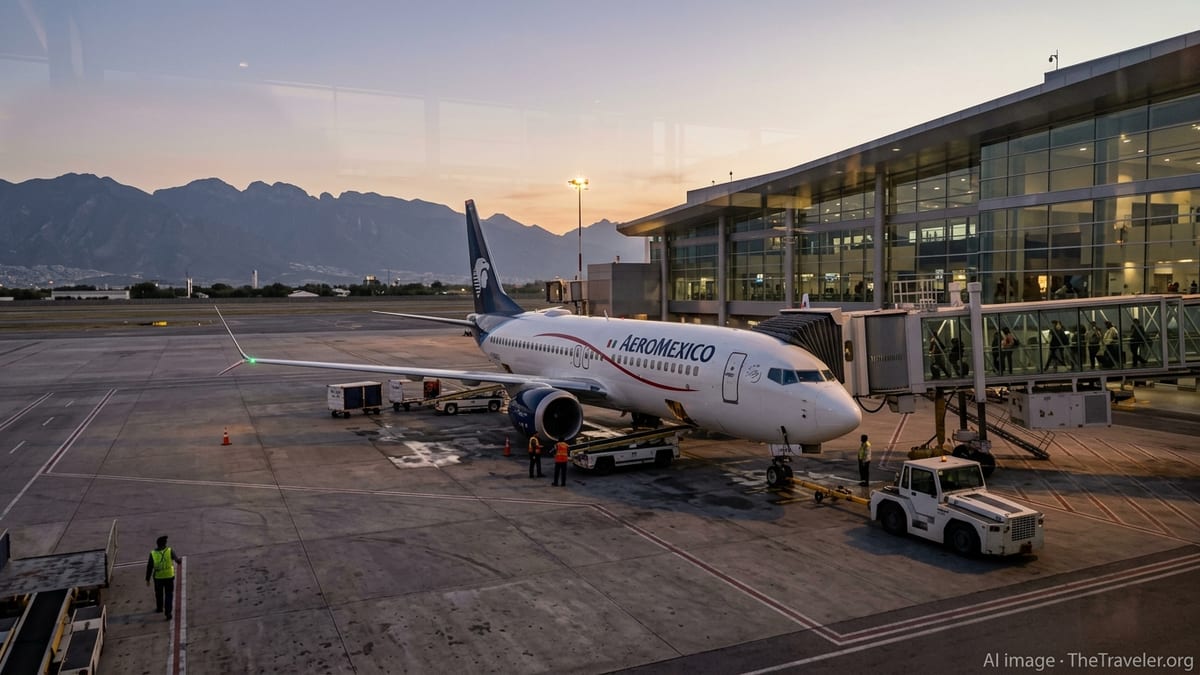
Busy Summer Schedules Strain Operations in Northern Mexico
Monterrey’s General Mariano Escobedo International Airport and Guadalajara International Airport have entered the peak of the summer travel period with heavy passenger volumes and dense daily schedules. Industry data shows Monterrey currently handles close to 200 flights per day serving more than 60 destinations, while Guadalajara continues to post record passenger totals following strong traffic in June.
Publicly available flight tracking data indicates that, although both airports are operating normally overall, individual services have been affected by late arrivals of aircraft, crew availability and congestion at connecting hubs. On recent days, several Monterrey departures to major U.S. gateways have operated behind schedule when inbound aircraft from the United States arrived late after weather or air traffic management restrictions.
Guadalajara, a key base for Mexican low cost carriers, has also seen sporadic delays on trunk routes to Mexico City, Tijuana, Los Angeles and Chicago. Carriers have been running packed schedules, and tight turn times between flights leave little margin when thunderstorms or congestion slow operations elsewhere in the network.
Recent Disruptions on Key Monterrey and Guadalajara Routes
Flight status records for the week of July 13 to 16 show a series of late departures on cross border and domestic services touching Monterrey and Guadalajara. Some Monterrey to Houston and Monterrey to Mexico City flights, for example, have departed later than scheduled when their inbound legs from U.S. or central Mexican airports arrived behind schedule. These knock on effects have mainly translated into delays of under two hours but have disrupted connections for travelers heading onward to other cities.
From Guadalajara, several high frequency services to Mexico City and other domestic hubs have also displayed delayed departure and arrival times this week. Available data suggests that many of these delays are tied to crowded afternoon and evening banks of flights, when incoming aircraft from weather prone regions arrive late and push back turnaround times on the ground.
Point to point services between Guadalajara and Monterrey themselves have not been immune. Recent evening departures on popular low cost routes linking the two cities have shown extended “en route” times or later than scheduled arrivals, reflecting periods of busy airspace and short ground buffers between consecutive rotations.
Weather and Earlier Security Events Shape Traveler Experience
Summer convection across central and northern Mexico, together with storms in major U.S. hubs, remains a recurring driver of disruptions that cascade into Monterrey and Guadalajara. Even when local conditions at the Mexican airports are favorable, storms around Dallas, Houston, Chicago or Mexico City can hold departures, force reroutes or slow traffic flows, leading to late inbound aircraft that then delay subsequent flights.
The region has also experienced security related turbulence earlier this year that temporarily reshaped flight operations. In February, security operations and related unrest in Jalisco produced highway blockades and short term disruption to air service at Guadalajara and Puerto Vallarta. While airport operators later reported that flight schedules had largely normalized, the episode prompted airlines to review contingency plans and has left many travelers more attuned to potential last minute changes.
More recently, travel advisories from government and corporate risk services continue to emphasize that access roads, not just runways, can affect the real world punctuality of flights in parts of Mexico. Even when aircraft depart on time, congestion or checkpoints on approaches to the airports can add significant time to a journey and contribute to missed check in deadlines.
Airlines Adjust Capacity Amid Demand Shifts
Carriers serving Monterrey and Guadalajara have been recalibrating capacity and route maps in response to shifting demand, the global aircraft delivery backlog and network priorities. Industry reports highlight that some international routes into Guadalajara launched in recent seasons have been cut back or canceled ahead of schedule, while other domestic markets have gained new frequencies.
Monterrey has seen the opposite trend on several fronts, with new links to long haul destinations and additional domestic connectivity. These expansions create more options for travelers but also increase complexity for airline operations, as fleets and crews are stretched across a greater number of city pairs. Any disruption at one node in the network can reverberate through to northern Mexico’s main business hubs.
For passengers, these adjustments mean that a city pair which previously had a single, well timed daily flight may now be served by multiple lower cost options but with greater variability in on time performance. In particular, late evening departures from Guadalajara and Monterrey, designed to maximize aircraft utilization, appear more vulnerable to knock on delays accumulating through the day.
What Travelers Through Monterrey and Guadalajara Should Expect
For the remainder of July, travelers heading through Monterrey and Guadalajara should be prepared for generally normal operations punctuated by occasional, sometimes clustered, delays. Historical patterns suggest that afternoon and evening travel, especially on days with active weather systems over central Mexico or major U.S. hubs, carries a higher risk of disrupted departure times and tight connections.
Publicly available guidance from airlines, airport operators and consular advisories continues to stress the importance of checking flight status frequently on the day of travel and allowing extra time for both airport access and security screening. Travelers making connections through Monterrey or Guadalajara, particularly on separate tickets between low cost carriers and international airlines, may want to build in longer layovers to account for potential late arrivals.
Despite the recent disruptions, both airports remain central gateways for tourists and business travelers moving between the United States and Mexico’s industrial and tech corridors. As carriers refine schedules and as the peak summer surge eases later in the season, observers will be watching on time performance metrics closely to see whether Monterrey and Guadalajara can translate their growth in passenger numbers into more reliable operations for international and domestic travelers alike.