


More news on this day
The World Conference on Transport Research is set to return in 2026 with its 17th edition, drawing around 1,500 experts to Toulouse, France, for a week of debate on how to reshape global mobility in the face of climate, technological and geopolitical pressures.
Get the latest news straight to your inbox!
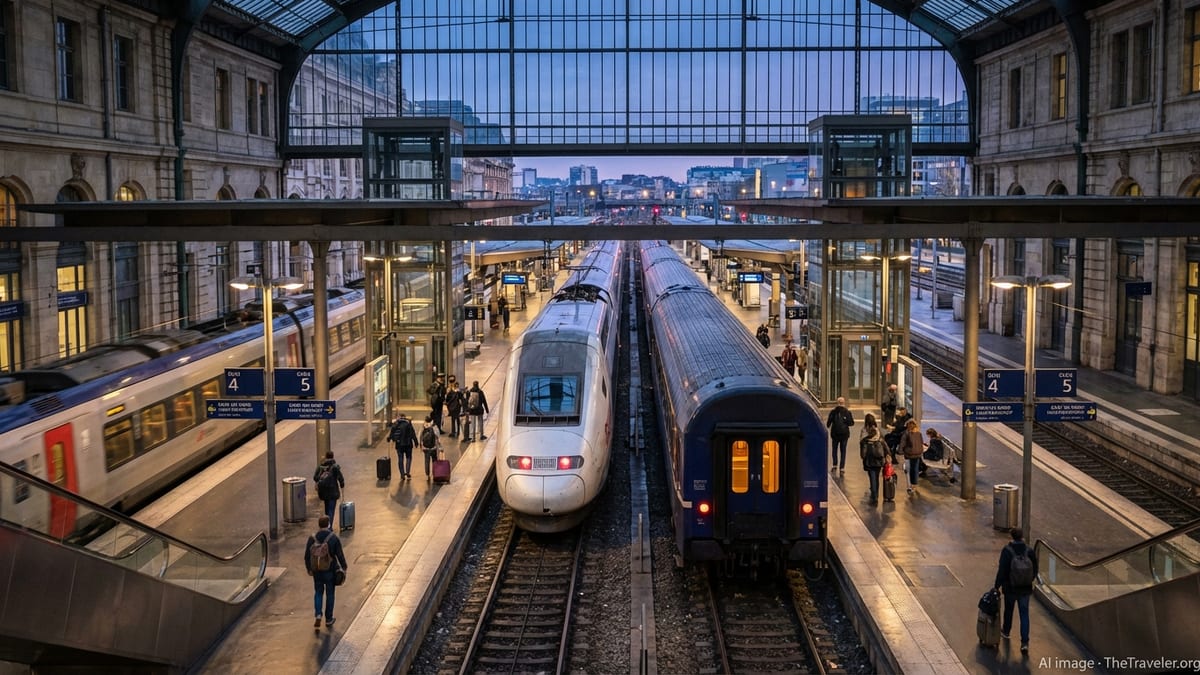
A Triennial Global Checkpoint for Mobility Policy
According to publicly available information from the World Conference on Transport Research Society, the 17th World Conference on Transport Research will take place from 6 to 10 July 2026 on the campus of Toulouse Capitole University in southern France. The triennial gathering is regarded in academic and professional circles as one of the most comprehensive forums focused solely on transport systems, policy and technology.
Organisers indicate that more than 1,500 participants are expected, spanning university researchers, engineers, consultants and decision makers from both the public and private sectors. Over several days, delegates will present peer reviewed papers, attend plenary debates and take part in technical visits across the Toulouse region, a major European hub for aerospace and mobility innovation.
The society behind the conference, founded in the 1970s, uses the event as its main platform for consolidating state of the art research in transport economics, planning, operations and safety. The 2026 edition continues that tradition while reflecting mounting pressure on transport networks to decarbonise, digitalise and remain resilient to shocks.
Nine Themes Framing a Rapidly Changing Sector
Conference material shows that discussions in Toulouse will be organised into nine broad themes intended to capture both long standing and emerging issues across passenger and freight transport. These include transport, land use and sustainability; infrastructure design and maintenance; urban traffic management; maritime and air logistics; and transport challenges in developing and emerging economies.
Road safety is highlighted as a key research strand within this structure, reflecting concern over stagnating or rising casualty trends in several regions despite advances in vehicle technology. Papers in this area are expected to explore interventions such as speed management, safe system design and the interaction between human behaviour and automated driving features.
Other tracks are devoted to the governance and financing of transport systems, where researchers will present work on pricing, public private partnerships and the distributional effects of major infrastructure programmes. Sessions on freight and logistics will examine supply chain efficiency, port competitiveness and the environmental footprint of global trade corridors.
The thematic framework is designed to encourage cross fertilisation between disciplines, allowing specialists in areas such as land use planning, behavioural science and data science to test ideas that could influence national and city level transport strategies in the coming decade.
Resilience, Deglobalisation and a Fragmenting World
One of the high profile elements of the 2026 programme is an international transport policy plenary focusing on how supply chains and mobility systems are responding to what organisers describe as a deglobalising and fragmenting world. Session details outline a focus on the combined impact of extreme weather, pandemics, cyber incidents and geopolitical tensions on the movement of people and goods.
Materials for the plenary indicate that contributors will examine how funding models, governance arrangements and innovation policy can be adjusted to make networks more shock resistant. This includes questions about redundancy and diversification in freight corridors, investment in climate resilient infrastructure, and the role of digital tools in detecting and managing disruption.
The topic reflects a broader shift in transport research priorities since the pandemic, with greater emphasis on continuity of essential services, supply security and the vulnerability of just in time logistics. By framing resilience as a central lens, the conference signals that risk management is now embedded alongside classic concerns such as efficiency and cost.
For host cities and regions, these discussions are closely linked to industrial strategy, as governments seek to balance open trade with more localised production and critical infrastructure protection. Toulouse, with its aerospace and technology base, provides a concrete backdrop for examining these trade offs in practice.
Climate, Digitalisation and the Net Zero Transition
Recent programme material emphasises that decarbonisation and digital transformation will cut across many sessions at the World Conference on Transport Research in 2026. The transport sector remains a major contributor to global greenhouse gas emissions, and the conference is expected to showcase research on pathways to net zero compatible mobility.
Studies on modal shift, vehicle electrification, sustainable aviation fuels and alternative propulsion for shipping are likely to feature, alongside work on demand management and pricing policies aimed at reducing car dependency. Researchers are also set to present analyses of equity impacts, including how climate policies affect low income households and peripheral regions.
On the digital front, the programme includes contributions on modelling tools, data platforms and artificial intelligence applications. Announcements from participating organisations preview demonstrations of open source modelling frameworks designed to simulate multimodal networks and test policy scenarios, reflecting a move toward more transparent and reproducible transport analysis.
The overlap between climate and digital themes is visible in planned sessions on real time traffic management, connected and automated mobility, and data driven public transport planning. These strands point to a future in which emissions reduction targets, land use decisions and network operations are increasingly integrated through shared data and analytical tools.
What the Toulouse Edition Means for Travelers and Cities
While the World Conference on Transport Research is primarily a specialist gathering, its agenda has clear implications for travelers, tourism flows and urban development. Research presented in Toulouse is expected to inform future policies on airport access, high speed rail corridors, urban transit expansion and active travel infrastructure in cities around the world.
For host city Toulouse, the event reinforces its position as a laboratory for transport innovation, building on existing strengths in aviation, space and digital technologies. Local authorities and academic institutions are preparing technical visits and side events to showcase new public transport projects, cycling routes and interchanges that connect the historic centre with the wider metropolitan area.
International delegates will navigate a compact European city with metro, bus and cycling options linking the conference venues with hotels, cultural sites and the nearby airport. Observers note that such real world conditions provide an informal test case for many of the themes under discussion, from intermodality and accessibility to user experience.
As the July 2026 dates approach, the World Conference on Transport Research is emerging as a key waypoint in debates over how mobility systems can support economic development while meeting climate, safety and resilience goals. Outcomes from Toulouse are likely to resonate in national transport plans, city strategies and industry roadmaps in the years that follow.