


More news on this day
RailTech Europe is preparing for a high-profile 2026 edition in Utrecht, positioning itself as a key meeting point for rail professionals focused on decarbonisation, digitalisation and cross-border connectivity across the European network.
Get the latest news straight to your inbox!
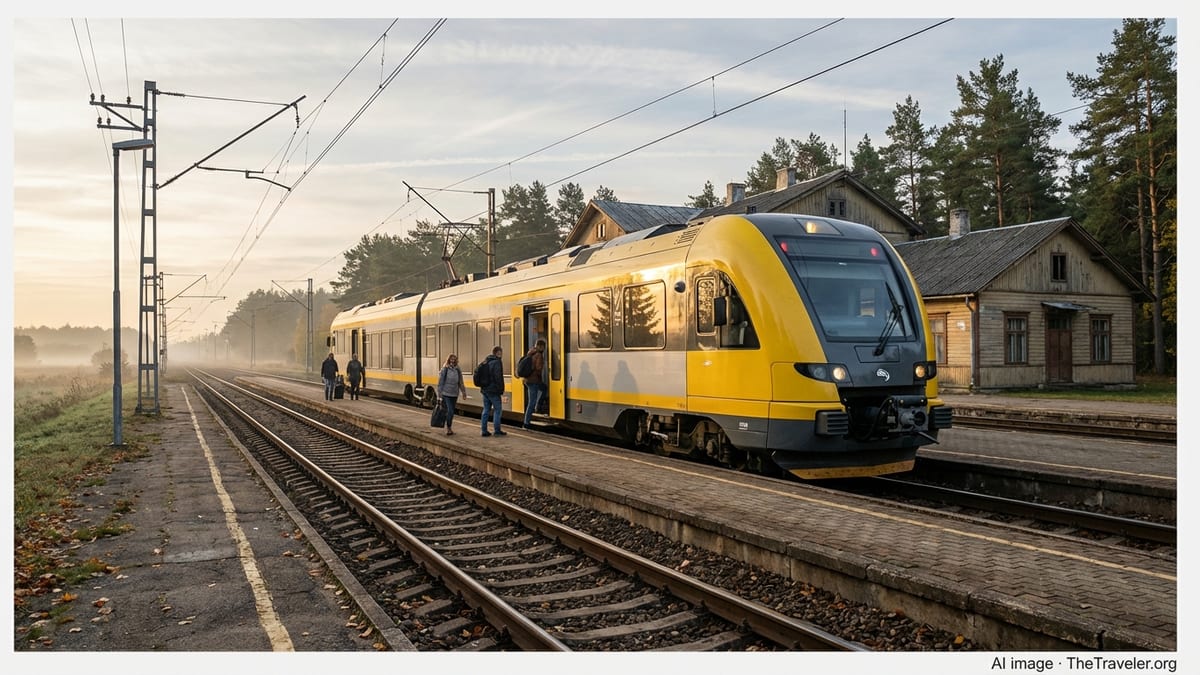
Utrecht to Host 16th Edition of RailTech Europe
The 16th edition of RailTech Europe is scheduled to take place on 4 and 5 March 2026 at the Jaarbeurs convention centre in Utrecht, returning the event to one of Europe’s busiest rail hubs. Organisers describe the gathering as a platform for infrastructure managers, train manufacturers, technology suppliers and policymakers to exchange ideas on the future of rail in Europe.
According to publicly available event information, RailTech Europe 2026 will combine an exhibition floor with a multi-track conference programme and technical sessions. Exhibitors range from established rolling stock builders and infrastructure specialists to component suppliers and digital start-ups, highlighting the breadth of innovation currently underway in the sector.
The trade fair is closely linked to the RailTech.com media platform, which has expanded its events and editorial coverage around themes such as net zero rail operations, digital traffic management and the changing role of stations. Coverage indicates that the 2026 show is expected to draw visitors from across Europe as well as delegations from Asia and the Middle East, reflecting growing international interest in European rail know-how.
Decarbonisation and Alternative Traction Take Centre Stage
RailTech Europe 2026 is set against a backdrop of accelerating efforts to cut emissions from transport, with rail positioned as a central pillar of the European Green Deal. Industry publications note that around 40 percent of Europe’s rail network remains non-electrified, which keeps thousands of diesel multiple units in daily service and has prompted strong interest in alternative traction technologies.
Conference previews indicate that one of the core themes in Utrecht will be net zero rail operations, with sessions examining battery-electric trains, hydrogen-powered rolling stock and hybrid concepts that can bridge gaps in electrification. Recent demonstrations in countries including Denmark and Germany have shown how battery units can charge either under the wires or via dedicated charging stations, allowing operators to phase out diesel on shorter regional routes without waiting for full electrification of every kilometre of track.
Hydrogen trains are expected to feature in discussions as well, but the tone of coverage has shifted toward a more cautious assessment of their role. Reports on recent industry developments point to a mixed picture, with some manufacturers scaling back long term hydrogen research while continuing to fulfil existing orders. Analysts quoted in trade media now tend to frame hydrogen as a niche solution for specific corridors where batteries or conventional electrification are less practical, rather than a universal replacement for diesel.
Alongside rolling stock, RailTech Europe is also expected to highlight research into smart substations, railway energy hubs and more efficient traction systems. European research initiatives focused on rail innovation have published roadmaps that include high performance battery multiple units, hydrogen refuelling solutions and energy storage systems, and these projects are likely to be represented in Utrecht through technical papers and partner stands.
Digitalisation, Signalling and Cross-Border Operations
Beyond propulsion, RailTech Europe traditionally devotes significant space to digital and operational topics, and 2026 is expected to be no exception. Preview material suggests a strong focus on the continued rollout of the European Train Control System and the broader digitalisation of signalling and traffic management. These programmes are central to increasing capacity on existing infrastructure, improving safety and simplifying cross-border operations for both passenger and freight services.
Suppliers are preparing to showcase new generations of multi-system locomotives and train control equipment designed to operate under multiple national standards while complying with European interoperability rules. Industry reports describe how such locomotives are increasingly being coupled with advanced onboard diagnostics, predictive maintenance tools and condition monitoring technologies, all of which reduce lifecycle costs and improve fleet availability.
Digital platforms for timetable planning, crew management and real time passenger information are expected to be prominent on the exhibition floor. RailTech Europe has previously highlighted how artificial intelligence and data analytics can support more accurate demand forecasting and incident management, themes that are gaining urgency as operators seek to rebuild ridership and improve punctuality after several years of network disruption and capacity constraints.
Stations, Infrastructure and the Passenger Experience
The 2026 event is also shaping up to be a showcase for innovations in rail infrastructure and station design. Companies active in catenary systems, track components and station equipment have announced plans to attend Utrecht, pointing to a wider industry trend toward modular construction, lighter materials and easier maintenance. Recent announcements from infrastructure suppliers highlight the use of advanced aluminium structures, composite materials and prefabricated elements to reduce installation time and environmental impact.
European research programmes have been promoting concepts such as smart green railway stations, integrating energy efficient building systems, on site renewable generation and improved passenger flow management. These ideas are expected to appear in Utrecht through design studies, pilot project presentations and supplier exhibits, reflecting growing recognition that stations are not only transport nodes but also gateways to cities and regions.
Passenger experience is likely to feature throughout the conference tracks, with discussions on accessibility, wayfinding, integrated ticketing and multimodal connections. As more national governments and metropolitan regions promote rail as the backbone of sustainable mobility, attention is turning to how stations connect with cycling networks, urban public transport and long distance services, an area where Dutch practice is often cited as a reference point for visitors.
Implications for International Travellers and the Wider Market
For international travellers, the developments showcased at RailTech Europe carry implications that reach beyond specialist circles. Investments in alternative traction, modern signalling and upgraded stations are expected to support more frequent and reliable regional services, easier cross border journeys and expanded night train networks, all of which make rail a more attractive alternative to short haul flights and long car trips.
Travel industry observers point out that the Netherlands, with Utrecht as a key junction, sits at the heart of the northwestern European rail grid, connecting high speed corridors to France and Germany with dense regional networks. As suppliers unveil new rolling stock and digital tools in Utrecht, operators from across the continent are likely to evaluate how these solutions can be deployed to strengthen international links and support tourism flows.
RailTech Europe 2026 will therefore serve not only as a marketplace for contracts and partnerships but also as a barometer of where European rail is heading in the next decade. The balance struck between batteries, hydrogen, electrification and digital upgrades will help determine how quickly the sector can reach climate targets while continuing to expand capacity for both passengers and freight, a question of growing interest for travellers, cities and national economies alike.