


HanseMerkur has become a go-to name in Europe and beyond for affordable travel insurance, particularly for German-speaking travelers and long-term backpackers. Yet a striking number of policyholders discover too late that they misunderstood what their contract actually covers. The result is denied claims, unexpected medical bills, and cancellation costs that travelers assumed were insured. This guide unpacks how HanseMerkur travel insurance really works in practice, and how to avoid using it the wrong way.
Get the latest updates straight to your inbox!
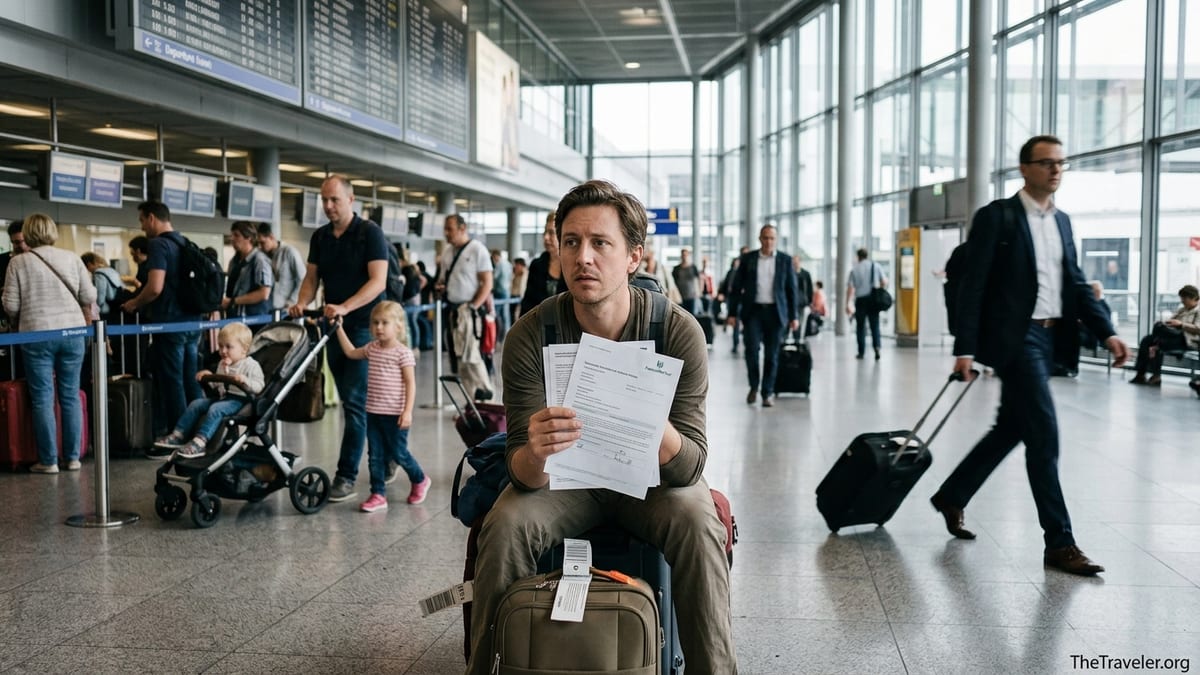
HanseMerkur Is Not One Product, It Is an Ecosystem
One core reason travelers misuse HanseMerkur is that they talk about it as if it were a single policy. In reality, HanseMerkur offers separate products that cover very different things: annual travel health insurance, cancellation insurance, combined annual packages, and long-stay or business travel medical plans. Buying the wrong type for your trip is the first, and most expensive, mistake.
For example, a German couple taking three trips a year might choose an annual travel health insurance contract starting at around a few dozen euros per year for individuals under 65, which covers emergency medical treatment abroad but not the loss of prepaid tour costs. By contrast, an annual cancellation plus travel protection bundle marketed to frequent travelers in Austria or Switzerland can start at roughly 90 to 100 euros per year and combines health, luggage, accident, liability and trip interruption cover for multiple journeys up to a maximum duration, often 62 days per trip.
Then there are specialized products marketed for long-term stays, business trips or student exchanges. A long-duration business travel medical plan can be priced per day and explicitly distinguishes between travel including the USA or Canada and travel that excludes those high-cost destinations. A 40-year-old on a business assignment outside North America for a year will pay significantly less per day than a retiree spending several months between the United States and Canada.
If you simply say “I have HanseMerkur” without knowing whether yours is a pure travel health policy, a cancellation package, or an annual all-round protection plan, you are almost certainly using it wrong. Before your next trip, log in to your documents or confirmation email and identify exactly which product name and tariff level you hold, and what maximum trip length applies.
Confusing Medical Cover with Cancellation Cover
Another frequent misunderstanding is to assume that because HanseMerkur reimburses hospital bills abroad, it will also refund your non-refundable flights and hotels if you cancel. In fact, these are typically two entirely separate types of insurance that may or may not be bundled together.
Consider a solo traveler from Munich who books a 2,400 euro small-group safari in Kenya and holds an annual travel health insurance with HanseMerkur, but no cancellation policy. Two weeks before departure they suffer an unexpected serious illness and cannot travel. The policy will usually help with medical treatment abroad, but because the illness occurred at home before the trip and the traveler never actually left Germany, no travel health claim arises. Without a separate cancellation or “Reiserücktritt” cover, the 2,400 euros paid to the tour operator remain at risk.
Contrast that scenario with a Swiss family that has purchased an annual contract such as “Travel 365” that includes cancellation protection. If one child develops appendicitis shortly before a 3,000 Swiss franc ski trip, the family can typically claim the contractually owed cancellation fees back from HanseMerkur, within the insured sum, because sudden serious illness is one of the listed insured events. They would, however, still need travel health insurance to cover the child’s hospital costs if the illness occurred after departure.
To avoid misusing your policy, stop assuming that “travel insurance” is a single catch-all. Check whether the word “cancellation” or “Reiserücktritt” actually appears in your contract. If not, and you have significant prepaid non-refundable arrangements for flights, cruises or tours, you are likely underinsured even if your medical cover is excellent.
Overlooking Trip Duration Limits and Annual Caps
Many HanseMerkur products marketed as annual or multi-trip cover come with a hard cap on the length of any single journey. A typical example: an annual travel health plan that insures an unlimited number of trips within one year, but each individual trip can last no longer than 56 to 62 days, depending on the tariff and country version. Beyond that, the policy quietly stops covering you, even though the calendar year is not over.
Imagine a digital nomad from Vienna who buys an annual multi-trip travel protection product in Austria, sees that it is “valid for 365 days,” and assumes it will protect them for a five-month stay in Thailand. If the fine print states a maximum of 62 days per trip, the coverage will normally end on day 63. Any medical emergency, luggage loss or trip curtailment after that date may be entirely uninsured.
This mistake is especially common among long-stay travelers heading to high-cost destinations like the United States. Some long-duration business travel plans explicitly allow stays of up to five years, but they may charge very different daily rates for trips that include the USA or Canada, reflecting higher hospital costs. A 12‑month medical policy for a traveler under 59 excluding North America might run around 1.70 euros per day, while the same coverage including the USA and Canada might cost well over double that amount per day for the first year. Travelers who purchase a short-stay multi-trip package instead of a true long-stay product may find themselves uninsured partway through their American road trip.
To use HanseMerkur correctly, look for exact wording such as “maximum length per trip” or “valid for trips up to X days.” If any of your upcoming journeys are longer than that number, you either need a different tariff or an extension product specifically designed for extended stays abroad. Do not rely on the term “annual” alone.
Misunderstanding Coverage for the USA, Canada and High-Cost Countries
HanseMerkur, like many European insurers, draws a strict pricing and coverage line between travel that includes the United States or Canada and travel that does not. Medical costs in North America can be many times higher than in much of Europe or Asia, and the insurer structures tariffs accordingly. Failing to pay attention to this can leave travelers dangerously exposed.
Take a 55‑year‑old traveler who buys a long-duration travel health insurance advertised for worldwide coverage “without USA/Canada” because it is cheaper per day. They then decide to add a spontaneous long weekend in New York City to their Latin America itinerary. If the contract explicitly excludes trips where time is spent in the United States or Canada, any illness or accident during those days may not be covered at all. A broken ankle on a Manhattan sidewalk, followed by surgery and a hospital stay, can easily cost tens of thousands of US dollars.
Similarly, some annual packages sold to families in Austria, Germany or the Netherlands let you choose a regional scope when purchasing online. Selecting “Europe” instead of “worldwide” often reduces the annual premium. That might work for a year of holidays in Italy, Spain and Croatia. It stops being wise the moment you accept an invitation to a wedding in Toronto. Unless you explicitly upgrade to worldwide coverage, your protection usually ends the moment you leave the defined region.
Before booking any trip that touches high-cost healthcare countries, check your policy documents for phrases such as “including USA/Canada” and “worldwide valid.” If your current HanseMerkur plan explicitly excludes North America or limits coverage amounts there, contact the insurer or your broker about switching to a tariff that properly reflects your itinerary, even if it means paying a noticeably higher premium.
Ignoring Exclusions, Pre-existing Conditions and Covid Clauses
Another way travelers use HanseMerkur incorrectly is by assuming that any health problem or disruption automatically triggers coverage. Every policy includes exclusions that can significantly affect real-world claims, particularly around pre-existing conditions, risky activities and pandemic-related situations.
Cancellation insurance, for instance, usually covers “unexpected serious illness.” That typically does not extend to a chronic condition that has recently worsened or for which a doctor had already recommended treatment before you booked the trip. If you plan a 3,500 euro cruise knowing that knee surgery is scheduled within weeks of departure, and the surgery then forces you to cancel, HanseMerkur may decline the claim on the basis that the risk was foreseeable at the time of booking.
Covid-19 has added another layer of complexity. Many current HanseMerkur products explicitly mention coverage if you are forced into official home isolation due to a positive test or cannot start your return journey because of an infection. Yet coverage may not apply if you cancel a trip purely out of fear of infection when there is no travel warning or official quarantine order affecting you personally. A traveler who decides “I do not feel comfortable flying to Barcelona next month because of rising case numbers” but has no medical diagnosis or government restriction often cannot rely on standard cancellation insurance to refund the airfare.
Adventure travelers also need to pay attention. While typical leisure activities such as hiking, swimming and recreational skiing are usually included, extreme sports or professional-level competitions can be excluded or subject to special conditions. If you are planning a high-altitude expedition in the Himalayas or a multi-day backcountry ski tour, relying on a basic tourist tariff from HanseMerkur without checking the section on hazardous activities is likely to be a misuse of the policy.
Common Claim Mistakes: Documentation and Deadlines
Even when travelers hold the right type of HanseMerkur coverage, they often lose out at the claims stage because they handle paperwork incorrectly. Nearly all policy documents emphasize that claims must be reported without undue delay, and in some cases “at the latest after completion of the trip.” Waiting months to submit receipts for hospital treatments or cancellation fees can give the insurer valid reasons to reduce or deny the claim.
For medical emergencies abroad, HanseMerkur typically expects original invoices, detailed medical reports and proof of payment. A traveler in Thailand who visits a private hospital for an appendectomy and leaves with only a credit card slip and a short discharge note will likely be asked later for itemized bills listing treatments, medications and dates. If they fail to obtain these before leaving the country, reconstructing the documentation can be difficult, especially if the clinic is slow to respond.
In cancellation and interruption cases, missing evidence is also a common pitfall. If you cancel a 1,800 euro package holiday because of a sudden illness, HanseMerkur will usually want both the tour operator’s confirmation of the cancellation charges and a medically based certificate confirming that you were incapable of travel on the relevant dates. Submitting only a brief email from your doctor saying you “should take it easy” without a specific diagnosis or travel incapacity statement can result in reductions or rejection.
To use the insurance correctly, save every invoice, boarding pass, hotel confirmation and email from tour operators relating to disruptions, and request detailed written reports from doctors and hospitals at the time of treatment. As soon as you are stable, notify HanseMerkur through the contact channels listed on your policy confirmation and ask which specific documents they require so you can collect them while still on the ground.
Choosing the Wrong Tariff Level and Underinsuring Big Trips
HanseMerkur generally structures its products in tariff levels such as Basic and higher-end versions that include additional benefits and higher limits. Many travelers automatically choose the cheapest premium level without comparing it to the actual value and risk of their trip. This can be a serious mistake if you are planning an expensive once‑in‑a‑lifetime journey.
A backpacker taking two short city breaks within Europe might reasonably choose a simple annual travel health insurance for under 50 euros per year, accepting modest coverage limits because their trips are low-value and healthcare costs are manageable. A family booking a 9,000 euro safari, however, should think differently. Relying on a basic level cancellation policy with relatively low maximum insured sums or no protection for missed connections can leave gaps if a long flight delay makes them miss the start of their tour.
One practical distinction: some comprehensive annual packages marketed in Austria and Germany include not just health and cancellation, but also luggage, personal liability, travel accident benefits and assistance services such as help with emergency repatriation. Paying an extra 20 to 40 euros per year to move from a minimal tariff to a more complete “Carefree” or “Premium” level may be trivial compared with the potential cost of an accident that leaves you liable for property damage in a rented apartment in Lisbon or for medical evacuation from a remote trekking lodge in Nepal.
Before finalizing a booking worth several thousand euros, calculate the maximum non-refundable amount and compare it to the insured sum in your chosen HanseMerkur tariff. If the policy limit is lower than your prepaid costs or excludes elements such as charter flights or cruises, upgrade the tariff or add a dedicated cancellation module so that your coverage realistically matches the scale of your travel investment.
The Takeaway
The most common way travelers misuse HanseMerkur is not by breaking rules, but by assuming that “travel insurance” is a single, all-purpose safety net. In reality, HanseMerkur’s ecosystem ranges from bare-bones travel health policies to sophisticated annual packages that include cancellation, interruption, luggage and liability cover, each with specific trip-length limits and geographical scopes.
If you want the policy to work when you need it, you must read it as carefully as you would a flight voucher or visa document. Confirm whether you are buying medical cover, cancellation, or both. Check whether your journeys include the USA or Canada and whether your policy reflects that. Make sure your longest upcoming trip is not longer than the maximum days allowed per journey, and that serious pre-existing conditions and high-risk activities are either included or backed up by specialized cover.
Finally, when the unexpected happens, treat your paperwork like a second passport. Save every invoice, confirmation and medical report, notify HanseMerkur promptly and ask which documents they need. Used correctly, the insurer can turn a potentially ruinous incident abroad into a manageable inconvenience. Used carelessly, the same policy can give travelers a false sense of security that disappears the moment they need to claim.
FAQ
Q1. Does HanseMerkur automatically cover both medical treatment and trip cancellation?
Not necessarily. Many HanseMerkur products are either pure travel health insurance or focused on cancellation and interruption. Only certain bundles combine both. You need to check your policy name and description to see which modules are included.
Q2. How can I tell if my HanseMerkur policy covers trips to the USA and Canada?
Look for explicit wording such as “including USA/Canada” or “worldwide including USA/Canada” in your contract or confirmation. If the document mentions “without USA/Canada” or only lists “Europe” as the region, you should assume North America is not covered unless you upgrade or switch tariffs.
Q3. I have an annual HanseMerkur policy. Am I covered for a six-month stay abroad?
Probably not with a standard multi-trip policy. Many annual products limit the duration of each individual trip to around 56 to 62 days. For a six-month absence you usually need a dedicated long-stay or long-term travel health insurance specifically designed for extended stays abroad.
Q4. Are pre-existing medical conditions covered by HanseMerkur travel insurance?
Cover for pre-existing conditions is limited. Sudden and unexpected worsening of stable conditions may be insured in some circumstances, but planned treatments or trips booked despite an impending operation or known serious illness are often excluded, especially under cancellation insurance.
Q5. Does HanseMerkur cover Covid-19 related cancellations and medical costs?
Many current products explicitly mention cover if you contract Covid-19, are ordered into official isolation or cannot start your return journey because of an infection. However, deciding not to travel solely out of fear or due to general pandemic news usually does not trigger standard cancellation benefits.
Q6. What documents do I need to file a claim with HanseMerkur?
For medical claims, expect to provide detailed medical reports, itemized hospital or doctor invoices and proof of payment. For cancellation and interruption, you typically need the tour operator’s cancellation invoice and a medical certificate confirming your inability to travel, along with booking confirmations and receipts.
Q7. Is it better to buy HanseMerkur insurance per trip or as an annual plan?
If you only take one short holiday a year, a per-trip policy may be sufficient. If you travel several times per year for work or leisure, an annual product often works out cheaper and more convenient, as long as each trip stays within the maximum duration allowed.
Q8. Does HanseMerkur cover extreme sports and adventure activities?
Basic tariffs are designed around regular leisure travel and may exclude extreme or professional-level activities such as mountaineering at high altitude, off-piste skiing or competitive racing. If you plan such trips, review the policy section on hazardous activities and consider a specialized adventure travel cover.
Q9. What happens if I stay abroad longer than the maximum days per trip in my policy?
Once you exceed the stated maximum duration per trip, coverage usually ends automatically for the remainder of your stay, even if the policy year is still running. You would then be uninsured for new events and should arrange appropriate long-stay insurance before extending your travels.
Q10. Can I upgrade my HanseMerkur tariff after booking a trip?
In many cases you can change tariff level or extend coverage, provided no insured event has already occurred and you comply with any booking deadlines. You should contact HanseMerkur or your broker as early as possible, ideally when you first notice that your existing cover does not match the value or profile of your upcoming trip.