


More news on this day
Sharjah International Airport is using the spotlight of Arabian Travel Market 2026 to underline its growing role in global tourism, highlighting new routes, digital upgrades and long-term expansion plans that align with the region’s broader push to reshape the future of travel through technology and sustainability.
Get the latest news straight to your inbox!
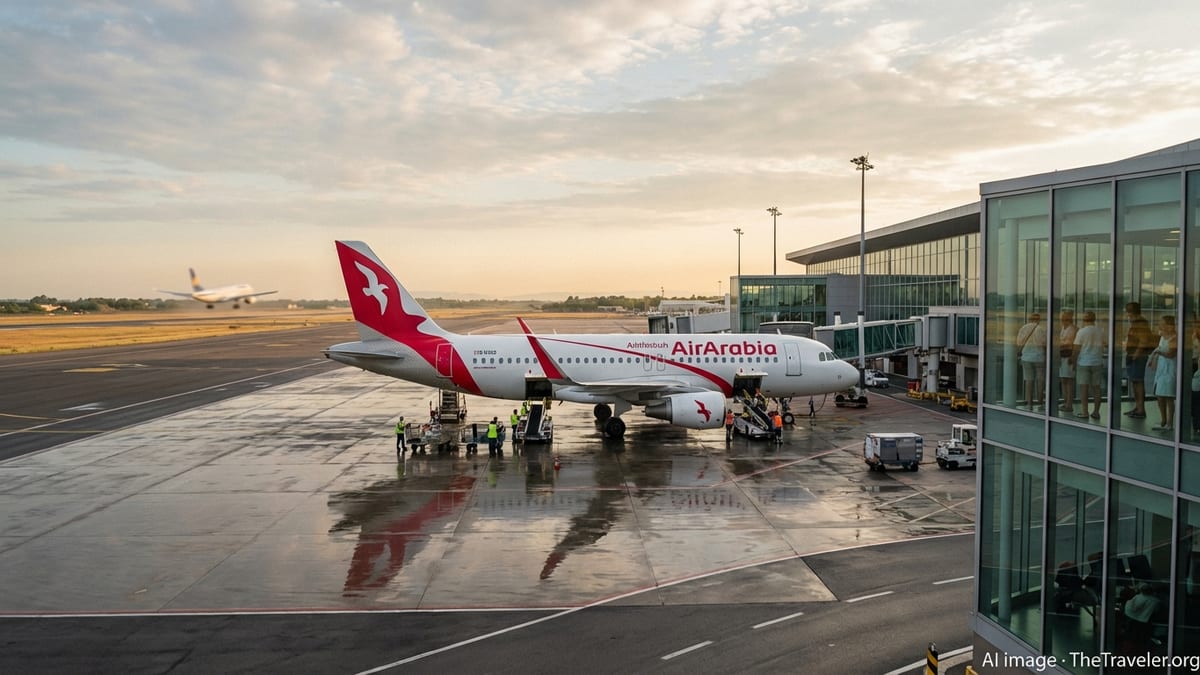
Sharjah’s gateway rises as travel demand accelerates
Sharjah International Airport is emerging as a key connector for cost-conscious and regional travelers, supported by strong passenger growth and a series of infrastructure upgrades. Recent industry reports indicate that the airport handled close to 20 million passengers in 2025 and is working toward a capacity target of around 25 million passengers a year by 2027, reinforcing its position among the UAE’s busiest gateways.
The airport’s ascent is unfolding as the wider Middle East outperforms global tourism averages and governments across the region prioritize aviation as a driver of economic diversification. Market analysis ahead of the 2026 travel season points to continued appetite for short- and medium-haul leisure trips, which plays to Sharjah’s strengths as a hub for low-cost carriers and value-focused itineraries that combine culture, family attractions and nature.
Sharjah authorities have also promoted integrated improvements to roads and public transport, with new smart and sustainable mobility projects aimed at easing access to airports and tourism districts across the emirate. Public information on these initiatives describes the rollout of cleaner fleets, digital ticketing and on-demand bus services, all of which are designed to support growing visitor numbers while keeping congestion and emissions in check.
Within this context, Sharjah International Airport’s profile at Arabian Travel Market 2026 is presented as part of a broader narrative in which the emirate seeks to convert aviation growth into higher tourism receipts, longer stays and greater dispersal of visitors to heritage sites, waterfront projects and emerging eco-tourism areas.
New routes strengthen global tourism connectivity
One of the clearest signs of Sharjah’s expanding reach is the steady growth of its route network, led by carriers based at the airport. Earlier this year, publicly available announcements highlighted the launch of a new daily service from Sharjah to Rome, adding a prominent European capital to the map and offering travelers from both sides a non-stop, low-cost option on a major leisure and business corridor.
The Rome connection complements a web of existing services across South Asia, the Middle East, North and East Africa and parts of Central and Eastern Europe, giving the airport a broad catchment area that feeds into the UAE’s tourism ecosystem. Industry observers note that these additions help diversify source markets for Sharjah and its neighboring emirates, at a time when destinations are seeking to balance visitor flows and reduce overreliance on a small number of countries.
Sharjah’s aviation plans sit alongside national-level efforts in the UAE to deepen tourism links with key international partners through air service arrangements and airport facilitation measures. Recent government statements on air connectivity emphasize that additional frequencies, new city pairs and more efficient processing at borders are central to keeping the country competitive as rival hubs in the region and beyond invest heavily in their own networks.
For tour operators and destination marketers taking part in ATM 2026, Sharjah’s strengthened connectivity is framed as a chance to craft multi-stop itineraries that combine the emirate’s cultural offer with Dubai and other Gulf destinations, as well as to sell new weekend city breaks built around the Rome service and other expanding routes.
ATM 2026 puts innovation and future travel at the center
Arabian Travel Market 2026, held at Dubai World Trade Centre from 14 to 17 September, is positioned as the Middle East’s largest travel industry gathering, returning this year under the theme “Travel 2040: Driving New Frontiers Through Innovation and Technology.” Event organizers describe a program that focuses on how artificial intelligence, smart mobility, green aviation and immersive digital tools can reshape global tourism over the next decade and beyond.
According to published previews of the show, ATM 2026 will place particular emphasis on technology that can enhance resilience and inclusivity in travel, from predictive analytics in demand forecasting to automation in airport operations and contactless guest journeys in hotels. A dedicated Tech and Innovation Hub is set to showcase live demonstrations and early-stage concepts, while conference sessions explore how destinations in the Gulf can maintain their growth momentum while addressing environmental pressures.
Sharjah’s presence at the exhibition is closely tied to this forward-looking agenda. Tourism and aviation stakeholders from the emirate are expected to highlight how smarter use of data and collaboration between airlines, hotels and attractions can optimize capacity throughout the year and create more personalized experiences for visitors. Publicly available event materials point to a strong regional focus on co-creation between the public and private sectors, an area where the UAE has sought to position itself as a test bed for new travel technologies.
For buyers and travel planners attending ATM, the combination of Sharjah’s expanding airport capabilities and the show’s innovation theme offers insight into how the emirate aims to compete not only on price, but also on efficiency, sustainability and curated product development.
Digital transformation reshapes the Sharjah passenger journey
Sharjah International Airport’s own digital transition is increasingly visible across the traveler journey, from trip planning to check-in and arrival. Information from airport service portals highlights the roll-out of online permit systems and e-services for partners, while industry coverage points to ongoing upgrades in areas such as automated check-in, self-service kiosks and enhanced digital communication with passengers.
These developments reflect a wider UAE trend toward cashless, app-based and card-based payments across public transport and travel-related services, intended to create a smoother experience for both residents and tourists. Government sources describe how integrated payment platforms on buses, metro lines and taxis are being expanded and refined, with each emirate introducing its own digital tools that support seamless mobility between airports, city centers and attractions.
Sharjah’s transport authorities are also investing in intelligent traffic management and cleaner vehicle fleets, which have a direct impact on airport access and last-mile connections. Reports on recent mobility initiatives in the emirate highlight the deployment of artificial intelligence in traffic control and a gradual shift toward electric and low-emission buses, complementing national strategies aimed at reducing the carbon intensity of travel.
For passengers passing through Sharjah International Airport, these changes are beginning to translate into more predictable journey times, greater transparency around services and a growing number of choices in how to move between the terminal and the wider urban area, whether through ride-hailing, shuttle buses or planned on-demand transport services.
Future expansion plans focus on sustainability and capacity
Across the UAE, 2026 is shaping up as a pivotal year for airport development, with major investments planned in runways and terminals from Dubai to Sharjah and Ras Al Khaimah. Coverage of national aviation strategies indicates that airports in the region are collectively part of an estimated multibillion-dollar expansion wave aimed at boosting capacity, improving resilience and upgrading the passenger experience.
Sharjah International Airport’s contribution to this wave centers on terminal enhancements, apron and airfield improvements and modernization of support infrastructure. Public data shows that the medium-term goal is to accommodate steadily rising passenger volumes while maintaining operational efficiency and service standards, with an eye on future demand from both leisure and cargo segments.
Sustainability considerations are increasingly woven into these plans. Regional aviation briefings highlight efforts to reduce energy consumption through more efficient building design and smart systems, alongside long-term exploration of low-carbon fuels and partnerships that can support greener flight operations. For Sharjah, which promotes its wider tourism offer as family-friendly and environmentally conscious, positioning the airport as an efficient and responsible gateway is becoming a core part of its brand.
As Arabian Travel Market 2026 unfolds, Sharjah’s airport expansion, digital upgrades and growing route map collectively signal how the emirate intends to deepen its role in global tourism flows. The combination of infrastructure investment, technology adoption and targeted connectivity is likely to remain central to its strategy as competition between regional hubs intensifies and travelers become more selective about the airports and destinations they choose to transit through and visit.