


For many travelers and expats, the ANA Card is just a convenient way to pay for flights and tap through train gates in Japan. In reality, it is a complicated ecosystem of co-branded cards, transit integrations, point schemes and hidden perks that can quietly save or cost you tens of thousands of yen over a few weeks. If you picked an ANA Card because you like flying All Nippon Airways, there is a good chance you are using it inefficiently, especially around trains, buses and daily spending.
Get the latest updates straight to your inbox!
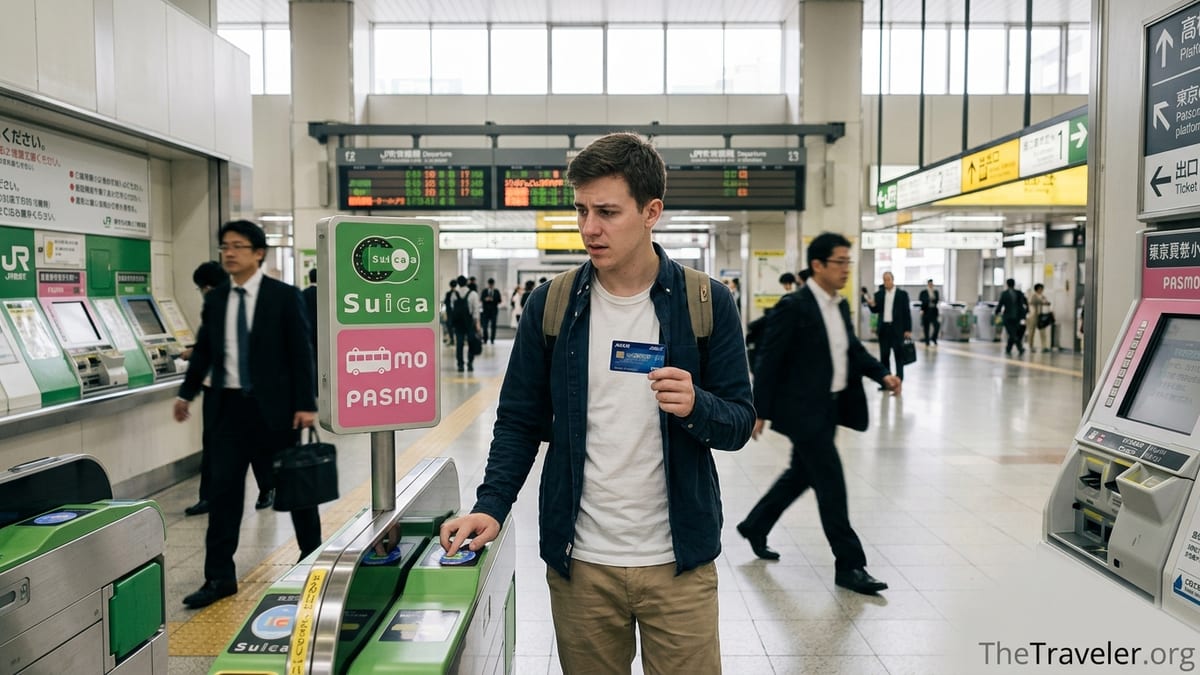
What the ANA Card Really Is (And Why That Matters)
One reason people misuse the ANA Card is that “ANA Card” is not one product. It is a family of credit cards issued with Visa, Mastercard, JCB and American Express, each with different benefits in Japan. Some versions are tightly integrated with transit systems and e-money, while others are essentially vanilla airline cards that happen to earn ANA miles. If you grabbed the first ANA Visa or ANA JCB card that your home bank or an expat site recommended, you may have missed a version that would fit your travel pattern far better.
For example, the ANA VISA Suica Card connects directly to JR East’s Suica system. Cardholders can convert miles to Suica balance in units like 10,000 miles to 10,000 yen equivalent, then collect the value at JR East’s VIEW ALTTE ticket machines in Tokyo and other Eastern Japan stations. That is a powerful way to turn flight miles into subway and convenience store money, but most visitors never touch it because they simply loaded cash on a standalone Suica at the airport and moved on.
Similarly, the ANA To Me CARD PASMO JCB, sometimes nicknamed the “Soratika” or “Soratica” card, bundles ANA mileage functions with Tokyo Metro’s PASMO transit system on a single piece of plastic. The PASMO chip sits inside the credit card, so you can tap the same card at Tokyo Metro gates, buses, and many shops that accept PASMO while also earning JCB reward points that can be converted into ANA miles. If you commute on Tokyo Metro or stay in Tokyo for weeks at a time, choosing this specific ANA Card version can matter more than which airline status tier you are chasing.
Understanding that the ANA Card is a platform, not a single product, is the first step. The second is to match the specific co-branded version to your itinerary rather than choosing purely on sign-up bonuses or airline branding.
Mistake 1: Treating Your ANA Card and IC Card as Separate Worlds
The most common mistake among travelers is carrying an ANA Card and a separate Suica or PASMO card, and never connecting the two. You might tap with Suica on the JR Yamanote Line, pay with your ANA Visa at a FamilyMart register, and think you are doing everything right. In reality you are splitting your spending across two systems and missing out on both convenience and value.
Take a typical week in Tokyo. A visitor staying in Shinjuku and sightseeing daily might spend around 700 to 1,000 yen per day on trains and a similar amount on snacks and drinks from convenience stores. Over seven days that could easily total 10,000 to 14,000 yen. If that visitor is using a regular tourist Suica and paying with a foreign credit card at the store, none of that local spend is feeding back into ANA miles, even if they went to the trouble of getting an ANA Card.
With an ANA VISA Suica Card, those same purchases can be concentrated. You can use the card as a regular credit card to buy larger items, but you can also convert ANA miles to Suica balance and then tap the Suica function of the card to ride trains or pay at convenience stores that accept Suica. Instead of carrying a separate green Suica card, you tap your ANA VISA Suica directly. That creates a loop where flights earn miles, miles become Suica value, and daily transit uses that value. Over a longer stay, even modest spending can recycle into meaningful free rides.
Owners of the ANA To Me CARD PASMO JCB can go a step further. Because PASMO is built into the credit card, every Tokyo Metro journey and many bus rides are paid with the same physical card you use for shopping. Tokyo Metro also runs its own point program, and with ANA To Me PASMO JCB you earn extra rewards on Metro rides, which you can combine with JCB’s Oki Doki points and convert into ANA miles. Ignore that integration and you are essentially using a premium card as if it were a basic prepaid transit pass.
Mistake 2: Ignoring Mobile Wallet and Auto-Charge Features
Another widespread mistake is treating the ANA Card only as a physical card and loading transit credit manually at machines. In major Japanese cities, mobile wallet integration and auto-charge can remove much of the friction from trains and buses, and several ANA Cards are designed to plug into that ecosystem.
If you hold an ANA VISA Suica Card and have a compatible iPhone or Apple Watch, you can move the Suica function into Apple Wallet and set it as your Express Transit card. That allows you to tap through JR East and many private railway gates simply by holding your phone or watch to the reader, without unlocking the device. You can then top up in the app or collect miles-converted Suica value at VIEW ALTTE machines. Many travelers continue to queue at physical ticket machines in Shinjuku, Ueno or Tokyo Station to top up with cash because they never explored the mobile integration offered by their ANA Suica card.
Similarly, the ANA To Me CARD PASMO JCB can be connected to PASMO’s auto-charge service. When your PASMO balance drops below a certain threshold, the system automatically reloads a preset amount charged to your JCB credit line. Imagine living in Yokohama and commuting into central Tokyo daily. Without auto-charge, you might run your PASMO balance down to under 200 yen and be forced to step aside at a busy gate to top up before you can exit. With auto-charge linked to your ANA PASMO JCB, you simply tap out, the card reloads automatically, and your commute stays smooth. Ignoring that feature not only costs you time but can also cost you points and miles if you revert to topping up with cash.
Even for short-term visitors, using a mobile Suica or PASMO with ANA Card backing can help avoid common pitfalls. For instance, if your physical tourist IC card balance is stranded when you leave Japan, you might need to queue for a refund at a station office and lose a handling fee. If your transit credit lives in a mobile Suica backed by an ANA Card, you can keep that card active for future trips and manage it from home, instead of letting value quietly expire.
Mistake 3: Wasting Miles on Poor-Value Redemptions
ANA Cards all revolve around one currency: ANA miles. Where many travelers go wrong is how they choose to redeem those miles once their balance grows. Flights are not always the only or best answer, especially if you live in Japan and use trains and buses every day, but not all non-flight redemptions are equal either.
With an ANA VISA Suica Card, one of the distinctive benefits is the ability to redeem miles for Suica value in simple units such as 10,000 miles converting to 10,000 yen of Suica balance. Used intelligently, that can be a flexible way to fund everyday commuting. Picture a graduate student living in Chiba and commuting into central Tokyo. Over a year of flying home once and putting utilities and groceries on the ANA card, they accumulate enough miles to pay for perhaps three months of daily train fares by converting miles to Suica value. That may be more immediately useful than saving for a long-haul award they are not sure they will take.
The mistake is using low-value catalog redemptions when your card offers better options. Many general ANA Card holders are tempted by merchandise or low-value gift vouchers because they seem tangible. Converting miles into generic shopping points at a poor ratio, then using those points in a way that does not stack with transit or ANA co-brand bonuses, dilutes the power of the ANA ecosystem. Before hitting redeem, compare the effective yen value you receive per mile for each option and favor redemptions that align with your actual spend in Japan, such as Suica value for commuters or strategic flight awards for long-haul travelers.
The ANA To Me CARD PASMO JCB introduces another layer. Your spending earns JCB Oki Doki points which can then be converted to ANA miles, often at a specific exchange rate. If you forget that step and instead spend those Oki Doki points directly on small catalog items or gift certificates, you may be giving up a chance to turn them into valuable miles. In practical terms, that could mean the difference between affording a domestic award flight from Tokyo to Okinawa in peak season or not.
Mistake 4: Expecting Your ANA Card to Replace All Train Tickets
Travelers often overestimate what their ANA Card and its built-in Suica or PASMO can do on Japan’s rail network. While IC cards are widely accepted across local and regional lines, they do not replace every form of ticketing. Assuming your ANA Card’s IC function covers everything is a reliable way to overpay, sit in the wrong seat class or be turned away at a gate.
Within major metropolitan areas, using the IC function built into your ANA Card is almost always the easiest approach. In greater Tokyo, Suica and PASMO work on JR East local lines, Tokyo Metro, Toei Subway and most private railways. You tap in at Shinjuku, transfer to the subway in Shibuya and exit at Asakusa with a single device. In Kansai, IC systems like ICOCA interoperate with Suica and PASMO for many routes. Your ANA-integrated Suica or PASMO behaves much like a regular IC card in these scenarios, offering pay-as-you-go fares with no need to decode fare charts.
The limitations appear when you move to long-distance trains and certain Shinkansen services. For example, a Suica or PASMO on its own does not usually cover reserved-seat tickets on the Tokaido Shinkansen between Tokyo and Osaka. You still need either a separate paper ticket, a digital ticket purchased through a reservation app, or a compatible Shinkansen IC product like EX-IC in combination with your regular IC card. If you assume your ANA VISA Suica alone will open the Shinkansen gates for a reserved seat to Kyoto, you may find yourself stuck at the barrier, frantically seeking staff assistance minutes before departure.
The same applies to some limited express services that require both a basic fare and an express surcharge. You can often use the IC function of your ANA Card to cover the base fare between stations, but you may need to purchase a limited express ticket separately. On a trip from Shinjuku to Hakone, for example, you might tap in with PASMO for the Tokyo segment but still need a separate ticket or reservation for a romancecar or sightseeing train. Misunderstanding what your ANA Card does and does not cover can lead you to pay twice, or to assume a simple IC tap includes a premium service when it does not.
Mistake 5: Using the Wrong ANA Card for Where You Actually Travel
Not all ANA Cards make sense for every region or style of trip. A card that is perfect for a Tokyo-based commuter might be a poor match for a traveler spending most of their time in Kansai or Hokkaido. Many people apply for an ANA Card before they have fully mapped their Japanese itinerary, or choose based solely on an attractive sign-up bonus, then discover in Japan that their card offers little synergy with how they actually move around.
If your trip is heavily concentrated in eastern Japan, especially around Tokyo, the ANA VISA Suica Card or ANA To Me CARD PASMO JCB can be particularly effective. They tie into JR East’s Suica network or Tokyo Metro’s PASMO system, and that means your miles, credit spend and transit all sit inside a tight loop. A digital worker renting a monthly apartment in Kanda and commuting lightly across central Tokyo can use such a card to handle nearly all transport for weeks simply by topping up the IC function and occasionally converting miles.
However, if your travel focuses on Osaka, Kyoto and Hiroshima with minimal time in Tokyo, a Suica or PASMO-centric ANA co-brand may still work for city transport but will not align as closely with local loyalty schemes. In Kansai, IC cards like ICOCA dominate, and while they interoperate for basic fares, the extra point multipliers and unique promotions may sit with cards co-branded to local railways rather than ANA. In this scenario, it may be more rational to treat your ANA Card as a pure airline and shopping card, and pair it with a regionally issued IC card such as ICOCA purely for transit, rather than forcing Suica or PASMO to handle everything.
Even within Tokyo, your lifestyle influences the optimal ANA Card choice. A commuter who rides Tokyo Metro lines twice daily will extract more value from the ANA To Me CARD PASMO JCB than someone who mainly uses JR East’s Yamanote Line and hardly ever touches the subway. Conversely, a frequent shinkansen user between Tokyo and Sendai might prioritize an ANA VISA Suica setup that integrates neatly with JR East tickets over PASMO-centric solutions.
Mistake 6: Forgetting Everyday Purchases and Partner Stores
The ANA Card’s value does not stop at airport check in or station gates. Japan’s retail landscape is dense with partner stores, point programs and electronic money readers, and it is easy to default to cash or a generic foreign credit card for small transactions. That habit often leaves ANA Card benefits on the table.
At many convenience stores, kiosks and vending machines, you can pay with Suica, PASMO or other transit IC cards. If your ANA Card is integrated with Suica or PASMO, every bottle of tea at Tokyo Station or quick onigiri at a Lawson near Osaka Castle can be routed through that ecosystem. A visitor buying breakfast on the go may be tapping a standalone Welcome Suica while their ANA Card sits idle in their wallet. Over a two-week trip, those 300 to 800 yen micro-purchases add up to tens of thousands of yen, which could have helped you hit a bonus threshold or contributed to reward points convertible into miles.
Some ANA Cards also offer special accrual rates at designated partner merchants in Japan. For instance, purchases with certain ANA Cards at specific department stores, in-flight shopping or online portals can generate bonus miles compared with generic cards. Imagine outfitting an entire ski trip at a Tokyo outdoor retailer: jackets, thermals and gear can easily run into the tens of thousands of yen. Redirecting that spend through your ANA Card at a partner store, rather than splitting payment across cash and debit cards, can be the difference between qualifying for a domestic award flight or falling short.
Even recurring bills should be considered. Utility companies, mobile carriers and streaming services in Japan typically accept credit cards. An expat living in Yokohama who pays electricity, gas, mobile phone and internet with an ANA Card can accumulate substantial miles every month without changing their lifestyle. Someone in the same apartment who continues paying by bank transfer or cash at a combini is effectively leaving their ANA Card underused.
The Takeaway
Used passively, the ANA Card is just another credit card with an airline logo, and its embedded Suica or PASMO function is just another way to reload transit credit. Used strategically, it becomes a hub that connects your flights, trains, buses and daily shopping into a single, flexible rewards loop. The biggest mistakes are conceptual: picking an ANA Card variant that does not match where you travel, treating your IC card and ANA Card as unrelated tools, ignoring mobile and auto-charge features, and redeeming miles without checking the real-world value you get back.
Before your next trip or your next renewal cycle, map your actual habits in Japan. Where do you ride most often: JR East, Tokyo Metro, or regional lines elsewhere. How much do you spend in convenience stores, supermarkets and department stores each week. Are your miles better used for an aspirational long-haul business class flight, or for months of practically free commuting in Tokyo. Answering these questions will help you decide whether your current ANA Card is the right one or whether you should switch to a version better aligned with Suica, PASMO or your local transit system.
If you already hold an ANA Card, take an evening to log into your ANA Mileage Club account and skim the benefits page for your specific product. Look for mentions of Suica value redemption, PASMO auto-charge, bonus miles at particular merchants and mileage transfer options from issuer point programs like Oki Doki. Then, on your next morning commute or your next walk through a Tokyo station, notice how often those logos appear around you. Aligning your everyday taps and swipes with the ANA ecosystem will not cost you extra, but over time it can quietly transform how far your yen and your miles carry you across Japan.
FAQ
Q1. Do I need to live in Japan to get an ANA Card that works with Suica or PASMO?
In most cases, yes. Co-branded ANA Cards such as ANA VISA Suica and ANA To Me CARD PASMO JCB are typically issued to residents with a Japanese address and local credit history. Short-term visitors usually rely on separate tourist IC cards or mobile Suica and use an overseas credit card only for topping up.
Q2. If I already have a regular Suica, should I switch to an ANA VISA Suica Card?
It depends on how often you travel in eastern Japan and how committed you are to collecting ANA miles. If you commute frequently on JR East and fly ANA regularly, combining your Suica and ANA functions can make sense. If you are an occasional tourist, a standard Suica or Welcome Suica is usually sufficient.
Q3. What is the practical difference between ANA VISA Suica and ANA To Me CARD PASMO JCB?
ANA VISA Suica is tied to JR East’s Suica network and is strongest for users focusing on JR lines and Suica-based payments. ANA To Me CARD PASMO JCB integrates PASMO and Tokyo Metro benefits, which is better suited for people who ride the Tokyo Metro system daily and value JCB’s point program for conversion into ANA miles.
Q4. Can I use the ANA Card’s Suica or PASMO function on Shinkansen trains?
You can often use the IC function for base fares in certain areas, but reserved seats and many long-distance Shinkansen journeys still require a separate ticket or a dedicated Shinkansen IC product. Always check whether your specific train accepts IC-only travel for your route and seat type before relying on a simple tap.
Q5. Is it better to redeem ANA miles for flights or for Suica or PASMO value?
There is no universal answer. Long-haul premium cabin awards can offer very high value per mile for international travelers, while commuters in Japan may find steady, predictable value converting miles into Suica balance. Compare how much yen or fare value you effectively receive per mile in each scenario, and choose based on your real travel habits.
Q6. Do ANA Cards work in mobile wallets like Apple Pay for transit in Japan?
Many ANA co-branded cards tied to Suica or PASMO can be linked to mobile wallet transit cards on compatible iPhone or Apple Watch devices. Once set up, you can tap your phone at gates with Express Transit enabled and top up digitally, which reduces the need for cash-based top ups at station machines.
Q7. I am an expat in Tokyo. How can I maximize my ANA Card with daily commuting?
Choose an ANA Card that matches your primary rail operator, such as ANA VISA Suica for JR East or ANA To Me CARD PASMO JCB for Tokyo Metro. Enable features like auto-charge, route as many everyday purchases as possible through the card, and periodically evaluate whether converting issuer points to ANA miles or Suica or PASMO value best fits your routine.
Q8. Are ANA Card foreign transaction fees a problem for visitors from overseas?
If your ANA Card is issued outside Japan and denominated in another currency, foreign transaction fees may apply on purchases in yen. Check your card’s fee schedule. For some travelers it can make more sense to use a no-fee international card for big purchases and reserve ANA Card use for situations where its mileage or transit integration is clearly beneficial.
Q9. What happens to my Suica or PASMO balance on an ANA Card when I leave Japan?
If the IC function is on a physical card and you stop visiting Japan, the balance remains but may be dormant until you return, and refund procedures can be inconvenient from overseas. If it is on a mobile wallet, you may be able to keep and manage the card for future trips. In either case, avoid leaving large unused balances if you are uncertain when you will next return.
Q10. How do I know if my current ANA Card is the wrong one for me?
Review where you actually travel and spend. If your ANA Card’s key perks focus on a rail network you rarely use, or if you never touch features like Suica conversion, PASMO auto-charge or issuer points transfer, there is a good chance another ANA co-brand or even a simpler travel card would fit your patterns and save more money over time.