


More news on this day
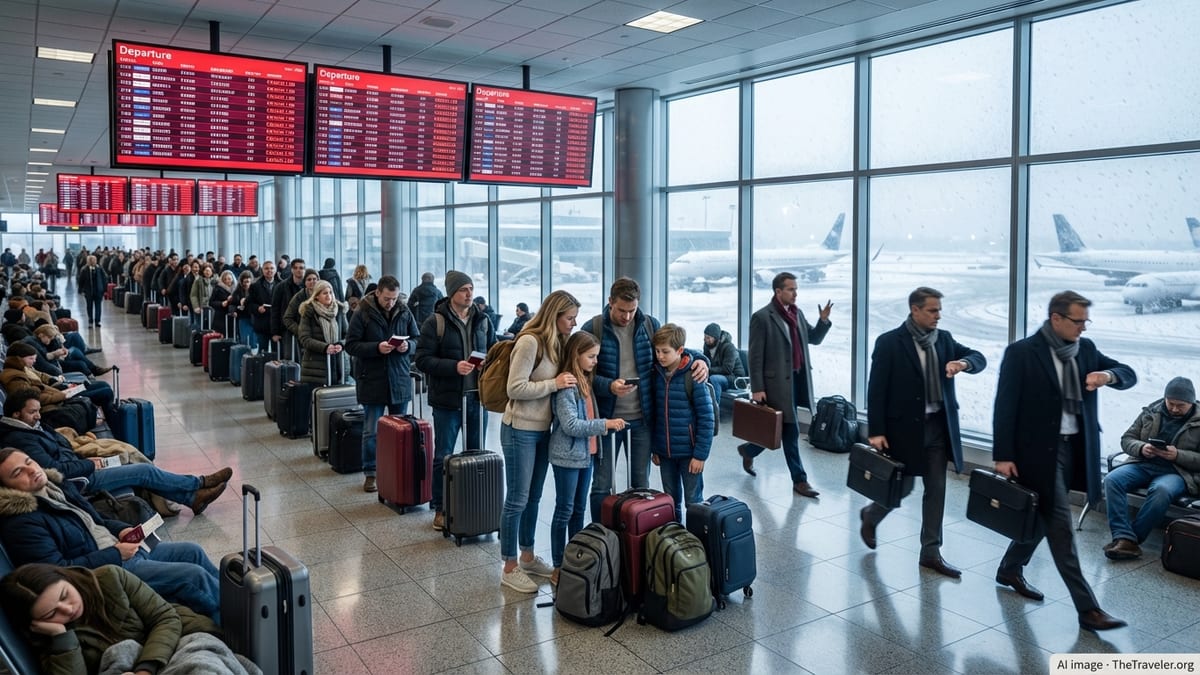
Zurich Airport experienced a sharp spike in disruption on Sunday, 12 July 2026, with 374 delayed flights and 13 cancellations causing widespread knock-on problems for passengers across Europe’s busiest summer routes.
Get the latest news straight to your inbox!
Severe Weather and Summer Traffic Create a Bottleneck
Publicly available disruption data for 12 July indicate that Zurich Airport recorded 387 affected flights in a single day, as 374 departures and arrivals ran late and 13 were cancelled outright during the peak of the summer holiday season. The figures highlight how quickly one of Europe’s most efficient hubs can become a bottleneck when heavy traffic coincides with unstable weather patterns.
The latest spike followed a series of severe thunderstorms over the Zurich region in late June and early July, when more than 70 flights were cancelled and over 30 were diverted to alternative airports. Those earlier events left aircraft and crews out of position, contributing to a fragile operating environment heading into the busy mid-July travel period.
Operational data and recent media coverage point to a combination of convective weather, saturated airspace and air traffic flow restrictions as key drivers of the latest wave of delays. While flight operations at Zurich resumed on Monday with more typical levels of punctuality, the backlog of displaced passengers and aircraft continued to affect schedules for at least 24 hours.
Aviation analysts note that the Zurich incidents form part of a broader pattern of summer disruption at major European hubs, where tight schedules, staffing constraints and capacity caps at air traffic control centers leave little room to absorb weather shocks.
Ripple Effects Across Switzerland, Germany and the UK
Because Zurich serves as Switzerland’s principal international gateway and a key transfer point for a large European network, the disruption radiated quickly across neighboring countries. Flights linking Zurich with Geneva and other Swiss destinations experienced late departures and missed onward connections, forcing carriers to rebook travelers on already crowded domestic and regional services.
Germany was among the hardest-hit markets, with delays reported on high-frequency routes between Zurich and major cities such as Frankfurt, Munich, Hamburg and Berlin. These city pairs are central to both business and leisure travel, and even short disruptions can cascade through aircraft rotations and crew schedules throughout the day, affecting passengers well beyond the original delay window.
Services between Zurich and the United Kingdom also felt the strain, particularly flights to London’s main airports, which themselves operate close to capacity in summer. Late-arriving aircraft from Switzerland pushed back departure times for evening services back to Zurich and onward connecting flights to other European destinations, complicating travel plans for passengers heading to northern Europe and transatlantic gateways.
Rail links absorbed some of the spillover as travelers opted to re-route journeys via cross-border train services between Switzerland and Germany or France when flights were heavily delayed or cancelled. However, rail services also faced high seasonal demand, limiting their ability to fully compensate for the disrupted air connections.
Holiday Plans Disrupted from Spain to Greece and Italy
The timing of the Zurich disruption coincided with one of the busiest outbound holiday weekends of the summer, particularly for travelers bound for Mediterranean destinations. According to published timetables and recent traffic statistics, Zurich maintains dense seasonal links with Spanish resort airports including Palma de Mallorca, Barcelona and Malaga, as well as with popular Greek islands and Italian coastal cities.
When Zurich’s operation slowed, knock-on delays spread to these leisure routes. Late departures from Switzerland compressed already tight turnaround times at smaller holiday airports, where ramp and gate capacity is limited. This in turn pushed some evening and night flights further behind schedule, or led to cancellations when local operating hour restrictions came into play.
Passengers heading to Greece and Italy reported reroutings via other European hubs and overnight stays when missed connections made same-day arrivals impossible. With many flights operating close to full, rebooking options were often limited to departures one or two days later, stranding some travelers at origin airports or in transit cities.
Tourism operators tracking the disruption noted that group itineraries and cruise connections were particularly vulnerable. Late arrivals into ports such as Venice, Barcelona or Piraeus increased the risk of passengers missing ship departures, adding financial and logistical complications at the height of the peak season.
Why Zurich Is So Exposed to Knock-on Delays
Industry data and past analyses of Zurich’s performance show that the airport generally maintains strong on-time records, but is structurally sensitive to sudden shocks. With a single main terminal and closely orchestrated runway operations, the hub relies on precise sequencing of arrivals and departures and on airspace access agreements with neighboring countries, particularly Germany.
Night-time restrictions on low-altitude overflights in German airspace limit Zurich’s ability to extend operating hours when significant disruption occurs late in the day. When thunderstorms or other weather systems disrupt the evening arrival and departure peaks, controllers have less flexibility to recover the schedule before curfews come into force, increasing the likelihood of cancellations and diversions.
The airport also functions as the primary hub for the national carrier and its partners, with a high percentage of connecting passengers. This hub-and-spoke model improves connectivity to secondary cities across Europe, but it also means that a delay in one part of the network can quickly affect multiple onward legs. Missing a single connection at Zurich can translate into lengthy reroutings across several countries.
Recent analysis of on-time performance for key airlines at Zurich indicates that a significant share of delays fall into the moderate to substantial category, reflecting the impact of slot constraints, turnaround times and tightly planned crew duties. The events of 12 July magnified those systemic pressures, leaving airlines with few options to absorb further shocks.
What Travelers Can Do as Disruptions Continue
The latest incident at Zurich underscores the importance for travelers of preparing for potential disruption, especially during the busiest summer weeks. Publicly available guidance from passenger rights organizations and travel advisers recommends closely monitoring flight status through airline apps and departure boards, and checking in as early as practical to preserve rebooking options if schedules change unexpectedly.
On itineraries involving connections at Zurich, building in extra transfer time can provide a buffer against moderate delays, particularly on days when convective weather is forecast across central Europe. Travelers with separate tickets for onward flights are especially exposed, as missed connections on unlinked reservations generally fall outside standard rebooking arrangements.
Passenger advocacy groups also encourage travelers to document delays and cancellations carefully, retaining boarding passes and confirmation emails in case they pursue claims later under European or Swiss consumer rules. While compensation eligibility often depends on whether a disruption was within an airline’s control or caused by external factors such as weather or air traffic control limits, carriers are still expected to provide assistance such as meals, accommodation and alternative transport in many scenarios.
With forecasters warning of further storm activity and sustained high traffic volumes across Europe in the coming weeks, Zurich and other major hubs remain vulnerable to renewed episodes of congestion. For now, the figures from 12 July stand as a stark illustration of how quickly a single day of disruption at one airport can reverberate across multiple countries and key European city pairs.