


More news on this day
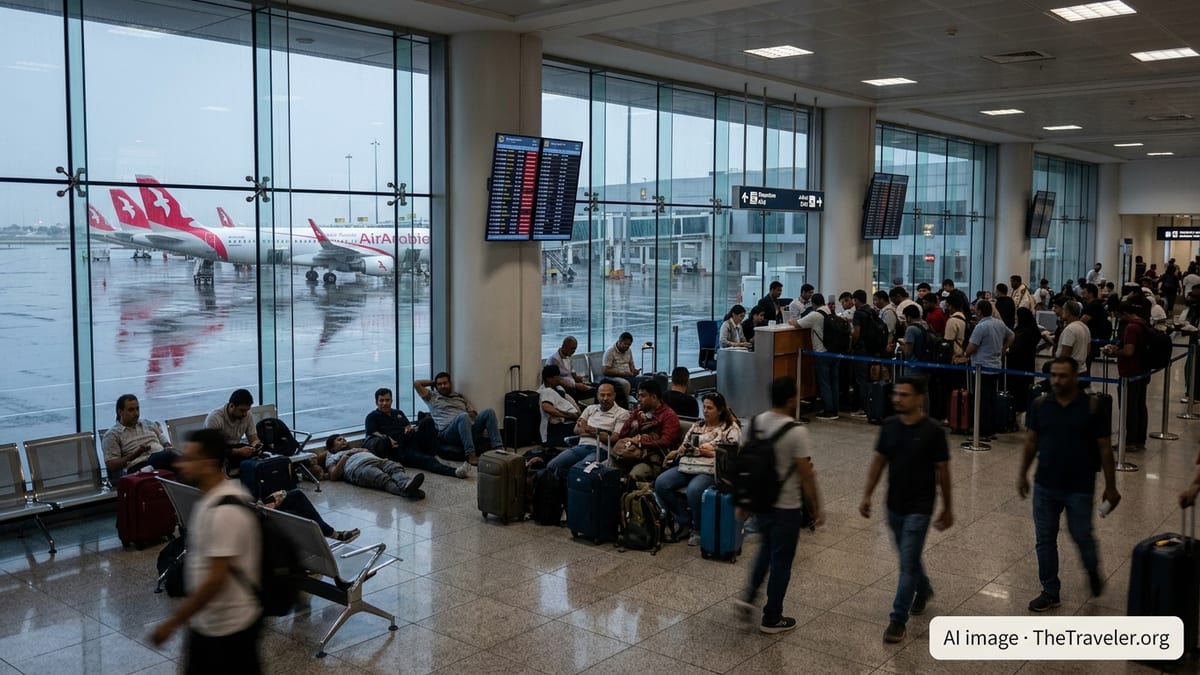
Poor weather over Delhi has led to the diversion of 11 flights to Jaipur, leaving hundreds of passengers stranded for hours on the ground and forcing airlines and airports to hastily reorganize late night operations across northern India.
Get the latest news straight to your inbox!
Weather over Delhi ripples across the network
Published coverage indicates that a spell of adverse weather over Delhi’s Indira Gandhi International Airport reduced visibility and disrupted arrival sequencing, forcing air traffic managers to reroute multiple services to alternate airports. With capacity temporarily constrained, at least 11 flights were diverted to Jaipur, turning the Rajasthan capital into an unscheduled relief hub for the night.
Available reports describe a mix of domestic and international services affected as aircraft approaching Delhi were instructed to hold and then divert once fuel and duty-time limits made further delays impractical. Jaipur, with relatively better conditions and spare runway capacity, emerged as one of the primary alternates, alongside other north Indian airports that routinely absorb spillover during weather events.
The situation highlights how a localised weather system over one of India’s busiest hubs can ripple quickly across the wider aviation network. Even short-lived storms or low-visibility events in Delhi can generate hours of follow-on disruption at secondary airports tasked with receiving diverted aircraft.
For airlines, such episodes require rapid recalculation of fuel, crew hours and gate availability, as well as coordination with ground handlers in cities that may not be staffed for sudden surges in late night arrivals.
Extended waits and uncertainty for stranded passengers
For passengers on board the affected flights, the disruption translated into long waits and mounting uncertainty. Publicly available information and social media posts from recent diversion episodes into Jaipur describe travellers remaining on parked aircraft for extended periods after landing, awaiting parking bays, ground power, and security clearance to disembark.
Once in the terminal, many passengers reported a lack of clear information on revised departure times, onward connections or accommodation, particularly for those who had expected to arrive in Delhi late at night and make early morning connections. Families with young children and elderly travellers appeared especially affected as they navigated crowded waiting areas and limited food and rest facilities during off-peak hours.
Several accounts from previous weather-related diversions into Jaipur suggest that baggage handling can become a flashpoint, with checked luggage sometimes remaining on board aircraft while airlines decide whether to refuel and continue to Delhi or cancel and rebook passengers. This can complicate onward travel plans for those willing to leave the airport by road rather than wait for a repositioned flight.
These experiences echo broader patterns seen during recent weather disruptions across India, where travellers have increasingly turned to online platforms to highlight inconsistent communication and support when flights divert or remain grounded for long stretches.
Operational strain at Jaipur’s airport
Jaipur International Airport typically manages a leaner schedule than Delhi, especially during late evening and overnight hours. An influx of 11 diverted flights within a narrow window places significant pressure on ramp space, terminal facilities and staffing levels, particularly when many handlers and concessionaires are rostered for quieter shifts.
Reports from earlier diversion events indicate that airport teams often need to juggle unplanned parking for widebody and narrowbody aircraft, arrange additional buses and stairs for remote stands, and coordinate with security agencies to process unexpected passenger volumes. When multiple aircraft arrive in quick succession, even basic services such as restrooms, seating and food counters can become strained.
Ground handling constraints can also slow the turnaround of diverted aircraft. Crews reaching their regulated duty-time limits may be unable to operate the onward sector to Delhi, forcing airlines to either fly in replacement crews or hold aircraft overnight in Jaipur. This in turn extends the time passengers remain stranded and can contribute to knock-on delays the following day as equipment and crews are out of position.
The episode underscores the growing importance of contingency planning at secondary airports like Jaipur, which increasingly serve as safety valves for overstretched metro hubs during periods of severe weather or airspace restrictions.
Traveler rights, rebooking and practical options
When flights are diverted due to poor weather, passenger entitlements under Indian regulations are more limited than in cases involving technical faults or airline scheduling issues. Public guidance from regulators and consumer advocates generally notes that weather is treated as an extraordinary circumstance, reducing the obligation on carriers to provide compensation, even when delays stretch into many hours.
However, published advisories indicate that airlines are still expected to offer reasonable assistance, such as snacks, water and basic information updates during long ground holds, and to make good-faith efforts to rebook travellers on the next available services once conditions permit. For passengers missing international connections in Delhi, this can involve complex re-ticketing across multiple carriers and alliances.
Travel specialists often recommend that passengers facing diversions into cities such as Jaipur carefully assess their onward options. For some, especially those with urgent appointments in the National Capital Region, arranging surface transport by road or rail from Jaipur to Delhi may be faster than waiting for aircraft to be ferried back once weather improves. For others with checked baggage or international itineraries, remaining with the airline’s rebooking plan can be the safer path despite the inconvenience.
Observers also point to the value of flexible tickets, comprehensive travel insurance and allowing additional buffer time for winter and monsoon-season journeys through Delhi, where fog, storms and wind shear have repeatedly disrupted operations in recent years.
Growing urgency around resilience in Indian aviation
The diversion of 11 flights to Jaipur due to poor weather over Delhi adds to a growing list of high-impact disruptions in India’s aviation sector, from dense fog episodes and thunderstorms to visibility challenges at rapidly growing regional airports. Each incident reinforces questions about how prepared airlines and airports are for increasingly volatile weather patterns.
Industry analyses note that while India’s busiest hubs have invested in advanced landing systems and improved forecasting, the wider ecosystem remains uneven. Secondary airports that serve as alternates may lack the same level of ground support or passenger amenities, even as they absorb the operational shocks when major metros are forced to slow or suspend arrivals.
For travellers, the latest diversions into Jaipur serve as another reminder that itineraries built around tight connections and rigid schedules remain vulnerable to disruption. For airlines and airport operators, the episode highlights the need for clearer communication protocols, more robust staffing models at alternate airports, and planning that treats weather resilience as a core part of the passenger experience rather than an occasional exception.