


More news on this day
Travelers at Nairobi’s Jomo Kenyatta International Airport spent long hours on terminal floors and check-in queues after a pilots’ strike and wider aviation labor unrest triggered major disruptions to flights at one of Africa’s busiest hubs.
Get the latest news straight to your inbox!
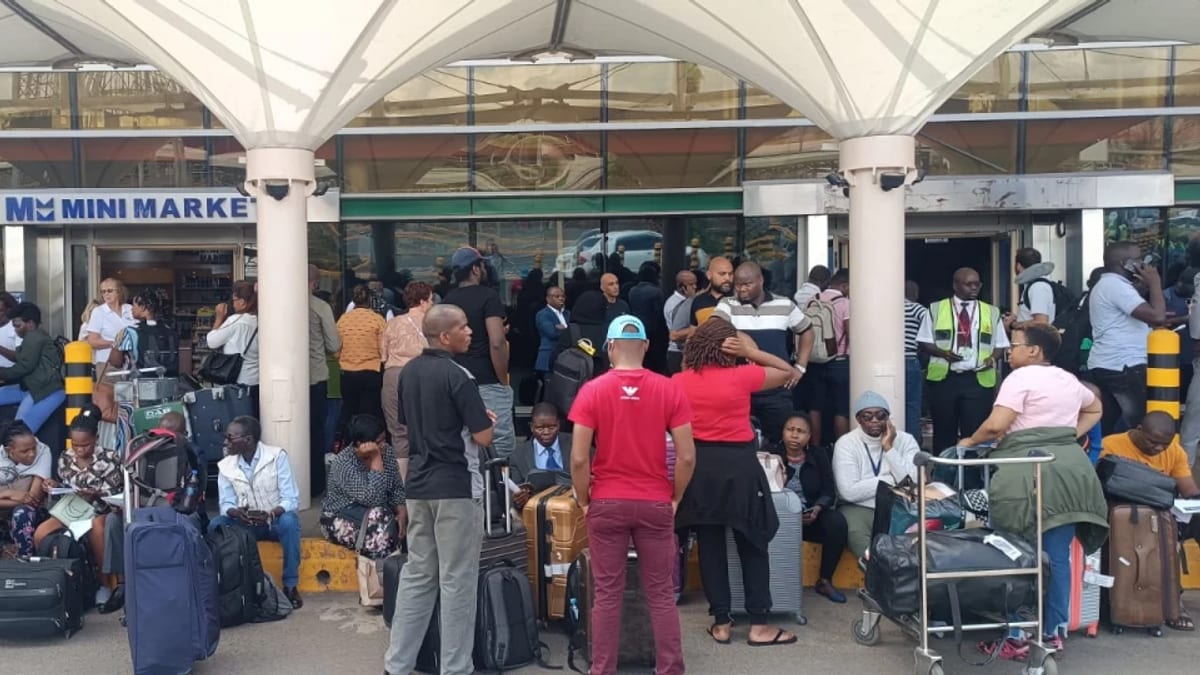
Long Queues, Full Departure Halls and Makeshift Beds
Images circulating on social platforms and in local media showed departure halls at Jomo Kenyatta International Airport packed with passengers sitting on luggage, sprawled across tiled floors and leaning against pillars as they waited for news of delayed or cancelled flights. Families with young children, elderly travelers and tourists on safari itineraries were among those photographed trying to sleep under bright terminal lights.
Publicly available coverage indicates that the disruption began building as aviation workers and pilots escalated a labor dispute that had already slowed operations through a go-slow and staffing shortages. As the stand-off worsened, flight information boards filled with notices of delays and cancellations, while security queues and check-in counters swelled far beyond normal peak levels.
Photos from the international terminal showed trolleys repurposed as makeshift beds, with passengers using jackets and backpacks as pillows. Others clustered around charging points and food outlets, forming long lines for basic necessities as they faced waits stretching into many hours.
Reports from Nairobi-based outlets described scenes of confusion, with some travelers learning of cancellations only after clearing immigration or arriving from upcountry connections. With hotel rooms around the airport filling quickly, many opted to remain inside the terminal overnight, hoping for a seat on the next available departure once operations resumed.
Pilots and Aviation Workers Raise Safety and Staffing Concerns
The latest disruption at JKIA comes after months of tension between aviation unions and sector regulators over staffing levels, pay and working conditions. Coverage of the dispute highlights concerns raised by pilot associations about fatigue, duty-time limits and the knock-on effect of repeated delays on crew rosters across Kenya’s aviation network.
Reports indicate that pilots have warned that chronic scheduling pressure, combined with ongoing ground staff go-slows, risks undermining safety margins if not addressed. Aviation workers, including air traffic and ground handling staff, have also used recent industrial actions to protest proposals affecting job security and the structure of safety oversight within Kenya’s aviation system.
According to Kenyan business and transport publications, the dispute escalated into a nationwide aviation workers’ strike in February 2026, which heavily disrupted operations at JKIA and other key airports. While pilots form only one part of the workforce, images from the terminal in Nairobi underscored how quickly a shortage of cockpit and operational staff can cascade into widespread disruption for passengers.
Union statements referenced in local news coverage frame the strike and related actions as a last resort after long-running negotiations over collective bargaining agreements, staffing transfers and infrastructure investment. Government and regulatory bodies, for their part, have emphasized that contingency plans are being used to maintain essential safety functions, even when flight schedules are heavily affected.
Ripple Effects Across Kenya’s Air Network
With JKIA serving as the primary gateway for international visitors and a central hub for domestic connections, the pilots’ strike and wider aviation work stoppages quickly rippled across Kenya’s air network. Coverage from regional outlets notes that disruptions were also reported at airports in Mombasa, Kisumu and Eldoret, where passengers similarly found themselves waiting for updated schedules and replacement flights.
Airlines operating out of JKIA, including Kenya Airways and several regional carriers, issued public advisories warning customers of extended delays and advising them to check flight status before heading to the airport. Some carriers reported average delays running into several hours, while others temporarily suspended select routes due to a lack of available crews and air traffic capacity.
Reports from travel industry observers suggest that the disruptions have been particularly difficult for passengers on multi-leg itineraries, including safari packages and business trips connecting through Nairobi to other African capitals or to Europe, the Middle East and Asia. Missed connections have forced hasty rebooking, with some travelers photographed queuing at airline desks late into the night as they sought new options.
Analysts quoted in regional aviation coverage say the economic impact extends beyond stranded passengers. Cargo delays, aircraft repositioning costs and schedule recovery efforts are expected to weigh on airline finances and on sectors such as tourism and horticultural exports that rely heavily on reliable air links through JKIA.
Efforts to Restore Operations and Assist Passengers
As the strike and go-slow actions intensified, Kenya’s aviation authorities and airport operators introduced contingency measures aimed at stabilizing operations at JKIA. Public statements highlighted efforts to prioritize essential safety and air navigation services while gradually rebuilding flight schedules as labor talks progressed.
Airlines announced revised timetables, consolidated services and increased communication through digital channels to keep passengers informed of changes. Photos from later in the disruption show somewhat shorter queues at check-in and security points as revised schedules took effect and some flights were re-routed or rescheduled to off-peak hours.
Local news reports describe airlines arranging meal vouchers, limited accommodation and rebooking assistance for the most affected passengers, particularly those with long-haul tickets and missed connections. However, the volume of stranded travelers meant that not all could be accommodated immediately, leaving many to spend extended periods in crowded waiting areas.
By the time union leaders signaled a willingness to suspend industrial action and return to negotiations, publicly available information indicated that operations at JKIA were gradually returning toward normal patterns. Even so, residual delays continued as airlines worked through backlogs and repositioned aircraft and crews, leaving some passengers facing knock-on disruptions days after the initial strike.
Spotlight on JKIA’s Capacity and Future Resilience
The images of stranded passengers at JKIA have reignited debate over the airport’s resilience and long-term capacity. Commentators in regional transport publications note that the hub has long operated close to its design limits, with passenger volumes and airline traffic outpacing infrastructure upgrades.
In previous years, discussions about potential private sector involvement and large-scale redevelopment of JKIA have triggered both interest and controversy. Worker actions, including earlier protests over proposed management changes and infrastructure deals, have often centered on concerns about job security, service quality and national control of a strategic asset.
Analysts observing the latest disruption argue that, beyond the immediate labor dispute, the scenes from the terminals underscore the need for more robust contingency planning, investment in staffing and facilities, and clearer communication systems during crises. Photos of crowded halls and improvised sleeping areas have become a visual shorthand for the strain on the airport’s current setup.
For travelers, the recent strike is a reminder to build flexibility into itineraries involving JKIA, particularly during periods of labor tension or peak travel seasons. For Kenya’s aviation sector, the challenge will be to translate the lessons of this episode into reforms that protect both safety and reliability, so that images of stranded passengers become less frequent at one of Africa’s key gateways.