


More news on this day
Thousands of passengers were left stranded at Nairobi’s Jomo Kenyatta International Airport as pilots and aviation workers staged industrial action that disrupted flights at Kenya’s busiest air hub.
Get the latest news straight to your inbox!
Chaotic scenes as flights grind to a halt
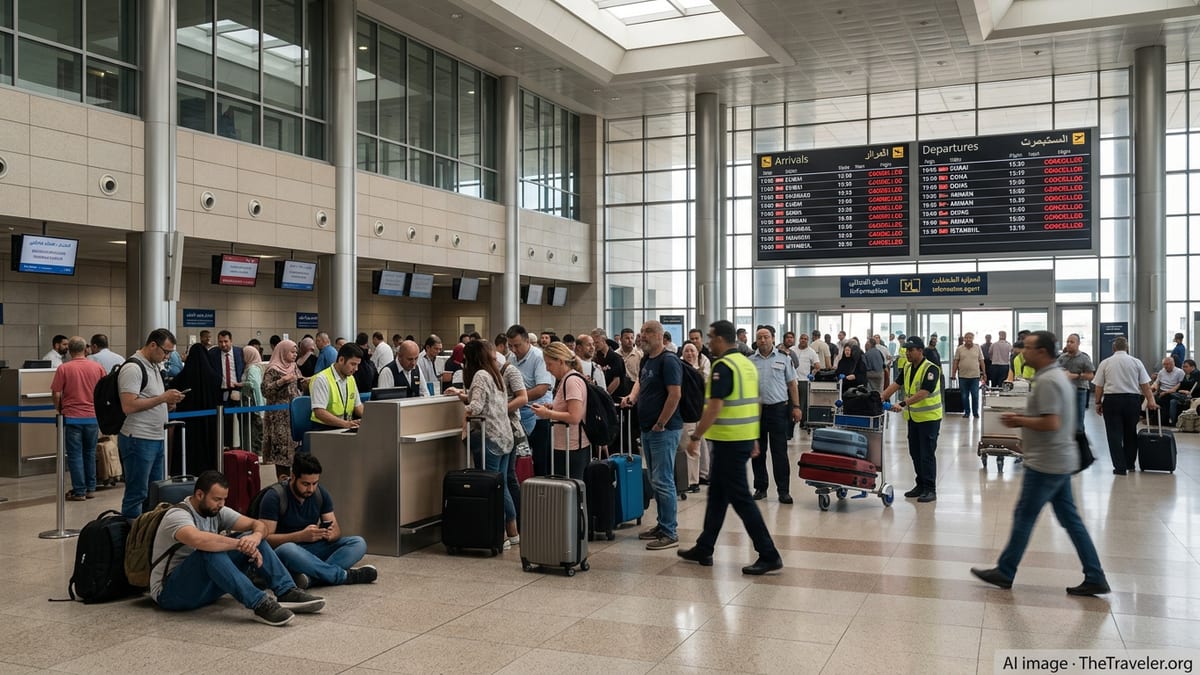
Images from Jomo Kenyatta International Airport showed long queues snaking through departure halls, with travelers sitting on trolleys, luggage piled beside them, as departure boards flashed repeated delay and cancellation notices. Publicly available coverage described scenes of confusion as ground staff attempted to rebook passengers while aircraft remained parked on the apron without flight crews.
Reports indicate that the strike, which escalated during a busy travel period, effectively paralyzed a large share of operations at JKIA for many hours. Some services managed to depart with reduced crews, but many domestic and regional flights were delayed or held on the ground, leaving passengers unsure when they would be able to continue their journeys.
Photos circulating in local media and on social platforms showed families camped out on terminal floors, business travelers working on laptops beside check-in counters, and lines at customer service desks stretching across the concourse. The images underlined the scale of the disruption at an airport that serves as a critical hub for East and Central Africa.
According to published coverage, some travelers reported having already endured previous schedule changes linked to air traffic and staffing constraints earlier in the week, only to face fresh uncertainty as the pilots’ stoppage took hold.
Industrial dispute rooted in safety, staffing and pay
Public statements by the Kenya Airline Pilots Association and related aviation unions in recent months have highlighted concerns over pilot fatigue, staffing levels and adherence to flight duty time rules. Reports indicate that union representatives have warned that a combination of tight rosters, rising traffic and operational pressures is stretching crews and could compromise safety if not addressed.
At the same time, workers have raised grievances related to implementation of collective bargaining agreements and the restructuring of certain technical and safety oversight functions in Kenya’s aviation system. Previous labor actions involving airport workers and air traffic staff have already contributed to delays at JKIA and other Kenyan airports this year, setting the stage for heightened tensions between unions and aviation authorities.
According to media analysis of the current stoppage, pilots see the strike as leverage to press for more predictable working conditions, stronger guarantees on rest periods, and clearer timelines for resolving long-running contractual disputes. Airlines and regulators, by contrast, have emphasized the need to maintain continuous operations at the country’s primary gateway while managing rising operating costs.
The convergence of these issues appears to have culminated in the latest walkout, which left many aircraft fully fueled and boarded but unable to depart due to a lack of available crew, intensifying frustration among passengers already assembled at the gates.
Travelers face missed connections and mounting costs
The immediate impact for travelers was stark. Passengers booked on early morning departures found themselves still in the terminal long after their scheduled departure times, while those arriving on inbound flights discovered that their onward connections had been canceled or severely delayed.
Reports from local outlets indicated that some passengers missed international connections to Europe, the Middle East and other African capitals, forcing them to seek last-minute rebooking options or overnight accommodation in Nairobi. For travelers on tight itineraries, including medical, business and school-related trips, the knock-on effects were particularly disruptive.
Stranded passengers described having to pay out-of-pocket for food, hotel rooms and alternative transport while they waited for clarity on revised schedules. Published accounts suggest that while some airlines provided meal vouchers or hotel placements, coverage varied by carrier and ticket type, leaving a portion of travelers to shoulder unexpected costs.
Families traveling with young children and elderly relatives appeared especially affected, with images showing parents trying to find relatively quiet corners of the terminal to rest while they monitored flight updates on screens and mobile phones.
Airlines scramble to adjust operations
Kenya Airways and other carriers operating from JKIA issued public advisories warning of extended delays and possible cancellations as the industrial action unfolded. According to airline statements cited in local media, carriers sought to consolidate flights, reroute aircraft and adjust crew rosters in a bid to preserve core routes and minimize total disruption.
Publicly available information shows that some airlines advised passengers to check their flight status before heading to the airport and, where possible, to consider rebooking to later dates at reduced or waived change fees. Others deployed larger aircraft on select routes once limited operations resumed, in an attempt to clear backlogs of stranded travelers.
Airport authorities, for their part, emphasized that critical safety and air navigation services remained functional, with air traffic control continuing to manage the reduced flow of arrivals and departures. Ground handlers and security personnel maintained operations inside the terminals, even as the absence of pilots left many planes unable to leave their stands.
Analysts noted that while the disruption centered on Nairobi, any extended stoppage risked rippling across regional networks, affecting feeder services through Mombasa, Kisumu and other East African destinations that rely on JKIA as a connecting hub.
Negotiations, wider implications and calls for reform
By late in the day, reports indicated that negotiations between union leaders and government transport officials were intensifying, with both sides facing pressure to reach a compromise that would restore confidence in Kenya’s key aviation gateway. Previous industrial disputes involving aviation workers in the country have sometimes been resolved through short-term agreements, only for underlying issues to resurface later.
Aviation analysts quoted in published commentary have suggested that the latest strike underlines the need for a more comprehensive framework to manage labor relations in the sector, including clearer dispute-resolution mechanisms and long-term planning for staffing and infrastructure at JKIA. The airport has faced mounting scrutiny over congestion, aging facilities and capacity constraints even in periods without industrial unrest.
Travel industry observers also warn that repeated episodes of disruption risk damaging Nairobi’s competitiveness as a regional hub compared with rivals in Addis Ababa, Kigali and the Gulf. Corporate travelers and airlines planning new routes may weigh operational reliability heavily when choosing where to base connections and schedules.
For the thousands of passengers left waiting amid rows of suitcases and improvised sleeping spots in the terminal, the immediate concern was more basic: when they would finally be able to board their flights. As talks continued and airlines worked through their backlog, images from JKIA captured a mood of weary patience mixed with uncertainty, illustrating how labor disputes in the cockpit can swiftly spill over into the journeys of travelers around the world.