


More news on this day
Dense fog over Delhi forced 11 flights to divert to Jaipur on a recent morning, leaving hundreds of passengers stranded for hours as aircraft and crews waited for conditions to improve and schedules unraveled across multiple routes.
Get the latest news straight to your inbox!
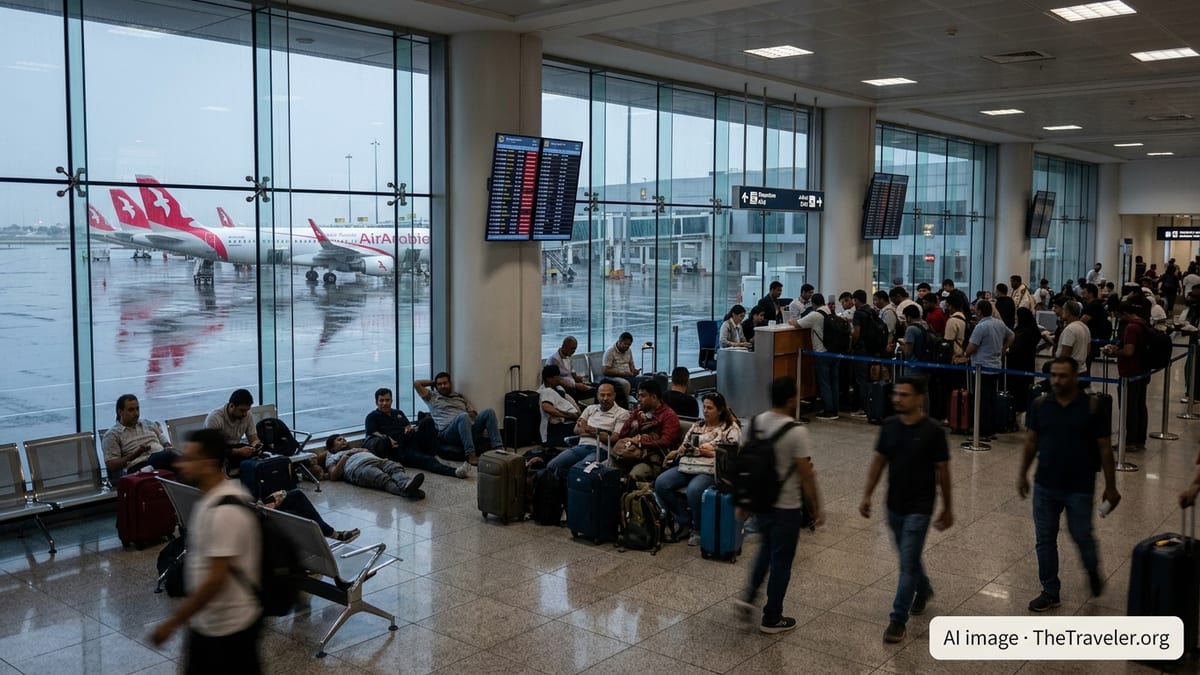
Low Visibility Over Delhi Triggers Series of Diversions
Publicly available information indicates that poor visibility at Delhi’s Indira Gandhi International Airport led to a cluster of diversions, with 11 flights rerouted to Jaipur over a several hour window. The disruptions occurred during the early part of the day, a period when winter fog and low clouds frequently affect operations in northern India.
Flight tracking data and media coverage suggest that affected services included arrivals from major Indian cities such as Mumbai, Bengaluru and Ahmedabad, along with regional routes funneling traffic into Delhi. With approach visibility slipping below the operating minima for many aircraft and crews, flights already en route had limited options beyond diverting to alternate airports with clearer conditions.
Jaipur, located around 280 kilometers from the capital by road, is a common diversion point for Delhi during episodes of fog. The airport’s runway and weather profile often allow it to accept traffic that cannot safely land in the capital, concentrating disruption in Rajasthan whenever Delhi’s airspace is constrained.
The sudden arrival of multiple unscheduled aircraft placed added pressure on parking stands, ground handling, refuelling and basic amenities at Jaipur, as operations teams attempted to accommodate the additional traffic while maintaining the regular schedule.
Passengers Face Long Waits, Confusion and Missed Connections
Reports from travelers and local media describe a familiar pattern for passengers caught up in the diversions to Jaipur. Many were held on board for extended periods while crews awaited updated weather information from Delhi, air traffic control clearances and revised flight plans back to the original destination.
Once it became clear that a quick turnaround was unlikely, several flights reportedly deplaned passengers into the terminal, where they faced uncertainty over rebooking, onward transportation and access to food and water. Some travelers described waiting multiple hours at Jaipur without firm departure times, as airlines worked through congested slots and crew duty limitations.
For passengers with onward international connections from Delhi or time-sensitive commitments, the diversions translated into cascading disruptions. Missed long haul departures, lost hotel nights and rescheduled meetings were common outcomes, echoing similar episodes during previous bouts of severe fog in the capital’s airspace.
Travel industry observers note that such events highlight persistent gaps in communication at times of stress, with some passengers reporting limited updates about the reasons for the delay, expected waiting times or available alternatives by rail and road from Jaipur to Delhi.
Operational Strain at Jaipur Airport During Diversion Surge
The influx of 11 unscheduled arrivals in a short span created significant operational strain at Jaipur International Airport. Each diverted aircraft required a parking position, ground power, refuelling and coordination with airline dispatch teams, all while regular departures and arrivals continued.
Ground handling providers had to rapidly scale up services for aircraft and passengers they had not planned to process, including baggage handling, cabin cleaning, catering and basic passenger assistance. Terminal facilities, already sized for routine demand, were stretched by additional travelers seeking seating, restrooms and customer service counters.
Observers point out that diversion management is a routine aspect of aviation safety, but the scale of simultaneous diversions can quickly expose capacity limitations at secondary airports. With multiple carriers relying on Jaipur as an alternate for Delhi, even a few hours of severe weather in the capital can translate into a wave of congestion on the ground in Rajasthan.
Industry data from previous winters show that repeated diversion events can also have a knock-on effect on Jaipur’s own outbound schedule, as aircraft and crews fall behind their assigned rotations while waiting for clearance to reposition to Delhi or onward destinations.
Broader Pattern of Weather-Related Disruptions in Northern India
The Jaipur diversions are part of a broader pattern of weather-related disruption impacting air travel in northern India during the winter and pre-monsoon seasons. In recent years, dense fog, low clouds and sudden thunderstorms have all led to waves of delays, cancellations and diversions at Delhi, one of the country’s busiest hubs.
Across multiple seasons, publicly available aviation data and media reports have documented flights being rerouted not only to Jaipur but also to airports such as Lucknow, Ahmedabad and other nearby cities when visibility or storm conditions made approaches into Delhi unsafe. These diversions have repeatedly left passengers stranded for extended periods while airlines worked to restore normal schedules.
Aviation analysts note that while advanced landing systems and trained crews enable low-visibility operations on certain runways, not all aircraft, airlines or pilots are certified for the most demanding procedures. When a combination of traffic volume, weather and infrastructure constraints converge, disruption becomes difficult to avoid, even with careful planning.
The recent cluster of 11 diversions to Jaipur underscores how quickly localized weather over Delhi can ripple through the wider domestic network, particularly during peak travel hours when spare capacity is limited and aircraft are tightly scheduled.
What Travelers Can Do When Flights Are Diverted
Travel experts suggest several practical steps for passengers to reduce the impact of events like the Jaipur diversions. One recommendation is to build additional buffer time into itineraries involving Delhi during the fog-prone months, especially when connecting to international long haul services or time-critical commitments.
Real-time flight tracking tools and airline apps can help travelers monitor evolving conditions, diversion patterns and gate changes, sometimes faster than information displayed on terminal boards. Maintaining updated contact details with airlines may also facilitate automatic alerts when flights are diverted or rescheduled.
When diversions lead to extended delays, publicly available consumer guidelines indicate that passengers may be entitled to certain forms of assistance such as refreshments, accommodation or rebooking options, depending on airline policy and local regulations. Keeping boarding passes, receipts and written confirmations can be helpful if travelers later choose to pursue formal complaints or compensation where applicable.
For journeys involving Delhi and nearby airports such as Jaipur, some passengers also consider contingency plans by road or rail once a diversion has occurred, particularly if conditions at the original destination are not expected to improve quickly. However, such choices should be weighed carefully against the risk of missing a rescheduled flight once normal operations resume.