


More news on this day
A long-distance passenger service in Queensland turned into a night-time ordeal this week when about 110 people were stranded for hours on a powerless Bundaberg Tilt Train without air conditioning, food or working toilets after storms brought down overhead powerlines north of Brisbane.
Get the latest news straight to your inbox!
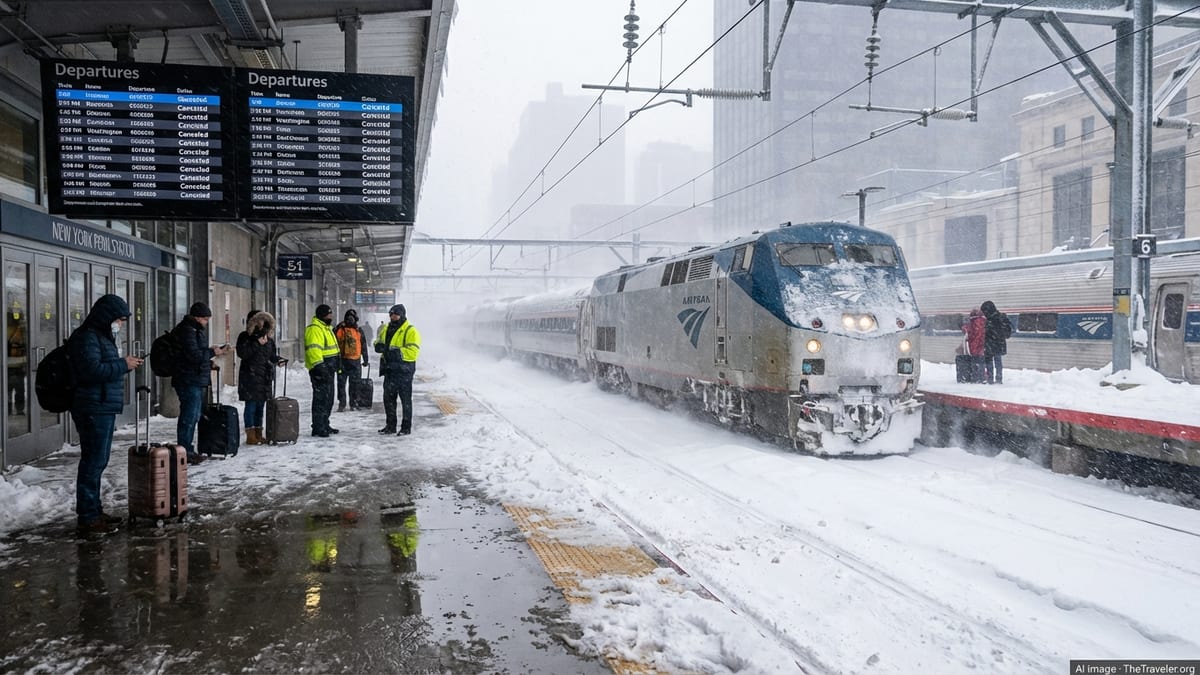
Storm-damaged powerlines halt Bundaberg Tilt Train
According to published coverage in Australian media, the northbound Bundaberg Tilt Train came to a halt near Gundiah, on the Fraser Coast south of Maryborough, late on Wednesday night, 11 November 2026, after severe storms damaged overhead power infrastructure. Services on Queensland’s busy North Coast line were disrupted as crews worked through the night to make the area safe.
Reports indicate that more than 100 passengers, with estimates centering on about 110 people, were stuck on board for roughly six hours while the train remained without traction power. The shutdown cut electricity to lighting, air conditioning and toilet systems, leaving the train in darkness for much of the night and limiting access to essential onboard amenities.
Publicly available information from local news outlets notes that the overhead powerlines could not be de-energised until the early hours of Thursday morning. Only after rail technicians confirmed that the damaged infrastructure no longer posed an electrocution risk were arrangements made to move passengers off the stranded train and transfer them to alternative transport.
The incident occurred on one of Queensland Rail’s flagship long-distance services linking Brisbane with Bundaberg. The line is a key passenger and freight corridor along the state’s eastern seaboard, meaning the failure had flow-on effects for other trains and freight movements while the fault was being addressed.
Onboard conditions: heat, darkness and limited supplies
Accounts compiled in regional and national coverage describe increasingly uncomfortable conditions inside the stationary train as the night wore on. With the air conditioning offline, carriages began to warm up despite the late hour, and passengers reported heavy, stagnant air in the sealed environment.
Reports from multiple outlets state that there was no food service available during the outage and that toilets were either not functioning or became close to unusable after hours without power to pumps and ventilation. One summary of the incident described toilets as “pretty full,” underscoring the hygiene concerns that can quickly arise when a modern train loses auxiliary power.
Passengers did have access to drinking water, according to international and Australian news coverage, but there were no hot meals or snack options once the power went down. For travelers, many of whom were undertaking late-night journeys along the coast, the lack of food added to fatigue and anxiety about when they would be able to disembark.
Lighting was also affected for long periods, leaving sections of the train in near-total darkness. Although some passengers relied on phone torches and battery-powered devices, the absence of normal interior lighting contributed to a sense of uncertainty, particularly for families and older travelers unfamiliar with the remote location where the train had stopped.
Evacuation by bus and wider network disruption
Once powerlines near Gundiah were confirmed safe around dawn, publicly available reports state that passengers were gradually moved off the immobilised train and onto replacement buses. Transfers began at around 6 a.m. on Thursday, with coaches brought in to take people onward toward Bundaberg and other destinations along the route.
The overnight delay meant many travelers arrived at their destinations hours later than scheduled, missing early-morning connections and commitments. However, there were no reports of serious injuries, and coverage indicates that emergency services remained on standby while the transfer operation was completed.
The powerline fault had implications beyond the single stranded service. Rail news summaries note that other Bundaberg Tilt Train and Spirit of Queensland services were disrupted or replaced by buses on sections of the North Coast line while repairs continued. Freight operators using the corridor also experienced delays as technicians worked to repair several hundred metres of damaged overhead line equipment.
For Queensland’s tourism sector, the disruption came at a time when coastal destinations between Brisbane and Bundaberg depend on reliable rail links for both domestic and international visitors. While the incident appears to have been weather-related, it has renewed attention on the resilience of long-distance passenger services that traverse storm-prone regions.
Safety protocols for stranded trains under scrutiny
The event near Gundiah has drawn attention to established safety procedures for trains stranded away from stations, particularly when live electrical infrastructure is involved. Public information from previous Australian rail investigations highlights that detrainment cannot begin until overhead wires are made safe, a step that can significantly prolong the time passengers remain on board.
Industry safety guidance published in Australia and abroad stresses that loss of onboard power can quickly escalate passenger discomfort, especially when air conditioning and toilets cease to function. Reports into earlier rail incidents in New South Wales and other jurisdictions have pointed to similar challenges, including rising heat in sealed carriages, limited communication and anxiety among those on board.
In this latest Queensland incident, rail crews and emergency responders were required to balance the imperative to remove passengers from an unpowered train against the risk posed by storm-damaged high-voltage equipment overhead. Until that risk was mitigated, the safest option remained to keep people on the train, despite the deteriorating onboard conditions.
Commentary in transport-focused coverage suggests that rail operators across Australia may use the Gundiah stoppage as another case study when revisiting contingency plans for extreme weather, particularly around passenger welfare when access to power, food and sanitation is cut off for extended periods.
Implications for travelers using Queensland’s coastal rail routes
The overnight stranding has practical implications for travelers planning rail journeys along Queensland’s coast, especially during storm season. Publicly available information on recent weather patterns in the state shows an increased likelihood of severe thunderstorms capable of damaging overhead lines and affecting rail timetables.
For visitors, especially those unfamiliar with Australia’s regional distances, the Gundiah incident is a reminder that long stretches of the North Coast line run through sparsely populated areas where immediate alternative transport is limited. When services are interrupted, replacement buses must often travel significant distances to reach stranded trains.
Travel reporting in the wake of the disruption notes that passengers on long-distance services may wish to prepare for contingencies by carrying essential medications, light snacks, and portable battery packs for phones or medical devices, particularly on overnight departures. While major incidents of this kind remain uncommon, the impact on the 110 passengers caught on the powerless Tilt Train illustrates how quickly a routine journey can be upended by a combination of severe weather and infrastructure vulnerability.
Queensland’s coastal rail routes remain an important link for leisure and business travel between Brisbane, the Fraser Coast, Bundaberg and destinations further north. As investigations into the powerline failure progress and repairs are completed, the incident near Gundiah is likely to feed into broader discussions about climate resilience, passenger care and investment priorities on one of Australia’s key tourism and transport corridors.