


More news on this day
Travelers at Hartsfield Jackson Atlanta International Airport are facing extensive disruption after a rare nationwide ground stop linked to a Federal Aviation Administration communications problem left passengers stranded on concourses, in aircraft cabins and at nearby hotels on Friday, November 13, 2026.
Get the latest news straight to your inbox!
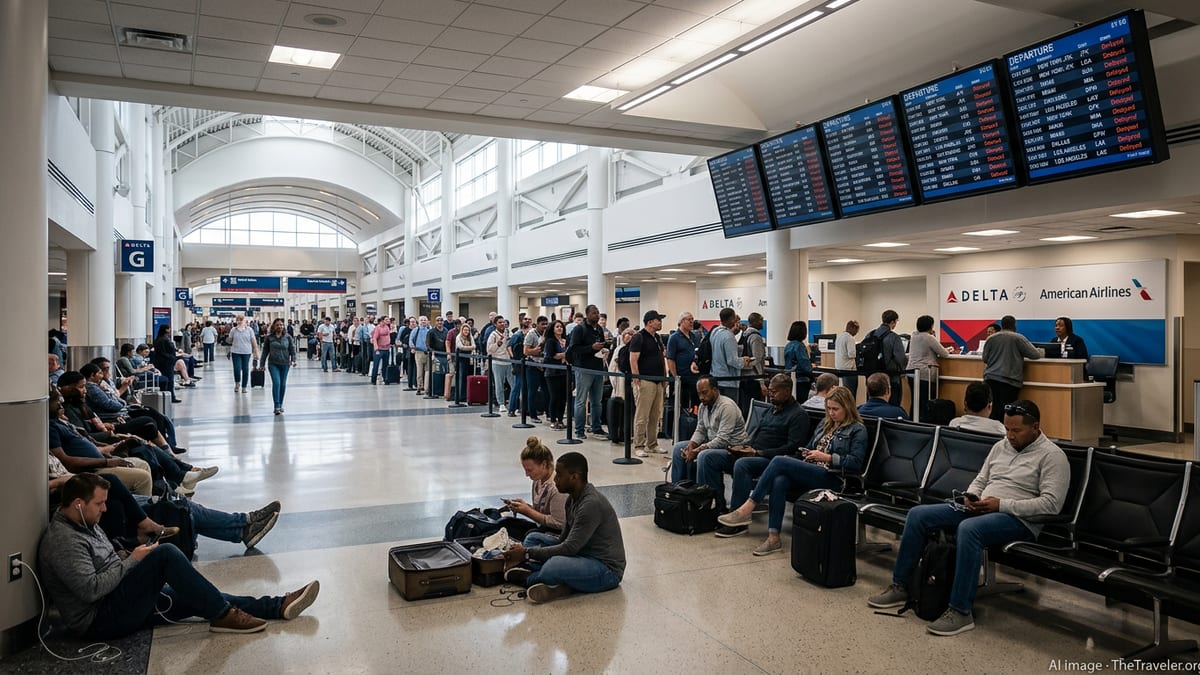
Atlanta Feels the Impact of Nationwide FAA Disruption
Published coverage indicates that the FAA ordered a nationwide halt to departing flights on November 13 because of what it described as extraordinary communications issues affecting air traffic control. Major outlets report that the first signs of trouble appeared in Chicago, before the disruption quickly cascaded through the national airspace system and forced airports across the United States, including Atlanta, to stop departures.
Hartsfield Jackson Atlanta International Airport, one of the world’s busiest hubs by passenger traffic, is particularly vulnerable to systemwide failures. Data from regional tourism and airport reports show the airport handling more than 60 million passengers in the first seven months of 2026, underscoring how a national outage can instantly affect tens of thousands of travelers moving through the city on any given day.
Live flight status boards for Atlanta on Friday showed a patchwork of conditions as the disruption unfolded. Publicly available trackers listed hundreds of scheduled departures for November 13, but many flights were placed into delayed, "to be determined" or diverted status while the ground stop was in effect, even as some arrivals continued to land once they were cleared into the system.
Social media posts and online forums from inside the terminal described crowded gate areas, long customer service lines and uncertainty about when departures might resume. Some passengers reported being held on board aircraft parked at gates or on taxiways as crews waited for updated instructions.
Stranded Passengers Face Overnight Stays and Missed Connections
The nationwide nature of the ground stop has compounded the effect for travelers using Atlanta as a connecting hub. Accounts on travel and airline discussion boards describe passengers who were scheduled to change planes in Atlanta finding themselves stuck far from their final destinations, with onward flights canceled or significantly delayed.
Some travelers heading for Florida, Brazil and other international destinations reported being advised that they might not be able to rebook for one or more days, depending on seat availability and crew scheduling. Others recounted diversions to smaller regional airports in Georgia when their flights could not secure arrival times into Atlanta while the disruption was unfolding.
Standard passenger protections and airline policies are being tested under the strain. Publicly available information on typical U.S. tarmac delay rules indicates that airlines are generally required to give passengers the option to deplane after around three hours on the ground for domestic flights if safety and operational considerations allow. Online discussions from Atlanta and other affected airports on Friday included multiple references to crews monitoring those limits as they weighed whether to return aircraft to gates or wait out potential resumptions.
Hotel rooms around Hartsfield Jackson are also under pressure. Local travel boards and user reports indicated that some nearby properties began to fill quickly on Friday afternoon and evening as stranded passengers sought last minute accommodation, raising costs for those who could not secure airline vouchers or alternative arrangements.
Operations Gradually Resume but Disruption Lingers
By Friday evening, national coverage suggested that the FAA was beginning to lift the ground stop in phases as communications capacity was restored, allowing some departures to resume from major hubs. Live tracking tools for Atlanta reflected this gradual normalization, showing a growing number of flights moving from delayed to airborne status while others remained canceled.
Even as aircraft begin to depart, however, the operational hangover is expected to persist. Industry history with previous large scale technology outages and air traffic system failures shows that airlines can take one or more days to fully unwind the backlog of displaced passengers, out of position aircraft and crews who have reached their maximum legal duty times.
For Atlanta, that means travelers may continue to encounter irregular operations into the weekend, including rolling delays, equipment changes and last minute cancellations. Analysts cited in broader aviation coverage point out that hub airports like Atlanta function as central nodes in complex route networks, so a few hours of nationwide grounding can scramble carefully balanced schedules for days.
Passengers who were able to depart Atlanta late in the day on November 13 reported on social platforms that their flights were often full and that standby lists grew quickly once operations resumed. Others noted that checked luggage did not always travel with them, echoing problems seen during previous large technology incidents when baggage systems and staffing struggled to keep pace with sudden schedule changes.
What Travelers in Atlanta Can Do Right Now
For travelers currently stranded in or heading toward Atlanta, publicly available guidance from airlines and airport information services points to several immediate steps. First, passengers are urged to confirm the status of their specific flight using official airline apps or departure boards before leaving for the airport, since broad airport status pages may show normal operations even while individual flights remain disrupted.
Second, rebooking options are likely to be more flexible than usual during a systemwide disruption of this scale. Major U.S. carriers often publish short term travel waivers during extraordinary events, allowing customers to change to later dates or nearby airports without typical change fees or fare differences, subject to specific conditions. Travelers connecting through Atlanta may be able to reroute through other hubs if seats are available, though this can vary significantly from airline to airline.
Third, passengers facing overnight delays at or near Hartsfield Jackson are being advised by travel advocates and online communities to secure hotel rooms or alternative transportation as early as possible. With more than a thousand departures scheduled from Atlanta on a typical day, even a fraction of passengers seeking accommodation at once can exhaust nearby capacity. Some travelers have reported turning to rental cars, intercity buses or rail for regional journeys when short haul flights remain backed up.
Finally, travelers are encouraged to keep receipts and documentation for meals, hotels and other unexpected expenses. While reimbursement policies differ, some airlines may offer vouchers or credits after major disruptions, and travel insurance providers often require proof of costs and confirmation that delays were caused by widespread operational issues such as a national ground stop.
Atlanta’s Role in a Strained U.S. Air Travel System
The events of November 13 highlight Atlanta’s outsized role in U.S. and global air travel. As the primary hub for one of the country’s largest airlines and a key connecting point between domestic and international routes, any disruption that affects the city ripples far beyond Georgia.
Recent passenger traffic reports from local and regional agencies confirm that Hartsfield Jackson continues to rank among the highest volume airports in the world, even as overall numbers have softened slightly compared with the previous year. That scale means the airport is both highly efficient in normal times and highly exposed when national infrastructure falters.
Aviation observers note that Friday’s nationwide ground stop has renewed attention on the resilience of U.S. air traffic control technology. Federal planning documents published in recent months have highlighted ongoing efforts to modernize communications and data systems at major facilities, including those serving Atlanta, in an attempt to reduce the likelihood that a single point of failure can lead to widespread grounding of flights.
For the thousands of travelers who found themselves unexpectedly camped out on concourse seats, hotel lobbies and rental car shuttles around Atlanta, those longer term modernization plans may feel distant. In the immediate term, the focus remains on getting flights back into the air, reuniting passengers with their destinations and luggage, and restoring confidence in a system that, on one Friday in November, briefly came to an abrupt stop.