


More news on this day
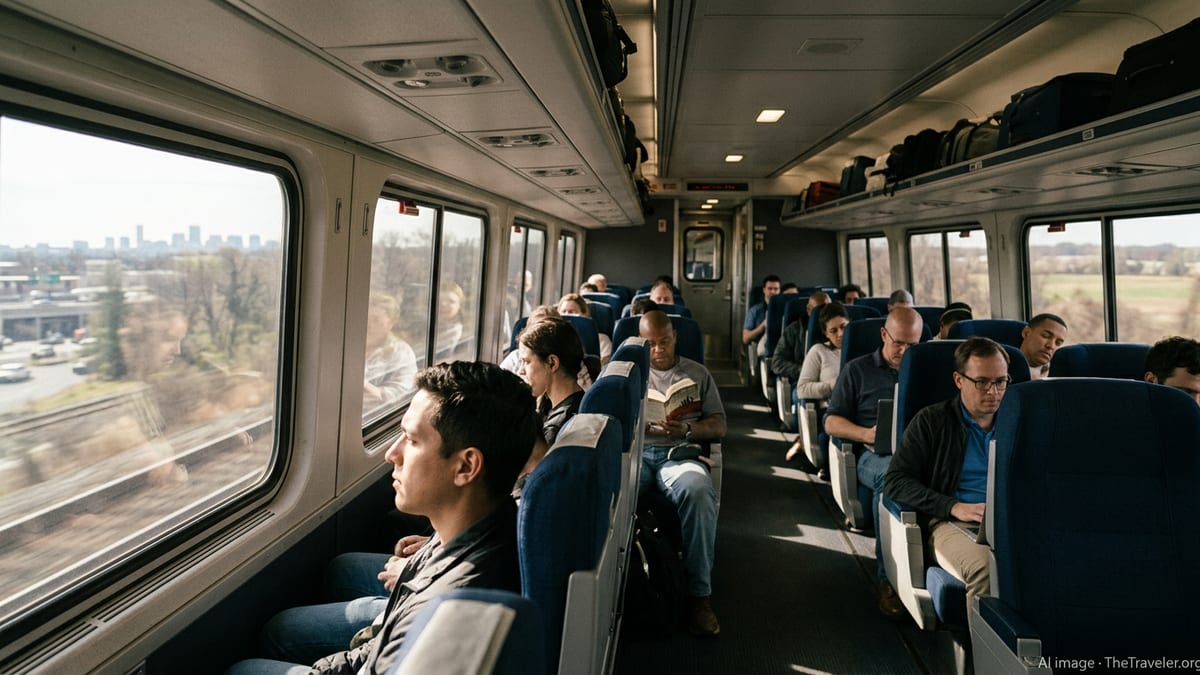
From Florida’s wildfire-stricken Amtrak routes to overheated commuter lines in London and Boston, a series of recent rail breakdowns in extreme heat has left passengers trapped for hours in stalled trains, intensifying scrutiny of how networks handle rising temperatures and on-board emergencies.
Get the latest news straight to your inbox!
Recent Stranding Incidents Underscore Growing Risks
In April 2026, hundreds of Amtrak passengers in Florida were left on board for more than 20 hours after wildfires in Putnam County forced a long-distance train to halt, blocking the route and preventing northbound services from continuing. Publicly available reports from regional television and national outlets describe passengers confined in increasingly uncomfortable conditions as food supplies dwindled and bathrooms began to fail.
Coverage from local stations in Georgia and Oregon indicates that this was not an isolated case. Separate Amtrak services linked to the same wildfire system left passengers stuck on board for many hours, with some riders reporting on-camera that they slept in their seats while waiting for the line to reopen or for buses to arrive to complete their journeys.
In the United Kingdom, regional outlets in London have reported trains halted in full sun during the 2026 heatwaves, with broken-down services near Drayton Park and outside St Pancras International leaving passengers in non-functioning air conditioning for up to two hours before trackside evacuations began. Earlier coverage from national newspapers has documented similar events in previous hot spells, where passengers described carriages as feeling like an oven as temperatures climbed.
Urban rail has also struggled. In the Washington, D.C. area, a July 2026 incident on the Metrorail Green and Yellow lines prompted evacuation after a train derailed near College Park. News reports linked the investigation to potential heat-related track problems, adding to a wider picture of infrastructure strained by prolonged high temperatures.
Heat, Power Failures and Ageing Infrastructure
While the causes of these incidents vary, recent coverage points to a combination of extreme heat, power failures and ageing equipment. In parts of the United States, wildfire smoke and fire lines have repeatedly forced dispatchers to halt trains until track inspections or firefighting operations are complete, turning carriages into de facto waiting rooms for hours at a time.
Rail operators acknowledge that high temperatures can affect both rolling stock and track. Network guidance and technical briefings referenced in public documents describe how steel rails can expand and deform in heat, prompting speed restrictions that lengthen journeys and increase the risk of trains being held between stations when other faults occur. Air conditioning units and power systems also come under strain, and once they fail, sealed modern carriages can heat up quickly.
In the United Kingdom, written evidence submitted to parliamentary committees on heatwaves notes that operators follow industry guidance on when to commence evacuations from stranded trains. Those documents refer to aims to begin evacuations within around an hour in many cases; however, published accounts from strandings near Lewisham and other bottlenecks show that reality can diverge when routes are congested or when access along live tracks is limited.
Amtrak has publicly shared materials on its preparations for extreme heat, including descriptions of temperature thresholds at which speed limits are reduced and inspections increased. The same materials highlight that track ownership by multiple entities across the network complicates how quickly uniform responses can be introduced on long interstate routes.
Passenger Experience: Dark Carriages and Limited Information
For travelers, the technical detail matters less than the on-board experience. In several recent cases, passengers described being left in dark, overheated trains with limited communication. A Boston-area commuter rail train in October 2026, operated under contract to the MBTA, reportedly sat without power near Ruggles station long enough that riders filmed themselves walking along the ballast to reach a platform after doors were opened and the train was evacuated.
In online forums and social media posts cited by regional news outlets, passengers on delayed Amtrak services this summer reported hours-long waits in stalled trains during heatwaves, with disrupted air conditioning, patchy mobile coverage and uncertainty about when relief equipment would arrive. Some riders described making informal arrangements to share water and to rotate access to vestibule doors for fresh air.
Accounts from UK services caught in similar conditions during the June 2026 heatwave echo those frustrations. Passengers reported that announcements were infrequent or difficult to hear over failing ventilation systems, and that the inability to open windows on modern rolling stock contributed to rising temperatures inside carriages even when trains were not in direct sunlight.
In several instances over the past decade, reports indicate that some passengers have chosen to self-evacuate, forcing doors and walking along the track. Industry guidance and investigative summaries highlight these actions as dangerous, noting that they can delay rescue operations further because signallers must then bring additional lines to a stop to protect people on the ground.
How Railways Are Responding to Heat-Related Disruptions
Published material from rail regulators and government departments in both the United States and the United Kingdom indicates that operators are under growing pressure to adapt. Heat preparation fact sheets, safety circulars and best-practice notes describe measures including additional inspections during heatwaves, revised speed limits, and contingency plans for deploying rescue locomotives or buses more quickly.
Guidance documents referenced by UK safety bodies recommend that companies maintain stocks of emergency water and supplies on board or at key junctions, and that staff receive regular training on managing stranded-train incidents, including timely communication and coordination with emergency services. Similar themes appear in US advocacy group submissions, which urge clearer standards for maximum on-board temperatures and timelines for evacuations.
In response to high-profile strandings, some operators have detailed investments in newer rolling stock with more resilient cooling systems and backup power. Others have pointed to control-room upgrades designed to give network managers better real-time visibility of train locations, making it easier to dispatch assistance and to reroute following services to avoid compounding delays.
Publicly available budgets and planning documents from transport agencies also show growing interest in infrastructure designed with hotter summers in mind, such as rail fastening systems more tolerant of expansion and additional shading or ventilation at key junctions.
What Stranded Passengers Can Expect and How to Prepare
Travelers have limited influence over infrastructure resilience, but recent incidents offer clues about what to expect if a train becomes stranded in hot weather. Industry guidance documents, which are sometimes summarized in passenger-rights leaflets, indicate that staff are generally expected to keep passengers informed at regular intervals, distribute water where available and coordinate medical assistance for anyone in distress.
Where conditions permit, operators may arrange for a rescue locomotive to tow a stalled train to the nearest station, or for an adjacent service to pull alongside so passengers can be transferred under supervision. In more challenging locations, buses may be sent to accessible points on the network, although reports from Florida and other rural corridors suggest that this can take many hours.
Consumer and safety advocates often advise passengers traveling during forecast heatwaves to carry extra water, light snacks and any essential medications, especially on long-distance or rural services where alternate transport options are scarce. For those with health conditions affected by heat, scrutinizing timetables for early morning or evening departures during cooler parts of the day can reduce exposure if something goes wrong.
As climate change lengthens and intensifies hot spells, the recent run of heat-related rail breakdowns has intensified debate about how quickly operators should evacuate stranded trains, what equipment should be carried on board, and how to balance passenger safety with network capacity. For many riders caught in dark, overheated carriages this year, the issue is no longer abstract policy but a lived experience that is reshaping how they think about rail travel.