


More news on this day
More than 100 passengers on Queensland Rail’s Tilt Train endured a distressing overnight ordeal this week after a storm cut power to their service in regional Queensland, leaving them trapped for about six hours in stifling carriages with limited food, failing toilets and no air conditioning.
Get the latest news straight to your inbox!
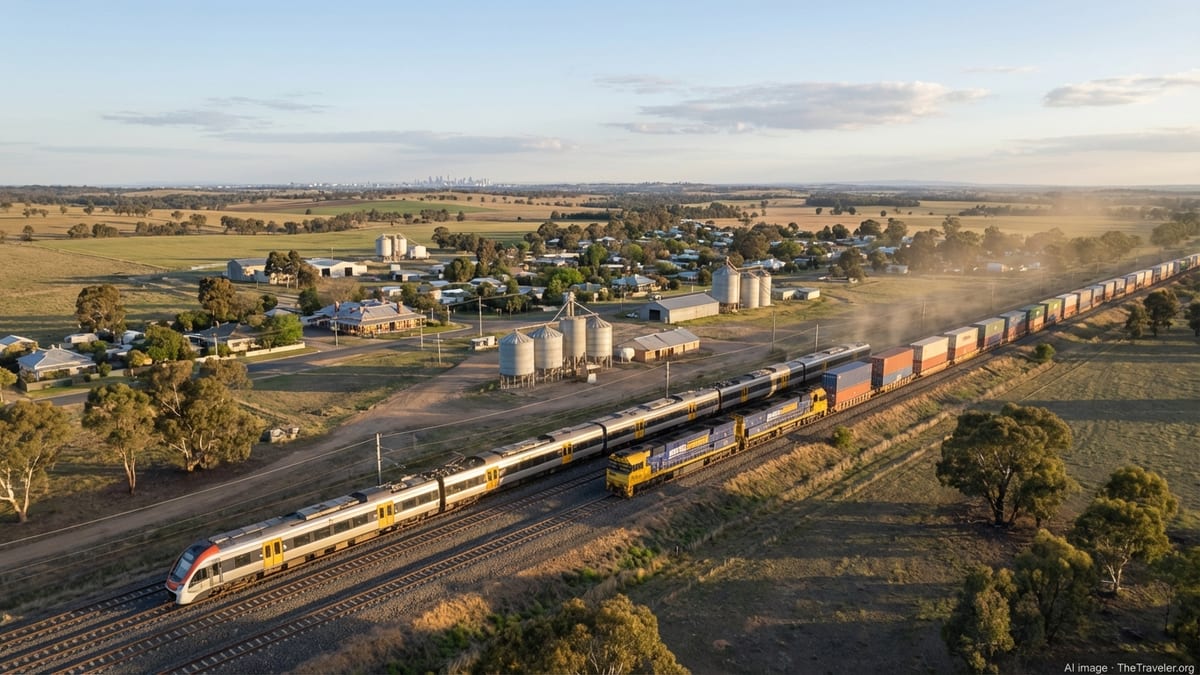
Storm Brings Overnight Journey to a Standstill
Reports indicate the incident occurred late on 11 November near the small locality of Gundiah, roughly 230 kilometres north of Brisbane, when severe weather brought down overhead power lines on the North Coast rail line. The affected service was a long distance Tilt Train operating between Brisbane and Rockhampton, one of Queensland Rail’s flagship intercity routes.
According to Australian broadcast and online coverage, the train lost power after the lines came down, leaving it stranded in a sparsely populated section of track with no nearby station platforms. With traction and auxiliary power interrupted, lighting and onboard systems were reduced, turning what was scheduled as an overnight intercity journey into a slow moving emergency that stretched into the early morning.
Regional passenger and freight movements along that section of line were disrupted as crews worked to isolate damaged infrastructure and restore power. Publicly available information from Queensland Rail indicates that bus replacements were eventually organised once safe access to the site was established, but that process took several hours, prolonging the time passengers spent unable to leave the train.
Heat, Darkness and Fears in the Carriages
Australian news outlets describe increasingly uncomfortable and anxious conditions inside the train as the night wore on. With the air conditioning offline in humid subtropical weather and windows sealed, temperatures climbed in the packed carriages. Passengers reported difficulty sleeping, heightened feelings of claustrophobia and, in some cases, what they described as “night terrors” among children woken disoriented in the dark.
Accounts published by national and regional broadcasters refer to toilets that became “pretty full” during the stoppage and limited food options as catering supplies dwindled. While some emergency lighting remained, the long periods without clear information about when passengers would be able to get off the train added to the sense of unease.
Several travellers quoted in media coverage spoke of distress, nausea and panic attacks among fellow passengers. Families with young children faced particular challenges in managing fear and fatigue, especially as mobile reception was unreliable in the rural stretch and there were few visible external reference points in the surrounding bushland.
Response from the Operator and Infrastructure Challenges
Queensland Rail’s regional leadership has acknowledged the severity of the disruption in public statements following the incident, attributing the stoppage to power lines brought down by lightning and strong winds. Available information indicates that safety protocols required the train to remain in place until the network was secured and alternative evacuation arrangements could be organised.
Bus transfers were eventually deployed to move passengers onward once crews could safely reach the stranded train and assess the site. The evacuation process, carried out in the early hours, required moving passengers from the train to road vehicles in an area with limited lighting and road access, which contributed to the length of the operation.
The event highlights the vulnerability of long distance rail corridors in sparsely populated areas when extreme weather impacts overhead electrification and signalling. Public documents on Queensland’s rail network planning note that the North Coast line is a critical freight and passenger artery, and that storm related disruptions are an ongoing operational risk, particularly during the warmer months when thunderstorms are more frequent.
Broader Pattern of Stranded Rail Journeys
The Queensland Tilt Train incident adds to a growing list of international rail disruptions where passengers have found themselves immobilised for extended periods in uncomfortable conditions. Coverage from the United States in recent years has described Amtrak passengers stuck for more than 15 hours after major storms damaged infrastructure in the Southeast, with limited catering and sanitation as supplies ran low.
Similar experiences have been reported on other long distance routes worldwide when overhead power failures or track obstructions halted trains far from stations. In several documented cases, passengers remained onboard for much longer than the six hours reported in Queensland before rescue locomotives, buses or repair crews could reach them, underlining how difficult mid route evacuations can be when tracks traverse remote countryside.
Rail advocacy organisations frequently point to such events when calling for more robust contingency planning, clearer communication protocols and investments in backup power or rescue equipment. They argue that as rail is promoted as an alternative to short haul flights, passengers expect standards of resilience and care comparable to those applied in commercial aviation.
Implications for Future Rail Travel in Regional Australia
For domestic and international travellers considering rail journeys through regional Queensland, the incident near Gundiah serves as a reminder of both the appeal and the challenges of long distance services. The Tilt Train is marketed as a scenic, lower carbon alternative to driving or flying between coastal cities, with scheduled journeys between Brisbane and Rockhampton taking around seven to eight hours under normal conditions.
Travel industry commentary following the stoppage suggests that maintaining confidence in such services will depend on transparent communication about risks during storm seasons, as well as visible improvements in emergency provisions on board. These may include larger stocks of drinking water and non perishable food, better battery backed lighting, and clear instructions for passengers in the event of extended delays between stations.
Publicly available information at this stage does not indicate any serious injuries arising from the November incident, but the reports of fear, sleeplessness and distress highlight the psychological impact that being trapped in an enclosed space for hours can have on travellers. As rail operators across Australia plan for more frequent extreme weather events, passenger experience during unplanned stoppages is likely to play a larger role in discussions about network investment and onboard standards.