


More news on this day
An 18-hour delay on a SpiceJet flight from Amritsar to Dubai over the weekend left scores of passengers stranded at Sri Guru Ram Dass Jee International Airport, with reports describing hours of uncertainty, shifting departure times and growing frustration among travelers worried about jobs, visas and missed onward connections.
Get the latest news straight to your inbox!
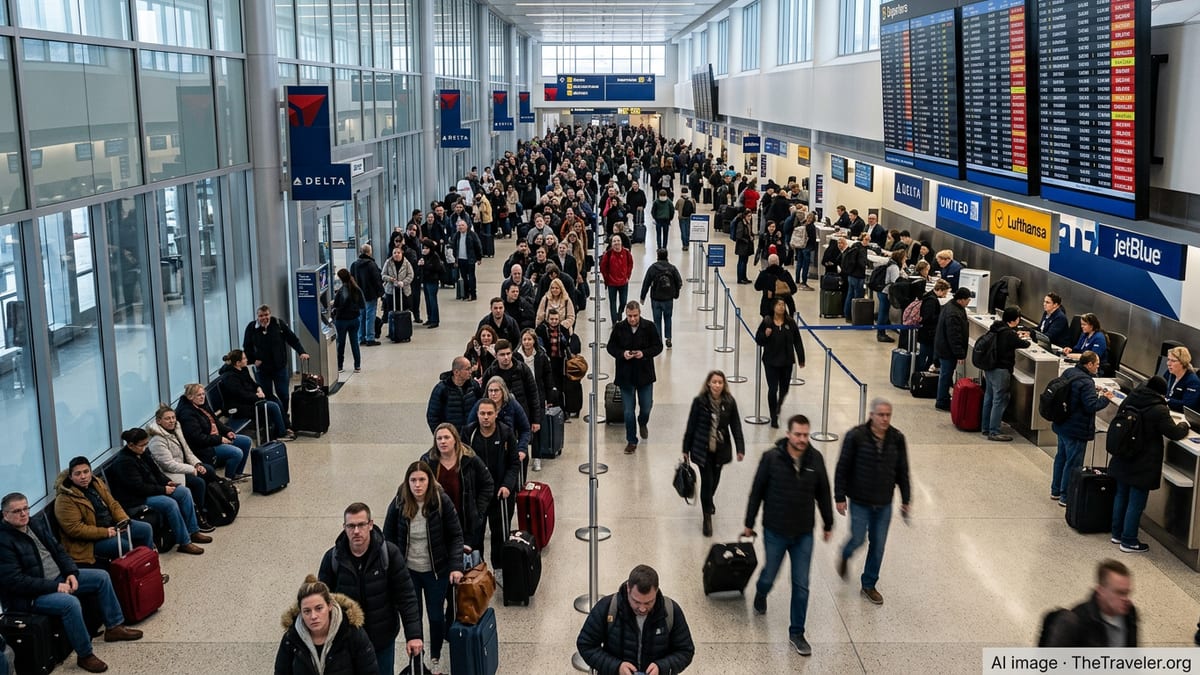
Passengers face night-long wait after rolling delays
Publicly available reports indicate that the disruption involved SpiceJet’s Amritsar–Dubai service, scheduled to depart on Sunday morning around 8:30 am local time. Coverage in Indian media describes a pattern of rolling delays, with the departure first pushed to late morning, then to mid-afternoon, and finally rescheduled for the early hours of the following day, extending the total wait to roughly 17 to 18 hours for many travelers.
According to coverage from national and regional outlets, passengers remained inside the terminal for much of the day as the flight’s timing was repeatedly revised. Several accounts describe crowded waiting areas, with families, migrant workers and leisure travelers attempting to rest on terminal seating while monitoring airport screens and airline messages for updates.
Reports also highlight how the prolonged uncertainty intensified the sense of disruption. Some travelers reportedly arrived at the airport hours before the original departure time, only to find themselves still waiting deep into the night as the departure shifted toward around 2:00 am the next day.
Tracking data for SpiceJet flight SG5155 on the Amritsar–Dubai route shows that the service has recently experienced significant schedule variation, including lengthy delays and at least one cancellation in the days leading up to the latest incident, underscoring wider operational strain on the sector.
Stranded families and workers report disruption to jobs and plans
Accounts compiled by local and national media point to a wide cross-section of passengers affected by the delay, including residents of Punjab heading to jobs in the United Arab Emirates, family visitors and travelers connecting onward from Dubai to other destinations in the Gulf.
One widely reported case involves a woman who traveled from Ludhiana to Amritsar with her six-year-old daughter, only to face nearly 18 hours inside the airport after the schedule repeatedly shifted from early morning to late night. Coverage notes that she expressed concern about managing a young child for such an extended period in a crowded terminal, with limited clarity on when boarding would begin.
Other passengers cited in published reports described fears over missing reporting dates for new jobs in Dubai and elsewhere in the Gulf. For migrant workers and new hires on fixed joining dates, such extensive delays can carry high stakes, including the possibility of lost employment opportunities or additional costs to rearrange contracts and accommodation.
Some coverage also notes that anxious travelers raised slogans in the terminal and pressed for refunds or alternative options once it became clear that the flight would not depart during the day as planned, reflecting rising tension as the delay stretched into the night.
Questions over communication, care and passenger rights
Across multiple outlets, passengers consistently point to communication as a central frustration. Reports indicate that many travelers first learned of timetable changes via display boards, text messages and word-of-mouth within the terminal, with limited explanation about the cause of the disruption or the likely duration of the delay.
Some accounts state that passengers were informed of a technical issue impacting the aircraft, though detailed clarification was reportedly scarce. As the day progressed, questions mounted over the availability of meals, refreshments and rest options, particularly for families and older travelers waiting through the heat of the day and into the early hours.
Coverage from Indian news platforms suggests that hotel accommodation was either limited or not provided for a significant number of passengers, with several reports explicitly noting that travelers remained in the terminal rather than being moved to nearby lodging. In practice, such arrangements can vary depending on the cause of a delay, airline policy and local regulations.
The incident has renewed attention on passenger rights during long delays on international routes from India. While carriers operating from Indian airports are expected to follow Directorate General of Civil Aviation norms on compensation and assistance, the on-the-ground experience can differ markedly between airlines and airports, especially when disruption extends across much of a day and into the next.
Spotlight on operational reliability on the Amritsar–Dubai corridor
The Amritsar–Dubai corridor is a key link for Punjab’s large overseas workforce, students and visiting families, with SpiceJet among several carriers operating services between Sri Guru Ram Dass Jee International Airport and Dubai International Airport. Industry documents and airline route maps list Amritsar as one of the low-cost carrier’s regular gateways on India–UAE traffic, alongside services from other Indian cities.
Flight-tracking data over recent weeks suggests that the Amritsar–Dubai route has seen a series of significant schedule disruptions, including long delays and at least one cancellation on recent days for the same flight number. Combined with anecdotal complaints circulating on travel forums and social media about late-running departures on various sectors, the latest 18-hour delay has sharpened traveler scrutiny of the airline’s operational reliability.
Frequent fliers on India–Gulf routes typically have a choice of carriers, including low-cost and full-service options. For many budget-conscious passengers, particularly migrant workers and family groups traveling with significant luggage, price remains a key consideration, which has helped low-cost operators maintain strong demand despite service concerns.
However, repeated long delays can influence traveler behavior over time, with some passengers indicating in public posts and discussion forums that they are reconsidering future bookings after recent high-profile disruptions. The Amritsar incident, widely shared in Indian-language and English-language media, is likely to feed into those perceptions.
Broader context of delays and disruption on Indian carriers
The 18-hour delay at Amritsar comes against a backdrop of pressure on parts of India’s aviation sector, where carriers face high fuel costs, competitive fares and fleet constraints. Industry observers have noted that some airlines have struggled to maintain on-time performance on certain routes, particularly where aircraft utilization is high and turnaround times are tight.
Data from online flight-status trackers for SG5155, the SpiceJet service linking Amritsar and Dubai, shows repeated irregular operations in recent days, ranging from multi-hour delays to cancellations. While such data sets are not official regulatory records, they provide a snapshot of the challenges airlines can face in sustaining punctuality on busy international links.
Travel-industry analysts often point out that long-haul and international passengers are especially vulnerable to major delays, given the knock-on impact on visas, employment reporting dates and connecting flights. For Gulf-bound workers and their families, a missed reporting time or onward sector can carry financial and professional consequences that extend well beyond the cost of a single ticket.
With the Amritsar–Dubai delay now drawing national coverage, passenger groups and commentators are once again highlighting the importance of transparent communication, timely welfare support in terminals and clearer awareness of what assistance travelers can reasonably expect when extensive disruptions occur on international flights.
India Today coverage of the Amritsar–Dubai delay