


More news on this day
Rail passengers in Sussex are preparing for the full return of trains between Haywards Heath and Lewes on Tuesday 1 September, after a major derailment near Lewes earlier in August prompted a complex recovery operation, weeks of repairs and an intensive safety review along the key east–west route.
Get the latest news straight to your inbox!
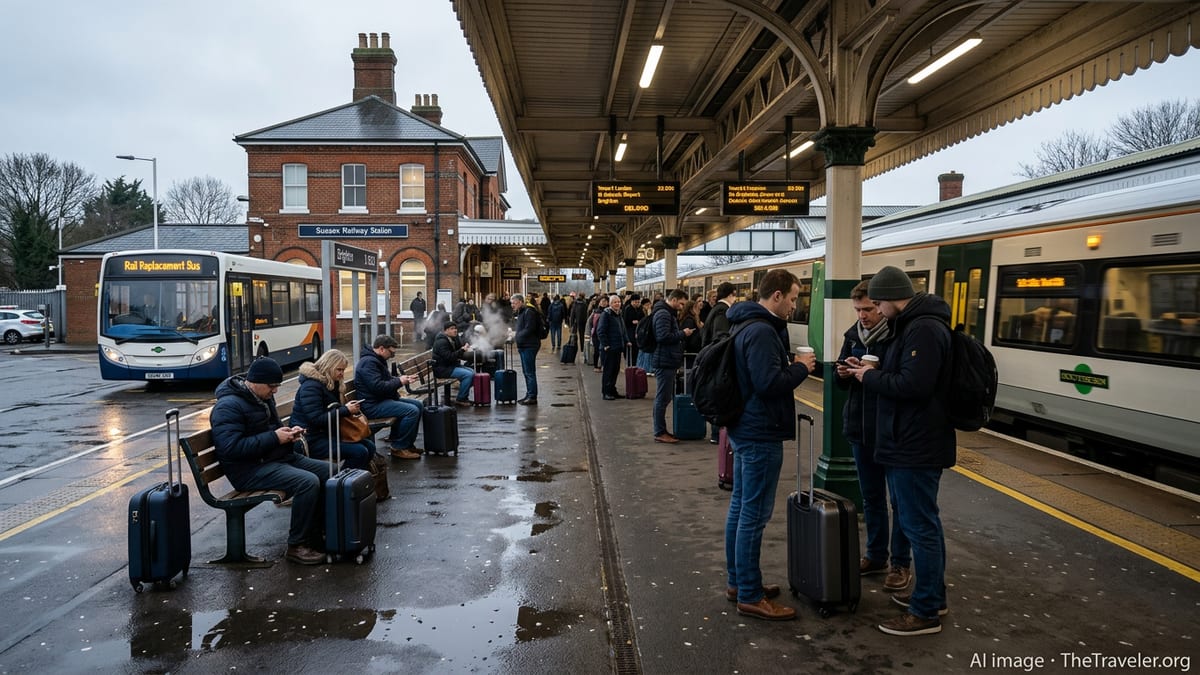
Line Reopens Following August Derailment Near Lewes
Publicly available information from Network Rail indicates that the railway between Haywards Heath and Lewes will reopen to passenger services on 1 September, restoring a vital link that has been closed since a Southern Railway train derailed close to Lewes station on Thursday 13 August. The incident led to several carriages leaving the tracks, significant damage to infrastructure and an immediate suspension of services across the corridor.
Initial disruption affected trains running between Brighton, Haywards Heath, Seaford and Eastbourne, with National Rail reporting that all services via Lewes were halted while the scene was secured and investigations began. Replacement buses and diversions via Brighton were introduced to keep people moving, but journey times lengthened and capacity was constrained on alternative routes.
According to published coverage and service updates, recent days have seen the focus shift from emergency response to restoring the line in time for the new school term and the end of the summer holiday period. With the reopening date now confirmed, operators are advising passengers to check journey planners, as timetables bed back in and some alterations may continue around the restart.
Major Recovery and Repair Programme Completed
Network Rail states that engineers have completed a substantial recovery and reconstruction effort along the affected section near Lewes, describing a programme that involved removing the derailed train, rebuilding damaged track and reinstating the formation and embankment. The work was complicated by the need to stabilise the ground and replace sections of ballast and rail that were distorted during the incident.
Updates from the infrastructure manager highlight that teams have carried out a rigorous series of engineering checks, including tamping and aligning the new track, inspecting signalling and power systems and verifying drainage, in order to return the railway to full operational condition. Test trains have already operated over the route to confirm that the line performs as expected under real-world conditions.
Southern Railway’s service information pages have consistently noted that the line would remain shut while heavy engineering plant was on site and access for recovery trains was required. With those activities now complete, the emphasis has moved to restoring normal passenger operations, supported by ongoing monitoring of the renewed infrastructure.
Weeks of Disruption for Commuters and Visitors
The closure between Haywards Heath and Lewes has been particularly disruptive for commuters in Mid Sussex and East Sussex, as well as for leisure travellers heading to coastal destinations. National Rail incident summaries record that services between Haywards Heath, Brighton, Lewes, Seaford and Eastbourne were rerouted or replaced by buses, with some trains terminating short at Haywards Heath or Brighton.
Published travel advice suggested that many passengers from London to Lewes and Eastbourne were encouraged to travel via Brighton and change there, adding complexity to journeys at a time when summer events and tourism typically boost demand on the south coast network. Replacement bus services between Lewes and Haywards Heath helped maintain a basic connection but were subject to traffic conditions and limited capacity.
Additional local disruption has been reported in relation to other infrastructure issues on nearby routes, including speed restrictions associated with a landslip between Eastbourne and Lewes. These overlapping challenges have underlined the importance of the Haywards Heath–Lewes corridor as both a diversionary path and a day-to-day commuting artery.
Safety Assurance and Ongoing Investigation
Alongside the physical repair work, the derailment has triggered a wider safety and assurance process. Network Rail notes that the reinstated route has been subject to detailed inspections and a structured sign-off regime before passenger trains are permitted to run again. This has involved multidisciplinary teams examining track geometry, signalling reliability and the interaction between trains and the renewed infrastructure.
In parallel, the Rail Accident Investigation Branch (RAIB) has begun an independent investigation into the causes of the derailment. A joint statement referenced in Network Rail’s media centre confirms that an interim report has already been issued, with further analysis to follow. While the formal findings are still in progress, early public commentary has pointed to factors such as track condition and high summer temperatures as areas of interest.
As is standard in such cases, the final RAIB report is expected to include recommendations for both the infrastructure owner and the train operator, potentially influencing future maintenance regimes, speed management during periods of extreme heat and the design of resilience measures on busy mixed-traffic routes.
What Passengers Can Expect from 1 September
From 1 September, journey planners from Southern Railway and National Rail show the reintroduction of direct services across the Haywards Heath–Lewes section, reconnecting communities including Wivelsfield, Plumpton and Cooksbridge with the wider Sussex network. The reopening is timed to coincide with the start of the new school term and the early autumn commuting season, when regular travel patterns typically resume after the summer break.
Operators advise passengers to verify times close to travel in case of late timetable adjustments or residual speed restrictions as the renewed infrastructure beds in. Some services may continue to operate with altered stopping patterns, and short-notice changes remain possible while performance is monitored in the first days after reopening.
Over the medium term, the restored line is expected to relieve pressure on the main London to Brighton axis by reinstating flexibility for diversions during incidents and engineering works. For local travellers, the return of through trains between Haywards Heath, Lewes and the coast will restore a familiar pattern of connections that has been absent since the mid-August derailment.
Network Rail: Recovery and repair programme completed on Haywards Heath–Lewes line
Network Rail: Planned reopening of Haywards Heath to Lewes line on 1 September
Southern Railway: Service updates on train derailment near Lewes
National Rail: Disruption information for Haywards Heath–Lewes corridor