


More news on this day
A minor derailment involving the historic 1880 Train in South Dakota’s Black Hills has prompted the cancellation of the themed July 12 Train Robbery excursion, as operators focus on inspections and safety reviews of the vintage tourist line.
Get the latest news straight to your inbox!
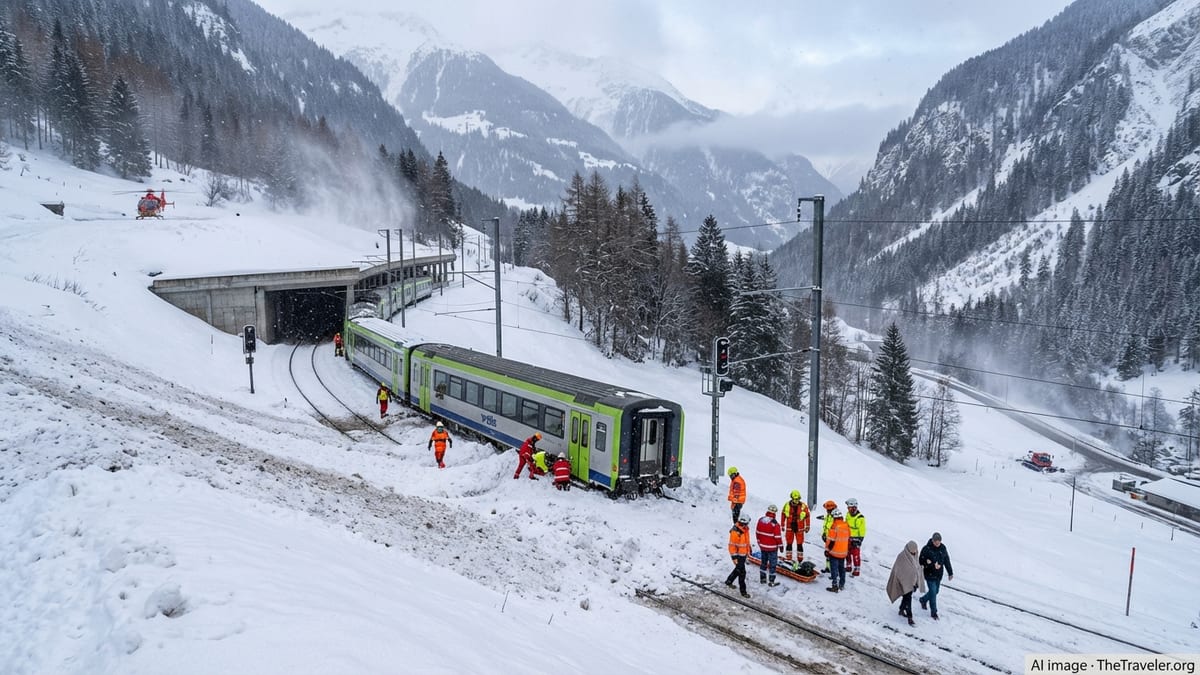
Incident on the historic Black Hills tourist line
Publicly available information indicates that the 1880 Train, a heritage railroad running between Hill City and Keystone in South Dakota, experienced a derailment affecting part of a consist used on its scenic excursions. Early indications suggest the incident occurred at low speed on a section of track dedicated to tourist operations, rather than on a mainline freight corridor.
Initial reports describe the derailment as limited in scope, with selected cars leaving the rails while remaining upright. There were no immediate indications of serious injuries or hazardous materials involvement, reflecting the railroad’s focus on passenger sightseeing rather than freight hauling.
The railway operates vintage, standard-gauge equipment on a roughly two-hour narrated route through the Black Hills, attracting families, rail enthusiasts and summer visitors to Mount Rushmore and nearby parks. The line has promoted its longevity as one of the oldest continuously operating standard-gauge excursion services in the world, which makes any operational disruption particularly notable for local tourism partners.
Following the derailment, staff and emergency responders assisted passengers and began stabilizing the equipment. Subsequent updates emphasize site cleanup, mechanical checks and track inspections as the immediate priorities before returning trains to regular schedules.
July 12 Train Robbery excursion canceled
As a direct consequence of the derailment and ensuing inspections, the railroad’s themed July 12 Train Robbery excursion has been canceled. The popular special event typically recreates a staged “hold-up” along the route, with costumed performers boarding the train for family-friendly entertainment during the ride.
According to publicly available event information and schedule summaries, the Train Robbery runs are offered on selected summer dates and are often marketed toward vacationing families seeking an immersive Wild West experience. The July 12 trip was positioned to capture peak mid-July visitation to the Black Hills and surrounding attractions.
With rolling stock, crew and track resources redirected toward recovery and safety checks, the operator has opted to remove the July 12 special from the calendar rather than compress inspection work or substitute alternate equipment. Passengers holding reservations are being directed to explore other dates or standard excursion departures later in the season.
Travel industry listings and regional tourism boards typically highlight these themed departures as marquee offerings, meaning the cancellation is likely to be noticed not only by ticketed guests but also by area lodging providers and tour organizers who build packages around the event calendar.
Impact on summer visitors and local tourism
The 1880 Train occupies a central place in Black Hills tourism, often packaged alongside visits to Mount Rushmore, Custer State Park and area mining and frontier attractions. A derailment at the height of the summer season and the cancellation of a signature themed run therefore carry wider implications than a routine schedule change.
Families planning vacations around specific dates for the Train Robbery excursion may face last-minute adjustments, including rebooking for standard sightseeing departures or rescheduling for later in July and August if capacity allows. Travel planning platforms and local visitor centers generally advise guests to confirm excursion status directly with the operator before finalizing day-by-day itineraries.
For hotels, campgrounds and tour companies in Hill City, Keystone and Rapid City, the disruption introduces a measure of uncertainty, especially for bundled packages that include rail tickets. However, because preliminary information suggests a contained, low-speed incident, many regional stakeholders appear to view the episode as a short-term interruption rather than a season-defining setback.
Nearby attractions continue to operate normally, and there is no indication that roadway or community access in the corridor has been significantly affected. As a result, the Black Hills remain accessible for visitors, with the rail incident primarily influencing rail enthusiasts and travelers who specifically targeted the Train Robbery experience.
Safety reviews and inspection priorities
In the aftermath of any derailment, even a minor one, tourist railroads typically initiate focused inspections of track, rolling stock and operating practices. Industry guidance and recent national discussions of rail safety underscore the importance of identifying issues such as track geometry defects, heat-related rail movement or mechanical anomalies before restoring full service.
Publicly available documentation from other recent derailments on passenger and commuter systems in North America highlights how factors such as heat kinks, misaligned track and equipment wear can combine to push wheels off the rails, particularly on curves or transitional track segments. While no detailed cause has been publicly established in the 1880 Train case, the timing in midsummer naturally raises questions about track conditions under elevated temperatures.
Heritage operations like the 1880 Train often balance the authenticity of vintage locomotives and cars with modern inspection, maintenance and training regimes. Rail tourism experts commonly stress that even relatively short excursion lines must adhere to rigorous track inspection schedules, including visual checks and gauge measurements, especially after any irregular event on the right-of-way.
Observers of the sector note that timely, transparent communication about inspection progress and service status can be as important as the mechanical work itself in maintaining public confidence. As inspection results become available, further updates are expected to clarify when additional special events and themed trips can resume.
What prospective passengers should know
For travelers considering a visit to the 1880 Train in the coming days and weeks, the key questions involve schedule reliability, alternative departures and refund or rebooking options in light of the July 12 Train Robbery cancellation. Public schedule postings and customer service advisories are likely to be the primary channels for real-time information on which departures are operating and whether any capacity constraints remain.
Prospective passengers are generally encouraged to verify departure times, event dates and boarding instructions on the morning of travel, especially for special themed trains that rely on specific equipment and performance staff. Those who planned their itineraries around the Train Robbery may look instead at standard narrated excursions, which still offer views of Black Hills scenery and interpretive commentary on regional history.
Travel planners suggest building some flexibility into Black Hills itineraries during periods following an operational incident, allowing room to shift rail excursions by a day or substitute other nearby attractions if needed. Because the derailment appears to have been localized and non-hazardous, the expectation among many tourism stakeholders is that the line will work to restore its full roster of special events as safety checks are completed.
Until further schedule updates are published, the derailment and the cancellation of the July 12 Train Robbery underscore how even well-established heritage railways can face unexpected operational challenges, and how visitors may benefit from staying attentive to real-time advisories when planning rail-based experiences.