


More news on this day
Passengers on a recent Frontier Airlines flight are describing a “scary” emergency landing that followed a reported mechanical issue in flight, adding fresh scrutiny to the carrier’s safety record and passenger communication practices.
Get the latest news straight to your inbox!
Reports Describe Smoke, Sudden Descent and Confusion
According to published coverage and passenger accounts shared publicly, the Frontier Airlines flight experienced an apparent mechanical issue that prompted the crew to initiate an emergency landing. Several travelers later described seeing or smelling smoke and feeling a sudden change in altitude as the aircraft diverted from its planned route.
Publicly available information indicates that the pilots reported a mechanical problem and requested priority handling to land as quickly as possible. Passengers recalled the cabin falling unusually quiet as the situation unfolded, with some reporting that they first realized something was wrong when they noticed the aircraft banking sharply and descending faster than expected.
Some accounts describe cabin lights being adjusted and flight attendants securing the cabin in an expedited manner. While emergency procedures are standard in such circumstances, the combination of unfamiliar instructions, visible concern among travelers and the hurried approach to the runway left many passengers characterizing the experience as frightening.
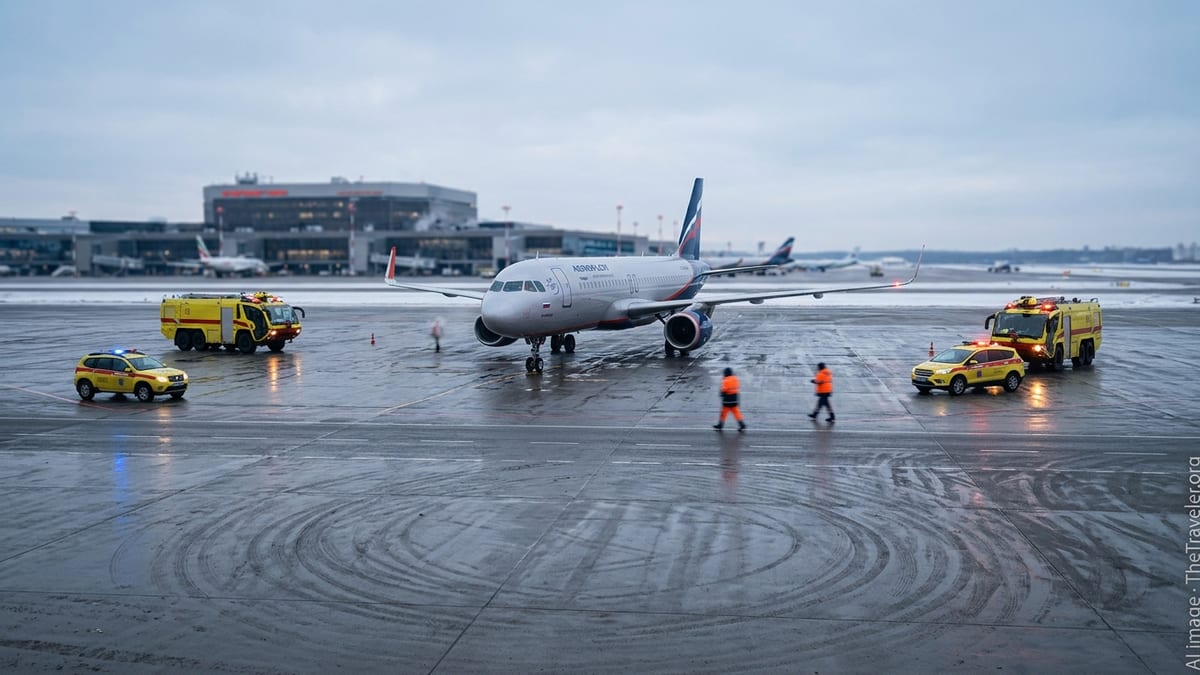
Once on the ground, the aircraft was met by airport emergency vehicles as a precaution while passengers remained seated until the crew confirmed it was safe to deplane or taxi to a gate. Many later said the landing itself felt harder than usual, though the aircraft came to a controlled stop and travelers were ultimately able to exit without serious injury reported.
Passengers Recount a ‘Scary’ Ordeal in the Cabin
In social media posts and interviews cited in news coverage, travelers repeatedly used words like “scary,” “terrifying” and “chaotic” to describe the atmosphere on board during the emergency landing. Some passengers reported crying, praying or texting loved ones as the aircraft descended, unsure of what exactly was happening.
Several accounts emphasize that the most unsettling element was not knowing the nature of the mechanical issue. While safety announcements were made, passengers recalled struggling to hear or interpret the information clearly over the cabin speakers amid noise and tension in the cabin. That uncertainty appeared to heighten anxiety, particularly for those already uneasy about flying.
Others characterized the crew as calm and focused, but acknowledged that seeing flight attendants move at speed, double checking seat belts and securing the cabin contributed to a sense of alarm. A number of passengers wrote that they tried to reassure children or nervous seatmates while also managing their own fears.
After landing, some travelers described emotional scenes as passengers applauded, hugged or thanked the crew. For a portion of those on board, the experience appears to have intensified existing fear of flying, while others expressed gratitude that the mechanical issue was addressed quickly and that the flight landed safely.
Frontier’s Safety Record and Prior High Profile Incidents
The incident comes during a period of heightened public attention to Frontier Airlines, following several recent events that placed the carrier under a safety and operations spotlight. Public records and previous reporting describe emergency landings, diversions and high profile runway incidents involving the airline in recent years, including cases where smoke or suspected mechanical problems prompted precautionary landings.
In one widely reported event, a Frontier flight experienced a hard landing that produced visible flames and smoke near the landing gear, leading passengers to evacuate via emergency slides. In another, an aircraft aborted takeoff after striking a person on the runway, triggering an engine fire and a large-scale emergency response at a major U.S. hub. While each case involved different circumstances, together they have fueled ongoing questions from travelers about the airline’s maintenance practices and overall safety culture.
Industry data and regulatory information reviewed in public sources indicate that Frontier, like other U.S. commercial carriers, operates under strict federal safety oversight. Aviation experts cited in prior coverage generally note that modern air travel remains statistically very safe, and that emergency and precautionary landings are often signs that onboard systems and safety protocols function as designed when a potential issue is detected.
Even so, the accumulation of dramatic incidents, viral passenger videos and emotional first hand stories has shaped a narrative around the carrier that can amplify fear among infrequent travelers. The latest emergency landing, with passengers again describing a distressing experience, is likely to reinforce that perception for some customers.
What Is Known About the Mechanical Issue and Investigation
Specific technical details about the reported mechanical problem on the recent Frontier flight have not yet been fully disclosed in publicly available documents. Initial descriptions in news reports and passenger accounts focus on signs consistent with smoke or overheating components in the cabin or flight deck, but do not identify a precise system failure.
In similar situations, aviation regulators typically review cockpit voice and flight data recorders, maintenance logs and crew reports to determine the root cause of an in flight issue. Maintenance history for the aircraft type, recent work on critical systems and any prior technical discrepancies are also examined to identify whether the incident reflects a one off malfunction or a pattern requiring broader corrective action.
Publicly available information shows that when mechanical issues arise, airlines are expected to coordinate with airport and federal safety officials, remove affected aircraft from service if necessary and complete any required inspections or repairs before returning the plane to operation. Any significant findings or recurring problems can lead to fleet wide checks, manufacturer service bulletins or updated maintenance procedures.
For travelers, many of these processes unfold out of public view and over an extended period. As a result, passengers often experience only the immediate disruption and emotional impact of an emergency landing, while the technical investigation continues quietly in the background.
Growing Focus on Communication and Passenger Rights
The Frontier emergency landing is also sharpening attention on how airlines communicate during in flight incidents and what support customers receive afterward. In online forums and media coverage, some passengers expressed frustration that they felt inadequately informed about the nature of the mechanical issue both during the flight and once on the ground.
Consumer advocates frequently argue that clear, timely updates can significantly reduce passenger anxiety in emergencies. They point to best practices such as straightforward explanations of what is known, reassurance about the safety steps being taken and follow up information about rebooking, refunds or accommodations if travel plans are disrupted.
Public guidance from transportation regulators outlines circumstances in which passengers may be entitled to refunds or other assistance when flights are canceled, significantly delayed or diverted. While mechanical issues are often categorized as within an airline’s control, the exact remedies can depend on the nature of the disruption and the carrier’s own policies.
As travelers continue to share first hand stories of “scary” landings and chaotic diversions, pressure is likely to grow on airlines, including Frontier, to pair strong safety performance with more transparent communication and consistent care for passengers caught in unexpected emergencies.