


More news on this day
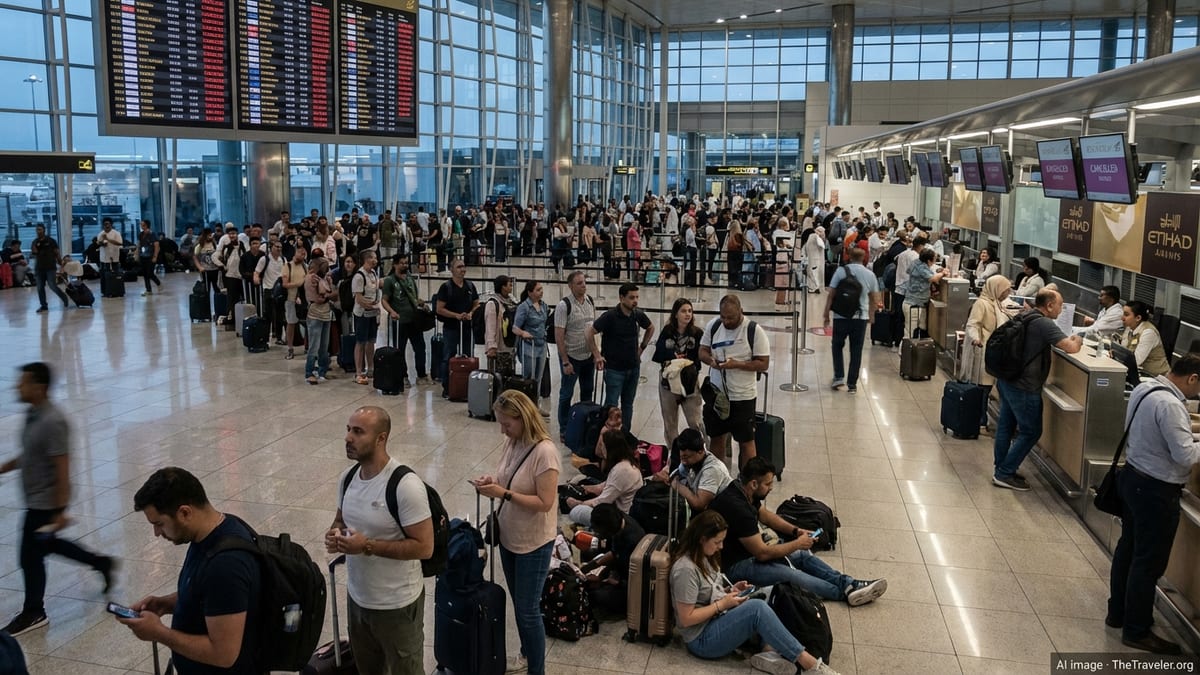
Australian travellers connecting through major Gulf hubs are being urged to rethink their itineraries as Smartraveller reiterates that simply transiting the United Arab Emirates or Qatar is treated the same as visiting those countries.
Get the latest news straight to your inbox!
Sharper wording on UAE and Qatar advisories
Recent updates to Australia’s Smartraveller platform have clarified that for destinations with higher risk levels, “reconsider your need to travel” also applies to passengers who only pass through an airport on their way elsewhere. That clarification has now been written directly into the country pages for both the United Arab Emirates and Qatar, bringing long connecting stops firmly within the scope of the government’s warning.
For the United Arab Emirates, Smartraveller continues to highlight legal and security risks alongside the new emphasis on transit. The advice notes that passengers whose itineraries include Dubai or Abu Dhabi, even for a short layover, should treat that routing as travel to a higher-risk destination when weighing insurance coverage and personal risk tolerance.
In the case of Qatar, the dedicated country page now explicitly tells Australians to check whether their policies cover both travel to and transit through a destination with a “reconsider your need to travel” rating. The wording underlines that a ticket with a brief Doha stopover is still exposure to the same risk profile that underpins the broader advisory.
The change follows a period in which the Middle East has seen repeated airspace disruptions, temporary schedule reductions and shifting security assessments. Australian travellers who became accustomed to using Gulf hubs as neutral crossroads are now being told that these points can no longer be treated as risk-free waystations.
‘Transit is travel’ reframes risk and insurance
The stronger language around transit carries significant implications for trip planning, particularly when it comes to travel insurance. Policies commonly exclude cover for destinations listed at the higher end of official warning scales, and under Smartraveller’s revised framing, that exclusion may extend to itineraries that only involve changing planes in Dubai or Doha.
Universities, corporations and other large organisations that sponsor travel are already responding to the shift. Guidance issued to staff at Australian institutions now stresses that internal travel approvals will not be granted for trips that include transits through locations rated “reconsider your need to travel” or higher, aligning company policy with government advisories and insurance conditions.
For independent travellers, the message is more nuanced but still stark. Publicly available information shows that some Australians are weighing up longer routings via Asian or European hubs in order to preserve full insurance coverage and avoid routing through Gulf airports currently sitting at elevated advisory levels.
Travel forums and community discussions indicate that many passengers continue to fly via Doha, Dubai and Abu Dhabi, attracted by competitive fares and convenient schedules. The new Smartraveller wording does not prohibit such travel, but it is designed to prompt a more deliberate assessment of whether the convenience of a short connection outweighs the potential financial and safety consequences if something goes wrong.
Legal and rights concerns for vulnerable travellers
The clarified approach to transit also intersects with long standing concerns about legal frameworks in the United Arab Emirates and Qatar. Smartraveller’s detailed sections on local laws emphasise that behaviour considered lawful or socially acceptable in Australia can attract serious penalties in both countries, even during brief stays between flights.
Australian guidance for LGBTQIA+ travellers highlights that same sex relationships and certain forms of gender expression remain criminalised in many parts of the Middle East, including the UAE and Qatar. The advisory warns that documentation such as passports with non binary gender markers may not be recognised for entry or transit in some jurisdictions, and that travellers should anticipate the possibility of additional scrutiny from border officials.
There are also reminders that alcohol consumption, social media activity and public displays of affection can carry legal risks that extend beyond what travellers may expect from short airport layovers. Smartraveller encourages passengers in higher risk destinations to understand local laws in advance, even if they intend to remain airside, as unexpected delays, medical incidents or missed connections can force an unplanned entry into the country.
These concerns are shaping the decisions of specific traveller groups, from queer travellers to solo women and people working in sensitive professions. For many, the elevated risk rating combined with stricter transit language is prompting a reassessment of long standing reliance on Gulf hubs for multi leg journeys between Australia, Europe and Africa.
Airlines and hubs caught between demand and caution
The sharpened wording arrives at a time when Gulf carriers and airports are rebuilding networks following months of regional disruption. Airlines such as Qatar Airways, Emirates and their partners have begun restoring services previously paused due to conflict and airspace restrictions, positioning Doha, Dubai and Abu Dhabi once again as critical connectors between Australasia and the rest of the world.
Industry updates and corporate travel notices show that carriers are advising customers to monitor official travel advisories while reaffirming their intention to resume and expand services through Gulf hubs in the months ahead. Some joint venture partners have already set dates for the return of suspended routes linking Australian cities with Doha via codeshare arrangements.
Travel sector commentary notes a growing divergence between commercial schedules, which are edging back toward normality, and government advisories, which remain elevated. As a result, travellers booking attractive long haul fares may find themselves in a patchwork landscape where an airline considers a route viable while insurers and corporate risk teams continue to apply stricter rules.
For Gulf airports accustomed to branding themselves as safe, seamless super connectors, the message that “transit is travel” presents a reputational challenge. While terminals are once again busy and many journeys proceed without incident, the higher advisory level can influence everything from tourism demand to conference planning and international education recruitment.
What Australian travellers should weigh now
The recalibrated Smartraveller language does not amount to a blanket ban on flying through the United Arab Emirates or Qatar, but it does narrow the space for treating transit as a loophole in risk assessments. Travellers are being encouraged to take the advisory at face value and treat any presence in those countries, however brief, as a meaningful part of their exposure.
Prospective passengers are being urged through public guidance and industry briefings to run through a series of practical checks before committing to Gulf routings. These include confirming whether their insurer will cover claims arising from incidents in higher risk locations, checking employer or university travel policies, and reviewing airline options that avoid flagged hubs where necessary.
Some observers expect that as long as competitive fares and convenient schedules remain available through Doha and the UAE, a substantial share of Australians will continue to use Gulf hubs despite the tougher wording. Others predict that over time, rising awareness of the “transit is travel” principle will redirect a portion of demand to alternative hubs in Asia or Europe that sit at lower advisory levels.
For now, the latest Smartraveller updates signal that Australia’s official travel advice framework is catching up with the realities of global aviation, where the line between destination and transit has blurred. In this environment, the simple act of changing planes has become a central consideration in how travellers weigh risk, rights and the fine print of their insurance policies.