


More news on this day
Austria’s regional rail network has reached a new milestone with the delivery of the 300th Desiro Mainline (Desiro ML) electric multiple unit, highlighting the country’s sustained investment in modern, low-emission passenger trains and its role as a manufacturing hub in Europe’s rail industry.
Get the latest news straight to your inbox!
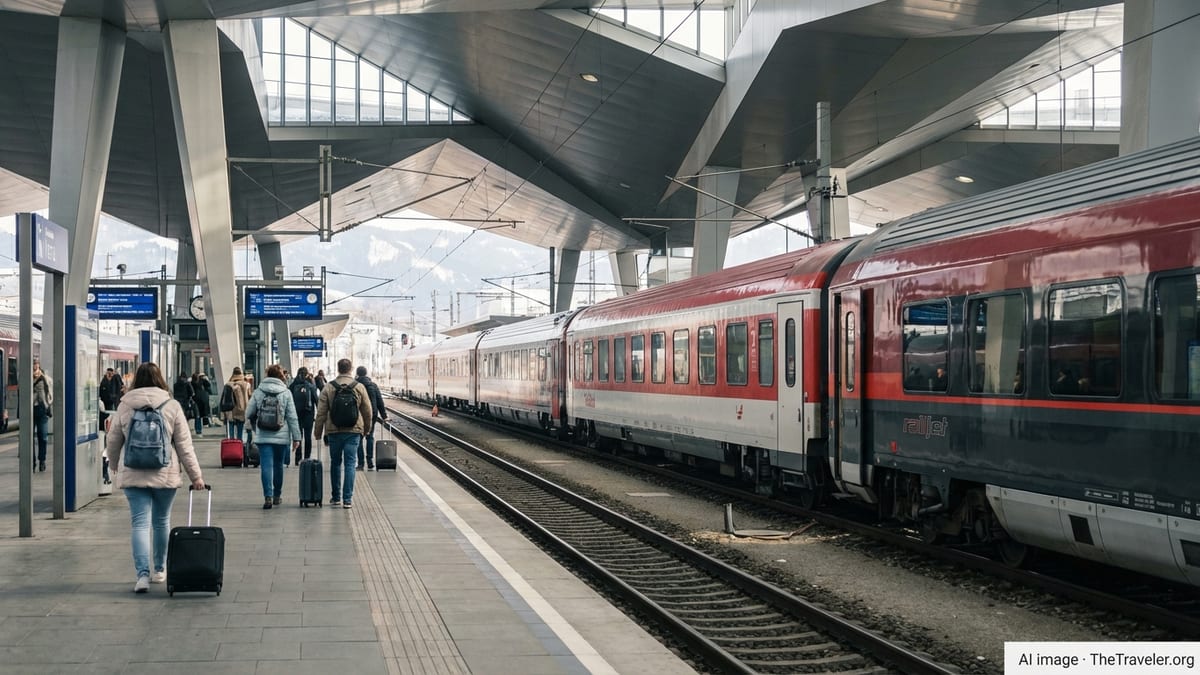
A fleet milestone for Austria’s regional rail
Publicly available information from Siemens Mobility indicates that a total of 300 Desiro ML trains are now in operation in Austria, supplied to the national operator ÖBB and to the cross-border operator Raaberbahn. The latest delivery takes the long running Desiro ML program into a new phase, with the bulk of units working under the ÖBB Cityjet brand in regional and suburban service across the country.
The Desiro ML family has been a core element of Austria’s passenger fleet renewal for roughly a decade. ÖBB first placed the trains into service in 2015 on heavily used commuter and regional routes, gradually replacing older rolling stock and expanding capacity around Vienna, Lower Austria, Styria and Tyrol. Subsequent framework contracts and follow-on orders added further units as demand for rail travel increased.
According to published coverage, the 300-unit landmark includes 294 trainsets for ÖBB and 15 for Raaberbahn, reflecting Austria’s strategy of standardising a large part of its regional fleet around a common platform. This concentration on a single family has allowed operators to streamline maintenance, training and spare parts while presenting a consistent passenger experience.
The latest deliveries arrive at a time when Austria’s railways are handling strong growth in ridership, particularly in and around major cities. The 300th unit is therefore being framed by industry observers as both a symbolic and a practical step, adding another modern trainset to a network where capacity is under constant pressure during peak hours.
From Cityjet brand to everyday workhorse
Within Austria, most Desiro ML sets operate as ÖBB Cityjet trains, a brand that has become synonymous with short and medium distance electric services. ÖBB describes the Cityjet Desiro ML as a comfort-oriented train for local and regional traffic, featuring wide doors and low-floor entry to speed up boarding at busy stations. Passengers encounter the trains on S-Bahn services as well as on regional corridors linking Vienna and other urban centres.
The trains typically run as three-car electric multiple units, with a length of about 75 metres and a maximum speed of 160 kilometres per hour. Technical information published by Siemens indicates that the design emphasises rapid acceleration and energy efficiency, characteristics that are especially valuable on stop‑and‑go commuter routes. Interior layouts are configured for high passenger throughput, with a mix of seating and generous standing areas to handle crowded urban peaks.
Cityjet-branded Desiro ML units have also become a visual fixture on Austria’s railways, often appearing in red and white ÖBB livery at hubs such as Vienna Central Station and Linz. Their deployment marked a shift away from ageing locomotive-hauled sets on many shorter routes, with the modern multiple units providing air conditioning, information displays and accessible toilets as standard.
For Raaberbahn, which operates cross‑border services between Austria and Hungary, the Desiro ML platform has been tailored under the “Ventus” brand. These units share the same basic technical architecture but serve a different market niche, underlining the flexibility of the platform for various operators within the Austrian network.
Domestic assembly and industrial impact
An important aspect of the Desiro ML story in Austria is the local industrial footprint. Technical documentation and operator information show that Desiro ML trains for ÖBB and Raaberbahn have been end‑assembled at ÖBB Technische Services in Vienna Jedlersdorf. This approach has allowed a significant portion of the value creation to remain in Austria, with ÖBB workshops carrying out final assembly and commissioning on behalf of Siemens Mobility.
This arrangement has supported skilled jobs in vehicle assembly, testing and maintenance while deepening cooperation between the manufacturer and the national operator. The Jedlersdorf site has developed experience with the Desiro ML family over multiple batches, which in turn underpins ongoing fleet support and mid‑life upgrades.
Austria has positioned itself as a rail engineering centre, with Siemens operating major rolling stock and components facilities in Vienna and other locations. The large Desiro ML program for ÖBB and Raaberbahn has been one pillar of this industrial base, complementing work on long‑distance Railjet sets and other projects. The delivery of the 300th Desiro ML therefore resonates beyond operations, reinforcing Austria’s reputation as both a demanding rail market and a production location.
Observers note that this industrial model, pairing an international manufacturer with a national operator’s technical services unit, has given Austria a strong position in tailoring standard platforms to local needs. The experience with Desiro ML provides a reference point as newer fleets, including the next generation of electric multiple units, move from contract stage into production.
Innovation stepping stone toward next-generation fleets
The Desiro ML program in Austria has also served as a testbed for technological innovations, particularly in alternative traction and onboard energy management. One prominent example is the Cityjet eco prototype, a battery‑equipped version of the Desiro ML developed by Siemens Mobility and ÖBB to operate on partly electrified routes. Public information describes the concept as a way to bridge gaps in electrification by charging on wired sections and running on battery power where overhead lines are absent.
Trials of the Cityjet eco concept have taken place on non‑electrified sections of Austria’s network, reflecting a broader European trend toward hybrid and battery multiple units. While only a small subset of Desiro ML units has been adapted in this way, the work indicates how the platform can be used to explore decarbonisation options without waiting for complete network electrification.
At the same time, the Desiro ML fleet operates alongside new procurement programs that will gradually introduce successor platforms. ÖBB has signed large framework agreements for future fleets, including orders for Siemens Mireo trains expected from the late 2020s. Industry commentary presents these as the next step in modernising regional services, with Desiro ML units continuing in heavy daily use while newer designs are phased in over time.
In this context, the 300th Desiro ML does not mark the end of a product line but rather a bridge between generations. The fleet has created a foundation of experience in high‑performance regional EMUs, helping to shape technical requirements and passenger expectations that will carry over to successor fleets.
Growing ridership and the role of regional EMUs
The expansion of the Desiro ML fleet has taken place against a backdrop of rising rail use in Austria. Publicly available figures from ÖBB indicate that the national railway carries more than a million passengers per day across all modes. On many corridors, regional and suburban EMUs such as the Desiro ML form the backbone of this traffic, providing the frequent, all‑day service patterns that make rail a viable alternative to private cars.
Austria’s transport policy places strong emphasis on climate protection and modal shift, with investment in regional rail seen as a key instrument. The availability of a large, standardised fleet of modern electric trains makes it easier to increase frequencies, add capacity in peak periods and maintain reliable timetables. The 300th Desiro ML delivery is therefore closely linked to broader policy goals around emissions reduction and congestion relief.
Looking ahead, industry reports suggest that regional networks will continue to see upgrades in both infrastructure and rolling stock. Additional orders for electric and potentially battery‑equipped units are planned or under discussion for various parts of the country. In the meantime, the Desiro ML sets delivered so far will remain central to daily operations, continuing to carry commuters, students and leisure travellers across Austria.
As transport authorities and operators refine long‑term strategies, the accumulated experience of operating 300 Desiro ML trains provides a substantial evidence base. Performance data, maintenance records and passenger feedback from this fleet are likely to inform decisions on future train specifications, service patterns and investment priorities across Austria’s rail system.