


More news on this day
Stratford station in east London remained partially closed on Sunday after a trackside fire forced emergency closures late on Friday, triggering significant disruption for commuters and long-distance rail passengers across one of the capital’s busiest transport hubs.
Get the latest news straight to your inbox!
Partial closure continues after Friday evening blaze
Reports indicate that the incident began on Friday 10 July, when vegetation and infrastructure beside the railway at Stratford caught fire near multiple sets of tracks. Services were halted as emergency responders secured the area and rail engineers assessed fire damage around lines and equipment serving the station.
According to publicly available information from rail operators, the blaze damaged signalling and telecoms systems close to the tracks, forcing the suspension of services through the station on key approaches. While the immediate fire was brought under control on Friday night, safety checks and repairs have continued through the weekend.
By Sunday, Stratford was operating with a reduced, heavily amended timetable. National Rail status updates described a “reduced service to, from and through Stratford” with a major incident still in effect and disruption expected into Monday morning.
Information shared by Greater Anglia and other operators shows that some lines remain blocked, with only limited paths available through the complex junctions at Stratford. This has constrained the number of trains that can safely run and has forced operators to prioritise key routes.
Severe disruption across Greater Anglia and Stansted routes
The partial closure has had a major impact on Greater Anglia services that normally funnel through Stratford towards London Liverpool Street, including routes from Norwich, Ipswich, Stowmarket and stations along the West Anglia corridor. Journey-planning feeds show widespread cancellations, short-notice alterations and extended journey times throughout Saturday and Sunday.
Several regional trains that would usually call at Stratford have been diverted or terminated short, with some services starting or ending at alternative stations such as Shenfield or Stansted Airport. Publicly available travel advice indicates that passengers heading from East Anglia into London have in some cases been directed to travel via Stansted Airport and then connect onto Stansted Express services into Liverpool Street.
Journey information systems continue to warn that service alterations and cancellations are likely to persist until at least the early hours of Monday 13 July. Ticket restrictions that normally apply at peak times were relaxed on affected dates, allowing passengers more flexibility in choosing alternative trains where space was available.
Local stopping services through the Lea Valley have also been affected, with some trains between stations such as Bishop’s Stortford, Cheshunt and Tottenham Hale cancelled or running non-stop through parts of the route. Passengers are being urged via online updates to check live departure boards before setting out.
Impact on London Underground and other urban services
The disruption has not been limited to mainline rail. Stratford is a major interchange served by London Underground’s Jubilee and Central lines, the London Overground and the Docklands Light Railway, as well as the Elizabeth line and regional and high-speed services. Coverage of the incident indicates that the closure and reduced capacity at surface platforms initially affected platform access and interchange patterns across the wider station complex.
Transport updates published on Saturday referred to severe delays on routes serving Stratford, including the Elizabeth line and the Jubilee line, as operators adjusted service levels and crowd management around the station. Passengers reported on social media that trains were being held outside the station or were skipping stops at peak disruption periods.
By Sunday, urban services had largely resumed through Stratford, but interchange remained more complicated than usual due to the partial mainline closure and ongoing platform restrictions. Passengers transferring between Underground, Overground and National Rail services have faced longer walking routes within the station, altered wayfinding, and occasional holds at entry gates to manage crowding.
The ripple effects have been felt at nearby stations including Liverpool Street, Tottenham Hale and other east London hubs, where displaced passengers from curtailed services have been seeking alternative routes across the network.
Repair work and warnings of extended disruption
Rail industry updates state that engineers have been working through the weekend to repair signalling and communications equipment affected by the fire. The scale of the damage has required detailed inspections, component replacement and extensive testing to ensure systems can safely handle the full pre-incident service level.
National Rail’s incident summary has warned that the reduced service around Stratford is likely to continue until at least 06:00 on Monday 13 July, with further alterations possible if testing identifies additional issues. Operators have cautioned that even once all lines reopen, knock-on delays and minor cancellations may continue while train diagrams and crew rosters are reset.
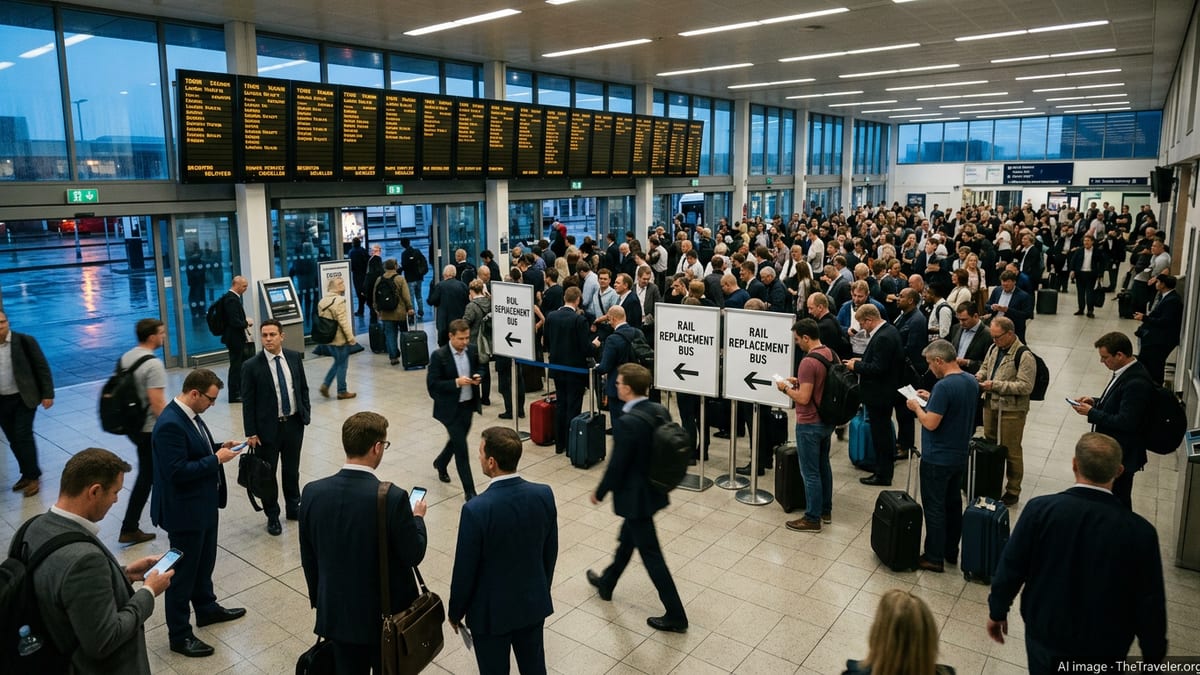
Information circulated to passengers notes that replacement buses are available in some areas, but capacity is limited and journey times can be significantly longer than usual. Travellers are being encouraged to consider alternative rail routes where possible, including other lines into London from East Anglia, and to allow extra time for connections.
The incident highlights the vulnerability of major rail hubs to trackside fires, particularly during hot, dry weather. Previous research into transit resilience has underlined how a single failure at a critical interchange can have far-reaching effects across urban and regional networks, with delays propagating widely even after the initial hazard is resolved.
Advice for affected passengers in the coming days
Passenger information channels are advising anyone planning to travel through Stratford on Sunday and Monday to check live updates before leaving home, as train times in printed timetables and some journey planners may no longer be accurate. Operators recommend using real-time departure and disruption feeds on the day of travel.
Those with advance tickets for cancelled or heavily delayed services have generally been permitted to use their tickets on alternative trains operated by the same or partner companies. Some operators have also published guidance indicating that tickets dated for the worst-affected days can be used on subsequent days, subject to certain conditions.
Travel planners suggest that commuters who can work remotely or travel at off-peak times may find it easier to avoid the most crowded periods while repair work is under way. For essential journeys, choosing earlier trains, allowing generous interchange time at hubs such as Liverpool Street, and being prepared for platform changes can help reduce stress.
With Stratford expected to remain under some form of operational restriction into Monday, rail users across east London and the wider East of England are likely to face at least another day of uncertainty. Updated information is being provided throughout the day by rail operators, National Rail and Transport for London as engineers work to restore full capacity at the station.