


More news on this day
Travellers across Europe are facing a turbulent start to the peak summer season as a combination of severe storms, tighter border checks and near record passenger volumes trigger widespread delays and flight cancellations at major airports.
Get the latest news straight to your inbox!
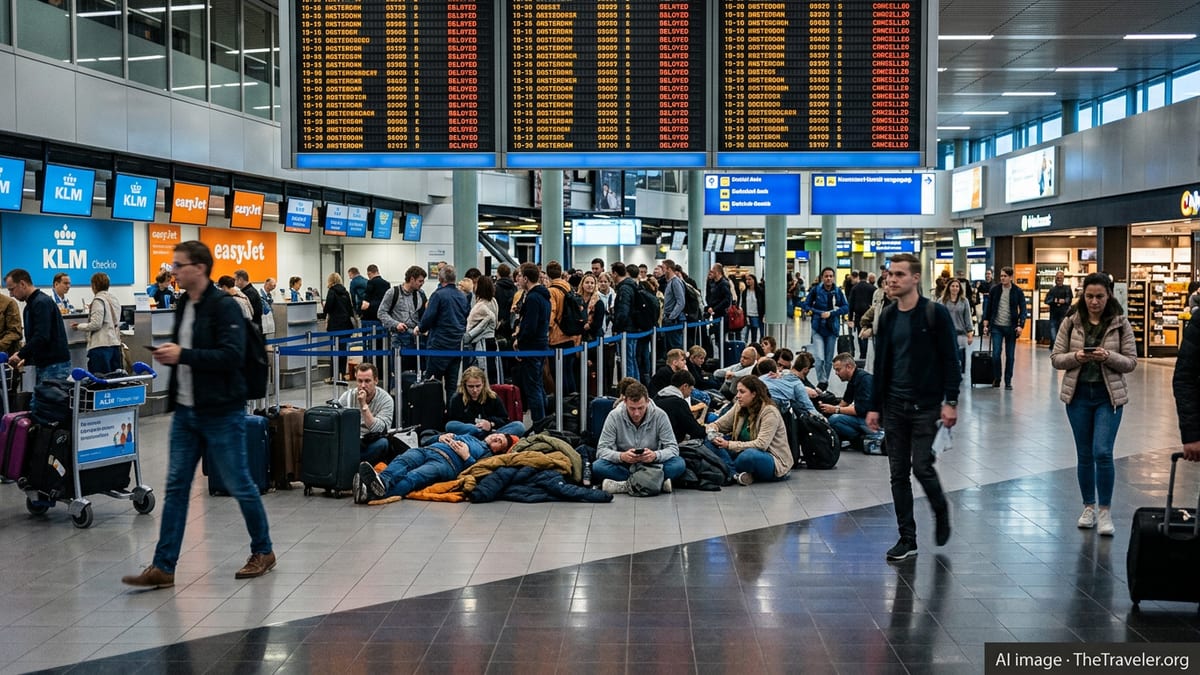
Weather Turbulence Triggers Sudden Airport Gridlock
Recent thunderstorms sweeping across parts of western and southern Europe have translated quickly into disruption at some of the continent’s busiest hubs. Reports from late June described hundreds of delayed and cancelled services at London’s Gatwick and Heathrow, with aircraft grounded for hours as storms moved through the region and knock-on effects spread into mainland Europe.
Weather-related disruption creates particular challenges for airlines and air traffic managers because delays tend to cluster in short windows and at key hubs. When arrivals and departures are briefly halted for safety reasons, schedules compress, gates and crews fall out of position and later flights often depart late or are cancelled altogether. Passengers have reported long waits on aircraft and in terminal queues as airlines work through backlogs once storms clear.
These conditions are arriving just as European flight numbers climb back to or slightly above pre-pandemic levels. With little spare capacity built into schedules at peak times, even a short period of severe weather can ripple across national borders and affect airlines and airports far from the original storm cells.
Air Traffic Capacity Strains Across Key European Hotspots
Beyond individual weather events, network data for early summer 2026 indicate that structural pressure points in European airspace are also contributing to delays and cancellations. Eurocontrol’s recent overviews highlight that total air traffic flow management delay per flight has been running above comparable 2025 levels, with en route bottlenecks continuing to weigh on performance.
France, Spain and Greece remain among the main generators of en route delays, reflecting a mix of capacity constraints, staffing issues and route complexity. Area control centres serving busy holiday corridors in the Mediterranean and over France have been singled out in recent briefings as persistent hotspots, especially on high-traffic weekends. When these centres impose flow restrictions, flights are held at departure airports across the network, leading to late departures and missed connections.
At major hubs such as Amsterdam, Barcelona and Athens, airport-specific capacity limits have added another layer of disruption at various points this spring. Publicly available aviation overviews show that some airports have recorded several minutes of average delay per flight linked to aerodrome capacity, pushing many services beyond scheduled departure slots and squeezing already tight turnaround times for airlines.
New EU Border Checks Add Queues and Missed Flights
New and tighter external border controls are emerging as another source of disruption this summer. The European Union’s Entry/Exit System, which relies on biometric data collection for non-EU nationals entering and leaving the Schengen area, is being phased in more broadly, and aviation industry bulletins warn that this is lengthening processing times at border control points.
Guidance circulated via airport and airline communications suggests that travellers at some European airports should now arrive considerably earlier than in previous years to allow for registration and checks under the new system. One low cost carrier has publicly advised customers to be at the airport at least three hours before departure, citing longer queues and reports of passengers missing flights as border-control desks adapt to the additional workload.
Operational notices for airports across the Schengen zone indicate that significant constraints are expected during peak hours of the summer timetable, especially in early afternoon waves when outbound leisure traffic is heaviest. While the new system is intended to streamline border management in the long term, the transitional period is contributing to crowded terminals, missed connections and, in some cases, the need for airlines to rebook or cancel affected passengers.
High Demand, Tight Schedules and Airline Performance Pressures
Eurocontrol’s traffic forecasts for the 2026 summer season point to continued growth in flight numbers compared with last year, with weekly volumes expected to sit a few percentage points above 2025. This rebound in demand, driven by strong leisure travel and steady business traffic, has left many carriers operating dense schedules with little resilience built in for disruption.
Recent analysis of delay statistics published by aviation data firms and regional media shows that around one in three flights in Europe is departing late, with average delays measured in the mid-teens of minutes. Some major airports have been highlighted for particularly high levels of lateness and above-average cancellation rates, reflecting the combined impact of weather, congestion and local operational constraints.
Airlines are under pressure to improve punctuality while also maximising aircraft utilisation and responding to strong booking trends. Industry reports note that so-called reactionary delays, in which one late flight cascades into others as the aircraft and crew cycle through their daily rotations, remain the leading cause of disruption. Tight turnarounds at congested airports leave little margin to recover from earlier setbacks.
What Passengers Can Expect for the Rest of Summer 2026
Network managers and aviation agencies stress in public documentation that efforts are underway to mitigate the impact of disruption, including updated capacity and weather-based procedures, closer coordination among air navigation providers and more realistic scheduling by airlines. Nonetheless, current indicators suggest that travellers should be prepared for ongoing irregular operations at least through the core holiday months.
Passengers flying through Europe’s busiest hubs, or connecting between regions affected by storms and airspace constraints, may face longer queues at check in and security, extended waits at border control, and a higher-than-usual risk of last-minute schedule changes. Travel experts and consumer advocates are urging passengers to monitor their flights closely, allow extra time at airports and familiarise themselves with compensation and care rules for delays and cancellations on European carriers.
With air traffic at near record levels, new border technology bedding in and summer weather turning volatile, disruption at European airports is likely to remain a defining feature of the season. For many travellers, flexibility around departure times and connections may prove as important as the destination itself.