


More news on this day
As Delta Air Lines battles renewed waves of cancellations and schedule disruptions in 2026, travelers are confronting a fast-changing legal landscape in both Europe and the United States that is redefining what airlines owe passengers when trips go wrong.
Get the latest news straight to your inbox!
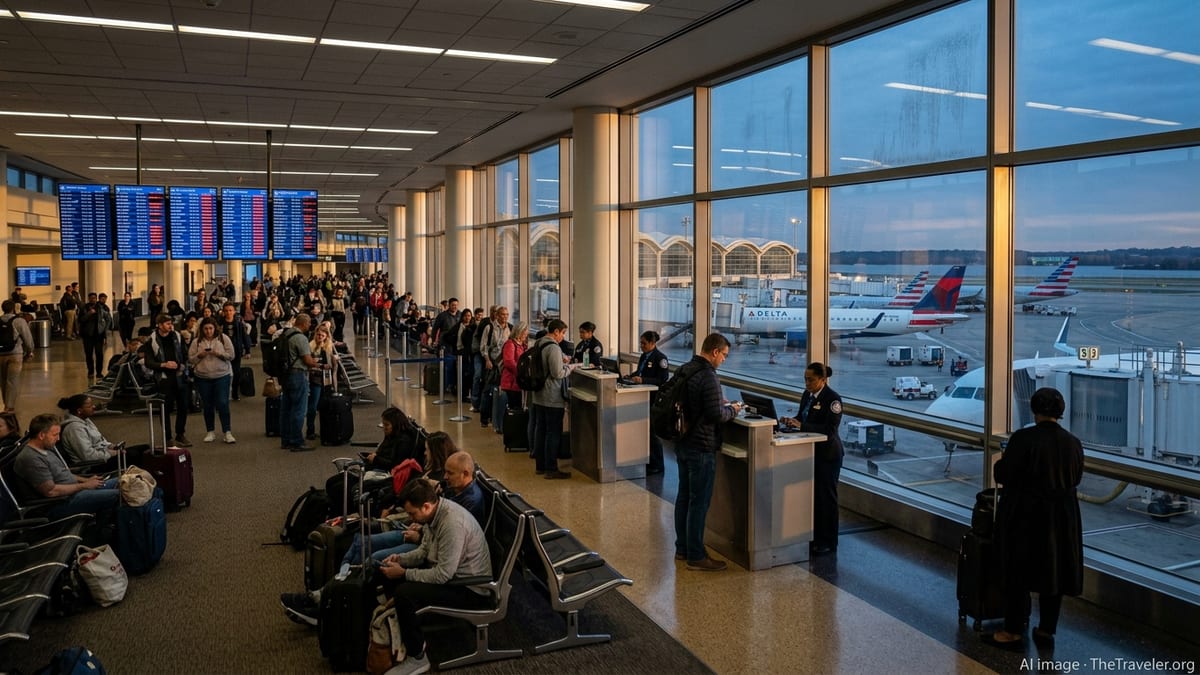
Delta’s Operational Strains Keep Legal Exposure in the Spotlight
Two years after a high-profile technology outage in July 2024 triggered more than 7,000 cancellations over several days and affected well over a million passengers, Delta Air Lines is again attracting scrutiny from frequent flyers who say reliability has deteriorated during 2026. Social media posts and travel forums in recent weeks describe repeated last-minute cancellations, missed connections and downgraded cabins, especially through major hubs such as Atlanta and New York.
Operational notices published by the airline show that Delta has continued to issue targeted waivers around weather and infrastructure constraints, including a July 2026 bulletin warning of High Heat conditions at New York LaGuardia that could lead to schedule disruptions and fee waivers for affected customers. At the same time, updated customer guidance on delays and cancellations sets out when travelers may request refunds, rebooking or reimbursement for hotels and meals if a disruption is considered within the carrier’s control.
Delta’s contract of carriage and customer service plan in the United States emphasize refunds and limited out-of-pocket reimbursements rather than automatic cash compensation. That approach broadly aligns with U.S. regulatory norms, which currently stop short of requiring airlines to pay standardized compensation for cancellations or long delays. However, for passengers on flights touching Europe, Delta must navigate a stricter regime that significantly raises its legal and financial exposure.
The combination of continued operational challenges, legacy fallout from the 2024 outage and expanding regulatory obligations has left Delta facing rising numbers of reimbursement and compensation claims. Travelers are increasingly turning to formal complaint channels, small-claims courts and specialist claims firms, especially when journeys involve European airports covered by EU compensation rules.
EU261 and New European Reforms Raise the Stakes
Under existing EU Regulation 261/2004, passengers departing from the European Union or traveling on an EU carrier are entitled to fixed-sum cash compensation when flights are canceled or arrive with long delays, provided the disruption is not caused by extraordinary circumstances such as severe weather or air traffic control restrictions. The amounts, typically between 250 and 600 euros depending on distance and delay, sit alongside rights to rerouting, care, and assistance at the airport.
Delta, like other non-European airlines operating from EU airports, acknowledges these obligations in its own compensation request forms for trips originating in the bloc. Passengers whose Delta-operated flights from Europe are canceled or heavily delayed can submit claims that are assessed under EU261 criteria, separate from any goodwill vouchers or policy-based reimbursements the company offers on its U.S. network. For long-haul services, that can translate into substantial per-passenger payouts on top of hotel and meal costs already absorbed during major disruptions.
In 2026 the regulatory bar in Europe is moving higher. A political agreement between the Council of the European Union and the European Parliament in June on revised air passenger rights aims to strengthen and clarify compensation rules, tighten the list of extraordinary circumstances and improve enforcement. Parliamentary briefing material highlights efforts to preserve the core right to compensation after a three-hour arrival delay on many routes while providing clearer guidance on when airlines can deny payment.
Fresh European Parliament communications in early July underscore that lawmakers see the upgrade of passenger rights as a flagship consumer project. The reform package also interacts with updated rules on package travel, where new legislation adopted in May seeks to give travelers stronger protection when flights are purchased as part of a broader holiday contract. For U.S. carriers with dense transatlantic schedules, including Delta, the result is a more demanding legal environment every time an aircraft departs an EU runway with delays already building into the timetable.
Transatlantic Travelers Caught Between Two Regulatory Worlds
For travelers flying between North America and Europe, the contrast between EU-style compensation and U.S. practice can be stark. On a New York to Paris itinerary operated by Delta, for example, a long delay on the westbound leg departing Europe may trigger fixed cash compensation plus care obligations, while a similarly lengthy disruption on the return leg from the United States may only produce a refund of the unused portion of the ticket, eCredits, or reimbursement of some reasonable expenses.
Publicly available guidance on U.S. passenger rights stresses that domestic law centers on refunds when airlines cancel flights or make significant schedule changes, with no blanket requirement to pay additional cash compensation for lost time. Airlines are largely free to structure their own customer service commitments regarding hotels, meals and ground transport during irregular operations. By contrast, European law relies on harmonized, mandatory minimum standards that apply across all carriers operating from EU airports, backed by national enforcement bodies and, increasingly, class-style actions coordinated by consumer groups.
Delta’s experience since the 2024 outage illustrates how these regimes interact in practice. While U.S.-based passengers often focus on securing refunds, miles or hotel cost reimbursements after major meltdowns, European-origin customers affected on the same network have concurrently pursued formal EU261 claims. Reports on consumer forums describe some travelers waiting months for responses or turning to national regulators and courts in EU member states when claims are rejected or delayed.
As European institutions finalize their updated rules, legal specialists expect more straightforward criteria on what counts as extraordinary circumstances, alongside procedural safeguards for passengers using third-party claims agencies. Those developments are likely to make it harder for carriers to decline compensation where operational issues stem from staffing, scheduling or non-exceptional technical problems, adding fresh legal risk to already fragile summer operations.
U.S. Passport Policy Debates Add Complexity for 2026 Trips
While European lawmakers focus on airline obligations, U.S. policymakers are engaged in parallel debates over passport services that could affect how easily Americans travel abroad if rules are tightened or processing systems strain under demand. A January 2026 briefing from the Congressional Research Service outlines the pressures on the State Department’s passport network, including sustained high application volumes and the need for additional regional agencies scheduled to open later in 2026.
Congressional discussions captured in recent records point to renewed attention on how central the passport has become for any form of international mobility. Lawmakers have floated ideas ranging from increased funding and staffing for passport services to potential adjustments in eligibility rules, security screening and fee structures. While no sweeping overhaul has yet been enacted, the policy direction suggests a continuing effort to balance security concerns with the practical need to process millions of applications and renewals each year.
For travelers, the most immediate implications are practical rather than theoretical. Planning international trips around peak holiday periods is likely to require applying for passports or renewals further in advance, especially if processing times lengthen again. Any legislative move to tighten documentation standards at U.S. borders or for airline check-in could also add friction on the outbound side of journeys that are already complicated by airline reliability issues and foreign compensation rules.
Taken together, evolving debates over U.S. passport policy and the patchwork of legal protections available to passengers across jurisdictions mean that 2026 travelers must navigate not only prices and schedules but also a shifting regulatory map. Delta’s ongoing struggles to deliver a consistently reliable operation have made that map more visible, and more consequential, for millions of passengers planning transatlantic trips.
What Travelers Should Watch as the Summer Peak Approaches
Industry analysts note that the convergence of tighter European standards, persistent operational strain at major U.S. carriers and intense demand for international travel could make the 2026 peak season unusually fraught. Airlines face pressure to operate full schedules in congested airspace while remaining within crew duty limits and managing weather, infrastructure bottlenecks and geopolitical disruptions that continue to affect certain long-haul routes.
Legal and consumer advocates suggest that travelers pay closer attention to where their flights originate and which jurisdiction’s rules apply at each stage of an itinerary. A single ticket that starts in the European Union and includes multiple segments on a non-EU carrier may benefit from stronger compensation protections than a comparable journey booked in reverse. Meanwhile, in the United States, any future congressional moves on passport policy or broader passenger rights legislation could alter the balance of power between airlines and customers.
For now, publicly available information indicates that Delta and its peers are responding by refining their customer service policies, updating contracts of carriage and investing in technology intended to reduce large-scale outages. Whether those steps will be sufficient to avoid a repeat of past meltdowns, and to contain mounting legal and reputational risks under tougher European rules, remains a central question for both investors and passengers as the busy second half of 2026 approaches.