


More news on this day
Travellers flying to and from the United Arab Emirates over the coming weeks are being urged to plan for possible disruption as changing seasonal weather conditions, including fog, dust and convective clouds, raise the risk of flight delays and schedule adjustments across the country’s busy airports.
Get the latest news straight to your inbox!
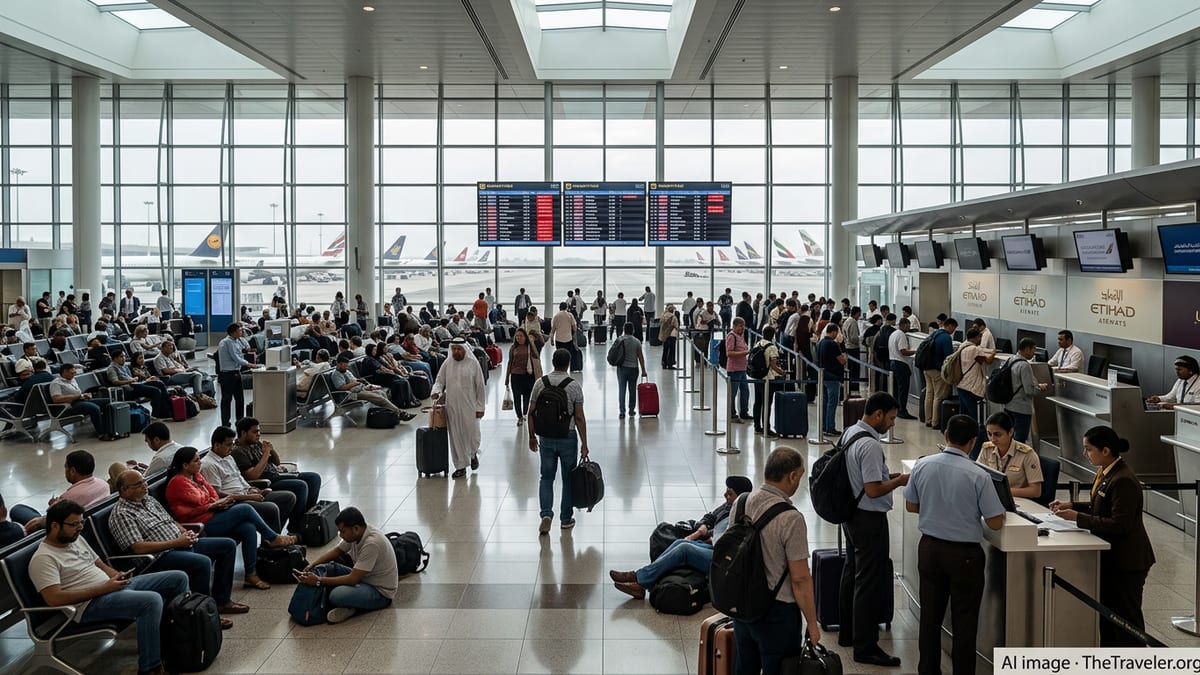
Seasonal shift puts UAE flight schedules under pressure
Publicly available information from the UAE’s National Center of Meteorology indicates that October marks the start of a transition period, with hot daytime temperatures persisting while humidity and early-morning fog increase, particularly over coastal and inland desert areas. Recent forecasts have highlighted dense fog patches, low clouds and occasional dust that can significantly reduce visibility around Abu Dhabi, Dubai and Sharjah airports.
Local media coverage in early October 2026 reported red and yellow alerts for fog in parts of the country, with visibility falling sharply during the morning hours and temperatures still climbing into the high 30s Celsius later in the day. These rapidly changing conditions can complicate flight operations, especially during peak departure and arrival banks when runways and taxiways are busiest.
Guidance published by the General Civil Aviation Authority describes how deteriorations in visibility associated with persistent weather such as haze, mist, fog and dust must be treated as operationally significant. When such conditions are forecast or observed, airlines and air traffic controllers are expected to apply stricter limits, sometimes reducing the number of movements per hour or extending separation between aircraft, which can lead to knock-on delays.
While heavy rain and thunderstorms are less frequent in early autumn than in the winter months, reports from earlier in 2026 showed that unstable weather with rain and embedded storms has already disrupted operations at Dubai and other airports this year. Aviation observers note that any repeat of such systems, combined with fog or dust, would place additional strain on flight schedules.
Which weather conditions most often disrupt UAE flights
According to meteorological and aviation documentation, three phenomena stand out as the main weather-related threats to on-time performance in the UAE: dense fog, sand or dust storms, and convective cloud build-up that can produce sudden wind shifts and showers.
Dense radiation fog, common on cool, humid mornings from late autumn through winter, can quickly reduce runway visual range below the minima required for take off and landing. When this happens, aircraft may be forced to hold, divert to alternates, or wait on the ground until conditions improve. Because large hubs such as Dubai International handle tightly spaced arrivals, even short periods of very low visibility can create a backlog that lasts for several hours after the fog lifts.
Dust and sandstorms are a second recurring concern, particularly during transitional seasons when strong winds can carry dust across long distances. Travel advisories for the UAE highlight that these storms can last from a few hours to several days, degrading air quality and cutting visibility along flight paths and at airports. Reduced visibility and crosswinds often oblige controllers to adjust runway use and spacing, increasing the likelihood of departure delays and occasional cancellations.
Convective clouds and associated thunderstorms, while often short-lived, can also be operationally disruptive. The GCAA’s technical material on meteorological assessment notes that persistent conditions linked to continuous precipitation require careful application of more restrictive criteria. For carriers, this can translate into longer routings to avoid active cells, holding patterns while storms pass over departure or arrival corridors, and temporary suspensions of ramp activity when lightning is in the vicinity.
How the GCAA and NCM manage aviation weather risk
The General Civil Aviation Authority is responsible for regulating civil aviation across the Emirates Flight Information Region, including the publication and enforcement of flight operations rules. Its regulations refer directly to the role of dedicated meteorological services in supporting safe decision-making by pilots, airlines and air traffic controllers under all weather conditions.
Air navigation publications for the UAE show that the National Center of Meteorology provides around-the-clock aviation weather coverage, including terminal aerodrome forecasts, trend forecasts and warnings such as SIGMETs and aerodrome weather alerts for major airports. These products are issued at short intervals, in some cases every 30 minutes, to capture rapidly evolving conditions such as fog formation, blowing dust or thunderstorm development along key routes.
Operational documents indicate that when forecasts include periods of temporarily reduced conditions associated with phenomena like haze, mist, fog or dust, the more restrictive values are taken into account for planning. In practice, this means that if forecasters expect a significant visibility drop during a particular time window, airlines and air traffic management units must adjust flight plans, fuel loads and spacing assumptions to maintain required safety margins.
The same regulatory framework requires operators to ensure that aircraft performance, de-icing and anti-icing procedures, and contingency plans are appropriate for expected conditions. Even though ground ice accumulation is not a major issue in the UAE climate, these provisions reflect a broader expectation that carriers prepare thoroughly for any kind of adverse weather that could influence controllability, braking performance or navigation.
Recent disruptions highlight vulnerability of busy hubs
Several episodes over the past year have illustrated how quickly weather and broader regional events can combine to disrupt air travel in the UAE. Earlier in 2026, heavy rain and thunderstorms prompted warnings that adverse weather could affect flights at Dubai International and Dubai World Central, with passengers urged via public channels to monitor their flight status before leaving for the airport.
In Abu Dhabi, official communications from the local media office have described how Zayed International Airport and other facilities in the emirate have at times moved to limited operations to manage safety during temporary airspace disruptions. Once conditions stabilized, airports progressively restored normal schedules, but residual delays often persisted for much of the day.
More recently, regional aviation notices have underlined that foreign operators serving UAE airports are expected to conduct risk assessments in light of the current geopolitical and operational environment. While these notices are not weather-specific, they reinforce the broader message that carriers must plan for a range of scenarios, including rapid weather changes that could affect routing, flight levels or alternates.
Industry observers who track delays using standard airline coding systems note that weather-related delay categories remain a regular feature in the region, particularly during periods of fog, dust storms or heavy rain. Although the UAE’s airports and air traffic management systems are designed to handle high volumes efficiently, their very density means that any prolonged reduction in runway capacity quickly cascades across networks.
What passengers can do if flying to or from the UAE
For travellers, the heightened attention to seasonal weather does not mean cancelling plans, but it does suggest adjusting expectations and preparation. Public travel advice from various governments already recommends that visitors to the UAE monitor local weather reports, especially during the fog-prone winter months and during episodes of dust or sandstorms that can affect all modes of transport.
Passenger information campaigns by UAE airports and airlines typically stress the importance of checking flight status through official channels on the day of travel, allowing extra time to reach the airport when visibility or road conditions are poor, and remaining alert to schedule changes communicated by carriers. In periods with red or yellow fog alerts, early-morning flights are especially prone to disruption, while mid-morning and afternoon services may experience knock-on effects if aircraft and crews are out of position.
Travel specialists also advise building flexibility into itineraries where possible. This can include avoiding tight same-day connections onto separate tickets, ensuring that accommodation and ground transport bookings are changeable, and carrying essentials in cabin baggage in case an unplanned stopover or overnight delay becomes necessary.
While there is no sign that the UAE’s overall air connectivity is at risk, the combination of seasonal weather patterns and high traffic density means that some degree of disruption is likely to recur in the weeks ahead. For passengers, understanding which weather conditions are most critical for aviation, and how regulators and airports respond to them, can help turn a potential day of uncertainty into a more manageable travel experience.