


More news on this day
Etihad Airways has extended the cancellation of flights between Abu Dhabi and three Saudi Arabian cities through October 24, as regional security concerns continue to disrupt services operated by several Gulf carriers.
Get the latest news straight to your inbox!
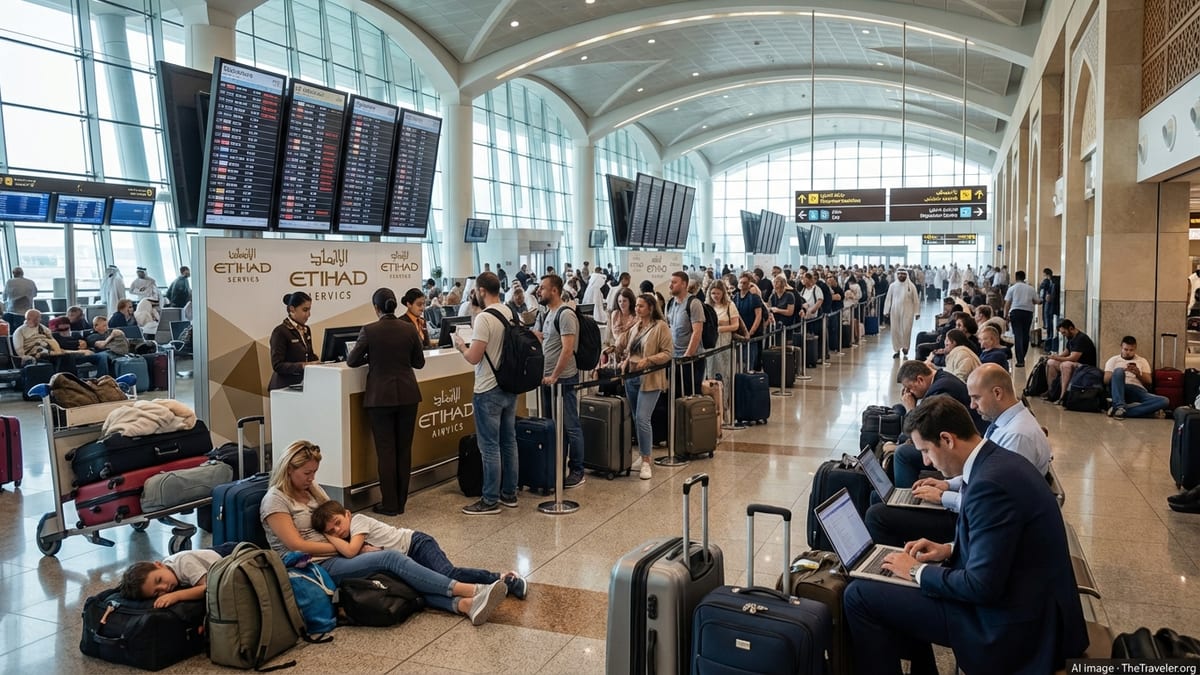
Etihad prolongs disruption on key Abu Dhabi–Saudi routes
Publicly available schedules show that Etihad has cancelled all flights between Abu Dhabi and Riyadh, as well as Abu Dhabi and Dammam, up to and including Saturday, October 24, 2026. Services on the Abu Dhabi–Jeddah route are also affected, with a series of daily flights removed from sale or listed as cancelled during the same period.
Reports from regional outlets indicate that the cancellations build on an earlier suspension that initially ran to October 19, before being rolled forward as the situation in Saudi Arabia’s airspace evolved. Etihad’s latest travel advisories describe the environment as dynamic, with the airline cautioning that further schedule changes remain possible at short notice.
Operational data reproduced in media coverage lists multiple Jeddah services as cancelled, including flights EY601, EY602, EY603 and EY604 between Abu Dhabi and Jeddah on selected days. Travellers booked on these rotations are being directed to monitor their reservations closely and consider rebooking options if they are due to fly before or on October 24.
Etihad’s published guidance emphasises that affected passengers can adjust their tickets without standard change penalties in many cases, although exact conditions vary by fare type and point of purchase. Travelers holding bookings issued through travel agencies are being advised to coordinate changes with their original ticketing channel.
Regional security backdrop after attacks on Saudi airports
The extended cancellations are unfolding against the backdrop of heightened security concerns following a series of attacks targeting airports in Saudi Arabia in early October. International and regional media reports describe missile and drone strikes on King Khalid International Airport in Riyadh and other facilities, prompting temporary closures and restrictions on flight movements.
According to widely cited coverage, Saudi authorities tightened controls on operations at Riyadh’s main airport after an attack on October 10, with hundreds of flights disrupted in the days that followed. Aviation reporting notes that some runways and terminals gradually reopened, but airlines have continued to adjust schedules while they assess security advisories and operational risks.
Industry analysis suggests that carriers are weighing a combination of factors, including government travel guidance, airport infrastructure checks and the availability of air traffic management services. In this context, airlines such as Etihad have opted to keep certain routes suspended beyond the minimum closure periods, preferring to offer more predictable schedules rather than piecemeal restorations that could change daily.
Aviation safety bulletins cited in travel media also highlight broader caution across the region’s airspace, recommending that operators exercise care when planning overflights and approach paths near areas of recent hostilities. This has added a layer of complexity for Gulf carriers whose networks rely on dense frequencies into and out of Saudi cities.
Emirates, Air Arabia and other carriers modify Saudi operations
Etihad is not the only airline reshaping its Saudi schedules in October. Coverage in UAE business and travel publications shows that Emirates, Air Arabia and flydubai have each cancelled or consolidated flights on selected days to Riyadh, Dammam and other Saudi destinations since the airport attacks.
Emirates’ published timetables for mid-October indicate that several services between Dubai and Riyadh, as well as Dubai and Dammam, were cancelled in the period immediately after October 10. Some rotations have since reappeared in booking systems, while others remain unavailable or operate at reduced frequency as the airline adapts capacity to the evolving situation.
Low-cost carrier Air Arabia has also implemented targeted cancellations on routes from Sharjah to Saudi airports, according to travel industry reporting that collates data from airline websites and global distribution systems. These adjustments range from total cancellations on specific days to aircraft downgrades and time changes designed to consolidate passenger loads.
Across the Gulf, observers note a patchwork of responses as airlines balance commercial demand with operational constraints. While some regional and Saudi-based carriers have restored limited services to cities such as Jeddah and Madinah, others continue to keep selected routes on hold, particularly those most closely linked to Riyadh’s main hub.
Impact on business, religious and transit travel
The timing of the cancellations has significant implications for multiple segments of travel between the UAE and Saudi Arabia. Riyadh and Dammam are major business destinations for corporate travellers based in Dubai and Abu Dhabi, and the loss of nonstop capacity from Etihad and other carriers has pushed passengers toward remaining options on Saudi-flag and regional airlines.
Jeddah, meanwhile, serves as a primary gateway for pilgrims and religious tourists headed to Makkah and Madinah. Travel forums and community groups monitored by news outlets have reported disrupted itineraries for travellers who had planned to connect via Dubai or Abu Dhabi on Etihad, Emirates or Air Arabia in mid and late October, with some needing to rebook via alternative hubs such as Doha or direct services on Saudi-based carriers.
Transit itineraries that rely on Abu Dhabi and Dubai as connecting points for long haul journeys have also been affected. For passengers originating in Europe, North America or Asia and connecting to Saudi cities, the suspension of certain Etihad and Emirates legs has required rerouting through different hubs or adjusting travel dates to align with remaining services.
Travel industry analysts quoted in regional coverage note that seat availability into Saudi Arabia has tightened on days most affected by cancellations, with economy fares on remaining flights sometimes trending higher than in late September. However, they also point out that schedule changes are occurring frequently, and that additional capacity could return quickly if security conditions improve.
What affected passengers can do now
Etihad’s travel updates advise passengers with bookings to or from Riyadh, Dammam or Jeddah through October 24 to check their flight status regularly before heading to the airport. This can be done through the airline’s online manage-booking tools or mobile app, where the latest operational information is typically reflected first.
For travellers whose flights have been cancelled, publicly available information shows that Etihad is offering a range of options that may include free rebooking to later dates, rerouting via alternative gateways where available, or refunds in line with fare conditions. Passengers who purchased tickets through third-party agents are generally being asked to coordinate changes directly with their original point of sale.
Travel planners recommend that passengers holding time-sensitive bookings, such as those linked to business meetings or religious tour packages, contact their airline or agent as early as possible to secure alternatives. In some cases, travellers may find more immediate options on Saudi-based carriers operating from other Gulf hubs, though availability can vary from day to day.
With the situation in Saudi airspace and at key airports still evolving, aviation observers expect Gulf carriers to continue reviewing their schedules beyond October 24. Passengers planning new trips in late October and early November are being encouraged to keep itineraries flexible, monitor airline advisories closely and allow extra time for potential changes as the region’s aviation sector works through the current disruption.