


More news on this day
Australia has raised its travel advice for Saudi Arabia to the highest "do not travel" level after a series of Houthi missile and drone attacks on Saudi airports and explicit rebel threats of further strikes, prompting urgent guidance for Australians in the kingdom and those planning to transit through it.
Get the latest news straight to your inbox!
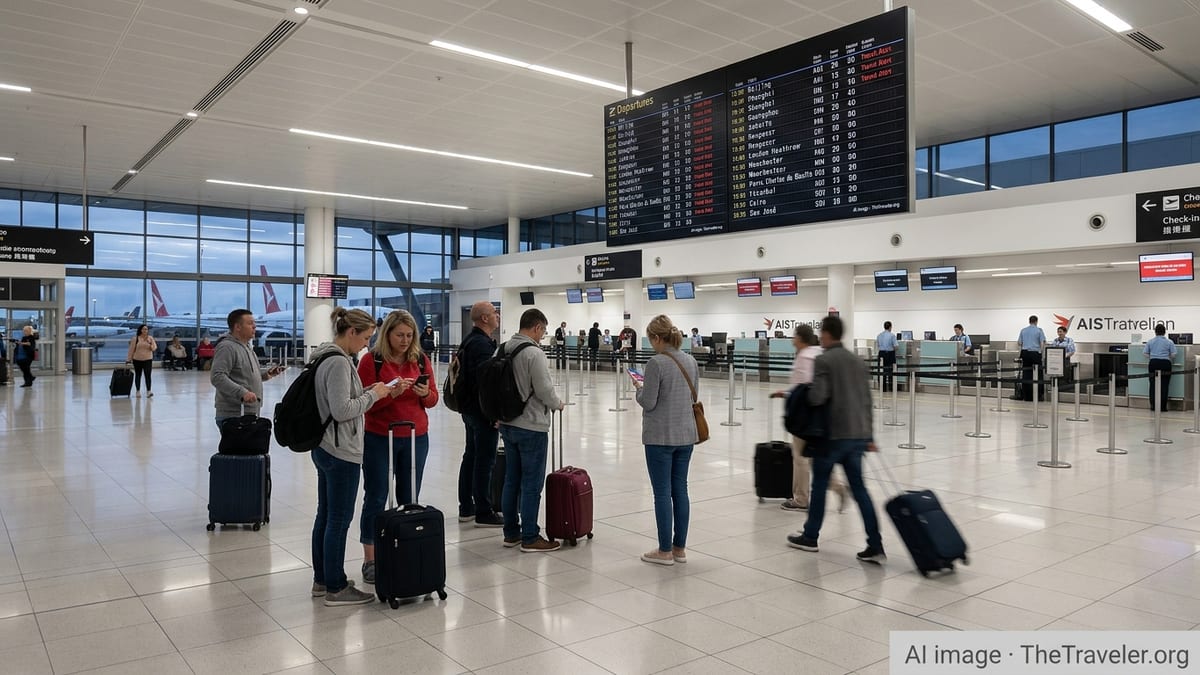
Travel advice escalated after airport strikes
Updated guidance on the Australian government’s Smartraveller portal on 16 October 2026 shows the overall advice for Saudi Arabia lifted to “do not travel,” citing a volatile security situation and the risk of further attacks on civilian infrastructure. The move comes days after a wave of Houthi attacks on Saudi airports that killed at least 20 people and injured more than 370, including at Riyadh’s King Khalid International Airport.
Publicly available information from international coverage indicates that from 6 to 12 October 2026, airports in Riyadh, Abha and Jizan were targeted with ballistic missiles and armed drones launched from Houthi-controlled areas of Yemen. The incidents have been described in open reports as a major escalation in the long‑running conflict, with civilian travellers among the dead and injured and flights disrupted across the kingdom.
Smartraveller’s Saudi Arabia page now highlights the risk of “terrorism, including in Saudi Arabia,” and links that risk to ongoing military operations in Yemen and the Red Sea in response to Houthi activity. Australians are advised not to travel to the country at all and to leave as soon as it is safe to do so if they are already there, while commercial routes remain available.
Australia’s Department of Foreign Affairs and Trade has been flagging the broader Middle East as highly unstable throughout 2026, but the shift of Saudi Arabia to “do not travel” marks one of the strongest warnings in the region outside Yemen itself.
Houthi threats widen to Saudi territory and airspace
The latest escalation follows a broader pattern of Houthi operations that have spread beyond Yemen’s internal battlefields into Saudi airspace and key transport hubs. According to analysis of recent events published by international outlets, the Iran‑aligned group has resumed large‑scale missile and drone strikes on Saudi cities, oil facilities and airports since early September 2026, coinciding with a breakdown in earlier ceasefire arrangements.
Reports on the October airport attacks describe coordinated barrages aimed at civilian terminals and runways, part of a campaign that has also included a declared maritime and aerial blockade targeting Saudi Arabia. Statements attributed to Houthi spokespeople in open sources have warned of further attacks on Saudi infrastructure in response to Saudi and allied operations in Yemen.
Government travel advisories in several countries now reference a “heightened threat” to airports in Saudi Arabia from Houthi forces, pointing to the 10 October strike on Riyadh’s King Khalid International Airport as a particularly serious incident. The United Kingdom’s Foreign, Commonwealth and Development Office, for example, is advising its nationals to avoid the Riyadh airport area and to closely monitor flight status with airlines before travelling.
These developments have raised concerns about the safety of both direct flights to Saudi cities and transit through local hubs, as well as the vulnerability of air corridors near the Yemen border and over the Red Sea.
Implications for Australian travellers and transit passengers
The Australian “do not travel” advisory has immediate consequences for tourists, business travellers and those using Saudi airports as connection points to Europe, Africa or the wider Middle East. Smartraveller’s destination index lists Saudi Arabia at the highest warning level as of mid‑October 2026, while neighbouring Yemen also remains at “do not travel” because of armed conflict, kidnapping risks and terrorism.
Australians already in Saudi Arabia are urged through public guidance to consider leaving while commercial options remain available. Related commentary circulating in Australian media and online forums indicates that travellers are being advised to consider alternative routings via hubs such as Doha or Abu Dhabi if overland or regional connections can be arranged safely, given the uncertainty around flights in and out of Saudi airports.
For those still planning trips, the “do not travel” status means that travel insurance policies purchased in Australia may not provide coverage for new journeys to Saudi Arabia, particularly for security‑related incidents. Insurers commonly exclude destinations that carry the highest official warning level, and travellers are being encouraged in publicly available advice to confirm policy conditions before booking or attempting to change existing itineraries.
Transit passengers who are booked to connect through Saudi airports are also advised to contact airlines or travel agents as early as possible. Airlines may adjust schedules, reroute flights or allow fee‑free changes in response to government advisories and security incidents, but these arrangements vary by carrier and are not guaranteed.
Wider regional risks in Red Sea and Gulf corridors
Australia’s updated warning for Saudi Arabia is tied not only to domestic security concerns but also to wider regional risks stemming from the conflict in Yemen and the 2026 Iran war. Smartraveller’s information for Saudi Arabia and Yemen notes that military operations are taking place in Yemen and the Red Sea in response to Houthi attacks on commercial vessels and Saudi‑linked shipping in the Red Sea and Gulf of Aden.
Separate assessments published by the United States and United Kingdom during 2026 describe a persistent risk of missile and drone attacks against regional infrastructure, including airports, oil facilities and ports, as well as potential threats to ships near the Bab al‑Mandab Strait and the wider Red Sea corridor. The Houthis have previously claimed responsibility for strikes on energy infrastructure and naval targets, and have publicly warned that they could target shipping that benefits Saudi Arabia and its partners.
Other allied governments continue to advise against travel within a wide band of territory near the Saudi–Yemen border, citing the possibility of cross‑border shelling and drone incursions. For travellers, that means itineraries that involve overland journeys in southern Saudi provinces, Red Sea coastal crossings or yacht passages through the Bab al‑Mandab and adjacent waters carry elevated risk.
Australia’s messaging points travellers back to its Middle East overview, which emphasises that the regional security situation can deteriorate quickly, potentially leading to sudden airspace closures, flight cancellations and diversions. Travellers are encouraged through public resources to maintain flexible plans and to have contingency arrangements for accommodation and onward travel.
Practical steps for Australians monitoring the situation
While the upgraded advice effectively calls for Australians to avoid Saudi Arabia for now, public information from the Department of Foreign Affairs and Trade highlights several practical steps for those who remain in or near the country. Smartraveller encourages travellers to subscribe to email updates for Saudi Arabia so they receive any further changes to the advice level as new information becomes available.
Australians overseas who need urgent consular assistance are directed to contact the 24‑hour Consular Emergency Centre in Canberra by phone, either directly or via Australian diplomatic missions in the region. The Australian embassy in Riyadh also points travellers to Smartraveller for the latest security and travel information.
Security‑focused travel advice for Saudi Arabia and Yemen recommends maintaining a high level of situational awareness, checking local media and airline notifications, and being prepared to move quickly if the security environment deteriorates. In the event of sirens, explosion sounds or reports of incoming missiles, travellers are advised in open guidance to move to a hardened shelter or the lowest possible level of a building, stay away from windows and follow any instructions issued by local emergency services.
With the Houthis signalling their intent to continue targeting Saudi territory and airspace, and with major partners such as Australia now advising against all travel, the near‑term outlook remains uncertain for air connections through the kingdom and for tourism and business trips involving Saudi cities.