


More news on this day
Hundreds of travelers faced hours of disruption in France as a cluster of operational problems and congestion led to 421 delayed flights and 10 cancellations affecting services at Paris Orly, Nice Côte d’Azur, and St. Barthélemy airports, straining one of Europe’s busiest domestic and leisure corridors at the height of the summer travel period.
Get the latest news straight to your inbox!
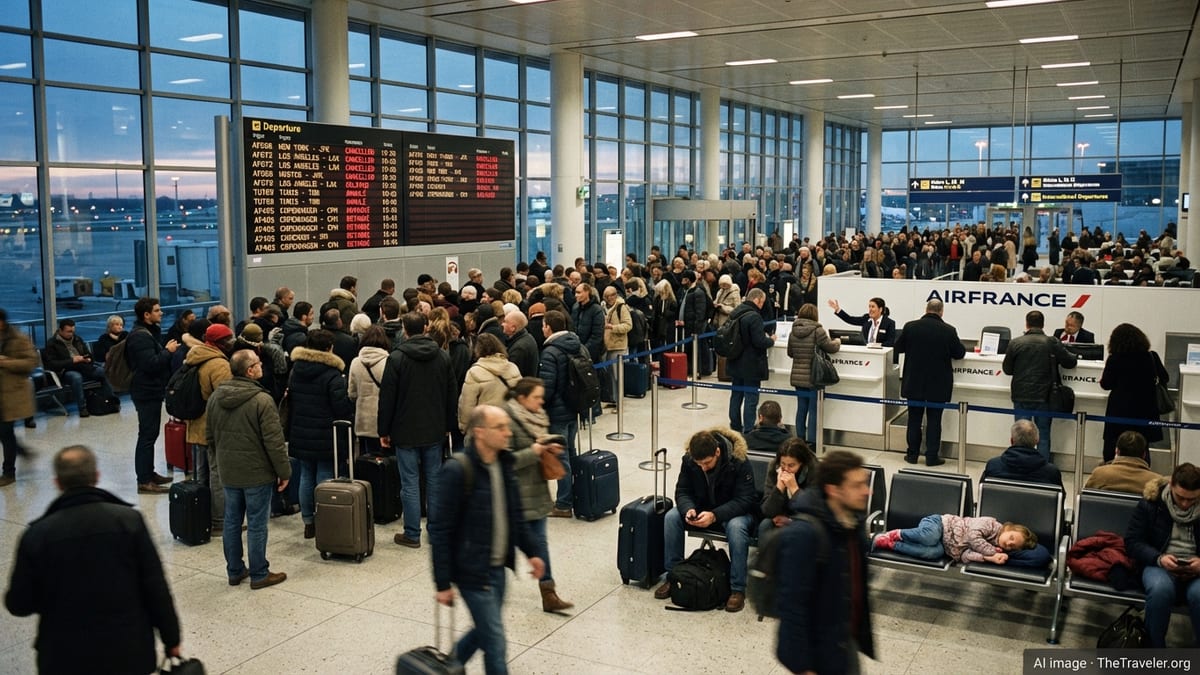
Operational Strains Ripple Across French Leisure Gateways
Publicly available flight-tracking data and local media coverage indicate that the wave of disruption built up over a single operating day, with delays accumulating through the afternoon across major French leisure routes. Paris Orly, a key base for low-cost and holiday traffic as well as services to overseas territories, recorded the bulk of late departures and arrivals, with knock-on effects seen on short-haul links to Nice and onward connections toward the French Caribbean via St. Barthélemy.
Reports indicate that airlines serving these airports operated the majority of services, but struggled to maintain schedules once early rotations began to slip. Late-arriving aircraft, congested airspace around Paris, and tight turnarounds at coastal airports contributed to a cascading pattern in which even minor initial delays translated into significant disruptions for evening departures.
Airline operational reports and historical performance data for carriers at Orly and Nice show that summer schedules in France run close to capacity. This leaves limited room to absorb disruption when a combination of weather, airspace constraints, or technical checks on individual aircraft reduce the margin for recovery. On the day of the incident, that lack of buffer appears to have turned routine delays into a system-wide challenge.
At St. Barthélemy, a smaller Caribbean airport that relies on carefully choreographed turboprop operations, even a handful of late inbound flights and cancellations created outsized disruption. This affected not only holidaymakers ending their trips in the French Antilles, but also travelers using the island as a stepping stone to other Caribbean destinations.
Paris Orly Bears Brunt as Domestic and Overseas Links Slow
Paris Orly, historically one of France’s busiest hubs for domestic travel and services to overseas departments, saw widespread knock-on effects as the day progressed. Public data on flight movements at Orly show that the airport typically handles several hundred flights each day, with dense patterns of departures clustered around peak business and leisure hours. Against that backdrop, the recorded 421 delays in a short time frame represented a significant spike in operational strain.
Disruptions at Orly were particularly visible on high-frequency routes to Nice, which have been reshaped in recent seasons as low-cost and hybrid carriers expanded their presence on what was once a flagship domestic corridor. Schedule data published ahead of the summer period already pointed to intense aircraft utilization on these links, with multiple daily rotations and short turn times. On the disrupted day, those efficiencies became vulnerabilities when inbound flights landed late and ground operations were forced to compress or reorder tasks.
Travelers connecting through Orly to long-haul services, including flights toward French Caribbean gateways serving St. Barthélemy-bound passengers, were among the most exposed. Missed connections and rebookings were reported across several airlines, extending travel times by many hours and in some cases requiring overnight stays near the airport.
Industry analyses of delay patterns in the wider Paris region have also highlighted the impact of air traffic management measures, especially when traffic peaks coincide with weather or staffing constraints. While no single cause has been publicly identified as responsible for the day’s tally of 421 delays and 10 cancellations, operational reports suggest a mix of factors rather than a single, isolated incident.
Nice Côte d’Azur Sees Peak-Season Pressure
At Nice Côte d’Azur Airport on the Mediterranean coast, the disruption intersected with one of the busiest periods of the year. The airport’s published summer program for 2026 underscores how aggressively airlines have built capacity into the Nice market, with dense schedules toward Paris and a growing roster of international services. On the affected day, this growth translated into tighter gate availability and busier taxiways, conditions that can amplify even modest upstream delays.
Arrivals from Paris and other French cities landed behind schedule throughout the afternoon, according to real-time tracking platforms, compressing the time available for turnarounds. Ground handling teams were left juggling aircraft needing servicing, cleaning, and boarding in shorter windows, all while trying to keep later waves of departures from sliding into the evening peak.
For passengers departing Nice to connect onto flights at Orly or onward to overseas territories, even a delay of 60 to 90 minutes was enough to jeopardize carefully planned itineraries. Traveler accounts shared on social platforms in recent weeks about tight connection times between French airports highlight how vulnerable complex itineraries can be when domestic legs run late, particularly on days with little spare capacity.
Airport planning documents for Nice emphasize the role of infrastructure upgrades and terminal extensions in handling rising demand. However, the latest disruptions show that infrastructure alone is not a guarantee against network-wide delays, especially when ground operations, airspace capacity, and airline scheduling all come under simultaneous pressure.
St. Barthélemy and Caribbean Links Caught in the Chain Reaction
Although St. Barthélemy operates on a much smaller scale than Orly or Nice, its position in the French and Caribbean network made it vulnerable to ripple effects once Paris and mainland hubs began to experience delays. Information shared in ongoing Caribbean travel disruption roundups indicates that services involving French carriers and connections through French territories remain sensitive to operational disturbances in Europe.
On the day of the disruption, the 10 recorded cancellations across the three airports forced airlines to consolidate loads and reroute travelers through alternative Caribbean gateways. For an airport like St. Barthélemy, where aircraft often operate several short sectors in sequence, the loss of a single rotation can upend the entire daily plan and limit options for rescuing later flights.
Travelers reported extended waits for rebooking information and uncertainty around luggage transfers when itineraries had to be reconstructed at short notice. Public guidance from consumer organizations notes that such situations are particularly challenging in island environments, where accommodation and alternative transport can be limited during peak holiday weeks.
The incident also highlights the complexity of linking small island airports to large European hubs through tight schedules. When upstream flights from Paris or Nice arrive late or are cancelled, local operators in the Caribbean face the difficult choice of holding departures, which can breach duty-time limits for crews, or operating on time and leaving connecting passengers behind.
What Disrupted Travelers Can Expect Next
According to publicly available guidance on European air passenger rights, many of those affected by the delays and cancellations may be entitled to assistance such as meals, refreshments, and accommodation, depending on the length of delay and the cause. Monetary compensation can also apply in certain circumstances, particularly when disruptions are not linked to extraordinary events such as severe weather or airspace closures.
Consumer advocacy groups generally recommend that passengers keep boarding passes, receipts for essential expenses, and any communication from airlines that references the reasons for disruption. These documents can be important when submitting claims under European regulations or seeking redress from travel insurance providers, which sometimes offer additional coverage for missed connections and extended delays.
Given the concentration of disruption at Orly, Nice, and St. Barthélemy during a peak travel period, analysts expect renewed scrutiny of summer scheduling practices in the French market. Industry research on airline network design and delay management has underscored the need for more resilient timetables and flexible aircraft rotations that can better absorb day-of-operation shocks without cascading across entire networks.
For travelers with upcoming itineraries through these airports, publicly available advice suggests building extra time into connections, monitoring flight status closely in the 24 hours before departure, and considering flexible booking options where possible. While the day that produced 421 delays and 10 cancellations stands out as an extreme example, it also reflects the heightened fragility of busy summer schedules across France’s key leisure and domestic hubs.